

- Commercial Flooring
Best Commercial Flooring Options for Offices and Retail
November 13, 2025

Reviewed by Kevin Sill, Co-owner, Harmony Flooring
The best commercial flooring for most offices and retail spaces is commercial luxury vinyl tile (LVT) on open floors and carpet tile wherever quiet matters, with slip-resistant commercial tile and a long walk-off zone at the entrance. Rubber, quarry tile, linoleum, porcelain, polished concrete and epoxy each win in specific rooms, and the table below shows where.
This guide compares eight commercial flooring options on traffic, maintenance and noise, then gives a pick for each business type: offices, retail stores, salons, restaurants and clinics. Harmony Flooring helps businesses choose, schedule and finish new floors through our commercial flooring in Madison, with one project manager from bid to punch list and the installs done by trusted subcontractors we coordinate.
The Short Version
Most commercial spaces do best with two or three floors chosen by zone, not one floor everywhere.
- Open floors and sales floors: commercial LVT with a 20 mil or thicker wear layer.
- Offices, conference rooms and quiet zones: carpet tile, which also lets you swap one stained tile instead of a whole room.
- Entries and restrooms: slip-resistant commercial tile plus a long walk-off zone for salt season, November into April.
- Clinics and exam rooms: glue-down commercial LVT with a sealed perimeter, and a specialty seamless floor only where codes call for one.
- Kitchens, stairs, gyms and wet areas: quarry tile in commercial kitchens, and rubber on stairs, in gyms and in other wet areas.
Commercial Flooring Options Compared
Here are the eight commercial flooring types most businesses choose between, rated on the things that decide a commercial floor. Traffic ratings assume a commercial-grade product, not a residential one.
Flooring type |
Traffic |
Maintenance |
Acoustics |
Where it fits |
|
Carpet tile |
Heavy, in commercial nylon |
Vacuum daily, deep clean by extraction; swap single tiles |
Quietest; absorbs footfall and voices |
Offices, conference rooms, classrooms, corridors |
|
Luxury vinyl tile (LVT) |
Heavy, with a 20 mil or thicker wear layer |
Dust mop and damp mop with a pH-neutral cleaner |
Moderate; acoustic backings help |
Retail floors, lobbies, break rooms, clinic waiting rooms |
|
Quarry tile |
Very heavy, takes grease and hot-water scrubbing |
Degrease and scrub; specify epoxy grout so the joints resist grease |
Loud, like other tile |
Commercial kitchens, dish rooms, back of house |
|
Rubber flooring |
Very heavy, handles impact |
Neutral cleaner and scrubbing per the maker |
Good at deadening impact noise |
Gyms, stairs, locker rooms, wet areas |
|
Linoleum |
Heavy |
Neutral cleaner only; Forbo says never use high pH chemicals |
Moderate |
Schools, libraries and civic buildings where a spec calls for a natural floor |
|
Porcelain and commercial tile |
Very heavy |
Easy surface; grout lines need care |
Loud; footsteps and carts echo |
Entries, restrooms, lobbies, anywhere salt and water land |
|
Polished or sealed concrete |
Very heavy |
Dust mop, auto-scrub, periodic re-polishing |
Loudest; needs rugs or other soft surfaces |
Big open retail, showrooms, warehouses |
|
Epoxy and resin coatings |
Very heavy, resists many chemicals |
Auto-scrub; the topcoat sets what it can handle |
Loud |
Back of house, shops, food production, garages |
Quick verdict: commercial LVT is the pick for most open floors and sales floors, while carpet tile wins in offices and conference rooms where quiet matters.
Harmony sources the first six from the major commercial lines, including Shaw Contract, Mannington Commercial, Patcraft, J+J Flooring, Interface, Tarkett, Forbo and Daltile. Linoleum needs an installer certified for it, so confirm installation before you specify it. Polished concrete and epoxy are concrete finishing and coating trades rather than floor coverings. When one is on your list, we can walk the space with you and tell you where a floor covering would serve the room better, and for a room that truly needs epoxy, Harmony Flooring can connect you with a specialty epoxy contractor. Our commercial epoxy flooring guide compares the coating systems.
Best Flooring for Retail Stores
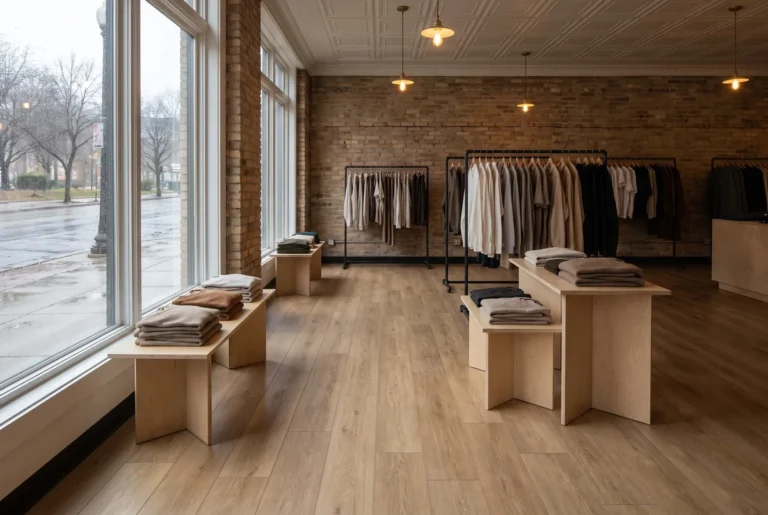
The best flooring for a retail store is commercial LVT on the sales floor with a real walk-off zone inside the door and slip-resistant tile or entry carpet tile at the entrance. LVT handles carts and steady foot traffic, comes in wood, stone and concrete looks, and a damaged plank can be replaced on its own.
- Entrances and walk-off zones: Plan a long run of walk-off matting or entry carpet tile inside the door. Every step it catches is grit and salt that never reaches the sales floor.
- Sales floor: LVT is the all-around pick. A concrete-look LVT gives an industrial brand the look of polished concrete with a softer, quieter surface. Carpet tile suits quiet boutiques and fitting rooms.
- Checkout and service counters: Staff stand here all day. Anti-fatigue mats on a resilient floor help more than a softer floor everywhere.
- Back of house: Stockrooms and break rooms need a tough surface that mops clean. Commercial LVT is a common choice, and it skips the regular stripping and waxing VCT needs to look right.
- Slip resistance: Ask for slip-resistant surfaces near doors and in any wet zone. Matte textures are safer than high gloss once winter slush comes in.
Your store can keep trading while the floor goes in. Our guide to commercial flooring installation without shutting down shows how the work is phased zone by zone around your hours.
Best Flooring for Offices
The best flooring for most offices is carpet tile in work areas and conference rooms with LVT in the lobby, break room and main walkways. Carpet tile keeps an open office quieter and lets you swap a stained tile, while LVT takes rolling chairs, coffee spills and the heaviest foot traffic.
Private offices and executive suites can carry engineered hardwood when the look matters most, as long as it stays out of entries and break rooms. For the full head-to-head, see carpet tile vs LVP for offices, and for open plans, our guide to quiet flooring for open offices explains the IIC and STC sound ratings.
Best Flooring for Hair Salons
The best flooring for a hair salon is a smooth, stain-resistant floor, usually glue-down commercial LVT on the styling floor, with slip-resistant porcelain tile and epoxy grout at the shampoo bowls and anti-fatigue mats at each station. Hair has to sweep up in seconds, so carpet and deeply textured tile are poor fits on the working floor.
- Hair color and chemicals: Dyes and some salon chemicals can stain certain floors permanently. Ask for the product’s stain resistance data and test a sample with the color line you use before you commit.
- Styling chairs: Hydraulic chair bases are heavy and pivot in one spot all day. A thick wear layer, or a glue-down floor instead of a floating one, holds up better under them.
- Shampoo area: Water and product land on the floor here. Choose a textured, slip-resistant surface and keep the seams to a minimum.
- Reception and retail shelves: LVT or carpet tile, matched to the look of the rest of the space.
Best Flooring for Restaurants and Cafés
Restaurants usually split the floor in two: quarry tile or slip-resistant porcelain tile in the kitchen and dish area, and LVT or tile in the dining room. Carpet near the kitchen door or the bar holds spills and odor.
Our full guide to the best flooring for restaurants and cafés in Wisconsin covers kitchens, bars and winter entries in detail. If you are planning a spring restaurant flooring renovation, our Madison guide covers timing and phasing.
Best Flooring for Clinics and Medical Offices
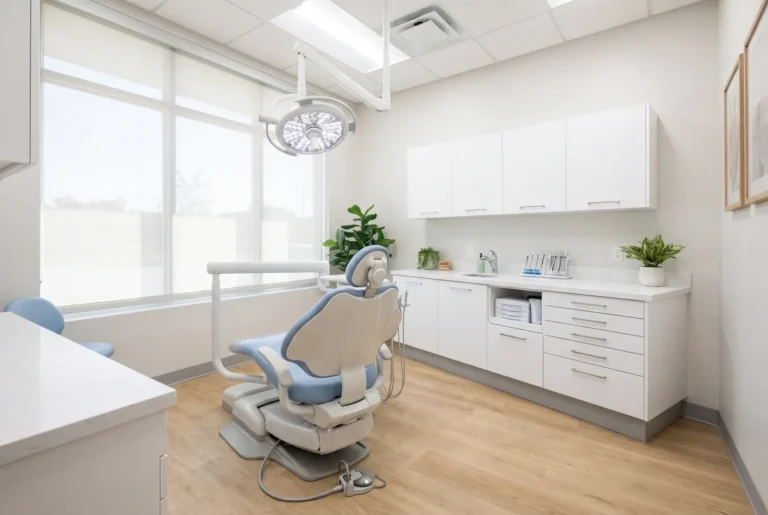
Most clinics do best with glue-down commercial LVT and a sealed perimeter in exam rooms, corridors and waiting rooms, with carpet tile in private offices. Procedure or sterilization rooms whose codes call for a seamless coved floor need a specialty system, which Harmony Flooring does not supply. The floor has to survive daily disinfectants, rolling stools and carts without opening seams.
We cover exam rooms, labs and waiting areas room by room in our medical office flooring guide.
Commercial Floors in a Wisconsin Winter
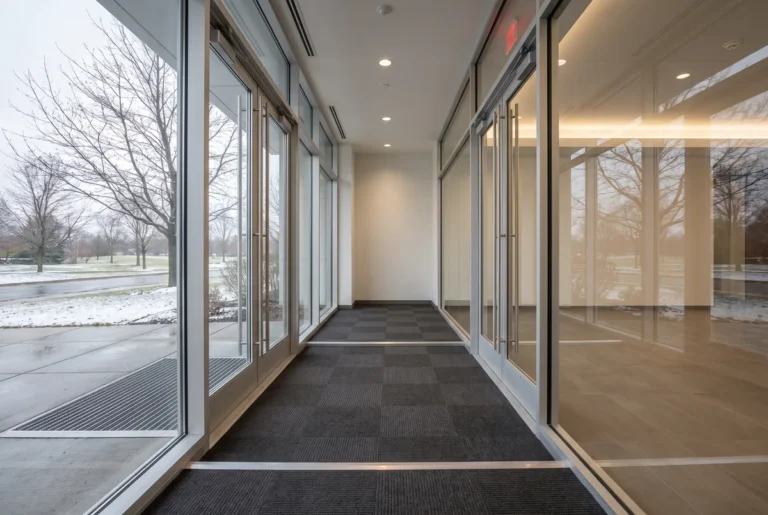
In southern Wisconsin, the entrance is where commercial floors wear out first. Salt season runs November into April, and every customer carries grit and slush across the first stretch of floor.
- Walk-off first: A long walk-off zone of entry mat or entry carpet tile protects every floor behind it, and the Carpet and Rug Institute advises mats both outside and in. The longer the zone, the less grit reaches the sales floor.
- Tile at the door: Choose commercial tile with a wet DCOF of 0.42 or higher, the ANSI A326.3 benchmark for level interior floors that will be walked on wet.
- Salt haze: Ice melt leaves a white film on LVT and other resilient floors. Damp mopping with the manufacturer’s neutral cleaner removes it; harsh cleaners can dull the wear layer.
- Slab moisture: Many storefronts sit on concrete slabs. Before a glue-down floor goes in, a testing firm or your general contractor should test the slab for moisture (ASTM F2170 is the common in-slab relative humidity test), and the flooring maker’s limit decides what can go down.
How to Choose Commercial Flooring
Choosing commercial flooring comes down to five questions about how the space really runs.
- What rolls, drags or drops on it? Carts, pallet jacks, rolling chairs and salon chairs need a harder, thicker floor than foot traffic alone.
- How wet does it get? Entries, restrooms, kitchens and shampoo areas need slip resistance and few seams.
- How loud can it be? Offices and classrooms need carpet tile or an acoustic backing; a showroom can live with a hard floor.
- Who cleans it, and with what? Match the floor to your cleaning team’s equipment and chemicals, not the other way around.
- How long can the space be closed? Phased work lets most businesses stay open, which can shape which floors make sense.
Lifecycle matters more than first cost. A floor that cleans faster every night and lasts through an extra lease term usually returns more than a floor chosen on the bid alone.
How a Commercial Flooring Project Works With Harmony
A commercial project with Harmony Flooring runs in five steps, and the same project manager stays with you the whole way.
- Walkthrough and measure: Your project manager tours the space, takes measurements, checks the subfloor and learns how the business operates.
- Specs, submittals and a written bid: If an architect wrote a spec, we price the floors in it that we supply; if not, we help you choose the floor. Either way, submittals and the bid come to you in writing.
- Scheduling: The order of work is planned around customers, tenants or opening hours, and you review it before work starts.
- Phased installation: The installers we coordinate move area by area so the business keeps operating.
- Final walkthrough: You tour the finished floor with your project manager, and punch list items get taken care of.
Keep Reading
- Office Flooring: Carpet Tile vs LVP
- How to Choose Flooring for High-Traffic Businesses
- 2026 Commercial Flooring Trends for Madison Businesses
- Commercial Flooring in Madison, WI: how we help businesses plan floors, including office and retail flooring in Madison
Flooring That Works as Hard as Your Business
The right commercial floor is the one your customers never think about and your cleaning team can keep up with. If you are planning a new space or a renovation anywhere within about 45 minutes of the Capitol, Harmony Flooring can walk it with you, match each zone to the right floor and coordinate the install around your hours.
Harmony Flooring: Covering Every Detail.
Sources: TCNA: ANSI A326.3 and DCOF, ASTM F2170 and Carpet and Rug Institute: Cleaning and Maintenance.
Commercial Flooring Questions
What is the best commercial flooring?
For most businesses, commercial LVT is the best all-around floor. It handles heavy traffic, mops clean and comes in wood, stone and concrete looks. Carpet tile is the better choice where quiet matters, and slip-resistant commercial tile belongs at entries and restrooms.
What is the best flooring for a retail store?
Commercial LVT on the sales floor is the best fit for most stores. Add a long walk-off zone at the entrance to trap salt and snowmelt. A concrete-look LVT gives a modern brand that look with a quieter, softer surface.
What are the main commercial flooring options?
The main options are carpet tile, luxury vinyl tile (LVT), rubber, quarry tile, linoleum, porcelain or commercial tile, polished concrete and epoxy. Most buildings use two or three of them, chosen zone by zone for traffic, water and noise.
What is the best flooring for a hair salon?
A smooth, stain-resistant floor such as glue-down commercial LVT works best on the styling floor, because hair sweeps up fast and spills wipe away. Test a sample against your hair color line before you buy, since some dyes stain certain floors. Add slip resistance at the shampoo bowls and anti-fatigue mats at each station.
Is polished concrete a good floor for a retail store?
It can be in a large, open store that already has a sound slab and wants an industrial look. It is very durable but hard, cold and loud, and it can be slippery when wet near the door. Many stores get the same look from a concrete-look LVT that is quieter and easier on staff.
What makes flooring commercial grade?
Commercial grade means the product is built and rated for commercial traffic, not just styled for it. Look for carpet tile with commercial fiber and backing, vinyl with a thicker wear layer (MSI lists 20 mil and up as its commercial tier), and tile rated for wet slip resistance. Ask for the manufacturer’s commercial spec sheet before you compare bids.
Planning New Floors in the Madison Area?
Get a free in-home estimate. We measure, bring samples to your kitchen table and give you one written price. No obligation.
Call or text 608-221-5500Schedule a Free Visit
Shop our floors: Hardwood · Vinyl · Carpet · Tile · Laminate
Showroom: 2125 S. Stoughton Rd, Madison, WI 53716
You Might Also Like
-
-
-
- Commercial Flooring
- Floor Care and Cleaning
November 10, 2026
Commercial Entrance Matting and Floors for Wisconsin Winters

