- Blog
2026 Commercial Flooring Trends for Madison Businesses
April 16, 2026
What’s Driving Commercial Flooring Trends in 2026
If you manage a commercial space in Madison, what’s on the floor matters more than most people realize. Business owners and property managers are making different choices in 2026 than they were just a few years ago, and the reasons go beyond aesthetics. See our commercial flooring page.
The commercial flooring trends for 2026 center on three priorities: durability, design that reflects brand and culture, and materials that meet growing sustainability expectations. The good news is that today’s options deliver on all three simultaneously.
Here’s what’s gaining traction this year, and how it applies to commercial spaces across Madison and the surrounding area.
Trend 1: Luxury Vinyl Tile (LVT) Remains the Dominant Choice
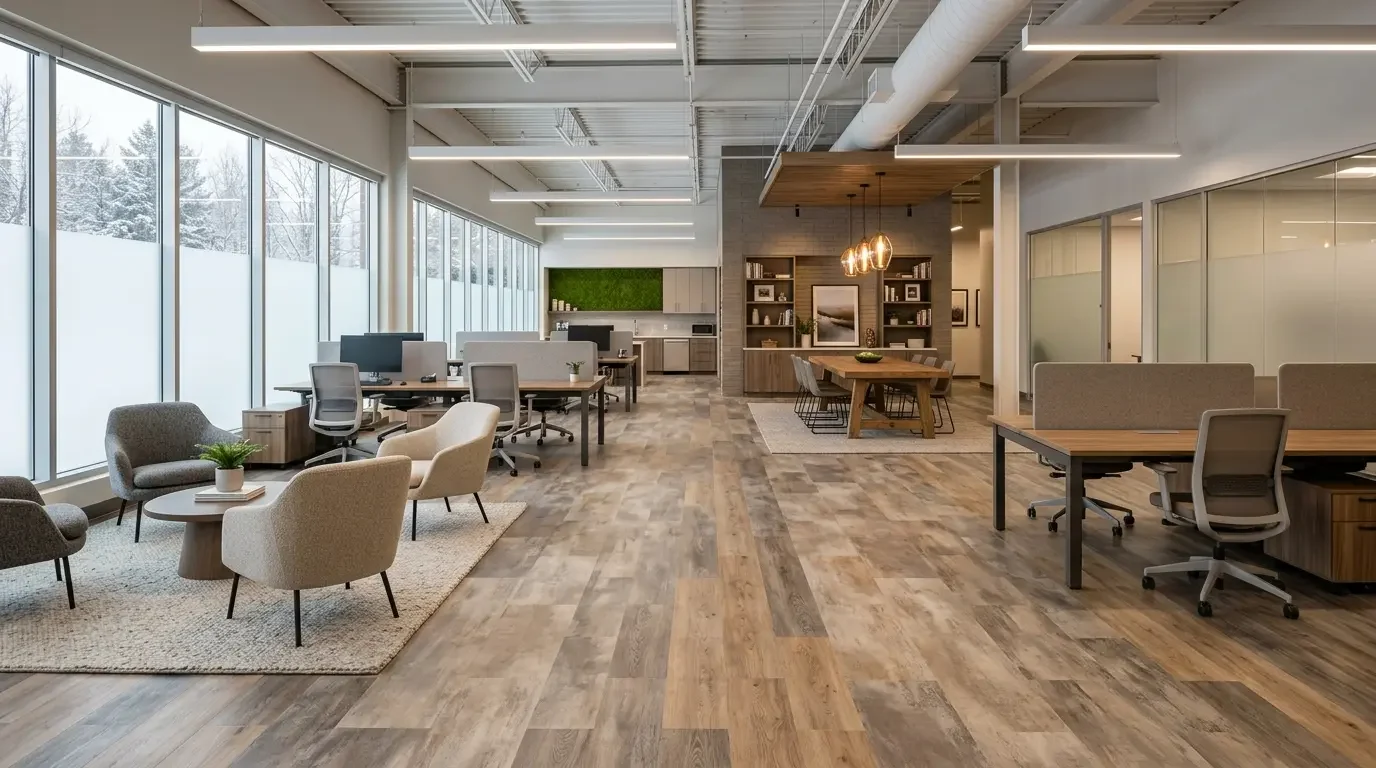
Luxury vinyl tile has held the top spot in commercial flooring for several years, and 2026 is no different. For high-traffic spaces like retail floors, office common areas, and healthcare reception lobbies, LVT delivers the right combination of performance and visual quality.
What’s changed is how convincing it looks. Today’s LVT mimics natural stone and wood with embossed textures and matte finishes that hold up under heavy foot traffic. For businesses in Madison’s expanding commercial areas in Middleton and Sun Prairie, it’s a practical choice that doesn’t ask you to trade design for durability.
The key spec to understand: wear layer thickness. A thicker commercial-grade wear layer extends floor life significantly in high-traffic zones. This is worth discussing with a professional who knows your specific space and traffic patterns.
Trend 2: Biophilic Design Is Reshaping Commercial Interiors
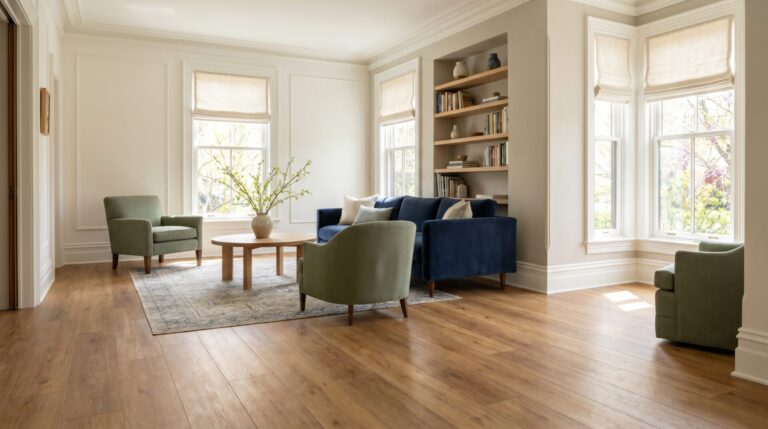
Biophilic design uses natural textures and earthy tones to create calmer, more grounded spaces. It’s moved from boutique hotels and high-end offices into everyday commercial settings, and in 2026 it’s showing up in medical offices, professional services firms, and retail environments alike.
On the floor, this means muted greens, warm neutrals, and slate grays. Wood-look planks, stone-look tile, and natural fiber-inspired carpet tiles all fit this direction. The effect is a space that feels intentional and welcoming rather than institutional.
For office tenants in Madison and Fitchburg looking to create environments that attract and retain employees, this kind of design investment pays off in how people feel when they walk in.
Trend 3: Carpet Tiles Are Back, and They’re Different This Year
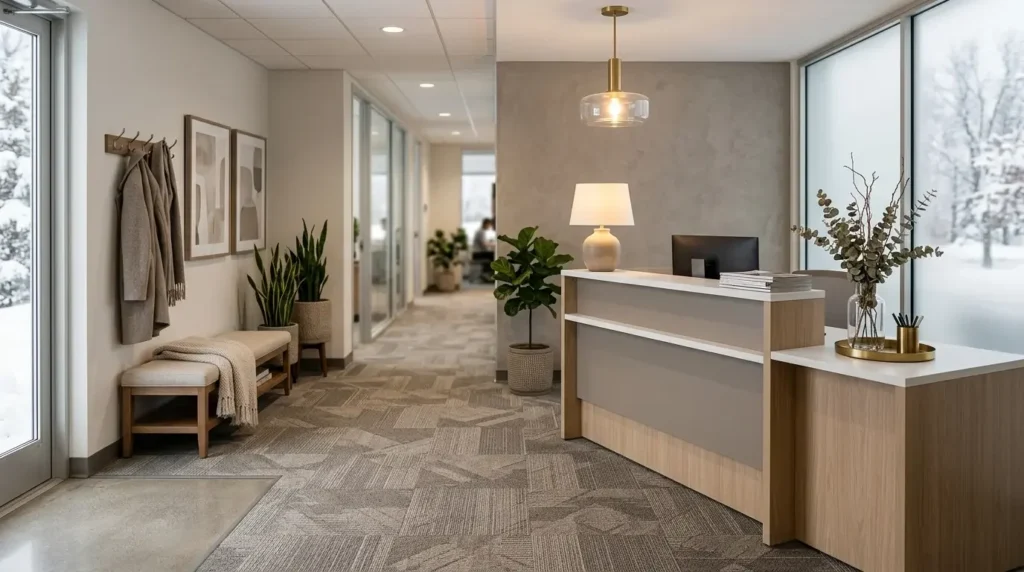
Commercial carpet tiles have had a reputation problem for years. That’s changing. The 2026 designs are geometric, textured, and layered, which is a significant departure from the flat utility tiles that gave the category a bad name.
What makes them practical for commercial spaces is the modular replacement model. When one tile wears out or stains, you replace that section rather than the entire floor. For conference rooms, hotel lobbies, and corporate offices, that’s a meaningful advantage in both cost and downtime.
They’re also being used strategically to zone open-plan offices without building walls, creating defined areas for collaboration, focused work, and circulation.
Trend 4: Wide-Plank Wood and Wood-Look Options
Wide-plank hardwood and engineered wood is a strong choice for commercial spaces that want warmth and visual weight. The 2026 preference runs toward lighter tones, natural oak finishes, and low-sheen or matte coatings rather than the dark stains that dominated the previous decade.
For spaces where real hardwood makes sense, such as executive suites, showrooms, or reception areas, wide-plank creates a premium impression that resonates with clients.
In Wisconsin’s commercial buildings, moisture and temperature variation can make solid hardwood unpredictable. Engineered hardwood or LVT with a wide-plank profile delivers the same visual result with better performance under those conditions. Our team can help you identify which option makes sense for your specific building and use case at harmonyflooring.com/commercial/.
Trend 5: Sustainability Has Become a Baseline Requirement
A few years ago, sustainable flooring was a differentiator. Now it’s a baseline expectation for many commercial tenants and property owners in Madison.
In 2026, that means looking for flooring with low or zero VOC emissions, recycled content, and transparent sourcing. Certifications like GREENGUARD Gold matter to organizations that have made environmental commitments, and they’re increasingly appearing in commercial lease and procurement requirements.
There’s also a practical benefit: low-VOC materials improve indoor air quality in spaces where people spend long hours. Office tenants, healthcare facilities, and schools are the most active buyers in this category, but it’s becoming relevant across all commercial segments.
Trend 6: Matte and Textured Finishes Are Replacing High-Gloss
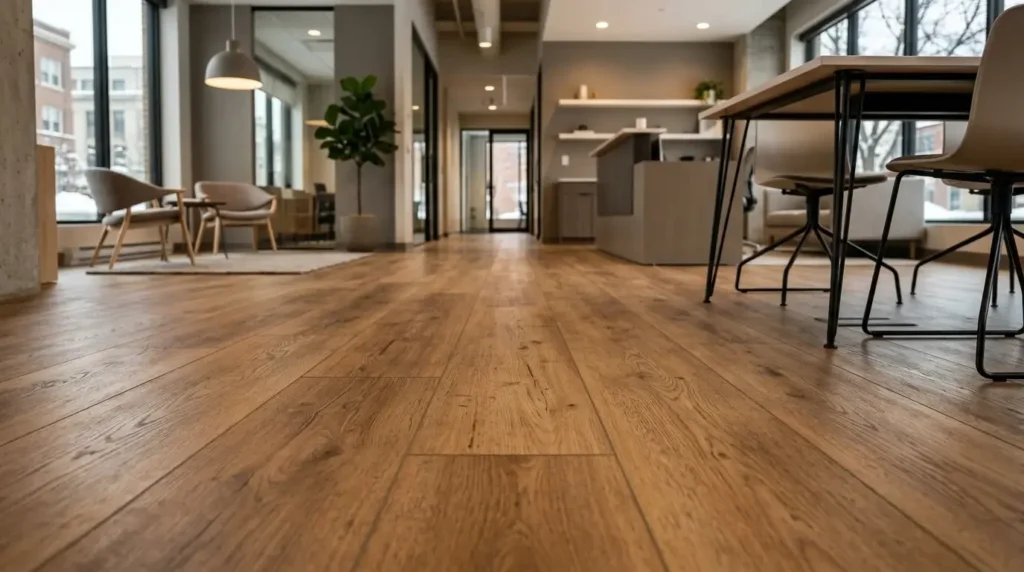
High-gloss flooring is on its way out across commercial design categories. Matte finishes have taken over in hardwood, LVT, tile, and polished concrete, and for good reason.
A matte finish hides scratches and scuffs better than a glossy surface. That means it holds its appearance longer between professional maintenance visits, which matters for busy commercial spaces. It also reduces glare in environments with significant natural or artificial light, a real quality-of-life improvement in open-plan offices and retail floors.
If your current commercial flooring shows every footprint and scuff mark, the shift to matte finishes is worth factoring into your next project.
What’s Built to Last vs. What’s a Short-Term Direction
Not every 2026 design trend will still feel fresh in five years. Here’s an honest perspective.
What’s worth building around:
- LVT with realistic texture and a quality wear layer: a proven category that keeps improving
- Matte finishes: transitioning from trend to standard, unlikely to reverse
- Sustainable materials with certifications: driven by regulatory and tenant pressure, not going away
- Wide-plank formats: a consistent preference over the past decade, not a moment
Worth considering carefully:
- Bold geometric carpet tile patterns: distinctive now, but can read as date-specific in a few years
- Heavy biophilic theming throughout: effective in the right space, but easy to overdo
- Mixed-material installations with strong contrast: high impact when executed well, harder to update when styles shift
The smart approach for most Madison businesses: anchor the design in quality materials with a neutral base. Let the trend elements come through in color, texture, or secondary flooring zones rather than locking the whole floor into a single direction.
Keep Reading
- Best Commercial Flooring Choices for Offices and Retail Spaces
- Quiet Flooring Solutions for Open Office Designs
- Commercial Flooring in Madison, WI: how we help businesses plan floors
FAQ: Commercial Flooring Trends for 2026
What’s the best flooring for a commercial office in 2026?
LVT is the most versatile option for most office environments. It’s durable, waterproof, available in a wide range of wood and stone looks, and handles the foot traffic and maintenance cycles that commercial spaces demand. Carpet tiles are a strong complement in conference rooms, private offices, and collaborative zones where acoustics matter.
Are carpet tiles actually making a comeback in commercial spaces?
Yes, and it’s not just nostalgia. The new generation of commercial carpet tiles offers a level of design quality and flexibility that the older product didn’t. The modular replacement advantage is real, and the pattern options available in 2026 are genuinely distinctive. They’re worth revisiting if your last exposure to carpet tile was a decade ago.
How do I choose flooring that holds up to heavy foot traffic?
Focus on wear layer thickness for LVT, surface hardness ratings for tile, and pile density for carpet. The right spec varies by space and traffic pattern. A professional assessment of your specific floor areas will give you a more accurate recommendation than any general guide can. We handle that evaluation as part of the Design · Measure · Install process.
How disruptive is commercial flooring installation, and how long does it take?
It depends on the scope, the materials selected, and how the project is phased. Many commercial installations can be scheduled around your business operations, including evening and weekend work or a room-by-room approach that keeps disruption contained. Spring is a popular window for commercial flooring projects in Madison, when construction schedules open up and businesses plan ahead before the busy summer season.
Ready to Plan Your 2026 Commercial Flooring Project?
If you’re managing a commercial space in Madison, Verona, or the surrounding area, the best move right now is to start the conversation before project season fills up. Our team works through the full process, Design · Measure · Install, so you know exactly what you’re getting before any work begins.
Covering Every Detail is how we approach every commercial project, from a single-suite refresh to a full building renovation. Reach out at harmonyflooring.com/contact/ or call us at 608-221-5500 to schedule a consultation.
For more on what to look for in a commercial flooring partner, see our guide at harmonyflooring.com/best-commercial-flooring-choices-for-offices-and-retail-spaces/.
Harmony Flooring is a Madison, Wisconsin flooring company serving homeowners and businesses across Dane County. Our team specializes in hardwood, luxury vinyl plank, tile, carpet, and custom installations. We follow a Design · Measure · Install process to make sure every project fits the space, the home, and the people who live in it.
Questions About Your Floors?
Call or text 608-221-5500Schedule a Free Consultation
Shop our floors: Hardwood · Vinyl · Carpet · Tile · Laminate
Showroom: 2125 S. Stoughton Rd, Madison, WI 53716