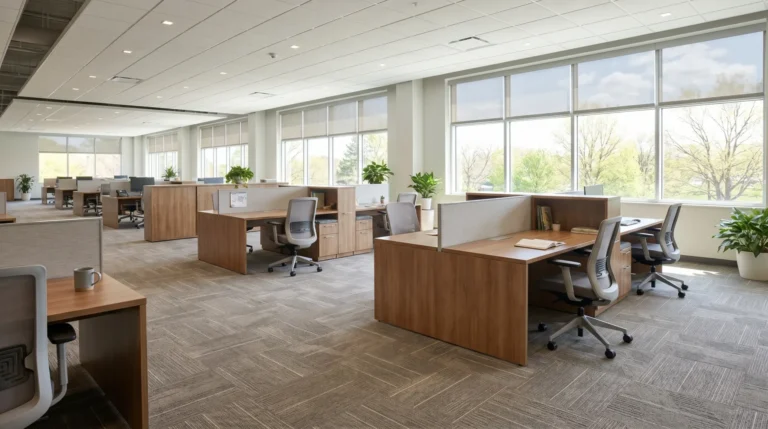
- Commercial flooring
Spring Flooring Renovations for Madison Hotels and Restaurants
April 27, 2026
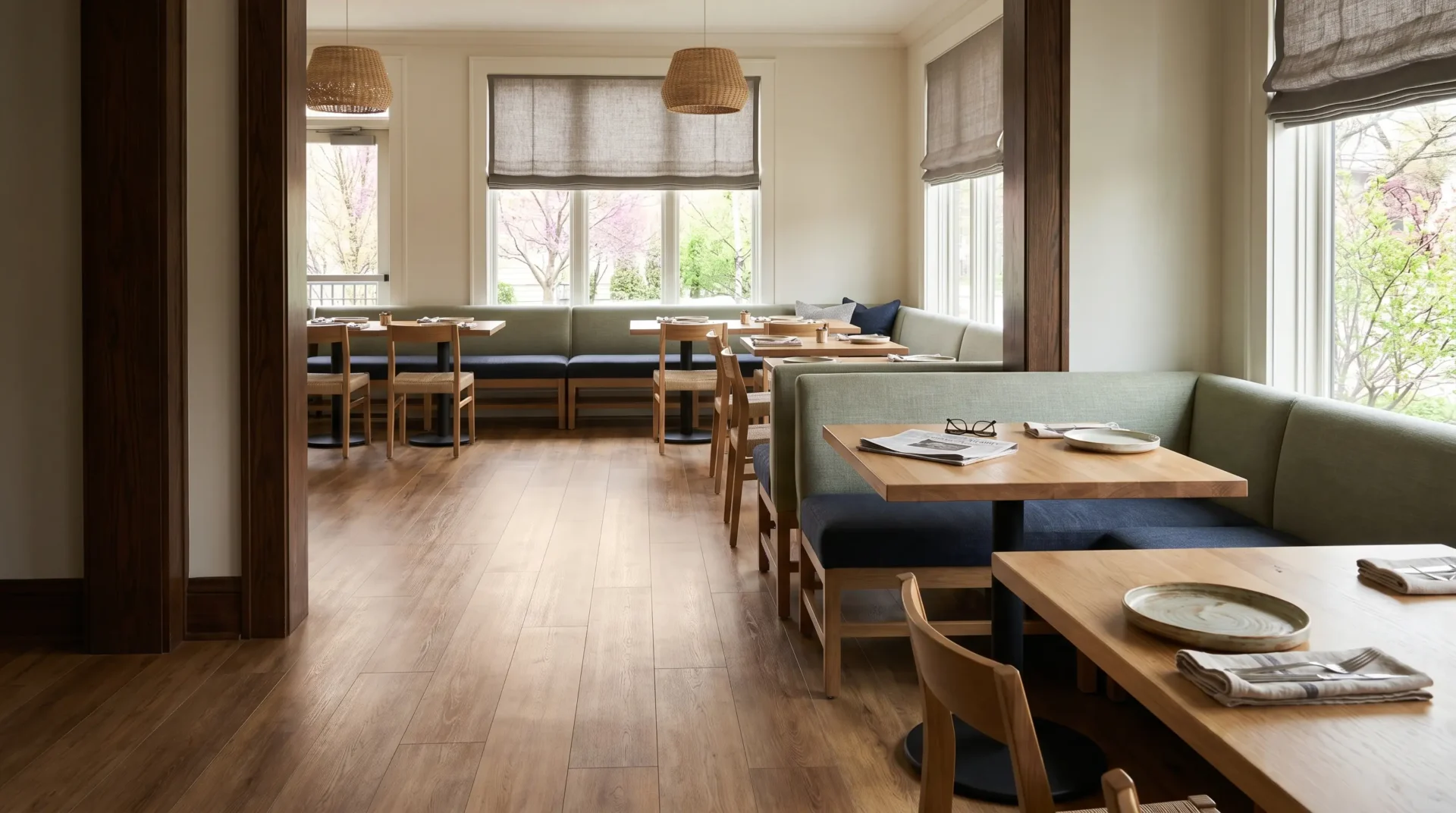
April hits Madison and everything shifts. Patio season is about to open, summer travel weekends fill up fast, and the lobby, dining room, or guest-room flooring that looked tired in February suddenly has a deadline. For hotel and restaurant owners across Madison, Middleton, and Sun Prairie, the window between now and early June is the one calm stretch of the year to handle commercial flooring renovations without fighting the calendar. Wait, and you’re renovating during your busiest months. See our commercial flooring page.
Why April Through Early June Is the Smart Renovation Window
Spring is the best time to renovate flooring in a Madison hotel or restaurant because it lands in the shoulder season between winter lulls and summer travel peaks. Installers have availability, products are in stock, and the work wraps before patio season, graduations, tournaments, and summer weekend bookings push occupancy and covers toward their annual highs.
Late April through early June is the practical window. By mid-June, wedding weekends, Ironman season, and steady leisure travel hit Madison hard. Restaurants downtown and in Middleton start running full-rotation patio covers. Putting up floor protection, moving furniture, and sending installers through a dining room during that stretch costs revenue in ways that a quieter April never does.
There’s also a practical reason tied to the trade itself. Installers across Wisconsin are booked lightest in early spring. That means better scheduling, experienced installers on your job, and fewer weather-driven delays compared to the November and December rush of year-end commercial installs.
Commercial Flooring Renovation Planning, Zone by Zone
Guest-facing flooring rarely fails all at once. It usually shows wear in one or two zones while the rest still reads fine. Walking the property with a professional and planning by zone, rather than replacing everything, is how most Madison hotels and restaurants actually move forward.
Entry and lobby. This is where guests form a first impression, and where salt, slush, and sand do the most damage in Wisconsin. Porcelain tile with a slip-rated finish holds up to tracked-in moisture without looking utilitarian. Rigid-core luxury vinyl tile with enhanced wear layers is another strong option for boutique hotels and restaurants that want a warmer look without the stone maintenance profile.
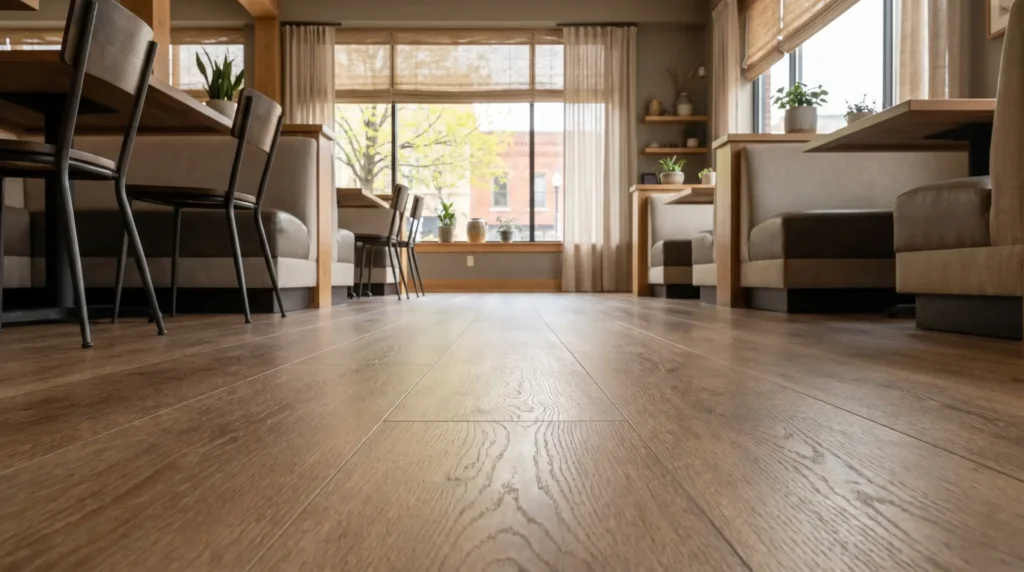
Dining rooms and bars. Rigid-core LVT is doing the work in most hospitality renovations right now. It handles rolling bus carts, dropped glassware, and nightly deep cleans. Engineered hardwood still fits upscale concepts where look and acoustics matter. Solid hardwood can work in dry, well climate-controlled dining rooms, but it’s not the default for a full-service restaurant.
Guest rooms and corridors. LVT replaced carpet in the majority of mid-scale and upscale brand PIPs over the last few years. It reads cleaner, lasts longer, and handles the moisture from wet swimsuits and boots. Where properties keep carpet, tighter loop constructions and stain-protected fibers age better than plush residential-style carpet.
Back-of-house and kitchens. Quarry tile and properly specified resinous systems dominate commercial kitchens in Madison. They handle grease, high temperatures, and daily power washing. This is where corner-cutting hurts the most. A bad kitchen floor shows up on health inspections and in injury reports.
If you’re not sure which zones are ready for renovation and which can wait another year, that’s exactly what a walk-through is for. You can explore your options with us before committing to anything.
Renovating Without Closing the Business
Most Madison hotel and restaurant owners cannot fully close during a flooring renovation. The question isn’t whether to stay open. It’s how to sequence the work so guests and covers keep moving.
A few approaches that actually work:
- Phase by zone. Renovate the lobby this spring, the dining room next spring. Or close one dining section at a time while the rest operates normally.
- Overnight and off-hours installs. Some products, particularly floating LVT and certain tile systems, install fast enough to wrap in overnight windows. Not every product or subfloor allows this, but it’s worth asking about.
- Coordinate with slow days. Most restaurants have a slowest day of the week. Most hotels have a midweek dip. Sequencing install days around those patterns cuts guest impact sharply.
- Clear communication. Simple signs that explain the work, what’s affected, and when it wraps keep guests and diners from assuming the worst.
What professional commercial installers look for in the planning phase is worth knowing. Subfloor condition is the single biggest variable. An uneven subfloor, a cracked slab, or a moisture issue can turn a four-day install into a ten-day install. A walk-through before you commit to timing catches most of those surprises.
Wisconsin-Specific Factors to Plan Around
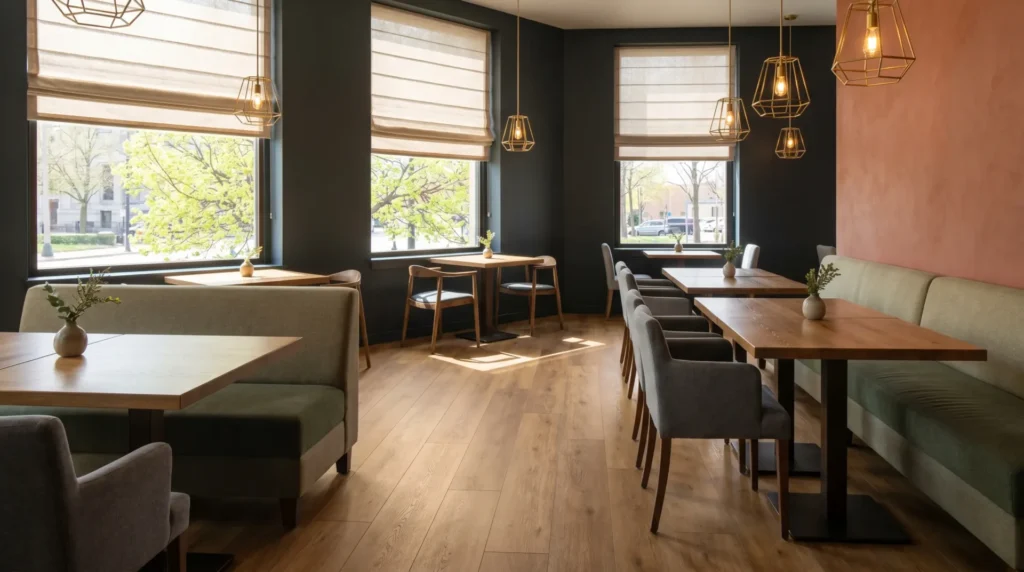
Madison’s climate shapes hospitality flooring in ways that national brand specs don’t always account for. Three to plan around:
- Salt and ice-melt residue. From November through April, exterior entry mats absorb most of it, but not all. Entryway flooring needs to tolerate chloride without pitting or clouding. Specify porcelain, dense LVT, or sealed quarry tile in high-traffic exterior zones.
- Humidity swings. Summer humidity spikes in Madison. Winter interiors, between forced-air heating and fireplace use, run dry. Solid hardwood moves more here than in milder regions. Engineered hardwood and LVT are the steadier choices in most hospitality applications.
- Freeze-thaw impact on slabs and subfloors. Older Madison commercial buildings, especially downtown and on the near east side, often sit on slabs that have shifted over decades. A moisture test and flatness check before install prevents tile cracking and LVT telegraphing later.
These are the kind of details a Madison-based flooring company flags before the first product sample hits your desk. A national catalog recommendation doesn’t know what your building is dealing with.
Keep Reading
- 2026 Commercial Flooring Trends for Madison Businesses
- Best Flooring for Restaurants and Cafés in Wisconsin: Durable, Slip-Resistant, and Easy to Clean
- Commercial Flooring in Madison, WI: how we help businesses plan floors
Frequently Asked Questions
When is the best time to renovate flooring in a hotel or restaurant?
For most Madison properties, late April through early June is the best window. Work happens before the summer travel and patio-season peak, and installer availability is stronger than in late fall or winter.
How do you replace flooring without closing the business?
Most hospitality projects use a phased approach. Zones or sections are renovated in sequence, work is scheduled around slowest days or overnight windows where possible, and guests are informed in advance. A professional walk-through is where that sequencing plan starts.
What’s the best flooring for a hotel lobby in Wisconsin?
Porcelain tile with a slip-rated finish and rigid-core luxury vinyl tile with enhanced wear layers both perform well in lobbies that face salt, slush, and heavy foot traffic. The right pick depends on the property’s design direction, traffic patterns, and maintenance capacity.
How long does a commercial flooring installation take?
It varies by square footage, product, and subfloor condition. A small dining room section can wrap in two or three nights. A full lobby or multi-floor corridor project may take one to three weeks. Subfloor surprises are the main variable that extends timelines.
Locking In Your Spring Window
Spring only lasts so long, and the Madison hotel and restaurant owners who move fastest are already walking their properties and narrowing product choices now. Getting the measure done, the design locked, and the installers booked in the next few weeks is what keeps the install window in April, May, or early June instead of slipping into the busy season.
Harmony Flooring handles commercial flooring for hotels, restaurants, and hospitality venues across Madison, Middleton, Fitchburg, and the surrounding area. We walk the property, match each zone to the right material, and install on a schedule that works around your operation. Covering Every Detail, from first consultation through final walkthrough.
Ready to plan your spring commercial flooring renovation? Schedule a consultation and we’ll help you start the conversation.
Questions About Your Floors?
Call or text 608-221-5500Schedule a Free Consultation
Shop our floors: Hardwood · Vinyl · Carpet · Tile · Laminate
Showroom: 2125 S. Stoughton Rd, Madison, WI 53716