- Blog
Medical Office Flooring in Madison: A Buyer’s Guide
July 14, 2026
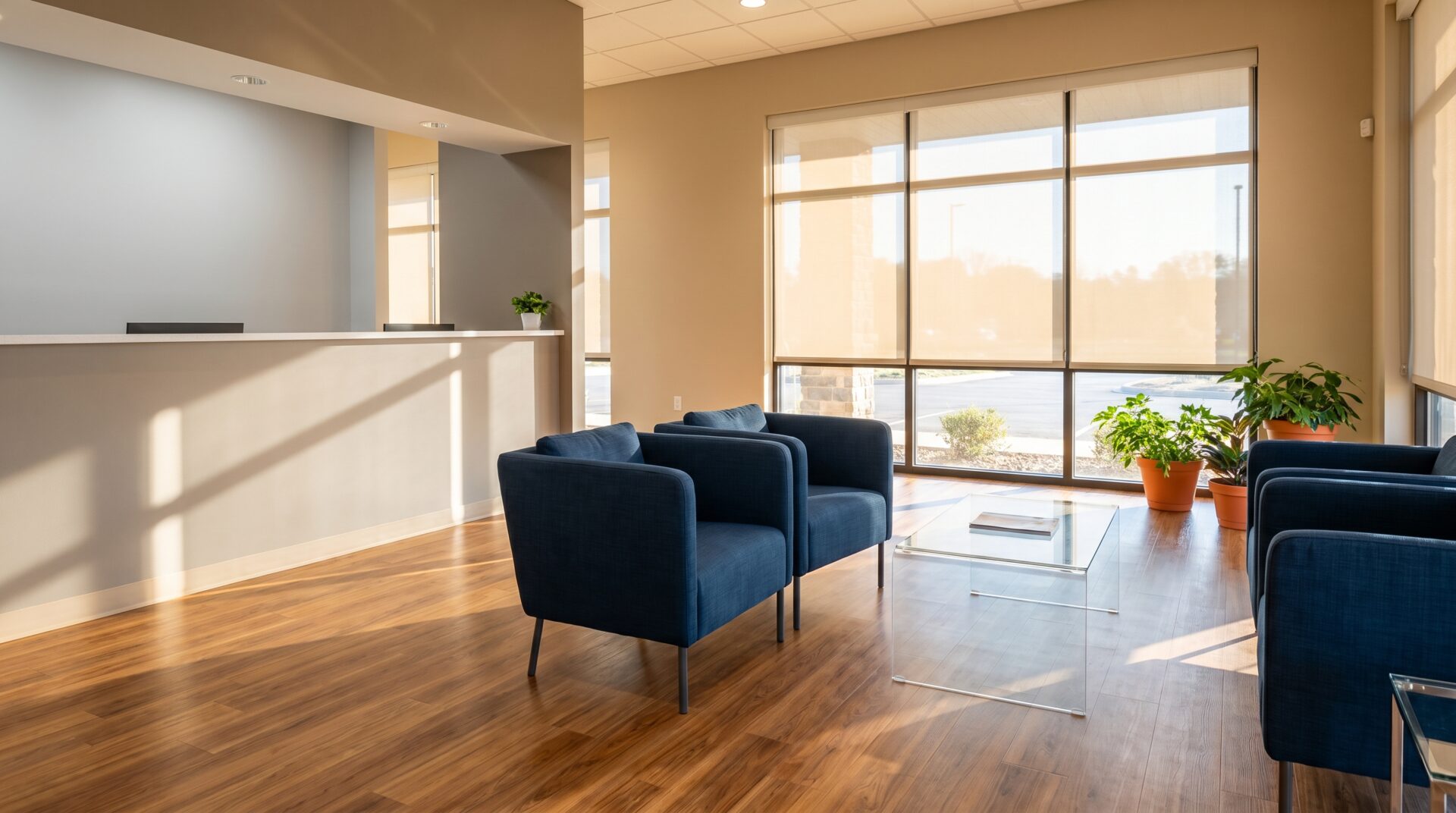
Choosing medical office flooring is a different job than choosing any other commercial floor. The surface under your practice has to satisfy infection control, survive rolling chairs and carts all day, quiet a busy hallway, and still feel welcoming to an anxious patient in the waiting room. Most flooring guides are written for hospitals. If you manage a private medical, dental, or veterinary practice in the Madison, WI area, this guide is written for you.
We’ll walk through the materials that work in healthcare spaces, how to match them room by room, and the planning details that keep your practice open while the floor goes in.
The Short Version: Sheet vinyl with heat-welded seams is the gold standard for exam rooms, operatories, and sterilization areas, because it eliminates the seams where contamination hides. Luxury vinyl tile handles waiting rooms and corridors with a warmer, more residential look. Carpet tile still earns its place in reception for acoustics and comfort.
Key Takeaways
- Infection control is decided at the seams, not the surface. Heat-welded sheet vinyl is the clinical-area standard for a reason.
- Luxury vinyl tile brings warmth and durability to patient-facing spaces without sacrificing cleanability.
- Rolling loads, from dental chairs to supply carts, punish soft or flexible floors. Spec for wheels, not just feet.
- Acoustics shape how a practice feels. Hard floors everywhere make a small clinic sound chaotic.
- A phased installation plan means most practices never need to close.
The Best Medical Office Flooring Options
Sheet vinyl. The workhorse of clinical spaces. Commercial sheet vinyl installs in large rolls with heat-welded seams, creating a continuous, impervious surface that mops, disinfects, and never gives fluids a place to hide. It can also be flash-coved, turning the floor up the wall a few inches to eliminate the hardest-to-clean joint in the room. For exam rooms, operatories, labs, and sterilization areas, this is the spec we reach for first.
Luxury vinyl tile (LVT). LVT delivers wood and stone looks that make waiting rooms and corridors feel more like hospitality than healthcare, and patients notice. It’s durable, water-resistant, and quieter underfoot than older hard-surface options. The trade-off versus sheet vinyl is seams, which is why we position LVT in patient-facing and administrative areas rather than clinical ones.
Rubber flooring. Rubber is the comfort-and-quiet specialist. It absorbs footfall noise, cushions staff who stand all day, and shrugs off rolling traffic. It’s a strong choice for corridors, treatment areas in veterinary clinics, and anywhere staff fatigue is a daily reality.
Carpet tile. Carpet still belongs in medical offices, just in the right zone. In reception and waiting areas, carpet tile softens acoustics, feels welcoming, and handles stains the modern way: when a tile is damaged, you replace that tile, not the room. Solution-dyed commercial fibers clean far better than the carpet most people remember.
Epoxy and resinous floors. For labs, mechanical areas, and back-of-house zones that see chemicals and heavy equipment, seamless epoxy systems are the heavy-duty answer. Our epoxy flooring guide covers where these systems make sense.
How to Choose Medical Office Flooring: Five Criteria
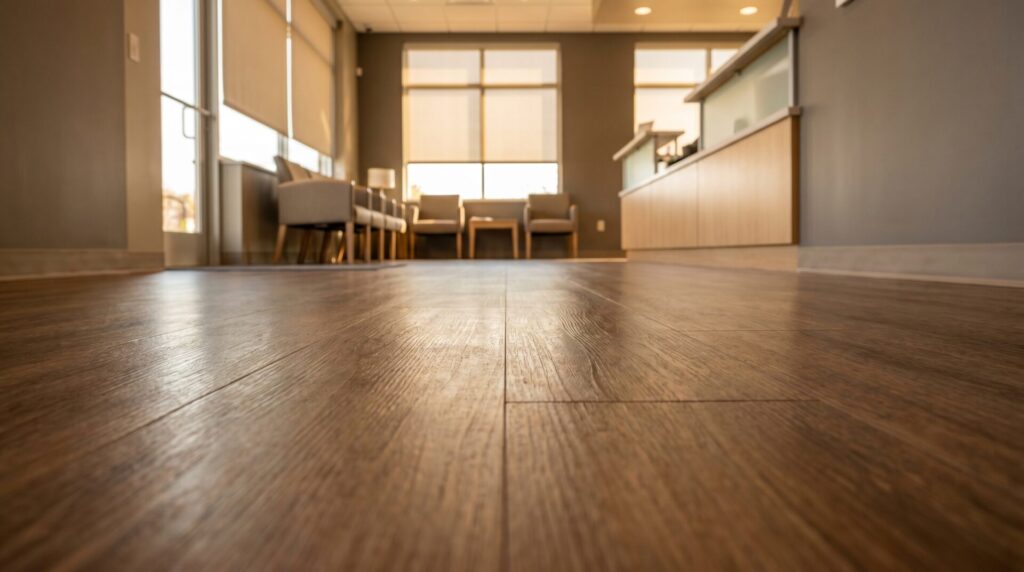
Cleanability and infection control. Here’s the insight that separates healthcare flooring from every other category: the surface material matters less than the seams between pieces. Every seam is a potential harbor for moisture and contamination, which is why clinical areas favor sheet goods welded into one continuous surface. When you evaluate any product for a clinical room, your first question should be about the seams, not the finish.
Rolling loads. Dental chairs, exam stools, supply carts, wheelchairs, portable imaging equipment. Wheels concentrate weight into small contact points, hour after hour. Floors rated for commercial rolling loads keep their surface; light-duty products develop tracks and indentations within the first year. This is the spec private practices most often miss.
Acoustics. Hard surfaces everywhere make a busy clinic loud, and sound carries conversations you’d rather keep private. Mixing in acoustic materials, carpet tile in waiting areas, rubber in corridors, acoustic-backed LVT in open zones, keeps the noise floor down and the patient experience calm.
Patient comfort and perception. Patients read your space before they read your credentials. Flooring that feels residential in the front of the house, warm wood-look LVT, soft waiting-area carpet, lowers the temperature of a visit. Clinical floors can live where clinical work happens.
Maintenance reality. Some floors look right on day one and demand burnishing, stripping, and waxing forever after. Modern sheet vinyl, LVT, and rubber have largely escaped that cycle. Ask what the floor needs in year three, not just how it looks at install.
Matching Floors to Spaces in a Medical or Dental Office
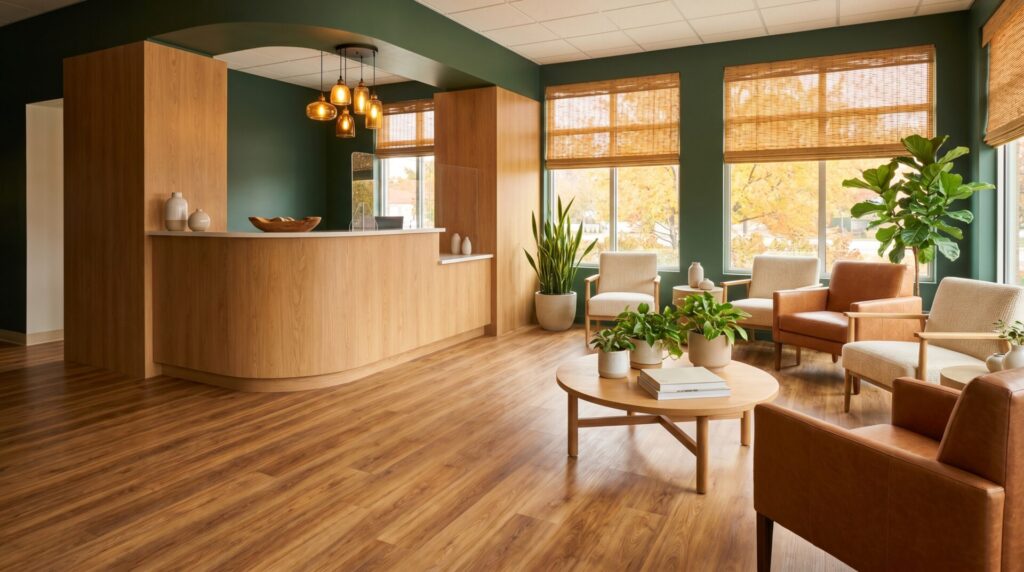
- Waiting room and reception: Carpet tile or wood-look LVT. Warmth, quiet, and easy section-by-section replacement.
- Exam rooms and operatories: Heat-welded sheet vinyl, flash-coved at the walls. Impervious, disinfectable, and built for rolling stools and chairs.
- Corridors: LVT or rubber, depending on traffic and noise goals. Both handle carts and wheelchairs well.
- Sterilization, labs, and utility: Sheet vinyl or epoxy, sealed and seamless.
- Private offices and consult rooms: LVT or carpet tile, matched to the front-of-house look.
This zoned approach is how practices around Madison, Middleton, and Sun Prairie get a space that performs clinically without feeling clinical everywhere. You can see the full range of what we install on our commercial flooring page.
What Drives the Investment
Square footage sets the baseline, but the real cost drivers in medical office flooring are preparation and detail work. Heat welding, flash coving, subfloor moisture mitigation on slab construction, and transitions between zones all take skilled labor, and they’re exactly the details that determine whether the floor performs for its full lifespan. Entry-level LVT in an administrative area and welded sheet goods in an operatory sit at very different points on the investment scale, which is why a room-by-room plan beats a single price per square foot.
The other cost most practices forget to count is downtime. A flooring plan that requires closing for a week costs more than the floor. That’s why phasing matters.
Staying Open During Installation
Most Madison-area practices we work with can’t simply close, and they don’t have to. Phased installation, weekend and evening work, and zone-by-zone scheduling let a clinic keep seeing patients while the floor goes in section by section. Low-odor adhesives and contained work areas matter in occupied healthcare settings, and they’re part of the plan from the start. We covered the approach in our guide to commercial flooring installation without shutting down.
If you’re planning a build-out, a refresh, or an expansion, talk through your project with us and we’ll help you map materials to rooms before any quotes get written.
Medical Office Flooring FAQs
What is the best flooring for a medical office?
Heat-welded sheet vinyl is the best flooring for clinical areas like exam rooms and sterilization spaces, because its seamless surface supports true infection control. Luxury vinyl tile and carpet tile are the best choices for waiting rooms and corridors, where warmth and acoustics matter more.
What flooring should go in exam rooms?
Commercial sheet vinyl with heat-welded seams, ideally flash-coved up the wall base. It creates one continuous, disinfectable surface that handles rolling stools, chairs, and daily cleaning chemicals without wearing down.
What is medical grade flooring?
Medical grade generally means seamless or heat-welded surfaces that are impervious to fluids, compatible with hospital-grade disinfectants, and rated for rolling loads. Sheet vinyl, rubber, and resinous systems are the most common materials that meet that bar.
What’s an easy-to-clean clinic floor that doesn’t demand heavy upkeep?
Modern commercial sheet vinyl and LVT both clean with routine mopping and avoid the strip-and-wax cycle of older tile. For most private practices, they deliver the lowest ongoing maintenance burden per square foot.
How much does medical office flooring cost?
It depends on the mix of zones. Welded sheet vinyl with coving is a premium clinical installation, while LVT and carpet tile in front-of-house areas sit at a more moderate tier. Subfloor condition and phasing also shape the number, so a walkthrough and room-by-room plan is the only reliable way to price it.
Can a medical or dental office stay open during a flooring installation?
Usually, yes. With zone-by-zone phasing, evening and weekend work, and contained installation areas, most practices keep operating through the project. Build the phasing plan before you pick the product.
How Harmony Flooring Works
- Design: We help you match materials to each zone of your practice, from the operatory to the waiting room.
- Measure: We come to you. A professional site visit checks subfloors, moisture, transitions, and the phasing realities of your schedule.
- Install: Our commercial team handles preparation, installation, and detail work like welding and coving, start to finish.
A medical office floor has to be two things at once: clinically serious where the work happens, and genuinely welcoming where patients wait. Get the zones right and the materials follow naturally. That’s Covering Every Detail, in the rooms where details matter most.
Ready to plan flooring for your practice? Schedule a consultation with our commercial team.