- Blog
Tile Flooring for Madison Homes: The Complete Guide
July 2, 2026
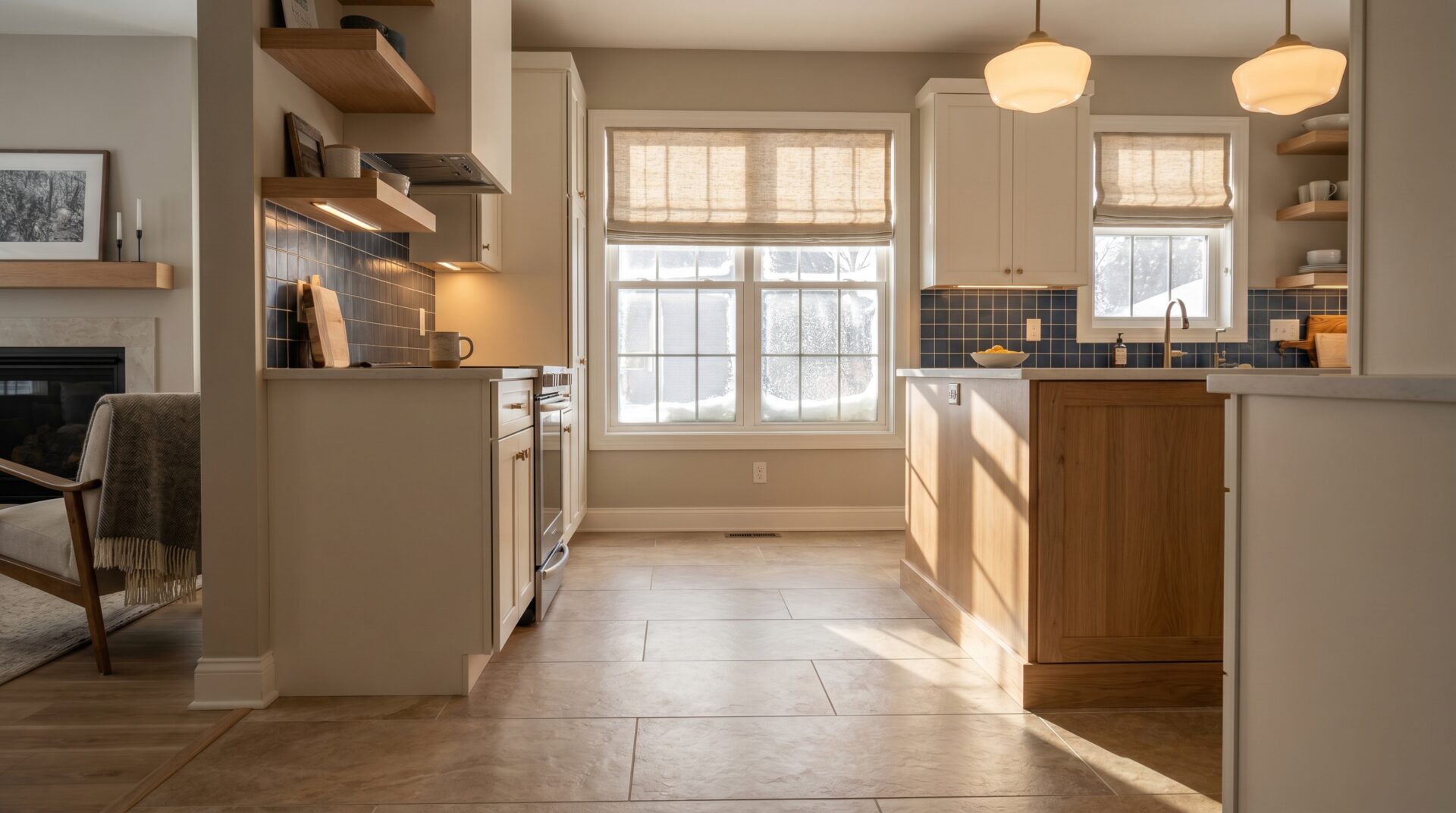
Tile flooring is the most durable surface you can put in a home, and in a Wisconsin climate that throws snow, slush, salt, and humidity at your floors for half the year, durability is not a small thing. Yet tile is also the category Madison homeowners have the most questions about. Porcelain or ceramic? Is natural stone worth it? Will it feel like an ice rink in January?
This guide answers all of it. Whether you’re planning a kitchen in Waunakee new construction, updating a bathroom in a Maple Bluff classic, or finishing a basement near the lakes, here’s everything we’d tell you in a consultation about choosing tile flooring in Madison, WI.
The Short Version: Tile flooring is the longest-lasting, most water-resistant floor available for Madison homes. Porcelain is the workhorse for floors, ceramic suits lighter-duty spaces, and natural stone delivers one-of-a-kind character with more upkeep. Pair tile with radiant heat and it goes from the coldest floor in the house to the warmest.
Key Takeaways
- Porcelain tile is the strongest all-around choice for floors, with the density to handle decades of traffic and moisture.
- Ceramic costs less and works well in lighter-duty rooms, but it’s more porous and less forgiving than porcelain.
- Natural stone is beautiful and unique, and it needs periodic sealing to stay protected.
- Wood-look porcelain planks deliver hardwood style in rooms where real wood shouldn’t go.
- Cold tile is solvable. Radiant heat makes tile the most comfortable winter floor in the house.
- Tile quality depends on installation quality. Subfloor prep makes or breaks a tile project.
Why Tile Flooring Works in Madison Homes
Tile flooring is fired clay or natural stone, finished into hard, water-shedding surfaces that outlast nearly everything else in the house. A properly installed porcelain floor serves for decades. Nothing else in the flooring world matches that combination of water resistance, scratch resistance, and lifespan.
That matters more here than in most places. From November through April, Madison floors deal with tracked-in snow, slush, sand, and salt. Entryways, mudrooms, kitchens, and bathrooms take daily moisture hits. Tile shrugs all of it off. Spills wipe up, salt residue mops away, and dropped boots leave no mark.
The trade-offs are real, too. Tile is hard underfoot, cold without help, and unforgiving to dropped glassware. The rest of this guide is about choosing the right tile, putting it in the right rooms, and solving the cold-floor problem the way Wisconsin builders have quietly been solving it for years.
The Main Types of Tile Flooring
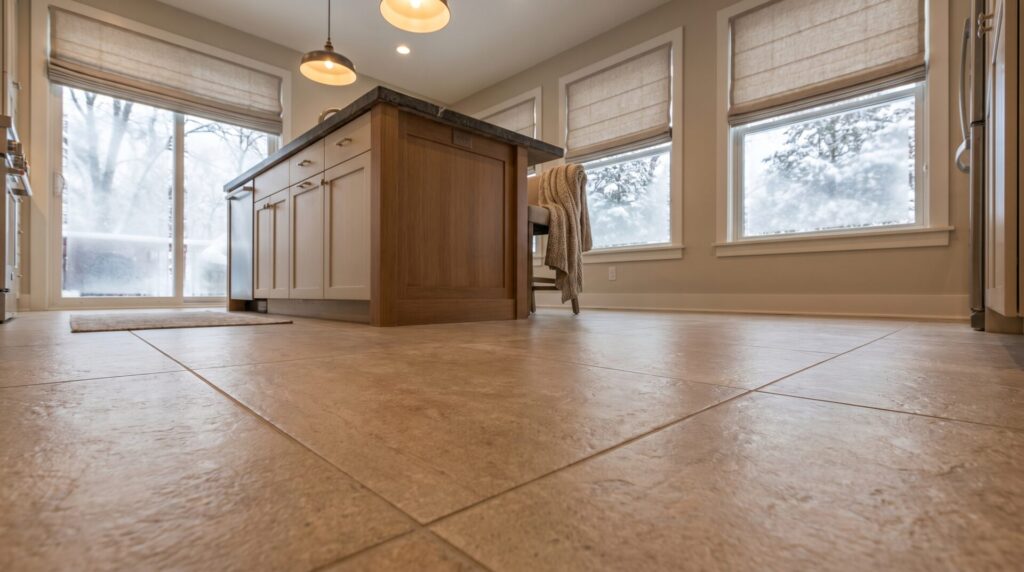
Porcelain tile. Porcelain is fired at higher temperatures from finer clay than standard ceramic, which makes it denser, harder, and far less absorbent. That density is why porcelain is the default recommendation for floors. It handles freeze-prone entryways, wet bathrooms, and high-traffic kitchens without flinching. It also comes in an enormous range of looks, including remarkably convincing stone and concrete styles.
Ceramic tile. Standard ceramic is porcelain’s lighter-duty cousin. It costs less, cuts easier, and works well on bathroom floors with moderate traffic or as wall and accent tile. The difference shows up in absorption: ceramic is more porous, so it’s a better fit for rooms that see splashes rather than standing moisture and heavy wear.
Natural stone. Marble, granite, slate, travertine, and limestone bring something no manufactured tile can: every piece is one of a kind. Stone rewards that character with a maintenance relationship. It’s porous by nature, so it needs sealing at installation and resealing periodically to resist stains and moisture. For homeowners who love the material, that’s a fair trade. For low-maintenance households, porcelain’s stone-look styles get surprisingly close without the upkeep.
Wood-look porcelain planks. Here’s the type that surprises most of our clients: porcelain planks that mimic hardwood, complete with grain texture and plank-format installation. They’ve become one of the most requested tiles we install, because they put a hardwood look in rooms where real wood is risky, like bathrooms, basements, and entryways. From standing height, good wood-look porcelain fools almost everyone.
You can explore the full range on our tile page.
Choosing Tile: What Actually Matters
Tile shopping usually starts with color and ends with confusion about specs. Here’s what professionals actually look at, in plain language.
Water absorption, not just hardness. The spec that separates floor-worthy tile from the rest is how much water it absorbs. Porcelain rated for floors absorbs almost none, which is why it survives wet rooms and freeze-prone spaces. When we evaluate tile for a Madison entryway or basement, absorption is the first thing we check, before color, before price.
Surface texture and slip resistance. A polished tile that looks beautiful in a showroom can be slick with wet socks in a real house. Matte and textured finishes grip better, and smaller tiles add traction through their grout lines. For bathrooms, entryways, and any floor that gets wet, texture is a safety feature, not a style compromise.
Tile size and layout. Large-format tile creates a clean, seamless look and fewer grout lines to maintain, but it demands an extremely flat subfloor. Smaller formats are more forgiving and add grip. Plank formats want a staggered layout with attention to “lippage,” the slight edge unevenness that shows badly in long, raking light.
Grout, the underrated decision. Grout color changes the entire personality of a tile floor: matching grout reads calm and seamless, contrasting grout turns the layout into a pattern. Modern grouts also resist stains far better than what was available even ten years ago. It’s a small line on the quote and a big part of the final look.
Room-by-Room: Where Tile Earns Its Keep
- Kitchens: Tile handles spills, dropped pans, and daily traffic better than any other surface. The honest caveat: it’s harder underfoot than vinyl during long cooking sessions, and dropped glassware rarely survives.
- Bathrooms: Tile’s home turf. Fully waterproof, endlessly designable, and ideal over radiant heat.
- Entryways and mudrooms: This is where Wisconsin homes need tile most. Salt, slush, and grit destroy softer floors. Porcelain takes the abuse for decades.
- Basements: Tile installs directly over properly prepared concrete slabs and doesn’t care about below-grade humidity, which makes it a strong choice in lake-adjacent Monona homes where moisture is a fact of life.
- Living areas and bedrooms: Less common in Wisconsin than in southern states, mostly because of winter comfort. With radiant heat underneath, though, tile living areas work beautifully here too.
Wisconsin Considerations: Cold, Slush, and Radiant Heat
The number one objection we hear about tile flooring in Madison is the cold. It’s a fair concern, and it deserves a real answer rather than a shrug.
Tile feels cold for the same reason it works so well with heating: it conducts temperature efficiently. On a bare floor in January, that conductivity pulls heat from your feet. Add electric radiant mats or hydronic tubing beneath the tile and the same physics reverses. The tile becomes a gentle, even radiator, and suddenly it’s the warmest floor in the house. Our guide to heated tile floors covers what that comfort upgrade involves.
Two more local realities worth knowing. First, humidity swings between muggy Wisconsin summers and bone-dry heated winters cause wood floors to move, but tile doesn’t budge, which is why it pairs so well with the seasonal extremes here. Second, the salt and sand that come home on boots from November through April are abrasive enough to wear finishes off softer floors. Tile’s fired surface is harder than anything your boots can carry in.
If you’re weighing tile against its most common rival for kitchens and baths, our tile vs vinyl comparison goes deeper on that decision.
What to Expect From a Professional Tile Project
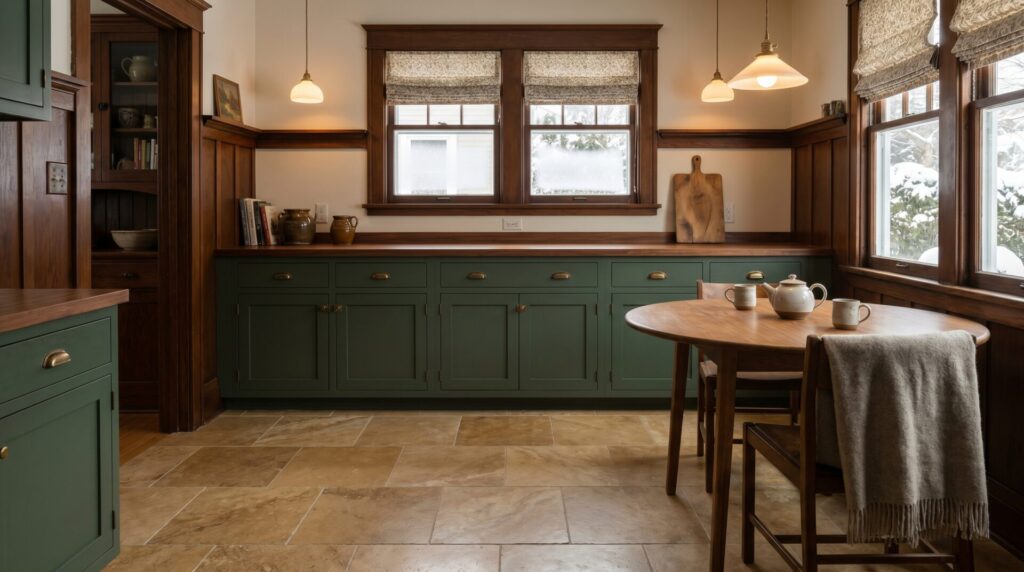
Tile is the one flooring category where professional installation isn’t optional, and that’s not a sales line. It’s the one floor where installation quality determines lifespan more than product quality does.
Here’s what a professional team checks that homeowners rarely think about: subfloor stiffness. A floor that flexes even slightly under foot traffic will telegraph that movement up into the tile, and the result is cracked grout lines within a year or two, sometimes cracked tile itself. Older Madison homes, especially the charming ones near downtown and in Shorewood Hills, often need subfloor reinforcement before tile goes down. That step is invisible in the finished floor and essential to it.
A typical project moves through consultation and selection, an in-home measure where the subfloor and layout get evaluated, preparation, setting and grouting, and a cure period before furniture returns. Tile takes longer to install than floating floors. It also outlasts them by decades, which is the trade you’re making.
If you’re starting to picture tile somewhere in your home, explore your options with us and we’ll help you think it through.
Tile Flooring FAQs
Is porcelain or ceramic tile better for floors?
Porcelain is better for floors in nearly every case. It’s denser, absorbs almost no water, and stands up to heavy traffic, freeze-prone entries, and wet rooms. Ceramic works well for walls, accents, and lighter-duty bathroom floors where its lower price is an advantage.
What are the downsides of tile flooring?
Tile is hard underfoot, cold in winter without radiant heat, and unforgiving to dropped dishes. Installation takes longer and depends heavily on subfloor preparation. For most rooms the durability payoff outweighs those trade-offs, but they’re real and worth weighing.
Are tile floors too cold for Wisconsin winters?
Not when they’re planned for our climate. Bare tile does feel cold in January, but tile over radiant heat is the warmest floor a Wisconsin home can have. Area rugs solve the comfort question in tiled spaces without heat underneath.
Can you put tile flooring over radiant floor heating?
Yes, and it’s the best flooring for radiant heat, period. Tile conducts warmth evenly and efficiently, doesn’t mind the temperature cycling, and never dries out or shifts the way wood can over heat.
What is the highest quality floor tile?
Dense, low-absorption porcelain rated for floor use is the top tier for performance. Within porcelain, quality shows up in consistent sizing, through-body color, and rectified edges that allow tight grout lines. The best tile for your home also depends on the room, which is where professional guidance earns its place.
How much does it cost to install tile flooring?
Tile pricing depends more on installation variables than on the tile itself: subfloor condition, layout complexity, tile size, and whether radiant heat is part of the project. Entry-level ceramic and premium large-format porcelain sit at very different points on that range. An in-home measure is the only way to get a number you can trust.
Tile asks a little more of you upfront: more decisions, more installation care, more patience during the project. In return it hands you back the most durable, most waterproof, longest-lived floor in the house, in a climate that tests floors harder than most. That’s a trade Madison homes have been winning with for generations.
Curious whether tile is right for your space? Start the conversation and we’ll walk through it together, Covering Every Detail along the way.