

- Basements and Wisconsin Climate
- |
- Buying Guides
Best Flooring for Radiant Heat and Heated Floor Options
June 23, 2026
Reviewed by Kevin Sill, Co-owner, Harmony Flooring
The best flooring for radiant heat is porcelain or ceramic tile, followed by engineered hardwood and luxury vinyl plank (LVP) that the maker rates for radiant use; solid hardwood and thick carpet over a soft pad are the weakest choices. Your heated floor options come down to two systems: electric mats or cables for one room at a time, and hydronic tubing that carries warm water under a whole floor.
In a Wisconsin winter, few upgrades earn their keep faster than stepping out of bed onto a warm bathroom floor. This guide covers how each system works, which floors pair well with it, where it makes the most sense in a Madison home, what drives the investment, and what to expect from the process. See the tile we carry in Madison.
Planning heated floors in a bath or basement? See our best bathroom floors and best basement floors, with the pros and cons of each.
The Short Version
- Best floor: porcelain or ceramic tile. It moves heat well and does not react to warm and cool cycles.
- Very good: engineered hardwood rated for radiant heat, kept at or below NWFA’s 80 degrees F surface limit for wood.
- Good with the right product: LVP and laminate lines the maker approves for radiant heat, within their stated temperature limit.
- Workable: low-pile carpet over a thin, dense pad. A thick, soft pad blocks the heat.
- Riskiest: solid hardwood, which moves the most with heat cycles.
- System: electric for one room, hydronic for whole floors, new builds and big remodels.
Best Flooring Over Hydronic Radiant Heat
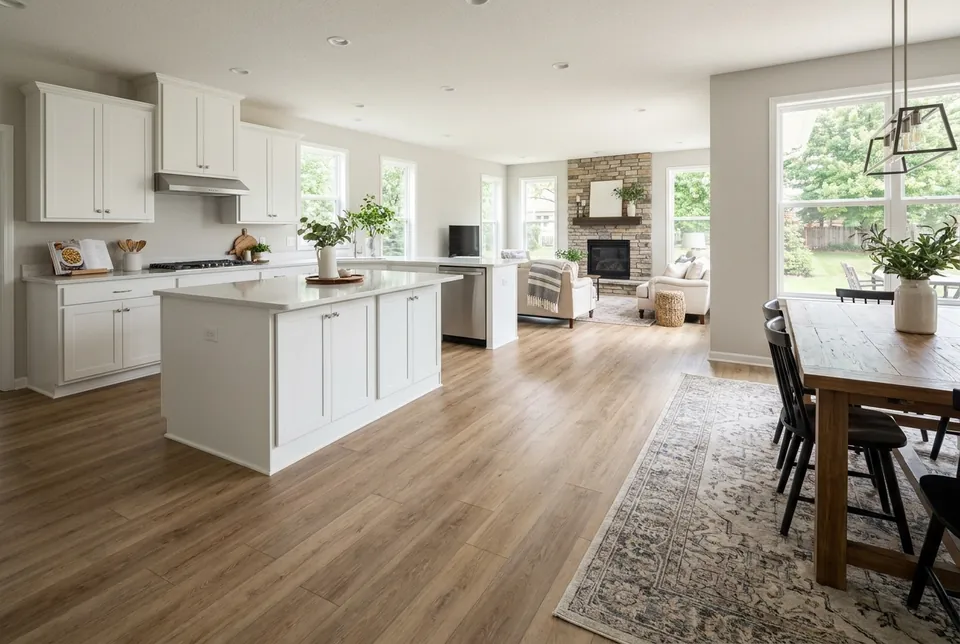
Tile and stone conduct heat best, so they are the top pick over hydronic radiant heat, with radiant-rated engineered hardwood and LVP close behind. What changes the choice is where the tubing sits, because that decides how fast the floor warms and how much it moves.
- Tubing in a concrete slab: common in basements and new slab floors. The slab warms slowly and holds heat for hours. Tile, rated LVP and engineered wood all work; the slab still needs a moisture test from a testing firm or the general contractor before any floor goes down.
- Tubing under the subfloor: run between the joists from below, often with metal heat transfer plates. It is a common way to add hydronic heat from an unfinished basement. Floors over it need to handle the heat, and wood stays within its surface limit.
- Tubing in panels over the subfloor: grooved panels carry the tubing right under the finished floor, so the floor responds faster than a slab. Follow the panel maker’s list of approved floors.
Whichever way the tubing runs, keep the floor surface within the flooring maker’s temperature limit, and skip a thick carpet pad, which holds the heat in the floor instead of the room.
What Radiant Heat Actually Is
Radiant floor heat is a heating system installed directly under the finished floor surface that warms the room by warming the floor itself. Instead of pushing hot air through ducts (the way most Wisconsin homes are heated), it radiates warmth upward from the floor, which then warms the bodies and objects in the room.
The experience is different. Forced-air heat warms the room unevenly, with warm air at the ceiling and cooler air at the floor. Radiant heat does the opposite. The floor is the warmest surface, the air near the floor is warmer than the air at the ceiling, and the entire space feels evenly comfortable. There’s no draft, no cycling fan noise, and no cold spot to step on when you get out of bed or out of the shower.
Two basic systems handle this differently. The right choice depends on the project.
Heated Floor Options: Electric vs Hydronic
Every heated floor is either electric or hydronic. Electric is the simpler choice for a single room, and hydronic is the efficient choice for a whole floor or a whole house.
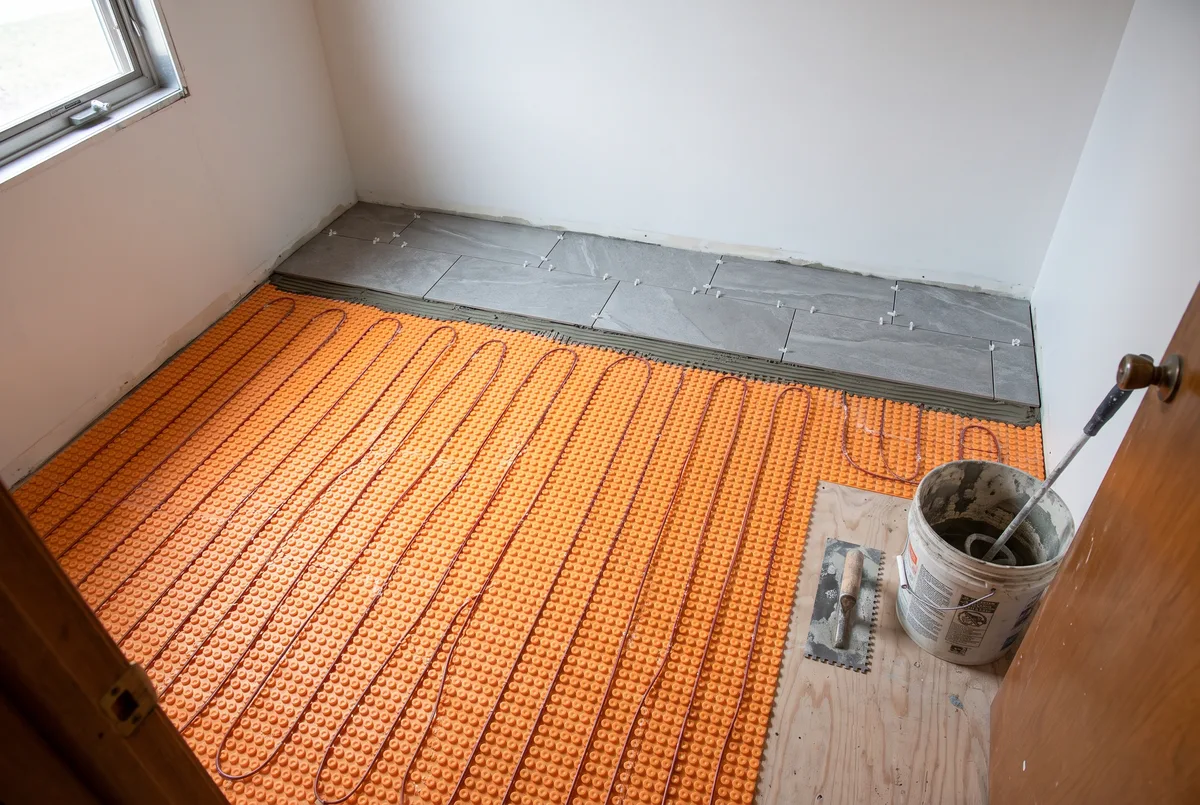
Electric radiant. Thin electric heating mats or cables install directly under the floor, typically in mortar under tile or in a thin underlayment under engineered hardwood or LVP. The system runs on standard household electricity, heats up quickly (Warmup, an electric floor heating maker, puts a typical install at about 30 minutes to go from 60 to 80 degrees F), and is straightforward to install in a single room. The trade-off is operating cost. Electric resistance heat is more expensive to run continuously than a hydronic system, which is why electric radiant is typically used as supplemental heat in specific rooms rather than as the primary heat source for a whole house.
Hydronic radiant. Cross-linked PEX tubing carries warm water from a dedicated boiler through coils embedded in the floor or subfloor. The system runs more efficiently than electric for larger areas, can serve as a primary heating system for a whole house, and pairs well with high-efficiency boilers. The trade-off is installation complexity. Hydronic systems involve plumbing, a boiler, and dedicated mechanical space, which makes them best for new construction, additions, or major renovations rather than single-room retrofits.
| Heated floor option | How it works | Best for | Warm-up | Floors that pair well |
|---|---|---|---|---|
| Electric mat or cable | Heating wire in the mortar under tile, or a mat under a floating floor | One room: baths, kitchens, mudrooms | Fast | Tile and stone; rated LVP, laminate and engineered wood |
| Hydronic in a concrete slab | PEX tubing cast into the slab | Basements and new slab floors | Slow, then steady for hours | Tile, rated LVP, engineered wood |
| Hydronic under the subfloor | Tubing between the joists, often with heat transfer plates | Adding heat from an unfinished basement below | Moderate | Floors rated for radiant heat |
| Hydronic panels over the subfloor | Grooved panels carry tubing right under the floor | Whole floors in new builds and big remodels | Faster than a slab | Floors on the panel maker’s approved list |
For most Madison homeowners thinking about radiant heat for the first time, the question is usually: am I doing one room or the whole house? One room or a few rooms means electric. Whole house or a major renovation means hydronic. The decision usually flows directly from the scope of the project.
Best Flooring for Radiant Heat, Floor by Floor
Tile is the best flooring for radiant heat, engineered hardwood and rated LVP are very good, laminate and carpet work only with the right product, and solid hardwood is the riskiest. The details below explain why.
Tile and porcelain: ideal. Tile is the natural partner for radiant heat. It has high thermal conductivity, which means heat passes through it efficiently and the floor surface warms up quickly. The tile itself doesn’t react to the heat cycles. Large-format porcelain in particular pairs beautifully with radiant systems in primary bathrooms, mudrooms, and kitchens. If you’ve ever wondered why heated bathroom floors are almost always tile, this is why.
Engineered hardwood: very good. Engineered hardwood is rated for radiant heat by most major manufacturers. The multi-layer construction handles the temperature changes far better than solid hardwood, and the look is identical to non-radiant installations. Specify a product that’s explicitly rated for radiant, follow the manufacturer’s installation requirements, and engineered hardwood performs beautifully. The NWFA installation guidelines cap the surface of a wood floor over radiant heat at 80 degrees F, and some makers set their own limit. Ask which of the engineered hardwood floors we carry in Madison are rated for radiant heat.
Premium luxury vinyl plank: good with the right product. Some premium LVP products are explicitly rated for radiant heat, with a maximum surface temperature in the maker’s installation guide. COREtec’s installation guide, for example, caps radiant heat at 85 degrees F and asks for temperature changes in 5 degree steps. The product spec matters here. Standard entry-level LVP often is not radiant-rated, and using a non-rated product can cause warping or warranty issues. If you want LVP over radiant heat, confirm the product is rated before purchase, and ask which of the vinyl plank floors in our Madison showroom are radiant-rated.
Laminate: only with an approved product. Some laminate lines allow radiant heat and some do not. Where it is allowed, laminate floats over the underlayment the maker specifies and stays within the maker’s temperature limit. Ask which of the laminate floors in our Madison showroom are approved for radiant heat.
Solid hardwood: the riskiest choice. Solid hardwood reacts most strongly to the temperature cycles of radiant heat, so seasonal movement, gapping and cupping are bigger risks. Some makers allow it, usually in narrow boards with careful humidity control, but engineered is the safer pick over radiant heat.
Carpet: workable with the right pad. The Radiant Professionals Alliance notes that radiant floor heat is quite tolerant of carpet, with limits: carpet and pad act as insulation, and their R-values add together. A thin, dense pad makes the difference. The Alliance lists a 1/4 inch slab rubber pad at about R-0.31 against R-1.62 for a 3/8 inch prime urethane pad, so the floor under the urethane has to run much hotter to deliver the same warmth. Pick a low-pile carpet over a thin, dense pad, and expect it to feel milder than heated tile.
Our LVP guide for Madison homes covers which LVP products fit which conditions, including radiant-compatible specs.
Want to see tile or plank looks in your own bathroom or basement first? Upload a photo to our room visualizer, then bring the looks you like to your free in-home visit.
Where Radiant Heat Makes the Most Sense in a Madison Home
Radiant heat delivers the most value in primary bathrooms, mudrooms, kitchens and finished basements, the rooms where a hard floor feels coldest in winter.
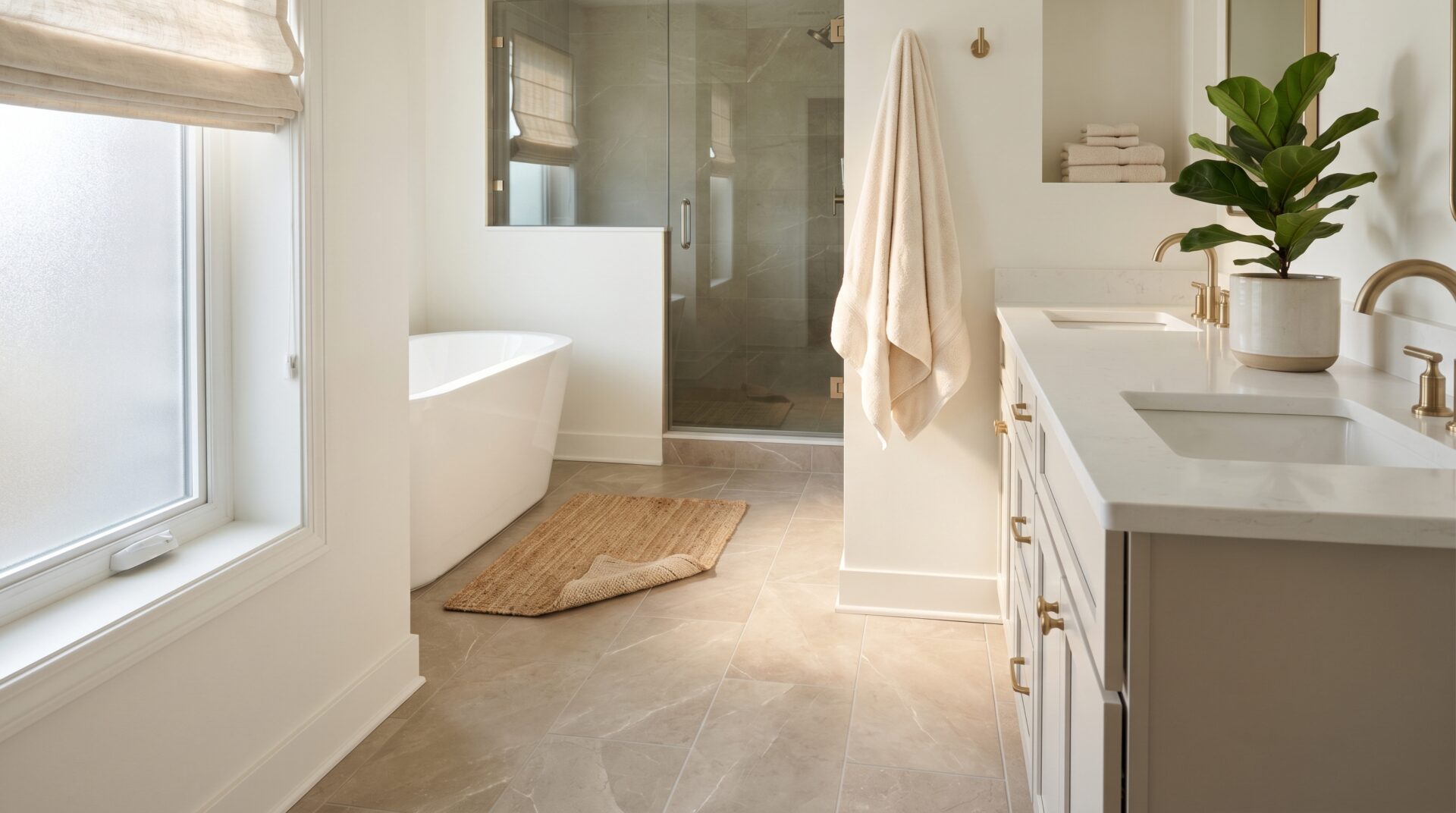
Primary bathrooms. This is the most common room for radiant heat, and for good reason. Stepping out of the shower onto a warm tile floor in February is the kind of small luxury that quietly improves daily life for years.
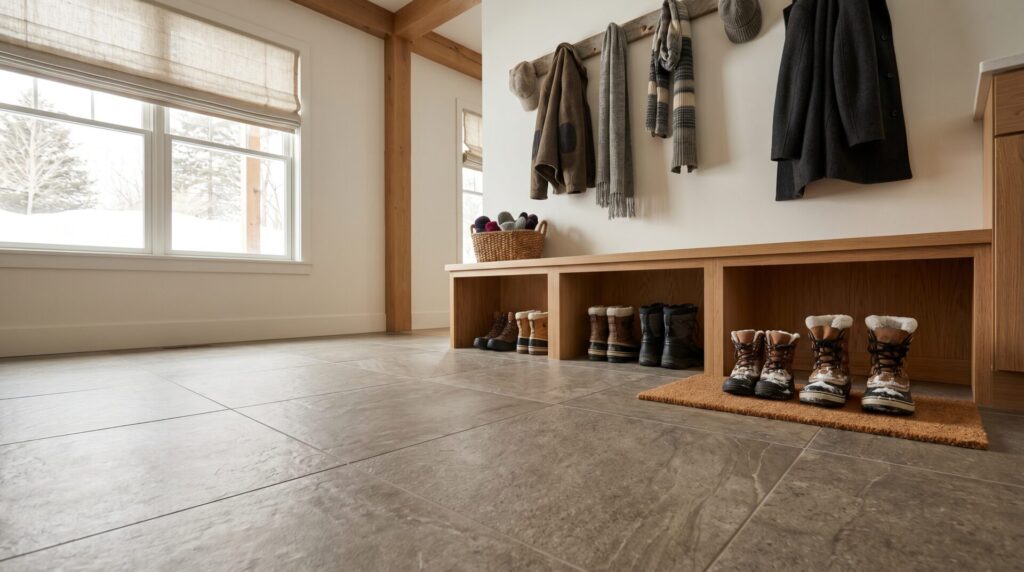
Mudrooms and entryways. Floors that take winter slush, salt, and tracked-in snow benefit twice from radiant heat. The warmth dries out wet boots and floors faster, and the room becomes more comfortable for the daily ritual of taking off coats and shoes. Tile or porcelain over radiant heat in a Madison mudroom is one of the better functional upgrades available.
Kitchens. For homeowners who stand and cook for long stretches, a warm floor underfoot makes a meaningful difference, especially in winter when kitchen tile would otherwise feel cold. Radiant heat under a tile or porcelain kitchen floor adds quiet daily comfort that adds up over years.
Basements. Basement floors are typically the coldest in a Madison home, sitting directly over a concrete slab that draws warmth out of the room. Radiant heat in a finished basement transforms the comfort of the space and makes the lower level genuinely livable in winter rather than a place that runs noticeably cooler than the rest of the house. Check the slab for moisture first; our basement moisture prevention guide covers the steps.
Whole-house new construction or major renovations. If you’re building new or doing a major main-floor renovation, hydronic radiant for the entire main level is worth a serious look. The system pairs naturally with high-efficiency mechanicals and delivers comfort that no forced-air system matches.
Three rooms that usually don’t need it: bedrooms (you’re under blankets and don’t feel the floor), formal living rooms that don’t get heavy daily use, and any room with wall-to-wall carpet.
What Drives the Cost of a Radiant Heat Project
System type, scope, the floor you pair it with, and timing decide what a radiant heat project involves. Without quoting specific numbers, here is how each one shapes it.
System type. Electric mat systems for a single bathroom are a relatively modest add to a tile installation. Hydronic whole-house systems involve a boiler, mechanical space, and full house plumbing, which is a meaningfully larger investment in both materials and labor.
Scope. A 60-square-foot primary bath is a different project than a 2,000-square-foot main floor. The materials cost scales roughly with square footage. The labor cost scales less predictably because larger projects can sometimes be more efficient per square foot than smaller ones. For the full picture, see what affects flooring cost in Madison.
Floor type. Some flooring installations require additional underlayment to host radiant heat properly. Some don’t. The combination of floor product and heat system affects the total project cost more than either alone.
Timing. Installing radiant heat during a new floor install is meaningfully less expensive than retrofitting later. Once a finished floor is in place, adding radiant heat means tearing the floor up. This is why the right time to think about radiant heat is when you’re already planning a floor replacement, not as a separate project years later.
If you’re thinking about a flooring project where radiant heat might fit, explore your options with us and we can walk through the specific costs for your house.
The Wisconsin Climate Case for Radiant Heat
Radiant heat makes more sense in Wisconsin than it does in most of the country, and the reasons go beyond just “it’s cold here.”
Forced-air heating systems struggle with comfort during a long Wisconsin winter. The air cycles on and off, the warm air collects at the ceiling, the floors stay cold, and the perceived temperature in the room is often several degrees cooler than the thermostat reading. Radiant heat solves all of this by warming the surface you actually touch, which is the floor.
The energy story matters too. A well-designed hydronic radiant system can run at lower water temperatures than a traditional baseboard system, which suits high-efficiency boilers. For homeowners thinking about comfort across many Wisconsin winters, that combination is worth a close look.
The seasonal pattern fits, as our four-season guide to Wisconsin flooring lays out. Radiant heat in a primary bathroom runs hardest during the heating season, October into April, which is when you want it most. The system can be set to come on before your morning routine, hold a comfortable surface temperature during the day, and idle the rest of the time.
Dry winter air matters for wood over radiant heat. A heated floor dries the boards above it, on top of the dry air of a Wisconsin heating season. Keep the home at the NWFA’s 30 to 50 percent RH, 60 to 80 degrees F; our indoor humidity guide for wood floors shows how.
For newer, tightly built homes in Sun Prairie or Middleton, radiant heat in the right rooms is a feature buyers notice. In older Madison homes where reworking forced air can be disruptive, a hydronic radiant system in a renovated basement or main floor can be a genuine modernization that respects the home’s character.
Radiant Heat for Madison, WI Homes: Who Does What
A heated floor is two projects that have to be planned together: the heat system and the floor on top of it. Bring radiant heat up at the in-home visit, because it is much easier to plan before the floor goes down.
- Electric systems: the heating mat or cable is installed per its maker’s instructions before the tile goes down, and an electrician wires it to a dedicated thermostat.
- Hydronic systems: a heating contractor designs and installs the boiler and tubing. The floor is chosen and planned to match the system’s temperatures.
- The floor: Harmony Flooring helps you choose a product rated for radiant heat, checks the subfloor or slab for flatness, and coordinates the flooring installation in Madison through vetted installation partners.
What the Process Looks Like
A radiant heat project breaks into clear stages, and the order matters: the heat goes in, gets tested, and then the floor goes over it.
For an electric mat system in a single room, the install fits directly into the tile or floor installation. The mats or cables lay over the prepared subfloor, the heating wire is tested before and after the floor goes down as the makers call for, the new floor goes over it, and the thermostat is wired into a wall location.
For a hydronic system, the process is more involved. The boiler and mechanical space need to be sized and located, the PEX tubing layout designed for the floor plan, the subfloor prepared to host the tubing (in some cases on top of the existing subfloor, in some cases as part of new construction), and the finished floor installed over the heating layer. For a whole-house project, this is typically coordinated with the home’s broader mechanical design rather than treated as a single-trade install.
Either system, once it’s in, requires almost no maintenance. The thermostat handles the daily operation. The system runs quietly underfoot. The floor stays the temperature you set it to.
If you’d like to think through whether radiant heat fits a project you’re planning, our 2026 flooring trends guide covers the broader context of where heated floors are showing up in Madison homes right now.
Keep Reading
- heated tile floors in Wisconsin bathrooms
- Tile Flooring for Madison Homes: The Complete Guide
- Indoor Humidity and Wood Floors in Wisconsin
- Tile Flooring in Madison, WI: porcelain, ceramic and stone-look options
Planning Radiant Heat for Your Madison Home
Radiant heat fits best when it is planned with a new floor in a bathroom, mudroom, kitchen, basement or whole-floor renovation. The question is usually not whether you will like it but whether it fits this project at this time, and it suits the conditions of a Wisconsin winter.
If you’re planning a flooring project and want to think through whether radiant heat belongs in the scope, start the conversation with our team at Harmony Flooring. We’ll walk through the rooms, the products that fit, and the realistic picture of what adding radiant heat would mean for your specific home.
Sources: NWFA Installation Guidelines (radiant heat), COREtec Installation Guide (Shaw) and NWFA: Problem Prevention.
Radiant Heat Flooring Questions
What is the best flooring for radiant heat?
Tile and porcelain are the best match because they move heat well and don’t react to warm and cool cycles. Engineered hardwood and radiant-rated LVP also work. Avoid solid hardwood and carpet over a thick, soft pad.
What flooring can go over hydronic radiant heat?
Tile and stone are the top picks over hydronic radiant heat. Engineered hardwood and some LVP work too when the maker rates them for radiant use. Keep the floor surface within the maker’s temperature limit, which the NWFA sets at 80 degrees F for wood.
What are the types of heated floors?
There are two main types. Electric radiant uses thin mats or cables under the floor and suits single rooms. Hydronic radiant runs warm water through tubing in a slab, under the subfloor or in panels on top of it, and suits whole floors or whole houses.
Can you put carpet over radiant floor heat?
Yes, with the right carpet and pad. Carpet and pad insulate the floor, so choose a low-pile carpet over a thin, dense pad such as slab rubber rather than a thick urethane cushion. The room will still feel milder than heated tile.
Can you put radiant heat under hardwood floors?
Yes, under engineered hardwood that’s rated for radiant use. Solid hardwood isn’t a good fit. It moves too much with the heat cycles and can gap or cup.
How long does radiant floor heat take to warm up?
Electric mats warm a floor fastest; Warmup puts a typical install at about 30 minutes to go from 60 to 80 degrees F. Hydronic systems take longer to come up to temperature, especially in a slab. They hold heat more evenly once warm.
Do you need radiant heat in every room?
No, it pays off most in bathrooms and mudrooms. Kitchens and basements are good fits too. Bedrooms and carpeted rooms rarely need it.
Can radiant floor heat replace a furnace?
A whole-house hydronic system built for that job can. When radiant heat covers just a few rooms, it adds comfort. Your furnace still does the main heating.
Planning New Floors in the Madison Area?
Get a free in-home estimate. We measure, bring samples to your kitchen table and give you one written price. No obligation.
Call or text 608-221-5500Schedule a Free Visit
Shop our floors: Hardwood · Vinyl · Carpet · Tile · Laminate
Showroom: 2125 S. Stoughton Rd, Madison, WI 53716
You Might Also Like
-
- Flooring Comparisons
- Buying Guides
November 9, 2026
Wide Plank Flooring vs Narrow Plank for Madison Homes
-
- Floor Care and Cleaning
- Buying Guides
November 5, 2026
Protect Floors During the Holidays: A Wisconsin Guide
-
- Vinyl Plank
- Basements and Wisconsin Climate
November 3, 2026
Why Is My Vinyl Plank Flooring Separating in Winter?

