- Vinyl Plank
Where Vinyl Plank Works Best in a Madison Home: A Room Guide
May 14, 2026
Reviewed by Kevin Sill, Owner, Harmony Flooring
A lot of Madison homeowners come to us with the same starting question: “Is luxury vinyl plank flooring the right floor for my house?” The honest answer is usually yes, in the right rooms, with the right product, installed the right way. Where it goes wrong is when a homeowner picks LVP based on a single feature like “waterproof” without thinking about how the rest of their home will use it.
This guide walks you through what luxury vinyl plank flooring actually is, where it works best in a Wisconsin home, and the details that separate a floor you love for fifteen years from one that disappoints by year three. Whether you’re in Madison, Sun Prairie, Middleton, or one of the newer subdivisions in Waunakee, this is the version of the LVP conversation we have at our kitchen-table consultations. You can see the luxury vinyl plank we stock in our Madison showroom before you decide.
The Short Answer: LVP flooring installation in Madison works best when the product fits the room and the subfloor is flat and dry. Choose a 20 mil or thicker wear layer for kitchens, basements and mudrooms. SPC cores suit basements and busy rooms. WPC feels softer in living spaces. A careful measure catches problems early.
Key Takeaways
- LVP is built in layers. The wear layer thickness (measured in mils) largely determines how long the floor will look new.
- SPC and WPC cores behave differently. SPC handles heavy traffic and basements well, WPC feels softer and warmer underfoot.
- Madison’s climate (humidity swings, salt-laden winters, basement moisture) makes LVP one of the most practical flooring choices for many rooms.
- LVP performs best with a flat, dry subfloor. A professional measure and subfloor assessment is where most installation problems get caught before they happen.
- It’s a strong fit for kitchens, basements, mudrooms, baths, and family rooms. Bedrooms and formal living rooms are more about preference than performance.
What Luxury Vinyl Plank Flooring Actually Is
Luxury vinyl plank flooring is a rigid, multi-layer floor built to look like real wood (or sometimes stone) while handling water, scratches, and daily wear far better than the materials it imitates. Each plank has four core elements: a clear wear layer that protects the surface, a high-resolution print layer that creates the wood or stone look, a rigid core that gives the plank its stability, and a backing layer that helps with sound and subfloor contact.
The result is a floor that clicks together over the subfloor, stays waterproof at the seams, and looks remarkably like the real thing. Modern embossing and printing has closed the gap between LVP and hardwood to a point where most people cannot tell the difference until they get on their hands and knees.
What this means in practice: LVP is no longer a compromise product. It is a category of its own, with premium tiers that compete on design and performance with traditional flooring.
If you want a deeper look at the construction layer by layer, our Luxury Vinyl 101: Anatomy of Rigid Luxury Vinyl walks through exactly what’s in a plank and why each layer matters.
The Two Cores: SPC vs. WPC
Almost every premium LVP product on the market today falls into one of two categories based on its core construction.
SPC (Stone Plastic Composite) uses a denser core made with limestone and stabilizers. The result is a harder, more rigid plank that handles dents, dropped objects, and rolling traffic (think kitchen carts and office chairs) very well. SPC is the workhorse of the LVP world. It’s the safer choice for high-traffic areas, basements, and any room where the subfloor has slight imperfections, because the rigid core hides minor variations.
WPC (Wood Plastic Composite) uses a wood-flour-based core, which makes the plank slightly thicker, softer underfoot, and a little warmer. WPC feels closer to engineered hardwood when you walk on it. It’s a good choice for bedrooms, family rooms, and main floors where comfort matters as much as durability.
Both are waterproof. Both look great. The difference is feel and use case, and it’s the kind of thing you’ll notice immediately when you stand on samples side by side.
Wear Layer Thickness: The Spec That Predicts Longevity
If there’s one number worth understanding when shopping for LVP, it’s the wear layer thickness, expressed in mils (thousandths of an inch). The wear layer is the clear top coating, and its thickness is the single biggest predictor of how long the floor will look new in your home.
- 6 to 8 mil: Entry-level. Suitable for guest rooms or spaces with light traffic. Not recommended for active families or pets.
- 12 mil: Solid mid-range. Works well in most residential rooms with normal household traffic.
- 20 mil and up: Premium. Built for kitchens, mudrooms, basements, and homes with kids, dogs, and the kind of daily traffic that defines real life in a Madison-area home.
For a family-friendly main floor or a basement that doubles as a family room, we routinely recommend 20-mil or higher. Before you order, our LVP buying checklist covers the spec sheet, sample tests and red flags. The investment difference between a 12-mil and a 22-mil floor is usually modest compared to the lifetime difference in how the floor wears.
Where LVP Shines in a Madison Home (Room by Room)
This is where the conversation gets specific. LVP is one of the most versatile floors available, but it is not a one-size answer.
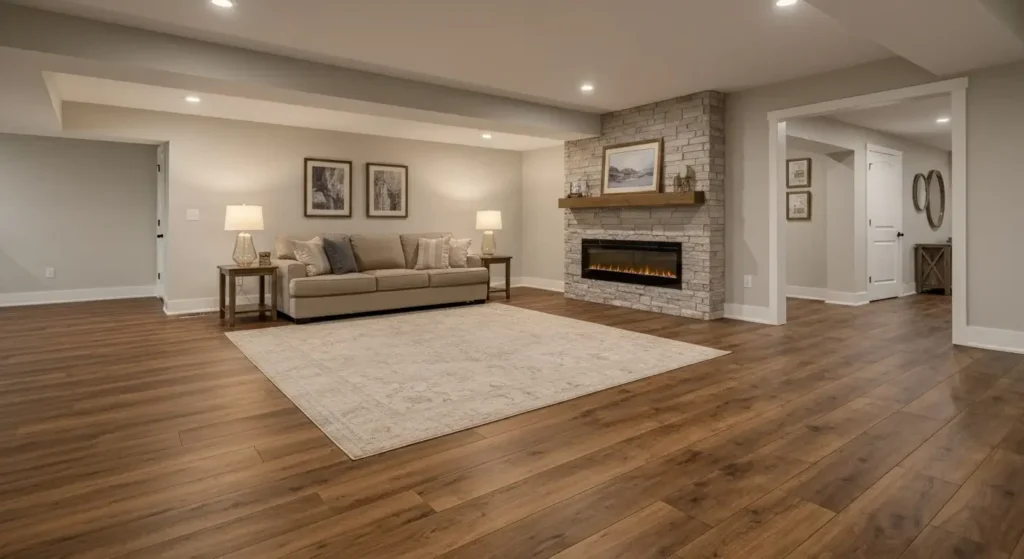
Basements. This is where LVP earns its reputation. Madison-area basements range from dry and finished to occasionally damp, and many sit on concrete slabs that move slightly with the seasons. A rigid SPC product with a quality underlayment handles all of it. Add a poly vapor retarder between the concrete and the floor (we’ll spec this for you on the measure visit), and you’ve got a basement floor that looks like wood, feels solid, and shrugs off the kind of moisture issues that ruin laminate. Our Madison basement flooring guide covers slab prep in more depth.
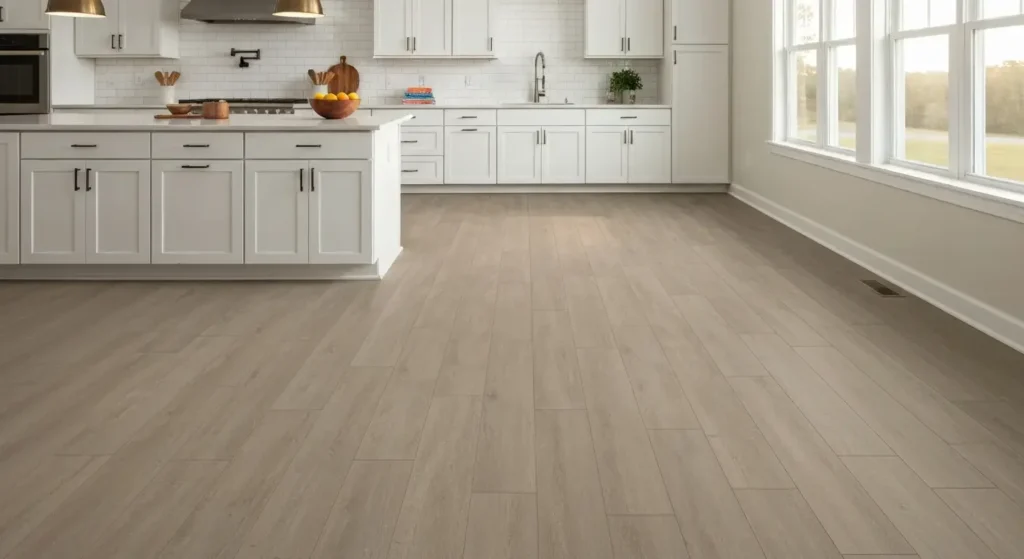
Kitchens. Cooking, spills, dropped pans, dishwasher overflows. Kitchens are punishing, and LVP is one of the few floor types that genuinely doesn’t care. Pair a 20-mil-plus wear layer with a realistic wood or stone visual and you have a floor that performs like vinyl and reads like a designer hardwood.
Mudrooms and entryways. Wisconsin winters bring salt, sand, slush, and tracked-in moisture from November into April. LVP handles all of it. For homes with a serious mudroom culture, this is one of the easier material decisions in the house.
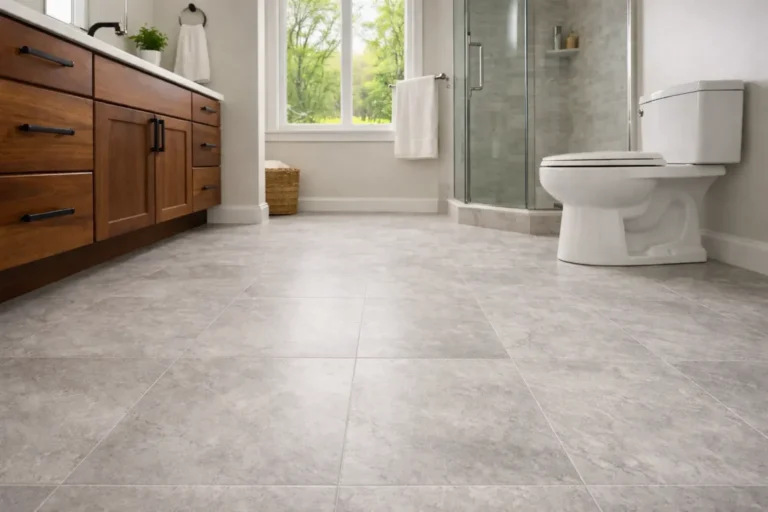
Bathrooms. Water-tight at the seams, comfortable to stand on, and warm-feeling compared to tile in February. LVP has become one of our most-requested bathroom floors in the last two years, particularly in primary bath remodels. If you’re weighing it against a seamless floor, our sheet vinyl vs LVP comparison covers bathrooms.
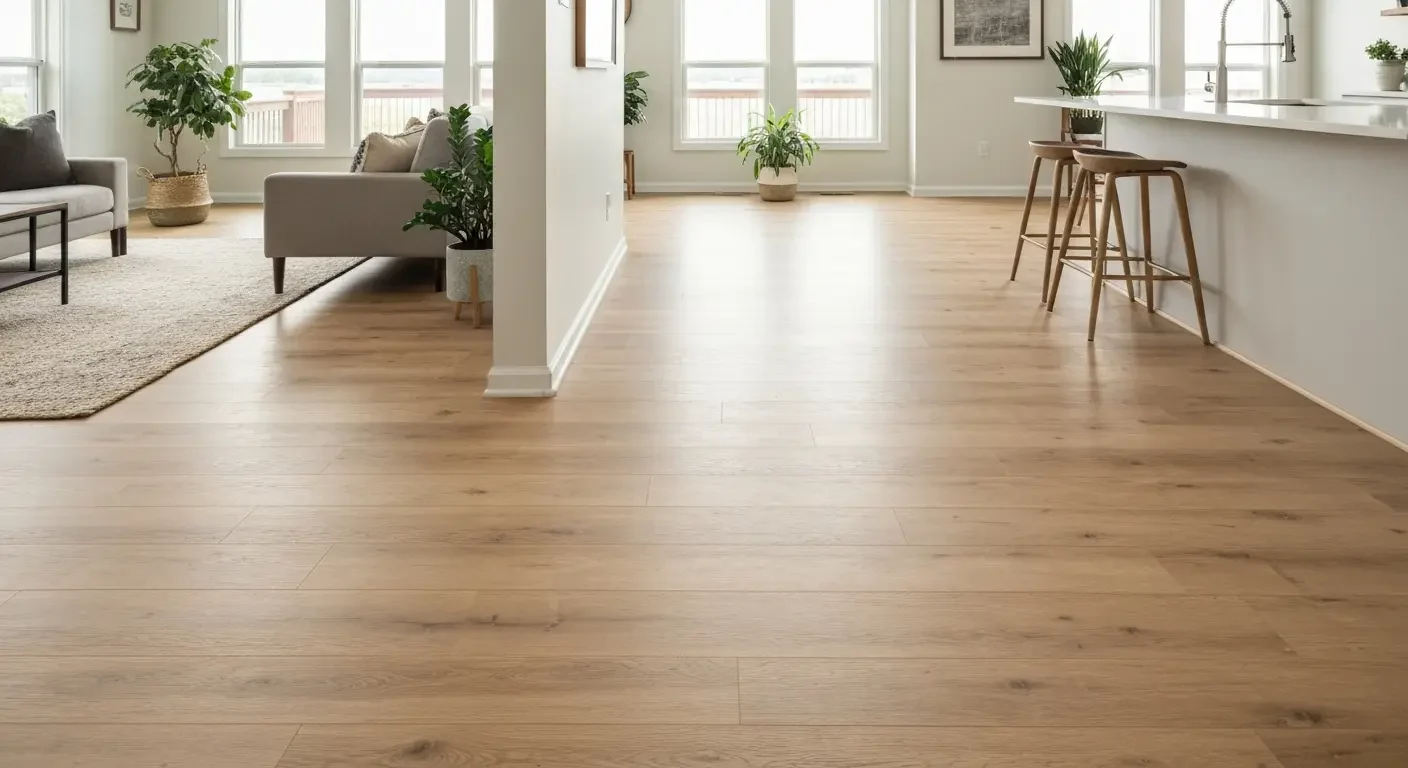
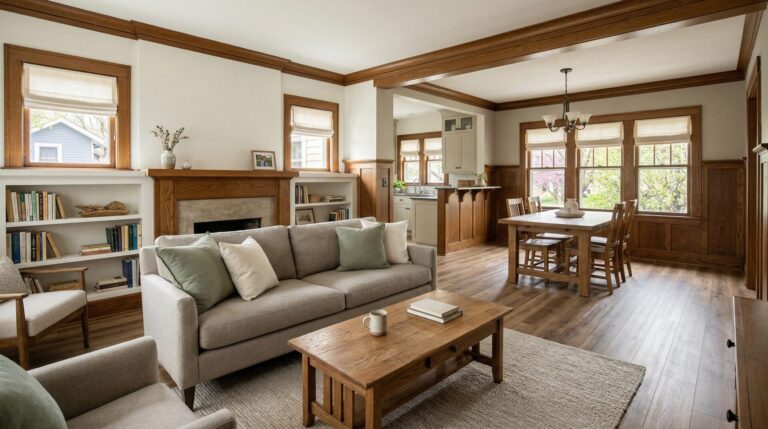
Main floors and open-concept living. If you want continuity from kitchen to family room to dining without changing materials, premium LVP delivers a single floor that works across all of it. This is where WPC products shine, because the slightly softer feel reads more like hardwood underfoot.
Bedrooms. LVP works here, but performance is rarely the deciding factor in a bedroom. This is where preference takes over. Some homeowners love the continuity of running LVP through the whole house, others prefer carpet for warmth and sound dampening. There’s no wrong answer.
Curious how a plank color looks in your kitchen or basement? Try it in our room visualizer with a photo of the room, then bring your favorites to your free in-home visit.
The Wisconsin Climate Factor Most Homeowners Miss
Here’s something most national LVP guides skip entirely: forced-air heating in a Wisconsin home creates winter humidity levels well below what hardwood is designed for. Solid hardwood reacts to that swing, sometimes dramatically, with gaps that open in February and close again by May. Engineered hardwood handles it better. LVP doesn’t react at all, because it isn’t wood.
That stability is one of the quiet reasons LVP has become so popular in Madison homes, particularly in newer construction in Waunakee where tight, well-insulated houses run especially dry in winter. The floor stays the floor, year-round.
The other Wisconsin factor worth knowing: salt and ice-melt residue is brutal on finished surfaces. LVP rinses clean, and our vinyl plank cleaning guide covers the salt-season routine. Hardwood in an entryway, by contrast, often shows visible wear within a few years if it’s the primary path in from the garage or front door, eventually calling for refinishing.
What Professional Installation Actually Does
LVP is sometimes described as an easy floor. The product itself is forgiving, but the floor underneath it (the subfloor) is where every project gets won or lost. A floor installed over a subfloor that isn’t flat, dry, or properly prepared will telegraph every imperfection up through the surface, click apart at the seams, or worse, fail under warranty terms that require professional-grade installation.
When our team comes out for a measure visit, we’re not just measuring rooms. We’re checking subfloor flatness with a long straightedge, testing concrete slabs for moisture, looking at transitions between rooms, planning expansion gaps at every wall, and identifying any prep work that needs to happen before a single plank goes down. In older Madison homes (and there are many), we often find subfloors that need leveling before LVP can be installed properly.
This is the part of the job that doesn’t show up in a product brochure, and it’s the difference between a floor that performs for fifteen-plus years and one that disappoints early. If you’d like to talk through what your space needs, explore your LVP options with us and we’ll start with the right product for your home.
How to Prepare for Your LVP Consultation
A few things that genuinely help us help you when you’re ready to start the conversation:
- Rough measurements of the rooms you’re considering. Even sketches work, we’ll do the precise measure later.
- A photo or two of the space, ideally with the existing floor visible.
- Notes on your household: kids, pets, anyone with mobility considerations, how the space is used day to day.
- Inspiration photos if you have a look in mind, whether that’s a wide oak plank, a dark stone visual, or something in between.
The more we know about how you live, the better we can match a product to your space. LVP has hundreds of styles, dozens of constructions, and a meaningful range of performance tiers. The right one for your kitchen may not be the right one for your basement.
Choosing the Right LVP for Your Madison Home
Luxury vinyl plank has earned its place in Madison homes. It handles the things our climate throws at floors, fits the way real families and households actually live, and now competes with traditional flooring on looks as well as performance. The decision isn’t really whether LVP is a good floor. It’s which LVP, in which rooms, on which subfloor.
That’s where a real conversation makes the difference. When you’re ready to look at samples, talk through your rooms, and figure out the right product for your house, start the conversation with our team. Harmony Flooring covers every detail of the Design · Measure · Install process so the floor you choose performs the way it should, from the day it goes down through the years your family lives on it.
Sources: MSI: LVT Wear Layer Thickness, COREtec Stone Installation Instructions and ASTM F2170.
Luxury Vinyl Plank Questions
Is luxury vinyl plank good for basements?
Yes, and for many Madison basements it’s the strongest choice. An SPC core handles the moisture and temperature swings of below-grade spaces. A vapor barrier between the concrete and the floor adds protection.
How long does luxury vinyl plank flooring last?
Premium LVP with a 20 mil or thicker wear layer can last 20 to 25 years or more in a home. Wear layer thickness matters most. Subfloor prep and traffic come next.
What is the difference between SPC and WPC vinyl plank?
SPC has a dense stone-based core that’s rigid and great for busy rooms and basements. WPC has a wood-based core that feels softer and warmer underfoot. Both are waterproof.
How thick should the wear layer be on LVP?
For most homes with normal traffic, 12 mil is the practical minimum. Choose 20 mil or more for kitchens and basements. It’s also the right call for homes with kids or pets.
Is LVP a good choice for Wisconsin’s climate?
Yes. LVP doesn’t react to humid summers and dry winters the way solid hardwood does. It also rinses clean of salt and slush at entryways.
Questions About Your Floors?
Call or text 608-221-5500Schedule a Free Consultation
Shop our floors: Hardwood · Vinyl · Carpet · Tile · Laminate
Showroom: 2125 S. Stoughton Rd, Madison, WI 53716
You Might Also Like
-
-
- Vinyl Plank
March 24, 2026
Vinyl Sheet Flooring vs LVP: Which One Fits Your Home (Or Business) Better?
-