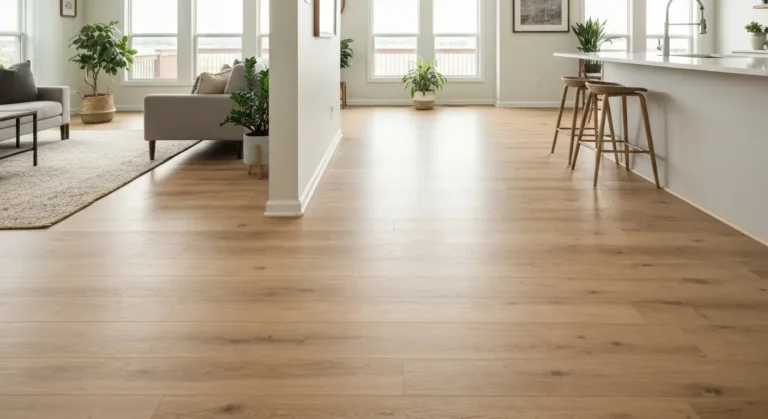
- Vinyl Plank
What Is Luxury Vinyl? LVP and LVT Layers Explained
August 13, 2025
Reviewed by Kevin Sill, Co-owner, Harmony Flooring
Luxury vinyl is a floor made mostly of PVC vinyl, built in four main layers: a clear wear layer with a hard top coat, a printed photo film, a core, and often an attached backing. Luxury vinyl plank (LVP) is that build cut into wood-look planks. Luxury vinyl tile (LVT) is the same build cut into stone or tile shapes. “Luxury” is a trade name, not a grade. It marks a thicker, layered, photo-printed product and sets it apart from thin sheet vinyl off a roll.
Each layer has one job. Here they are from the top down:
Layer |
What it’s made of |
What it does |
|
Wear layer and top coat |
A clear vinyl film measured in mils (1 mil is 0.001 inch), finished with a urethane coat hardened under UV light |
Takes the scuffs, stains and scratches so the print stays clean. Its thickness is the best clue to how long the surface keeps looking new. |
|
Print film |
A high-resolution photo of wood, stone or tile printed on thin vinyl |
Sets the look and adds no strength. Better products have more unique plank images before the pattern repeats. |
|
Core |
Flexible vinyl, rigid SPC (PVC plus powdered limestone) or rigid WPC (foamed PVC) |
Sets how the floor feels, how it installs and how well it bridges small dips in the subfloor. |
|
Backing |
An attached cork, rubber or foam pad on many rigid planks; a plain vinyl backing on glue-down LVT |
Quiets footsteps and softens the feel. Makers often limit what can go under a padded plank, so check before adding a second pad. |
Two of those layers do most of the work. The wear layer decides how long the floor looks new. The core decides how it feels, how it installs and what it can go over. The print is only a photo, so realism comes from print quality and from texture pressed to line up with the grain. In a Wisconsin basement, the core and backing earn their keep: a rigid vinyl core doesn’t swell the way a laminate’s wood-fiber core can, but moisture rising through the concrete slab still has to be measured before anything goes down.
What Luxury Vinyl Tile Is, and How It Differs From LVP
Luxury vinyl tile is vinyl flooring sold as separate pieces, with a clear wear layer over a printed film, made to look like stone, slate, ceramic or wood. ASTM’s standard for it, F1700, covers solid vinyl tiles and planks protected by a clear wear layer. It files printed-film products like these under Class III.
The name trips people up in two ways. In a showroom, LVT usually means squares and long rectangles with a stone or tile look, and LVP means wood-look planks. They share the same layers, so the difference comes down to shape and look. In commercial specs, LVT is often the name for the whole category. A commercial LVT quote may well be a wood-look plank.
Harmony sells both. If you want a stone look in a kitchen or entry, compare LVT tiles next to planks in our vinyl plank flooring in Madison lineup. For offices, clinics and schools, look at the glue-down LVT we cover under commercial flooring in Madison.
What Makes Vinyl Flooring Luxury
No single spec earns the word. What sets luxury vinyl apart is the build, and it’s easiest to see next to the two older vinyl floors:
- Sheet vinyl comes off a wide roll in one thin, flexible piece. It can show a photo print too, but there are no separate planks or tiles to lay out like the real material.
- Vinyl composition tile (VCT) is the thin, hard tile in many old school hallways. It has no clear wear layer on top, so it gets stripped and waxed on a schedule.
- Luxury vinyl is thicker and layered, with a high-definition photo film, a clear wear layer, texture pressed to match the print, and planks or tiles you lay out one by one. It doesn’t need wax or polish.
Within luxury vinyl, quality still varies a lot. Four things separate a good plank from a plain one: wear layer thickness, core type, how many plank images the print has before it repeats, and whether the texture is embossed in register. If you are weighing sheet goods too, our sheet vinyl vs LVP comparison covers which one fits which room.
What Luxury Vinyl Is Made Of, Material by Material
PVC, a plastic resin, is the base of almost every layer. What changes from layer to layer is what gets mixed into it:
- PVC resin: the base of the wear layer, the print film and most cores.
- Plasticizers: additives that soften PVC so it bends. Flexible LVT relies on them. Rigid cores are built stiff on purpose.
- Stabilizers: keep the PVC from breaking down under the heat of manufacturing.
- Powdered limestone: the “stone” in SPC. It makes the core dense and hard.
- Foaming agents: give WPC its lighter, softer core. Some WPC also adds wood flour.
- Urethane and hard particles: the top coat, which many makers load with ceramic particles for scratch resistance.
- Cork, rubber or foam: the attached pad on many rigid planks.
Each brand builds its planks a little differently. Some skip the attached pad and call for a separate one, and some add a thicker top coat. Because it’s made from PVC, some buyers ask about indoor air. Ask whether the exact product carries UL GREENGUARD certification, which tests flooring against chemical emission limits for VOCs. GREENGUARD Gold sets lower limits still.
Luxury Vinyl Flooring Layers From the Bottom Up
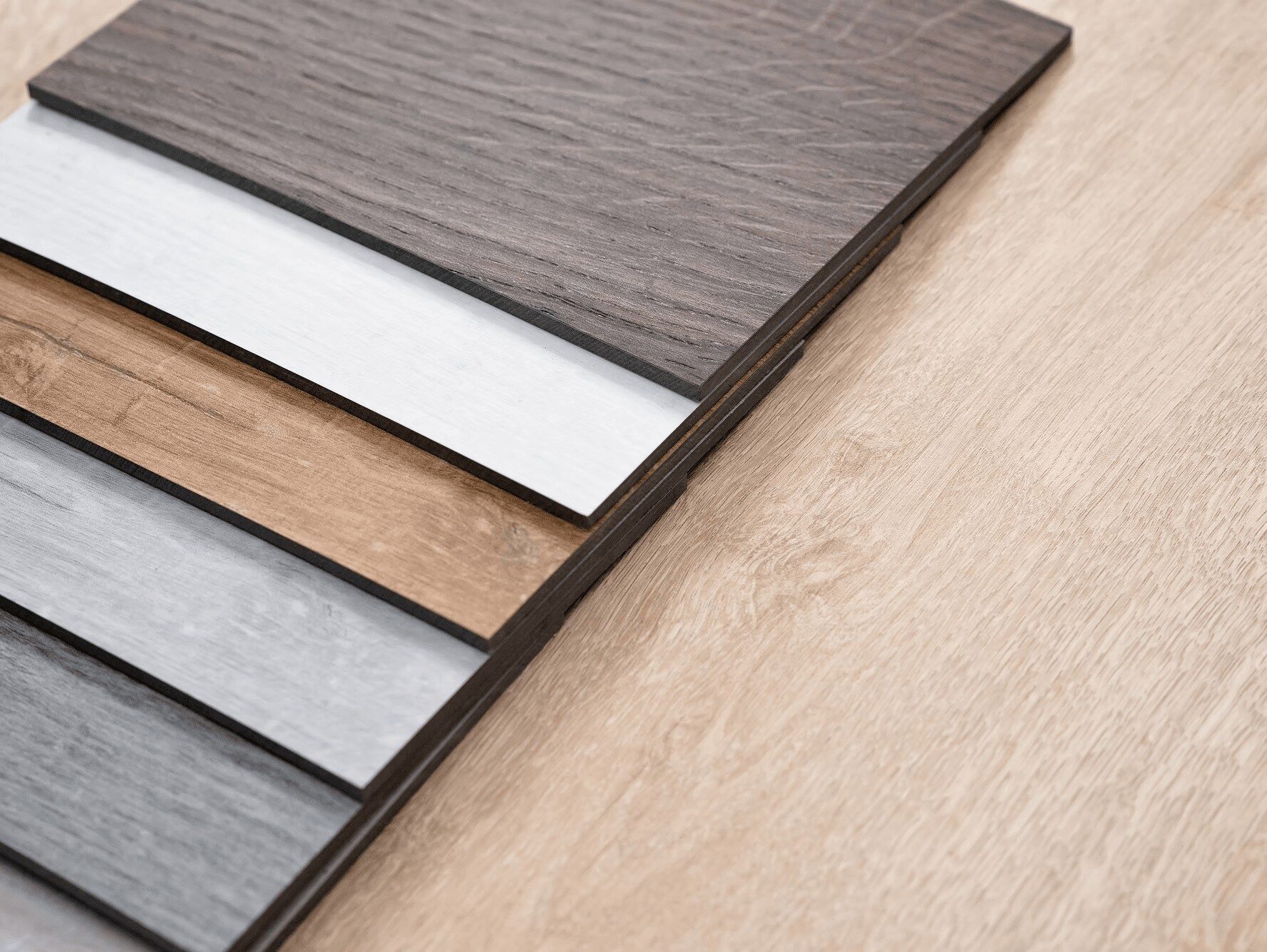
Count the top coat on its own and a rigid plank has five layers. From the bottom up: backing, core, print film, wear layer and top coat. The bottom layer on many rigid planks is an attached underlayment, usually cork, rubber or a closed-cell foam. It dampens sound, adds a little cushion and helps mask small subfloor flaws. Glue-down LVT has no pad because it bonds straight to the subfloor.
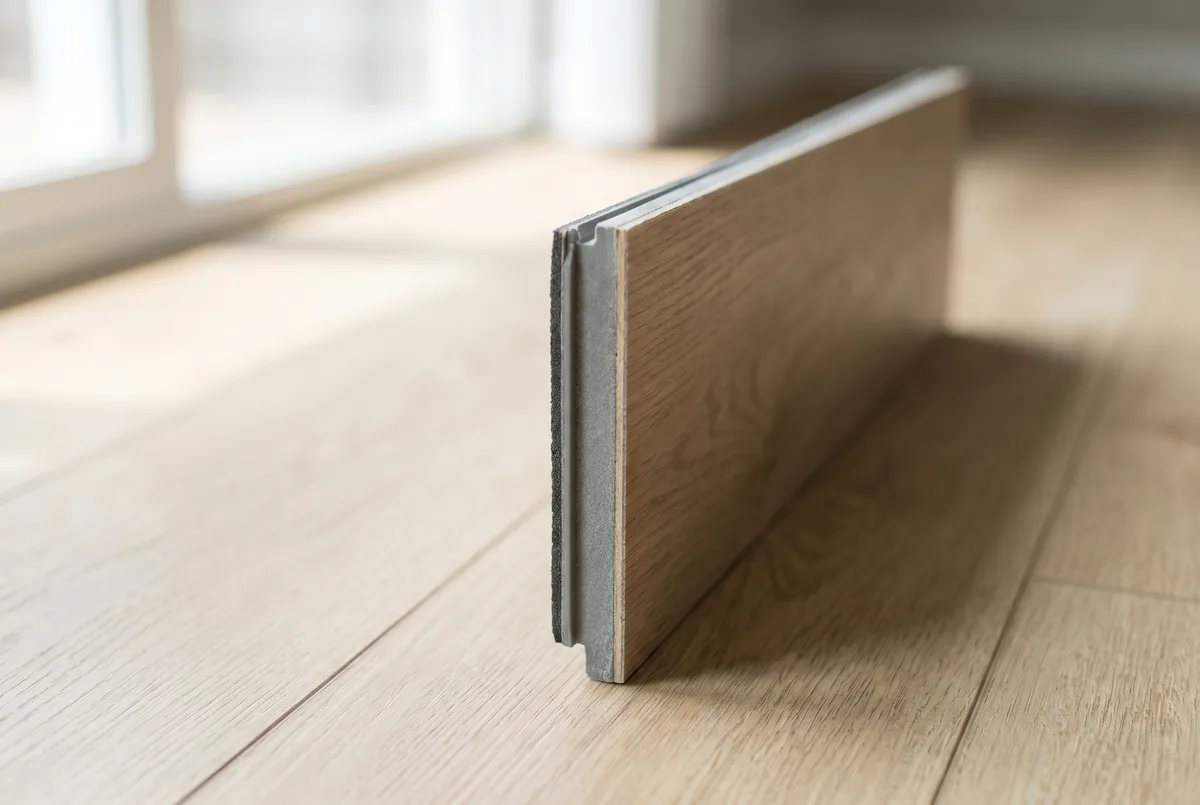
Rigid Luxury Vinyl Plank With Rubber Attached Underlayment
The next layer is the core, the thick middle of the plank. It comes in three types, and it decides how the floor feels, how it installs and how forgiving it is of the subfloor under it.
- SPC (stone plastic composite): PVC blended with powdered limestone. Thin, dense and hard, so it resists dents from furniture and rolling loads best. It can feel firmer and sound louder without a good pad.
- WPC (wood plastic composite): a thicker, lighter core of foamed PVC, sometimes with wood flour mixed in. It feels softer and warmer and is often quieter, but it dents more easily under heavy point loads.
- Flexible (glue-down or dryback) LVT: solid vinyl layers with no rigid board. It bends, glues directly to a smooth, flat subfloor and sits low, which is why it is common in commercial spaces.
Rigid core is the umbrella name for stiff boards like SPC and WPC. Both usually click together and float over the subfloor, so they bridge small dips better than flexible vinyl. ASTM has a separate standard for them, F3261, written for resilient flooring with a rigid polymeric core. Glue-down LVT needs a smoother, flatter subfloor, and the installers we coordinate handle that leveling and prep before it goes down.
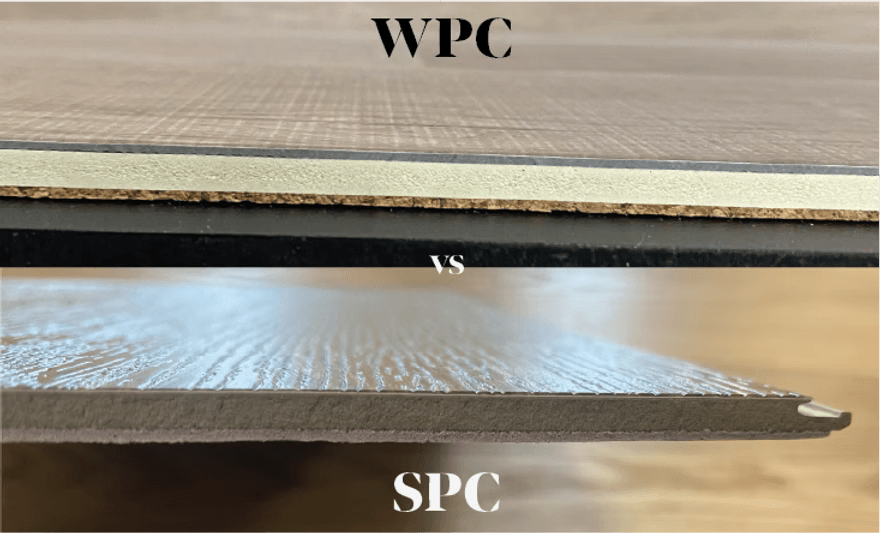
WPC Core Plank vs. SPC Core Luxury Vinyl Plank
The third layer is the print film, also called the decorative film. It is a high-resolution photo of wood, stone or tile printed on thin vinyl. It sets the look and adds no strength. Better products include more unique plank images before the pattern repeats, which you notice most in a big open room.
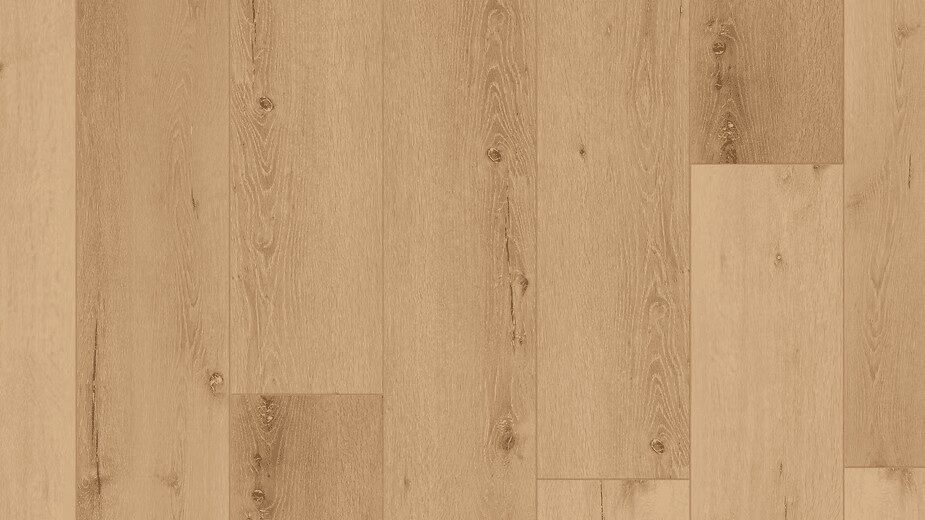
Wood-Look Decorative Film
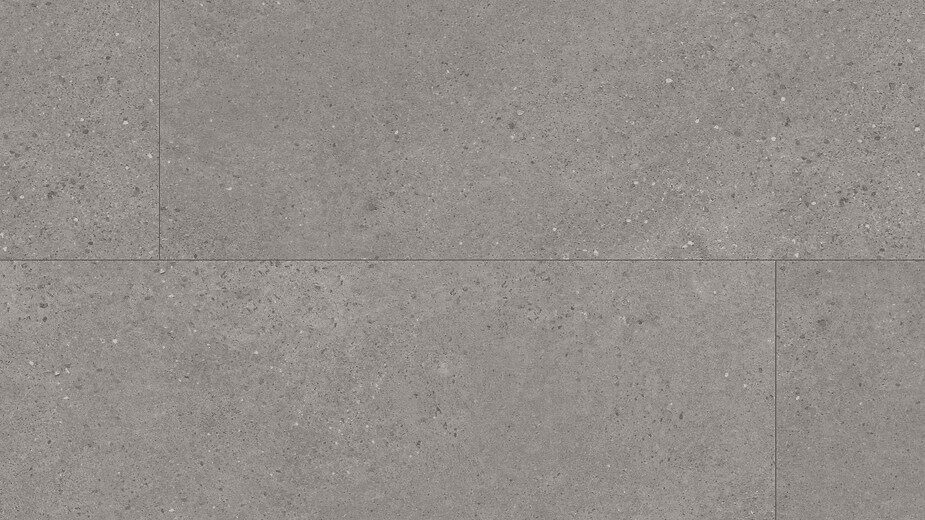
Stone Tile-Look Decorative Film
The fourth layer is the wear layer, a clear vinyl film over the print. It’s measured in mils, and a mil is a thousandth of an inch, not a millimeter. MSI, one of the brands we carry, rates 6 to 12 mil for light residential use, 12 to 20 mil for active homes and light commercial spaces, and 20 mil or more for commercial projects. Our room-by-room vinyl plank guide matches wear layers to rooms.
Most wear layers are embossed with texture. The most realistic planks are embossed in register (EIR), which means the texture lines up with the grain in the print, so you feel a knot where you see one. That texture also adds a little grip underfoot. One more tip: wear layer thickness is not plank thickness. Plank thickness is listed in millimeters and is mostly core.
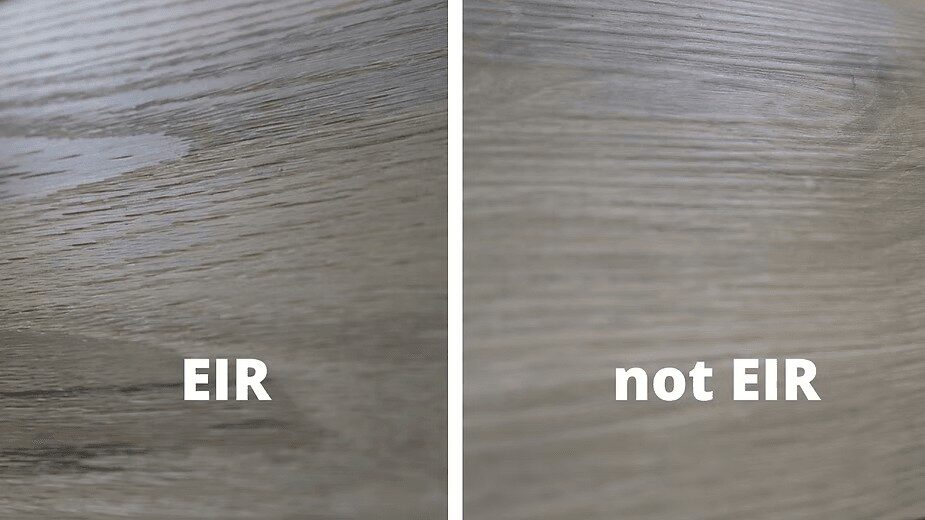
Luxury Vinyl Plank Embossed in Register vs Luxury Vinyl Plank Not Embossed in Register
The final layer is the UV-cured top coat, a thin urethane finish hardened under ultraviolet light, often with hard ceramic particles mixed in. It is the first defense against scuffs, stains and light scratches, and it is the surface you clean every week. Our LVP cleaning guide covers what keeps it intact.
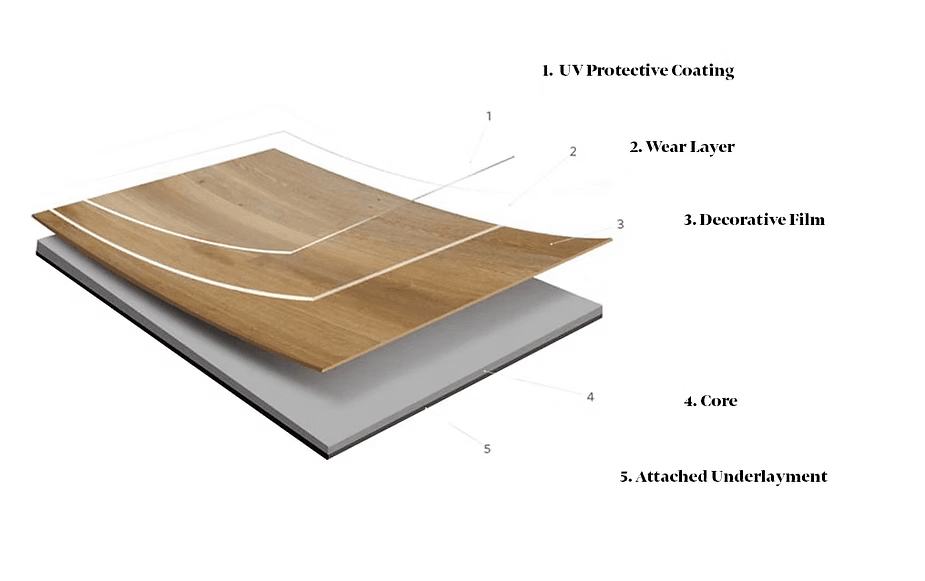
Layers of Rigid Core Luxury Vinyl
How Luxury Vinyl Plank Is Made
Luxury vinyl plank is made by forming a core, fusing the print film and wear layer onto it with heat and pressure, curing a top coat, and then cutting and milling the boards into planks. Here is the sequence for a typical rigid plank:
- Mix the core. PVC resin is blended with stabilizers and, for SPC, powdered limestone. WPC adds a foaming agent to make a lighter board.
- Form the board. The hot mix is extruded or pressed into a flat, rigid sheet of exact thickness.
- Add the print film and wear layer. The decorative film and the clear wear layer are laid on top and fused to the core with heat and pressure.
- Emboss the texture. A textured plate or roller presses grain into the surface. On EIR products it lines up with the print.
- Cure the top coat. A urethane finish goes on and is hardened under UV light.
- Cut, mill and back. The sheets are cut into planks or tiles, the edges are milled into a click-lock profile, and many get a pad attached underneath.
Flexible glue-down LVT follows the same idea with layers of solid vinyl pressed together and square edges instead of a click profile.
Luxury Vinyl in Wisconsin Homes: Cold Rooms, Basement Slabs and Sun
Luxury vinyl handles a Wisconsin house well, but three local conditions decide whether a given product is the right one: temperature, concrete slab moisture and strong sun through big windows. Manufacturers spell out the limits in their installation guides, and the guide for COREtec Stone, from COREtec, one of the vinyl brands we carry, is a good example.
- Cold rooms: Vinyl does not soak up and give off moisture the way wood does, so the dry heating season from October into April does not open gaps the way it can in hardwood. Temperature is the limit instead. The COREtec Stone guide asks for rooms kept between 55 and 85 degrees F after installation, which rules out an unheated three-season porch or a cabin closed up for the winter unless your product’s own guide allows it.
- Basement slabs: A rigid core will not swell if water reaches it, but moisture rising through a concrete slab can still collect under the floor. The same guide sets slab moisture limits using two ASTM tests, F2170 (relative humidity inside the slab) and F1869 (calcium chloride), and recommends a 6 mil poly vapor retarder under floating floors. The installers we coordinate don’t test slabs; a testing firm or your general contractor does that first. Our Madison basement flooring guide covers the slab side in detail.
- Sun and heat near windows: South and west-facing windows and patio doors put strong sun on the floor. COREtec warns that prolonged direct sun can discolor the floor and cause thermal expansion, and recommends blinds or drapes during peak sun hours. Our guide to preventing sun fade covers window film and other fixes.
- Radiant floor heat: Many products can go over radiant heat, but there is a ceiling. The COREtec Stone guide says the operating temperature should never exceed 85 degrees F.
Narrowed it down to a core and a wear layer? Upload a photo of your room to our room visualizer to try plank looks, then bring the ones you like to your free in-home visit.
Keep Reading
- The Ultimate Guide to Cleaning Luxury Vinyl Plank Flooring (LVP)
- Why Luxury Vinyl Plank (LVP) Flooring Is the Perfect Choice for Busy Families
- What to Know Before You Buy Vinyl Plank
- What Does Waterproof Really Mean for LVP Floors?
- Vinyl Plank Flooring in Madison, WI: the styles and brands we carry
Sources: MSI: LVT Wear Layer Thickness, COREtec Stone Installation Instructions, ASTM standards F1700, F3261 and F2170, and UL GREENGUARD Certification.
Luxury Vinyl Plank FAQs
What is luxury vinyl made of?
Luxury vinyl is made mostly of PVC vinyl, built in layers. From the top: a UV-cured urethane coat, a clear wear layer, a printed film with the wood or stone look, and a core of flexible vinyl or rigid SPC or WPC. Many rigid planks also have an attached cork, rubber or foam pad for sound and comfort.
How is luxury vinyl plank made?
The core comes first. PVC is mixed with stone powder for SPC or made into a lighter foamed blend for WPC. It’s pressed into a flat rigid board. Next a printed film with the wood or stone image goes on top. A clear wear layer and top coat are bonded over it with heat and pressure. The boards are then cut into planks and milled with click edges. Many get a backing pad attached last.
Is luxury vinyl made of plastic?
Yes. Luxury vinyl is a plastic floor made mainly of PVC (polyvinyl chloride). SPC cores add powdered limestone to the PVC, and WPC cores use foamed PVC. It is built to look like wood or stone, but it is a different material, so a badly damaged plank is replaced rather than repaired.
Is luxury vinyl tile the same as luxury vinyl plank?
They’re built the same way with the same layers. The main difference is shape. LVP comes in long planks that look like wood. LVT comes in squares or rectangles that look like stone or ceramic tile.
What is the difference between rigid core and flexible luxury vinyl?
Rigid core luxury vinyl has a stiff SPC or WPC board in the middle, clicks together and usually floats over the subfloor, so it hides small dips better. Flexible luxury vinyl, often called glue-down or dryback LVT, has no rigid board. It bends, glues directly to a very smooth subfloor and sits lower, which is why it is common in commercial spaces.
What does LVT stand for?
LVT stands for luxury vinyl tile. In stores it usually means stone-look or tile-look pieces, while LVP (luxury vinyl plank) means wood-look planks. In commercial specs, LVT is often used for the whole category, planks included.
Planning New Floors in the Madison Area?
Get a free in-home estimate. We measure, bring samples to your kitchen table and give you one written price. No obligation.
Call or text 608-221-5500Schedule a Free Visit
Shop our floors: Hardwood · Vinyl · Carpet · Tile · Laminate
Showroom: 2125 S. Stoughton Rd, Madison, WI 53716
- luxury vinyl
You Might Also Like
-
-
- Vinyl Plank
- Basements and Wisconsin Climate
November 3, 2026
Why Is My Vinyl Plank Flooring Separating in Winter?
-