

- Vinyl Plank
What Does “Waterproof” Really Mean for LVP Floors?
October 13, 2025
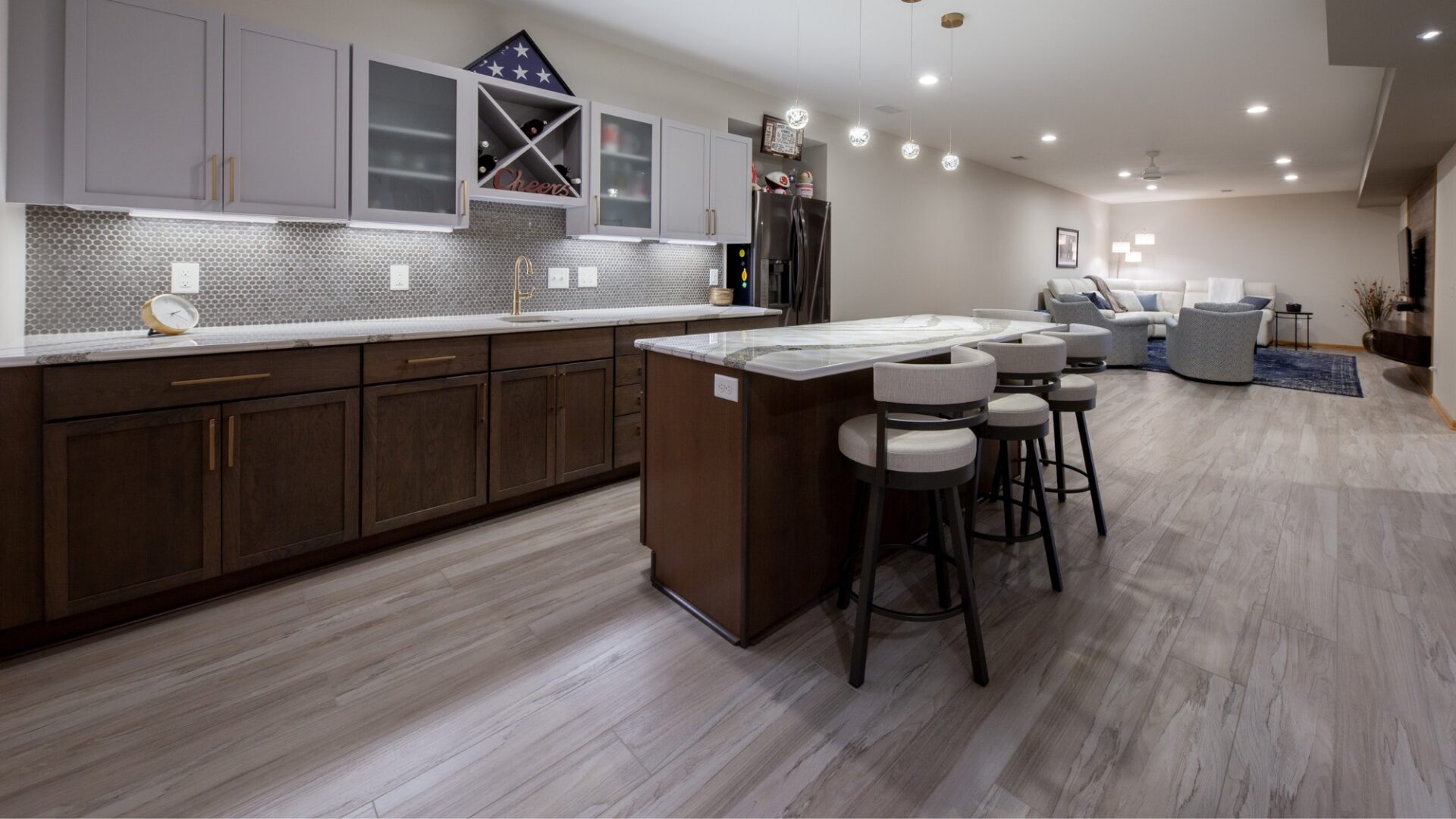
What Does “Waterproof” Really Mean for LVP Floors?
If you’ve been shopping for new flooring, you’ve probably noticed that luxury vinyl plank (LVP) is often advertised as “waterproof.” It’s one of the most common questions we hear at Harmony Flooring and one of the top flooring searches on Google:
Is LVP really waterproof?
The short answer is yes, but with a few essential details. “Waterproof” doesn’t always mean what people think it does. Let’s look at what it truly means, how it works, and what to watch out for in Wisconsin’s climate. See the vinyl plank floors we carry.
What “Waterproof” Really Means
When homeowners ask if LVP is waterproof, they’re usually wondering if it can handle everyday spills, humidity, or even basement moisture. Most of the time, the answer is yes. The planks themselves won’t absorb water because they’re made from vinyl and composite materials that don’t swell or warp.
Each plank has a sealed surface layer that keeps liquids from soaking in, and most click-lock systems create a tight enough seal to keep water from seeping through. That’s why LVP is such a popular choice for kitchens, bathrooms, and mudrooms.
However, being “waterproof” doesn’t mean it’s immune to every type of moisture problem. The material may resist water, but the installation and the environment play a big role in how well it performs.
Where LVP Can Still Run Into Trouble
Even the best waterproof LVP can fail if water seeps underneath or around the planks. Spills that sit too long, heavy moisture from a damp basement slab, or a small leak around a toilet can eventually cause issues. The water doesn’t harm the planks themselves, but it can get trapped below, leading to mold or damage to the subfloor. If water already got under your floor, here’s what to do about water-damaged floors.
Another common issue is gapping between planks. If seams aren’t installed tightly or if the room temperature and humidity fluctuate a lot, those small openings can let water in. In Wisconsin homes, especially during cold, dry winters, that expansion and contraction can make a difference.
Where LVP Works Best
LVP is one of the most versatile flooring options available today. It performs beautifully in:
- Kitchens and bathrooms: Ideal for spaces that see daily moisture. Just make sure seams are tight and the perimeter is sealed properly.
- Basements: Works well as long as there’s a moisture barrier or underlayment in place and the concrete slab is dry.
- Laundry rooms and mudrooms: Handles splashes, humidity, and wet boots with ease.
- Living areas and bedrooms: Provides durability and comfort without the worry of spills or pet accidents.
Basically, LVP can go almost anywhere, as long as it’s installed correctly and maintained with care.
How to Choose Truly Waterproof LVP
When you’re comparing brands or styles, focus on the details that make a difference:
- Core construction: Look for SPC (stone polymer composite) cores for superior stability. WPC (wood polymer composite) cores are softer underfoot but need solid waterproofing.
- Locking system: A tight, click-lock edge design prevents water from getting between planks.
- Underlayment: Use a moisture barrier or waterproof underlayment, especially over concrete or crawl spaces.
- Installation quality: Make sure installers seal the edges and check for level, dry subfloors before laying the planks.
- Warranty coverage: Read the fine print. Some warranties cover moisture damage, while others only guarantee the planks themselves.
At Harmony Flooring, we take the time to evaluate each space before installing LVP. Our team checks moisture levels, seals vulnerable areas, and ensures every plank fits perfectly to give you real peace of mind.
Caring for Waterproof LVP Floors
Once installed, LVP is easy to maintain. Here are a few simple habits that keep it looking great:
- Wipe up spills right away instead of letting them sit.
- Clean with a gentle, pH-neutral cleaner. Avoid harsh chemicals or steam mops.
- Use rugs or mats near doors to reduce moisture from shoes.
- Recheck caulking or perimeter seals occasionally, especially in bathrooms.
Taking these small steps helps your floors stay beautiful and truly waterproof for years to come.
Keep Reading
- Tile vs Vinyl Flooring for Kitchens and Bathrooms in Wisconsin
- Luxury Vinyl 101: Anatomy of Rigid Luxury Vinyl
- Vinyl Flooring in Madison, WI: waterproof plank styles and brands
Final Thoughts
Luxury vinyl plank flooring is one of the most durable and moisture-resistant options you can put in your home. The key is understanding what “waterproof” really means and choosing products and installation methods that match your needs.
If you live in or around Madison, Verona, Sun Prairie, or Middleton and want help selecting the right LVP for your home, Harmony Flooring is here to help. From product selection to the final walkthrough, we’ll make sure your floors are protected and built to last.
Questions About Your Floors?
Call or text 608-221-5500Schedule a Free Consultation
Shop our floors: Hardwood · Vinyl · Carpet · Tile · Laminate
Showroom: 2125 S. Stoughton Rd, Madison, WI 53716
You Might Also Like
-
-
-
- Vinyl Plank
March 24, 2026
Vinyl Sheet Flooring vs LVP: Which One Fits Your Home (Or Business) Better?

