- Blog
Gym Flooring for Madison Fitness Studios: A Buyer’s Guide
August 6, 2026
Every rep, sprint, and burpee in your facility lands on the floor. That makes gym flooring one of the few purchases that touches member safety, your lease, your neighbors, and your brand all at once. This guide is for fitness studio owners and gym operators in Madison, WI who are planning a new space or replacing a floor that’s taken a beating. Whether you run a boutique studio near Monroe Street, a franchise gym in a Sun Prairie retail strip, or a fitness room inside a Middleton apartment building, the same core decisions apply. See our commercial flooring page.
The Short Version: Most Madison gyms need zoned gym flooring: dense rubber under free weights, turf strips for sled and agility work, luxury vinyl tile in lobbies and locker areas, and resilient vinyl or sprung floors in group fitness studios. Thickness, acoustic control, and subfloor prep matter as much as the surface you pick.
Key Takeaways
- One floor rarely serves a whole gym. Plan by zone: free weights, functional training, group fitness, and front-of-house each have different demands.
- Rubber thickness should match what gets dropped on it, not just what gets walked on.
- Sound and vibration travel through the structure. If anyone occupies the space below, plan acoustic isolation from day one.
- Sweat, moisture, and cleaning chemicals shorten the life of the wrong floor fast. Choose surfaces rated for daily wet cleaning.
- Subfloor condition and moisture testing decide how long any gym floor lasts. The prep you don’t see matters more than the color you do.
Gym Flooring Zones: Match the Surface to the Workout
Walk through any well-built facility and the floor changes as the activity changes. That’s intentional. The best gym flooring plan treats your space as a map of zones, not one big rectangle.
Start by sketching your layout: where weights drop, where sleds run, where classes move, and where members check in with wet shoes in January. Madison winters guarantee that last one, so treat the entry as a performance zone too.
Rubber for Free-Weight Areas
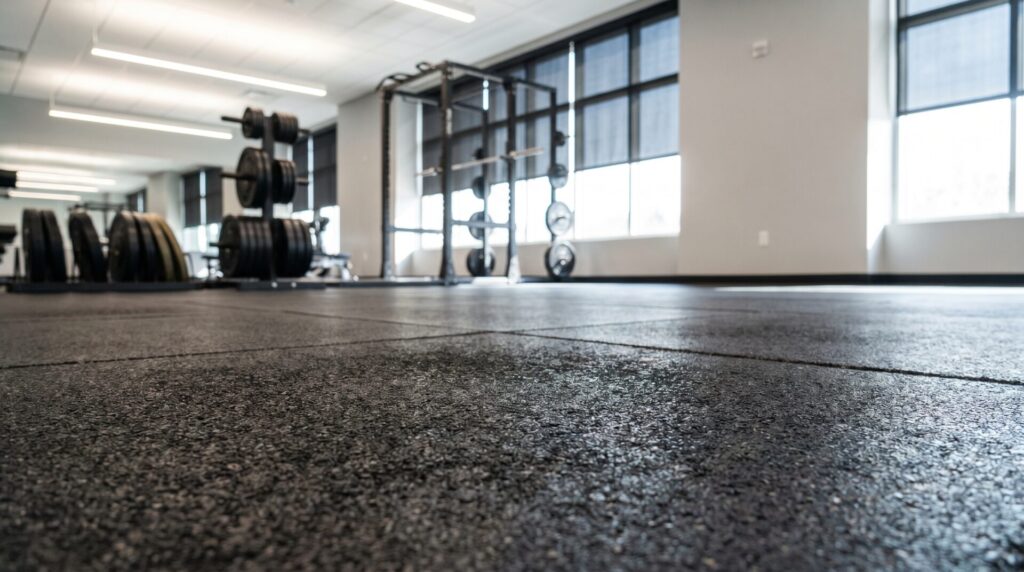
Rubber is the workhorse of strength zones for good reason. It absorbs impact, grips well under shifting feet, resists moisture, and shrugs off dropped dumbbells. It comes in rolls and tiles across a wide thickness range.
Thickness is the decision that matters most. Thin rubber works under cardio machines and light dumbbell work. Areas where members deadlift or drop loaded barbells need much thicker material, and serious lifting zones often add platforms or shock pads on top.
Here’s the counterintuitive part: more cushion is not automatically better. Rubber that’s too soft lets feet sink and roll under a heavy squat. The goal is matched firmness, soft enough to absorb the drop, firm enough to keep lifters stable.
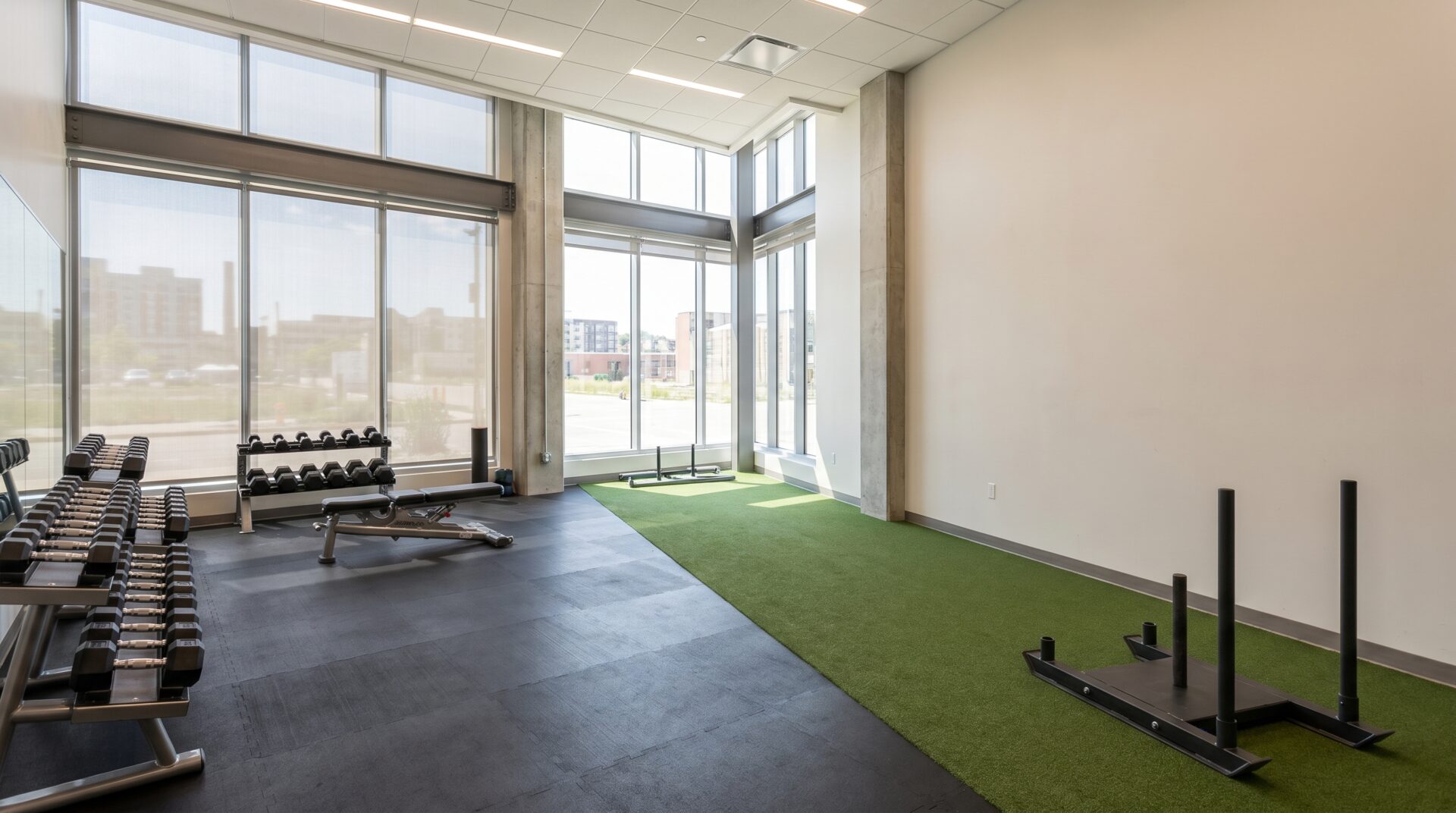
Turf Strips for Functional Training
Turf has become a signature feature in functional training zones, and it earns the space. The dense synthetic surface is built for sled pushes, lunges, footwork drills, and floor work that would chew up rubber or burn skin on vinyl. A turf lane also reads as energy the moment a prospective member walks in.
Fiber type and pile direction are details pros sweat. Some fibers are softer on hands and elbows, others stand up better to constant sled traffic. Lane length, markings, and flush transitions into neighboring rubber affect both safety and the finished look, and clean transitions prevent trip points.
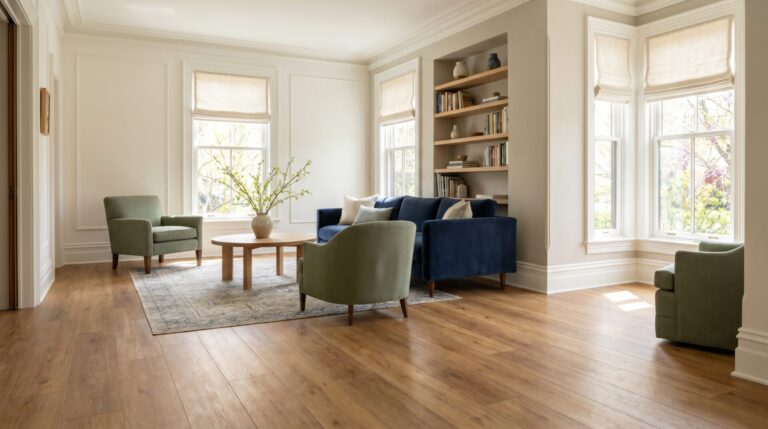
LVT for Lobbies, Locker Rooms, and Retail Corners
Front-of-house is where design carries the load. Luxury vinyl tile gives you wood and stone looks that photograph well, and it’s waterproof, which matters in locker areas and anywhere members track in Wisconsin weather. It cleans quickly and holds up to constant foot traffic at the desk.
Lobbies in fitness businesses behave a lot like retail entries, so the same logic applies as in any busy storefront. Our guide to choosing flooring for high-traffic businesses covers wear layers and slip resistance in more depth.
Sprung and Resilient Floors for Group Fitness Studios
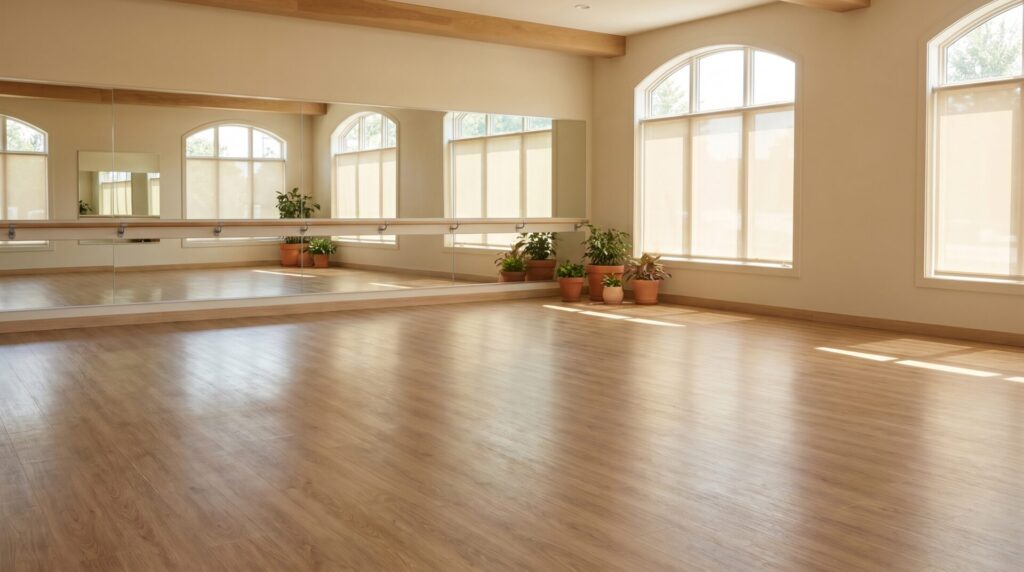
Group fitness rooms have their own physics. Dozens of people jumping in rhythm create repeated impact that a bare slab returns straight into knees and shins. Purpose-built studio floors solve this with resilience, either a sprung subfloor system or a cushioned vinyl engineered for aerobic movement.
The right choice depends on programming. Dance, barre, and HIIT formats reward a floor with controlled give and consistent response across the room. Spin studios care more about sweat cleanup and bike stability than bounce. A multi-use room is a different specification than a single-format studio, so say so upfront.
Five Factors That Separate Good Gym Flooring From Regret
Once you know your zones, weigh every product against these five criteria.
- Impact absorption. The floor should take the hit so joints and the slab don’t. Match shock absorption to the activity in each zone.
- Sound and vibration. Airborne noise annoys; structure-borne vibration ends leases. If your gym sits above offices, apartments, or hotel rooms in buildings like Middleton’s mixed-use developments, you need an acoustic underlayment strategy, not just thick rubber.
- Equipment point loads. Treadmills, racks, and loaded plate trees concentrate enormous weight on small feet. Surfaces and underlayments must resist permanent indentation.
- Sweat and moisture cleanup. Gym floors get wet-cleaned daily. Seams, porous surfaces, and moisture-sensitive cores fail early in this environment.
- Subfloor protection. The flooring system should shield the slab from impact and the flooring from slab moisture, in both directions.
Here’s what pros check that owners often miss: the concrete itself. We test slab moisture and check flatness before recommending anything, because vapor pushing up through concrete will attack adhesives and underlayments from below. Caught early, a failed moisture test changes the product plan. Caught late, it changes your opening date.
If you’re weighing options for a specific space, reach out for a consultation and we’ll help you map zones before you commit to products.
Boutique Polish or Big-Room Durability?
Boutique studios in Verona and near downtown Madison sell atmosphere. Warm LVT tones, clean turf lanes, and polished studio floors are part of the membership pitch, and the floor shows up in every mirror selfie your members post.
Big-room gyms flip the priority. A 24-hour franchise floor in Sun Prairie absorbs more drops, more grit, and more cleaning cycles in a month than a boutique studio sees in a quarter. Interlocking rubber tiles, for example, let you swap a damaged section in a drop zone without replacing the room.
Most facilities land in between, which is another argument for zoning: spend on polish where members linger and on toughness where the work happens.
What Drives the Investment
Gym flooring spans entry-level to premium tiers, and the spread comes from a few drivers. Material density and thickness move cost more than color or pattern. Acoustic underlayments add a layer of product and labor but protect tenant relationships in shared buildings. Subfloor prep, moisture mitigation, and transitions between zones add installation complexity.
Think in terms of cost per year of service. A dense rubber floor that survives a decade of drops usually beats a thin one replaced twice, and a properly isolated floor is far less costly than an acoustic complaint from the tenant below.
Timing matters too for operating gyms. Replacement projects can often be phased zone by zone so you never go fully dark. We covered the playbook in our guide to commercial flooring installation without shutting down.
Why Professional Guidance Pays Off
A gym floor is a system: slab, moisture barrier, underlayment, surface, and transitions, all chosen against your programming and your building. A commercial flooring consultation looks at the whole stack. We review your layout, test the subfloor, flag acoustic risks, and spec each zone for the business you’re actually running, whether that’s a Fitchburg business-park gym or an apartment fitness room.
Keep Reading
- Medical Office Flooring in Madison: A Buyer’s Guide
- Epoxy Flooring for Commercial Use: The Complete Guide for Wisconsin Facilities
- Commercial Flooring in Madison, WI: how we help businesses plan floors
Gym Flooring FAQ for Madison Facility Owners
What is the best flooring for a commercial gym?
There’s no single best surface, because a commercial gym is really four or five environments under one roof. Rubber dominates strength and cardio zones, turf handles functional training lanes, LVT covers lobbies and locker areas, and resilient or sprung floors serve group fitness rooms. The best plan assigns the right product to each zone and details the transitions cleanly.
How thick should rubber gym flooring be?
Match thickness to impact, not just traffic. Lighter material handles cardio equipment and stretching areas, mid-thickness rubber suits general dumbbell zones, and dedicated drop zones for barbell work need substantially thicker material. Putting thin rubber under heavy lifting is the most common and most expensive sizing mistake we see.
Does gym flooring stop noise from traveling to the floor below?
Surface rubber alone reduces some sound but does not stop structure-borne vibration from dropped weights, which travels through the building frame. Spaces above other tenants need an isolation strategy, typically acoustic underlayment beneath the rubber and extra-thick material or platforms in drop zones. Raise acoustics in the first planning conversation, not after the first complaint.
Can heavy gym equipment sit on LVT?
LVT is excellent for lobbies, locker areas, and offices, but concentrated point loads from racks and loaded machines can dent it permanently. Keep heavy equipment on rubber, or use load-distributing mats where machines must sit on vinyl.
How much does commercial gym flooring cost?
It depends on tier and scope rather than a single number. The big drivers are material thickness and density, acoustic underlayment, subfloor preparation and moisture mitigation, demolition of existing flooring, and the number of zone transitions. Entry-level surfaces cover light-duty rooms, while premium systems earn their keep in drop zones and shared buildings.
What flooring is best for a group fitness studio?
Look for engineered resilience: either a sprung floor system or a cushioned commercial vinyl designed for aerobic activity. The floor should absorb repeated jumping impact while staying stable underfoot, and it should handle daily sweat cleanup without seam damage. Share your class mix before choosing a product, because the right specification depends on it.
How Harmony Flooring Works
- Design. We start with your layout, programming, and brand, then build a zone-by-zone flooring plan that fits how your facility actually operates.
- Measure. Our team evaluates your space in person, tests the subfloor for moisture and flatness, and flags acoustic and transition details before anything is ordered.
- Install. Professional installers handle demolition, prep, and installation on a schedule built around your hours, so your members barely notice the changeover.
Your floor is the one piece of equipment every member uses in every visit. If you’re planning a new studio, expanding a gym, or replacing a floor that’s past its prime anywhere in the Madison area, schedule a consultation with Harmony Flooring and we’ll build a zone plan around your space. Covering Every Detail, from the slab up.
Questions About Your Floors?
Call or text 608-221-5500Schedule a Free Consultation
Shop our floors: Hardwood · Vinyl · Carpet · Tile · Laminate
Showroom: 2125 S. Stoughton Rd, Madison, WI 53716