

- Kids, Pets and Durability
- |
- Buying Guides
How to Choose the Best Flooring for Kids and Playrooms
January 15, 2026
Reviewed by Kevin Sill, Co-owner, Harmony Flooring
Want the short list? See our 3 best bedroom floors, with the pros and cons of each.
How to Choose the Best Flooring for Kids
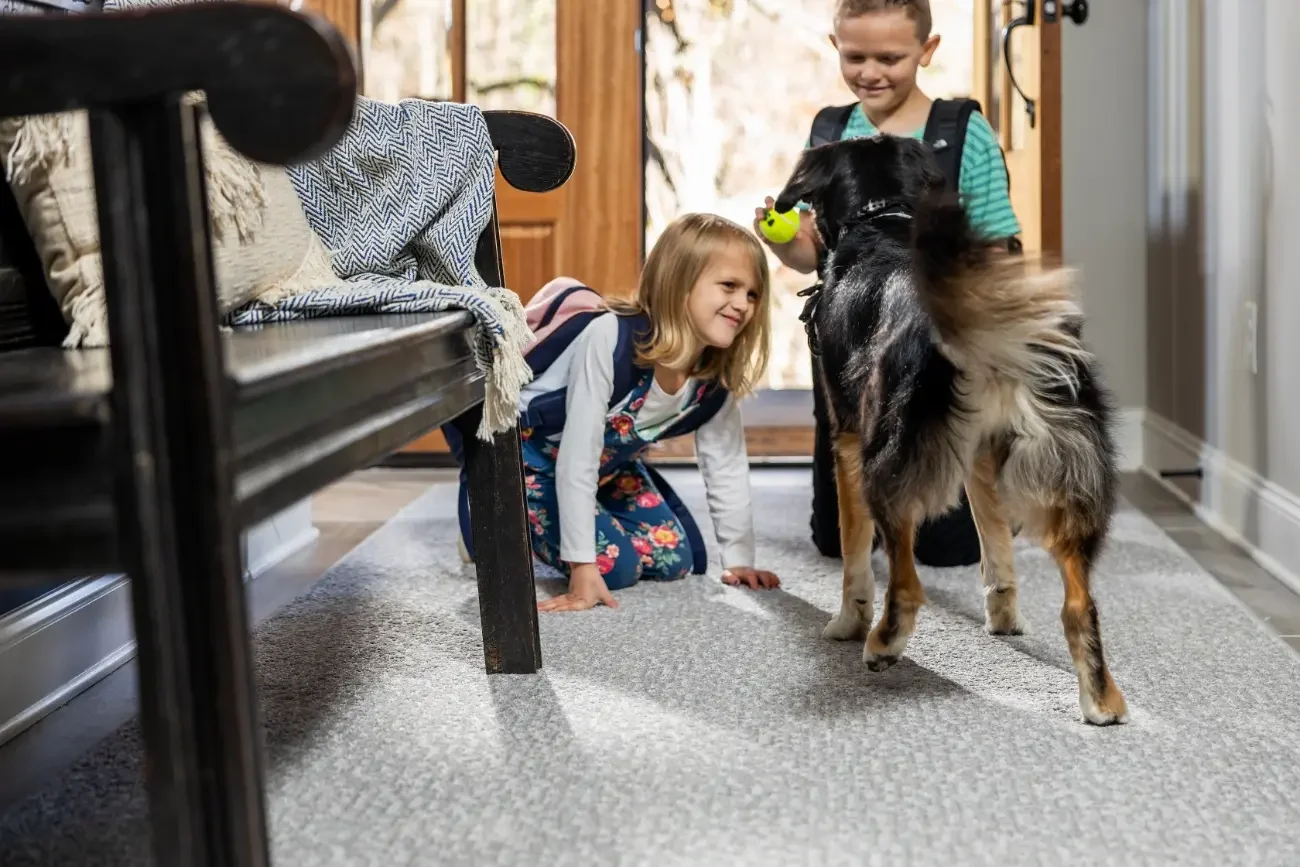
To choose the best flooring for kids, match the floor to the room’s main job: carpet or carpet tile where kids sit, crawl and sleep, luxury vinyl plank (LVP) where they spill and craft, and a thick rug or rubber where they tumble. Then check three things on the product itself: how soft it is for falls, how it handles spills, and whether it carries an indoor air label like FloorScore or CRI Green Label Plus.
In a Wisconsin home, add one more test: how the floor feels on a cold morning from October into April, and how it handles the grit and salt kids track in from November into April. At Harmony Flooring, we help families across Madison, Middleton, Sun Prairie, Monona and nearby towns choose floors that hold up to childhood and still look good years later. Have pets too? See our guide to flooring for kids and pets in Madison.
The Short Version
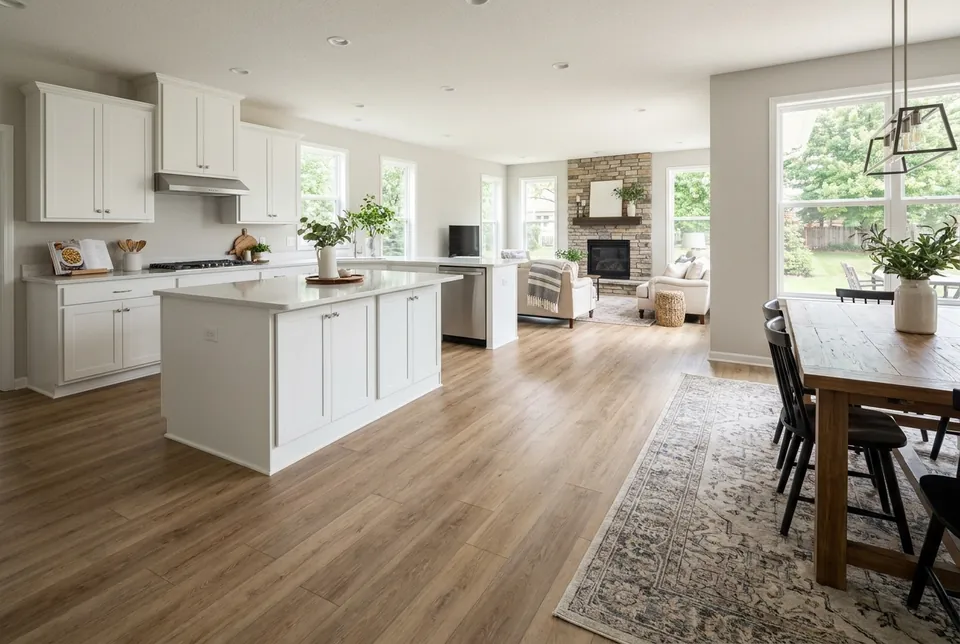
- Kids’ bedrooms: carpet over a firm, quality pad for warmth and quiet. If spills are constant, LVP with a large rug.
- Messy playrooms: LVP with a wear layer of 12 mil or more, or carpet tile you can swap one square at a time.
- Tumbling and climbing: rubber, or a thick rug with a non-slip pad over a hard floor.
- Basement playrooms: LVP or carpet tile over a slab that has been checked for moisture. Skip solid hardwood and standard laminate below grade.
- Any floor in a child’s room: a matte or textured finish for grip, and a FloorScore (hard surface) or CRI Green Label Plus (carpet and pad) label for low emissions.
Choosing Kids’ Flooring in 6 Steps
The quickest way to choose is to decide what the room does most, then check the floor against softness, spills, durability and air quality, in that order.
- Name the room’s main job. Sleep, messy play, active play, or homework. A nursery, a craft room and a teen’s bedroom need different floors, even in the same house.
- Decide how soft it needs to be. Crawlers, new walkers and floor-sitters do best on carpet with a good pad or a rug over a hard floor. Older kids care more about a desk chair that rolls.
- Plan for spills and water. Juice, paint, potty training and a basement slab all point to waterproof LVP or replaceable carpet tile. Standard laminate and hardwood need spills wiped up quickly.
- Check the durability specs. For LVP, a wear layer of at least 12 mil (20 mil for a busy playroom). For laminate, an AC3 rating or higher. For carpet, nylon or solution-dyed fiber with stain protection over a dense, firm pad.
- Check the indoor air label. FloorScore, run by SCS Global Services with the Resilient Floor Covering Institute, tests hard surface flooring for 35 VOCs under the California method. CRI Green Label Plus does the same job for carpet, cushion and adhesive. For kids with allergies, a hard floor with a washable rug is easiest to keep dust-free; if you love carpet, vacuum often and deep clean on a schedule.
- Plan for the next stage. The nursery becomes a playroom, then a teen’s room. LVP and carpet tile adapt well; wall-to-wall carpet is easy to replace later, while a hard floor can stay for many years.
What “Kid-Safe” Flooring Really Means
Kid-safe flooring softens falls, grips under socks, wipes clean, and does not add strong odors or emissions to a bedroom. Most families want a floor that checks these boxes:
- Cushion and comfort: Less impact when kids fall, warmer underfoot in winter.
- Slip resistance: Especially for socks-on-hard-floor situations.
- Easy cleaning: Spills, crumbs, markers, slime, and paint happen.
- Low stress durability: Resists scratches, dents, and wear from toys and rolling chairs.
- Healthy indoor air: Low odor products and low-emission materials are a big plus in bedrooms.
- Noise control: Softer, quieter floors help the whole house.
No one product is “best” at everything. The smartest approach is choosing based on the room’s main job: messy play, quiet sleep, or both.
Kids’ Flooring Comparison Table
Carpet is the softest and quietest floor for kids, LVP is the best for spills, and rubber is the best for impact. This table compares the floors families ask us about most.
| Floor | Soft for falls | Spills | Quiet upstairs | Best kids’ rooms |
|---|---|---|---|---|
| Carpet with a firm pad | Best | Weakest; a moisture-barrier pad helps | Best | Bedrooms, upstairs playrooms |
| Carpet tile | Good | Fair; swap a stained tile | Good | Playrooms, craft rooms, basements |
| LVP and rigid core vinyl | Fair; add a rug | Best (waterproof) | Fair with underlayment | Playrooms, spill-prone bedrooms, basements |
| Laminate | Firm | Fair; waterproof lines exist | Fair with underlayment | Older kids’ and teen bedrooms |
| Cork | Good | Fair; needs a sealed finish | Good | Quiet bedrooms, reading rooms |
| Rubber | Best for impact | Good | Good | Tumbling, sensory and gym spaces |
| Engineered hardwood | Firm; add a rug | Fair; wipe spills fast | Fair | Bedrooms with a rug |
Quick verdict: carpet over a firm pad is the pick for most kids’ bedrooms, while LVP wins in playrooms and basements where spills come daily.
Best Flooring for Playrooms and Bedrooms, Product by Product
Luxury Vinyl Plank (LVP) and Rigid Core Vinyl
Best for: Playrooms, main-level family spaces, basement playrooms, kid bedrooms with frequent spills
LVP is one of the most parent-friendly floors out there because it’s tough, forgiving, and simple to maintain.
Pros
- Easy cleanup: Wipes up snacks, juice, paint drips, and most kid messes fast.
- Water-resistant options: Great for basements, near bathrooms, or homes with constant spills.
- Durable wear layer: Handles toy traffic, chair movement, and general chaos.
- Comfortable compared to tile: Warmer and slightly softer underfoot than ceramic or porcelain.
- Style range: Wood looks, modern neutrals, even “tile look” without grout.
Cons
- Not the softest: Kids can still slip in socks. Add a rug in the main play zone.
- Dents can happen: Very heavy furniture or a hard drop can leave marks, especially on lower-end products.
- Lower-end LVP can look worn faster: Quality matters, especially in a busy playroom.
What to look for (parent-friendly specs)
- A wear layer of at least 12 mil, and 20 mil for a busy playroom. MSI’s published wear layer guide puts active family homes in the 12 to 20 mil range.
- A textured or matte finish to help hide scuffs and improve traction.
- A quality underlayment for sound reduction and comfort, especially on second floors.
Best Harmony Flooring tip:
If your playroom is in a basement, LVP is usually a top pick because it handles moisture better than wood-based products and still feels comfortable over a slab. Browse the vinyl plank floors we carry in Madison to compare styles.
Carpet (Wall-to-Wall)
Best for: Bedrooms, cozy playrooms, upstairs spaces where noise matters
Carpet is still the comfort champion for kids. It’s warm, soft, and quiet.
Pros
- Soft landing: Great for toddlers learning to walk and kids who play on the floor.
- Warmth in Wisconsin winters: Bedrooms feel cozier and more comfortable.
- Noise control: Reduces echoes and footstep noise in multi-level homes.
- Softer sound environment: Helps playrooms feel calmer.
Cons
- Stains and spills: Manageable, but you need the right style and cleaning habits.
- Allergens and dust: Carpet can hold onto particles if vacuuming is inconsistent.
- Matting in traffic paths: Some carpets show wear faster in “run lanes” or around beds.
What to look for (kid-smart carpet choices)
- Textured or patterned styles that hide footprints, vacuum marks, and traffic lanes.
- Nylon or solution-dyed fiber with stain protection: nylon springs back in traffic lanes, and solution-dyed color goes all the way through the fiber, so spills are easier to lift.
- A firm, quality pad for comfort and longer carpet life. A pad with a moisture barrier keeps spills from soaking down into the cushion. Our carpet pad and underlayment guide explains the options.
- A color that’s realistic for your household. Mid-tones and flecks tend to hide daily life best.
Best Harmony Flooring tip:
For kids’ bedrooms upstairs or over a garage, carpet is often the best way to make winter mornings warmer. Pair it with a good vacuum routine and you’re set. Our bedroom carpet guide covers fiber, pile and pad in detail.
Carpet Tile
Best for: Playrooms, bonus rooms, finished basements, craft rooms, mixed-use kid spaces
Carpet tile is a sleeper hit for families because it blends comfort with easy repairs.
Pros
- Replaceable tiles: If one area gets stained, you can swap individual tiles instead of replacing the whole floor.
- Comfort and sound control: Similar benefits to carpet.
- Great for “zones”: You can mix colors or patterns and create play areas visually.
Cons
- Seams can show: Depending on style, you may notice tile edges in certain lighting.
- Not every carpet tile is equally soft: Some are designed more for durability than plush comfort.
- Professional installation is key: Proper prep makes a big difference in how it looks long term.
What to look for
- A comfortable, dense product with a texture that hides dirt.
- A color and pattern that won’t show every crumb.
Best Harmony Flooring tip:
If you want a playroom that can survive a craft phase, a slime phase, and a “learning to eat cereal” phase, carpet tile is one of the most practical options.
Cork Flooring
Best for: Bedrooms, playrooms, reading rooms, quiet spaces, homes wanting a warmer hard surface
Cork is naturally comfortable and has a soft “give,” which makes it feel kid-friendly without being carpet.
Pros
- Softer underfoot: More cushion than hardwood or laminate.
- Warmer feel: Comfortable in cooler Wisconsin seasons.
- Quieter: Absorbs sound better than many hard surfaces.
- Unique look: Warm, natural style that works in modern and cozy homes.
Cons
- Can dent: Heavy furniture, sharp toys, or high heels can leave marks.
- Needs the right finish: Quality sealing helps protect against spills and stains.
- Sunlight can change color: Rooms with lots of direct sun may see some natural variation.
What to look for
- A strong factory finish and good sealing strategy for your room.
- Felt pads under furniture, always.
Best Harmony Flooring tip:
Cork is a great “middle ground” for parents who want something warmer and softer than vinyl, but easier to maintain than carpet.
Rubber Flooring
Best for: Dedicated playrooms, home gyms that kids use, sensory rooms, basement activity spaces
Rubber is common in gyms and schools for a reason. It’s built for impact and movement.
Pros
- Excellent traction: Helps reduce slipping.
- Impact absorption: Great for climbing toys, tumbling, and high-energy play.
- Durable and resilient: Holds up to rough play and dropped items.
- Quieter than hard surfaces: Helps with sound control.
Cons
- Style is more limited: It looks like rubber, even in designer options.
- Can have a noticeable odor initially: This typically improves over time, but it’s worth discussing before installing in bedrooms.
- Cost can vary a lot: Depending on thickness and quality.
What to look for
- A thickness that matches your use. Heavier play or gym use usually benefits from thicker rubber.
- Good edge and transition detailing for safety and cleaning.
Best Harmony Flooring tip:
If your kids’ playroom includes heavy activity or sensory play, rubber can be one of the safest and most durable floors you can choose.
Laminate Flooring
Best for: Kid bedrooms, teen rooms, playrooms where water exposure is low
Laminate is popular for scratch resistance and value. It can be kid-friendly with the right expectations.
Pros
- Very scratch resistant surface: Great for toy traffic and rolling desk chairs.
- Lower upfront cost: Good visuals at a strong value.
- Easy routine cleaning: Vacuum and damp mop.
Cons
- Moisture sensitivity varies: Standing water is still something to avoid.
- Feels harder than LVP: Less forgiving for falls.
- Noise: Can sound “clicky” without proper underlayment and rugs.
What to look for
- An AC3 or higher abrasion rating, the class laminate makers rate for heavy household traffic.
- Water-resistant laminate options if the room is spill-prone.
- An underlayment that improves sound and comfort.
Best Harmony Flooring tip:
Laminate can be great in bedrooms and older kids’ spaces. The wear layer on the laminate flooring in Madison, WI that we carry stands up to toys and dog nails. For toddler playrooms with frequent spills, we usually steer families toward LVP or carpet tile.
Engineered Hardwood
Best for: Bedrooms, upstairs living spaces, homes wanting real wood with better stability
If you want real wood and a kid-friendly plan, engineered hardwood can work, especially in lower-mess rooms.
Pros
- Real wood beauty: Warm and timeless.
- More stable than solid wood: Helpful in Wisconsin’s seasonal humidity swings.
- Works with area rugs: Rugs add softness and protect the main play zones.
Cons
- Scratches happen: It’s real wood. You’ll see wear over time in busy kid areas.
- Moisture risk: Spills need to be cleaned promptly.
- Not every engineered floor can be refinished: Depends on the thickness of the top layer.
What to look for
- A tougher factory finish.
- A texture that hides minor wear better than glossy smooth boards.
Best Harmony Flooring tip:
Among the hardwood floors we carry in Madison, engineered hardwood is often a better fit for kid bedrooms than full-time playrooms. If you love wood everywhere, we’ll help you plan rugs and entry protection so it ages gracefully.
Room-by-Room Recommendations for Wisconsin Families
For most families, the answer is carpet in bedrooms, LVP or carpet tile in playrooms, and LVP or carpet tile in a basement playroom. Here is how that breaks down.
Curious how a carpet or plank color looks in your child’s room? Upload a photo to our room visualizer, then bring the looks you like to your free in-home visit.
Best Playroom Floors
- LVP or rigid core vinyl for the easiest cleanup and strong durability
- Carpet tile for comfort plus replaceability
- Rubber flooring for high-energy play and safety
- Cork for quieter playrooms where comfort matters
Best Bedroom Floors for Kids
- Carpet for warmth, quiet, and comfort
- LVP for kids who spill everything and have pets in the room
- Laminate for scratch resistance and value (lower spill zones)
- Engineered hardwood with a rug for a real wood look
Best Basement Playroom Floors
LVP and carpet tile are the best basement playroom floors because a concrete slab can carry moisture you cannot see. Before anything goes down, the slab should be checked for moisture. Our basement moisture prevention guide walks through the steps, and a slab that already feels damp is covered in why a basement floor gets wet.
Floors for Kids Who Use a Wheelchair or Walker
A firm, smooth floor is the best choice for a child who uses a wheelchair, walker or gait trainer, with a soft zone added only where they play on the floor. The U.S. Access Board’s ADA guide for public buildings treats tile and wood as firm and stable, caps carpet pile at 1/2 inch, and calls for a firm pad or none at all. LVP with a rug and a vinyl-safe pad in the play corner, or a low, dense carpet without a plush pad, both work. Our aging-in-place flooring guide covers walkers, wheelchairs and thresholds in more detail.
Kids’ Flooring in Wisconsin Homes: Cold Floors, Salt and Older Houses
Wisconsin changes the advice in three places: floors feel colder for half the year, winter grit reaches the playroom, and many Madison-area homes are old enough that the floor being replaced needs a closer look.
- Cold floors, October into April: rooms over a slab or an unheated garage feel coldest. Carpet with a good pad, or a thick rug over LVP, keeps kids comfortable on the floor. Tile and LVP can also go over radiant floor heat if you are planning a bigger project.
- Salt and grit, November into April: ice melt and sand ride in on boots and end up in the play zone. A walk-off mat at the door, a boot tray, and a wipeable floor in any playroom next to the entry keep grit off the carpet.
- Older homes: the EPA lists vinyl floor tiles and the backing on vinyl sheet flooring and adhesives among the places asbestos may be found, and advises leaving undamaged material alone and never sanding it. If an old floor might contain it, have a trained, accredited asbestos professional test it before anyone pulls it up. In homes built before 1978, painted trim may contain lead, and the EPA requires anyone paid to disturb paint there to be certified in lead-safe work practices. Tell us the age of your home at the in-home visit so the plan accounts for it.
Parent-Approved Add-Ons That Make Any Floor Safer
A rug with a non-slip pad, felt pads on furniture and a good entry mat do more for safety than any single flooring upgrade. No matter what you choose, these details make a big difference:
- Area rugs in play zones: Softer landings and less slipping. Choose a rug pad that works with your flooring type.
- Felt pads on furniture: Prevents scratches and reduces noise.
- Entry mats and boot management: Especially in winter. Grit is a major cause of wear.
- Rounded transitions: Safer transitions between rooms and less tripping risk.
- Easy-clean baseboards: Helpful in playrooms and snack zones.
Keep Reading
- A Whole-House Flooring Plan for Busy Families
- Best Carpet for Bedrooms: How to Choose the Right Style, Fiber, and Cushion
- Top Scratch Resistant Flooring Options for Active Homes in Wisconsin
- Carpet Flooring in Madison, WI: styles, fibers and brands to compare
Sources: Carpet and Rug Institute: Green Label Plus, U.S. Access Board: ADA Standards, EPA: Protect Your Family From Asbestos and EPA: Lead Renovation, Repair and Painting Program.
Common Questions Parents Ask
What is the safest flooring for a playroom?
For soft falls, carpet or carpet tile is hard to beat. If you also want easy cleanup, luxury vinyl plank with a large rug and a non-slip pad in the play zone is a great choice. For climbing and tumbling, rubber flooring absorbs impact best.
What is the safest flooring for toddlers?
Carpet with a good cushion gives the softest landing. Luxury vinyl plank with a big rug is a strong option if spills are constant. On any hard floor, use rugs with a non-slip pad. Our flooring for kids and pets page has more ideas.
Is there such a thing as child proof flooring?
No floor is fully child proof, but luxury vinyl plank comes closest for spills and carpet tile comes closest for stains, since you can replace one square. Pick a wear layer of at least 12 mil for LVP or a stain-protected nylon for carpet, and add a rug where kids play hardest.
What’s best for a basement playroom in Wisconsin?
Luxury vinyl plank or carpet tile usually works best. It depends on moisture and how the room gets used. Have the slab moisture tested by a testing firm or your general contractor first, since the floor maker’s limit decides what can go down.
What flooring is non-toxic for a nursery or kid’s room?
Look for a third-party indoor air label. FloorScore covers hard surface floors like vinyl, laminate and cork, and CRI Green Label Plus covers carpet, cushion and adhesive. Both test for low VOC emissions, and airing the room out after install is a sensible extra step with any new floor.
What is the best flooring for a kid’s bedroom?
For most kids’ bedrooms, carpet over a firm, quality pad is best because it is warm, quiet and soft for floor play. If your child spills a lot or shares the room with a pet, luxury vinyl plank with a large rug is the easier floor to keep clean.
The Takeaway: The Best Kid-Safe Flooring Is the One That Matches Your Mess Level
If your playroom is a craft zone, snack zone, and race track, lean toward LVP, carpet tile, or rubber. If you want warm, quiet bedrooms, carpet is still a top choice. If you want a natural, comfortable hard surface, cork is worth a look. And if you want real wood, engineered hardwood with rugs is the best “kid plan.”
Plan a Kid-Friendly Floor With Harmony Flooring
For families across Madison, Verona, Fitchburg, Waunakee and nearby Dane County towns, Harmony Flooring can help you compare kid-safe options in person and pick a floor that fits your home and your day-to-day life. We design, measure and coordinate installation through vetted installation partners.
Visit our Madison showroom or schedule a consultation with Harmony Flooring. We’ll help you create floors that are comfortable, durable, and truly Covering Every Detail.
Planning New Floors in the Madison Area?
Get a free in-home estimate. We measure, bring samples to your kitchen table and give you one written price. No obligation.
Call or text 608-221-5500Schedule a Free Consultation
Shop our floors: Hardwood · Vinyl · Carpet · Tile · Laminate
Showroom: 2125 S. Stoughton Rd, Madison, WI 53716
You Might Also Like
-
- Floor Care and Cleaning
- Buying Guides
November 5, 2026
Protect Floors During the Holidays: A Wisconsin Guide
-
- Basements and Wisconsin Climate
- Buying Guides
October 30, 2026
Best Flooring for Wisconsin’s Climate: A Four-Season Guide
-
- Installation and Project Planning
- Buying Guides
October 26, 2026
8 Questions to Ask Before You Hire a Flooring Installer in Madison

