- Buying Guides
Why Is My Basement Floor Wet or Moldy? (And What to Do)
April 30, 2026
If you’ve stepped into your basement this spring and found damp concrete, a musty smell, or mold creeping along the baseboards, you’re not alone. Basement floor moisture is one of the most common issues we see in Madison-area homes, and late March through May is when it hits hardest.
Damp Basement Floor: What It Means
A damp basement floor comes from condensation, seepage or a slab wicking moisture. Tape a plastic sheet down for two days. Wet on top means condensation, so control humidity. Wet underneath means the slab moves moisture, so pick rigid-core LVP or tile. Seepage at cracks or edges needs fixing before any new floor.
The Short Answer: Your basement floor is wet for one of four reasons: groundwater pushing up through the slab during spring thaw, condensation on cold concrete, a missing vapor barrier under the slab, or a slow plumbing leak. Basement floor moisture ruins carpet, laminate and solid hardwood fast, so find the source before choosing new flooring.
Common Causes of Basement Floor Moisture and Mold
Most wet basement floors trace back to one of a few sources:
Groundwater pressure and spring thaw. As snow melts and soil saturates in March and April, water pushes through porous concrete even without a visible crack. Homes in Sun Prairie, Monona, and other Madison-area communities built on clay-heavy soil see this regularly.
Condensation. Cold concrete pulls moisture out of warm indoor air. Spring humidity rising against a still-cold floor creates the same effect as summer condensation, and it’s easy to miss until the floor or flooring material starts showing damage.
A missing or failed vapor barrier. Many Wisconsin basements, particularly in homes built before the 1980s, were finished without a proper moisture barrier under the floor. Without one, vapor moves steadily up through the concrete slab and into whatever’s above it.
Slow plumbing leaks. A drip from a water heater, utility sink, or supply line can go unnoticed for weeks. By the time the floor shows damage, the subfloor is often already compromised. Here’s what to do when your floors are water damaged.
The source matters because the fix is different for each one. Replacing flooring without identifying the cause means you’ll likely be replacing it again.
What Floors Fail First
Here’s something most homeowners don’t realize: concrete is not waterproof. Moisture vapor moves through a concrete slab constantly, even when the surface looks dry to the touch. That vapor has to go somewhere, and it goes into whatever’s installed on top.
Carpet is the most vulnerable. It absorbs moisture and traps it beneath the surface, often hiding mold growth for weeks before anything shows above it. By the time you notice the smell, the padding and potentially the subfloor underneath are already compromised.
Standard laminate swells at the seams when it absorbs vapor. Solid hardwood warps and buckles. Neither belongs below grade in a Wisconsin home with any history of moisture. A professional can test your subfloor for moisture before any product goes down, and that step matters. Replacing the same floor twice is an expensive lesson.
The Right Flooring After a Moisture Problem
This is where most guides stop short, and it’s where the real decision gets made. Once the moisture source is resolved, the replacement choice is the most important variable.
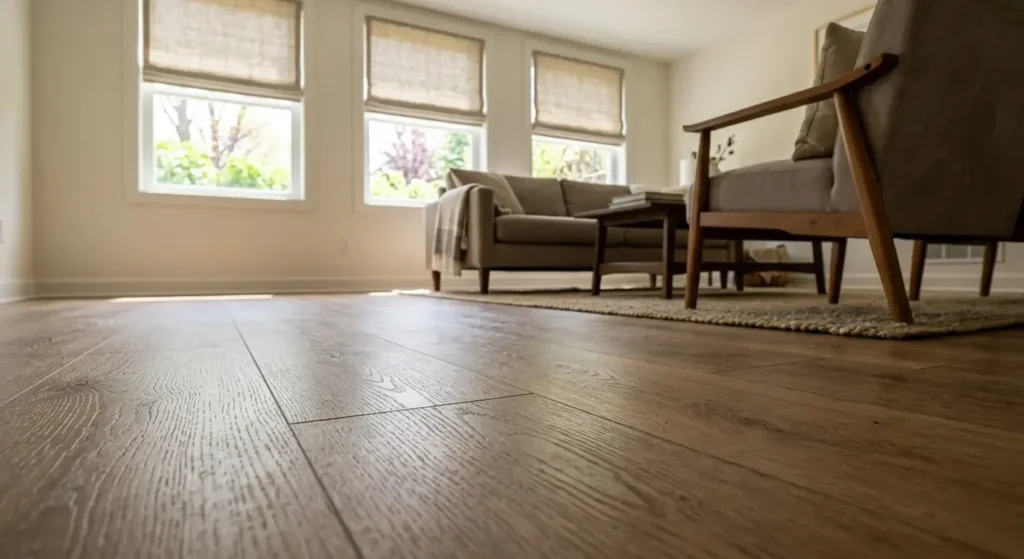
Luxury vinyl plank, specifically rigid-core (SPC) construction, is the most reliable option for Wisconsin basements with a moisture history. It’s inorganic, won’t support mold growth, and holds up to the humidity swings typical in an unfinished or semi-conditioned basement. If you want to understand exactly what separates a quality LVP product from one that will fail under the same conditions, our breakdown of what “waterproof” actually means for LVP floors is worth a read before you choose a product.
Porcelain tile is the other strong choice. It’s impervious to moisture, extremely durable, and long-lasting. It does require a stable, level subfloor and proper sealing at the grout lines. Done correctly, it’s one of the best below-grade options available.
Engineered hardwood can work in the right situation, but only after thorough subfloor moisture testing and with the correct vapor barrier in place. It’s not the first recommendation for a basement that has had active moisture issues.
Not sure where to start? Let’s assess what your floor actually needs. Schedule a free consultation or call or text 608-221-5500. A professional walkthrough tells you a lot before you spend anything on product.
When to Call a Flooring Professional
If any of these apply, it’s worth having a pro take a look before making any decisions:
Visible mold, soft spots, or persistent dampness that returns after drying
Flooring that’s buckling, separating at the seams, or discoloring along edges
A recent moisture event (flooding, slow leak) where you aren’t sure what’s salvageable
Planning to finish or refinish a basement and want the subfloor done right from the start
For homeowners thinking ahead rather than reacting, our guide to preventing moisture damage in basement floors covers what proper moisture management looks like before new flooring goes down.

Keep Reading
- Laminate Flooring: A Buyer’s Guide for Madison Homes
- How to Prevent Moisture Damage in Your Basement Floors
- Vinyl Flooring in Madison, WI: waterproof plank styles and brands
How Harmony Flooring Works
If your basement floor has been damaged by moisture, we walk you through the whole process.
Design. We help you find the right product for your specific basement conditions, lifestyle, and goals.
Measure. A professional measure visit handles every detail so nothing is left to guesswork.
Install. Our team manages everything from subfloor prep through the final walkthrough.
Covering Every Detail means you don’t have to figure this out alone.
Ready to find out what your basement floor actually needs? Schedule a free consultation or call or text 608-221-5500. We’ll assess the situation and help you make the right call the first time.
Basement Floor Moisture Questions
Why is my basement floor wet after it rains?
Rain saturates the soil around the foundation, and that water pressure pushes moisture up through porous concrete. Clay-heavy soil common around Madison holds water longer, so the dampness can linger for days.
Why is my basement floor wet in the summer?
Warm, humid summer air condenses on cool concrete, the same way a cold glass sweats. A dehumidifier and steady air movement across the floor usually solve it.
Does a wet basement floor mean the foundation is cracked?
Not necessarily. Water can push through porous concrete without a visible crack, and condensation can wet a floor with no leak at all. Seepage that shows up at cracks or along the walls is worth having checked.
Can you put new flooring over a damp basement floor?
Only after the moisture source is fixed and the slab is tested. Rigid-core vinyl plank and porcelain tile handle below-grade conditions best, while carpet, standard laminate and solid hardwood tend to fail.
Can a damp basement floor cause mold?
It can. Carpet and padding trap moisture against the concrete and can hide mold for weeks. A musty smell is often the first sign.
Why is my basement floor wet with no obvious leak?
Spring groundwater can push through porous concrete from below. Condensation is the other common cause when humid air meets a cold slab. Both show up as general dampness instead of one wet spot.
Is it normal for a basement floor to be damp?
A little condensation isn’t unusual. Dampness that keeps coming back is not something to live with. Many older Madison-area homes were built without a moisture barrier under the slab.
Can basement mold spread to the rest of the house?
Yes. Mold spores travel through the air and your HVAC system. Visible mold should be handled by a remediation pro before new flooring goes in.
Questions About Your Floors?
Call or text 608-221-5500Schedule a Free Consultation
Shop our floors: Hardwood · Vinyl · Carpet · Tile · Laminate
Showroom: 2125 S. Stoughton Rd, Madison, WI 53716