

- Installation and Project Planning
- |
- Buying Guides
8 Questions to Ask Before You Hire a Flooring Installer in Madison
October 26, 2026
Reviewed by Kevin Sill, Owner, Harmony Flooring
To choose a flooring installer in Madison, WI, compare how each one handles the work before install day: the measure, the subfloor check, the moisture plan, and a written scope. Tight seams and clean transitions matter, but the floors that fail early in Madison homes rarely fail because of a bad cut. They fail because of something nobody checked before the first plank went down.
This guide gives you eight questions to ask any installer or contractor, and what good answers sound like. Harmony Flooring designs, measures, and manages the install for homeowners across Madison and Dane County, so this reflects what we see on real projects here. To see how a project runs with us, read how our flooring installation in Madison works.
The Short Version: A good flooring installer is defined by the work done before install day: an accurate measure, a subfloor flatness check, a documented moisture result (on a slab, from a testing firm or the general contractor), an acclimation plan, and a written scope that says who handles furniture, old floor removal, and transitions. Ask to see the moisture and flatness results. Then confirm who is accountable if something goes wrong.
What Separates a Good Flooring Installer
A good flooring installer in Madison, WI is one who measures in person, checks the subfloor, will not install over a slab without a moisture test result, puts the scope in writing, and stays accountable after the last plank. Speed and neat cuts matter, but the measure, the subfloor evaluation, and the moisture plan decide whether a floor still looks right in five winters. Clean workmanship is the minimum. Preparation is the difference.
A quick search returns a long list, and plenty of them can lay a floor that looks good on day one. The harder question is who will catch the soft spot by the stairs, the slab that reads damp, or the doorway where the new floor will sit too high against the old one. Those calls are made at the measure, and they are the ones a homeowner almost never sees.
The Pre-Install Work That Decides How Long a Floor Lasts
In Madison homes, the moisture test result and the subfloor flatness check matter more to a floor’s lifespan than the installer’s speed or the product’s wear layer. Homeowners rarely ask to see either one.
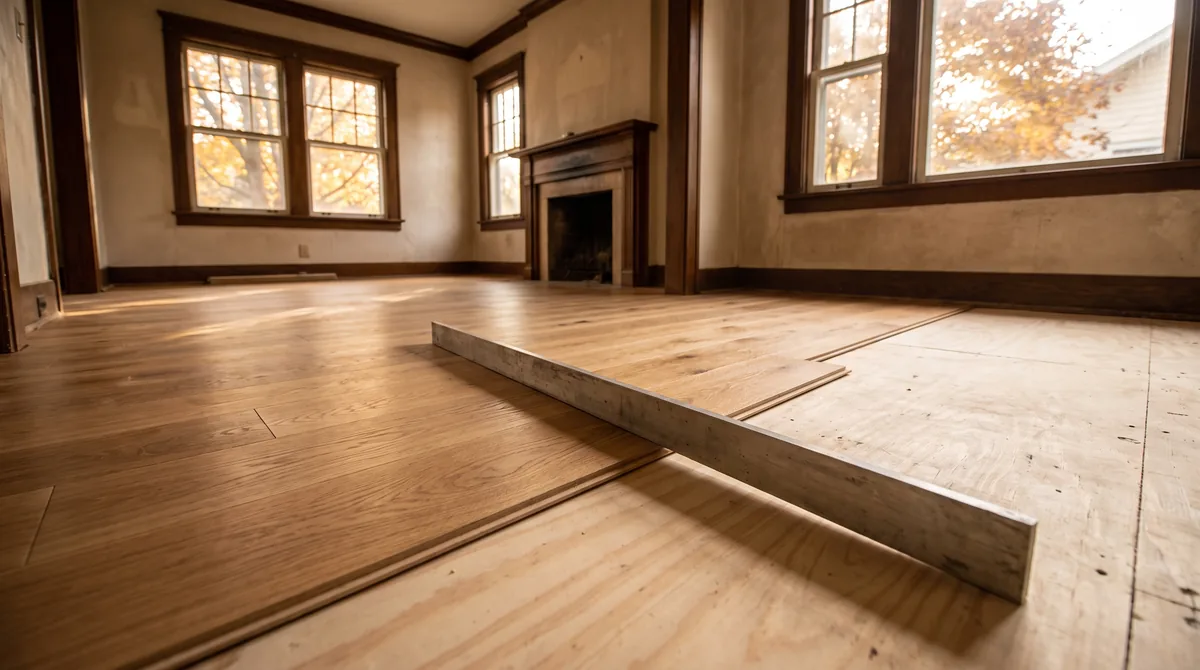
Here is why. A premium plank laid over a dip will flex at the seams every time someone walks across it, and click joints can separate or creak over time. A beautiful hardwood floor laid over a damp subfloor can cup within a season. Neither problem is the product’s fault, and neither shows up on install day.
The pre-install work a careful installer does looks like this:
- An accurate measure. Room dimensions, closets, stairs, and doorways, plus layout direction and where seams and cuts will land.
- A subfloor evaluation. Checking for loose or squeaky areas, damage, and flatness. Floating-floor instructions commonly call for 3/16 inch over 10 feet, but the number that counts is the one on your product’s installation instructions.
- A moisture check. A meter reading on wood subfloors, and for concrete slabs, a test by a testing firm or the general contractor using a method the manufacturer accepts. ASTM F2170, which uses relative humidity probes set into the slab, is the method manufacturers commonly reference. The floor maker’s limit decides whether the slab is ready.
- An acclimation plan. Hardwood and laminate often need time in the home before install, per the manufacturer. Our acclimation guide explains why.
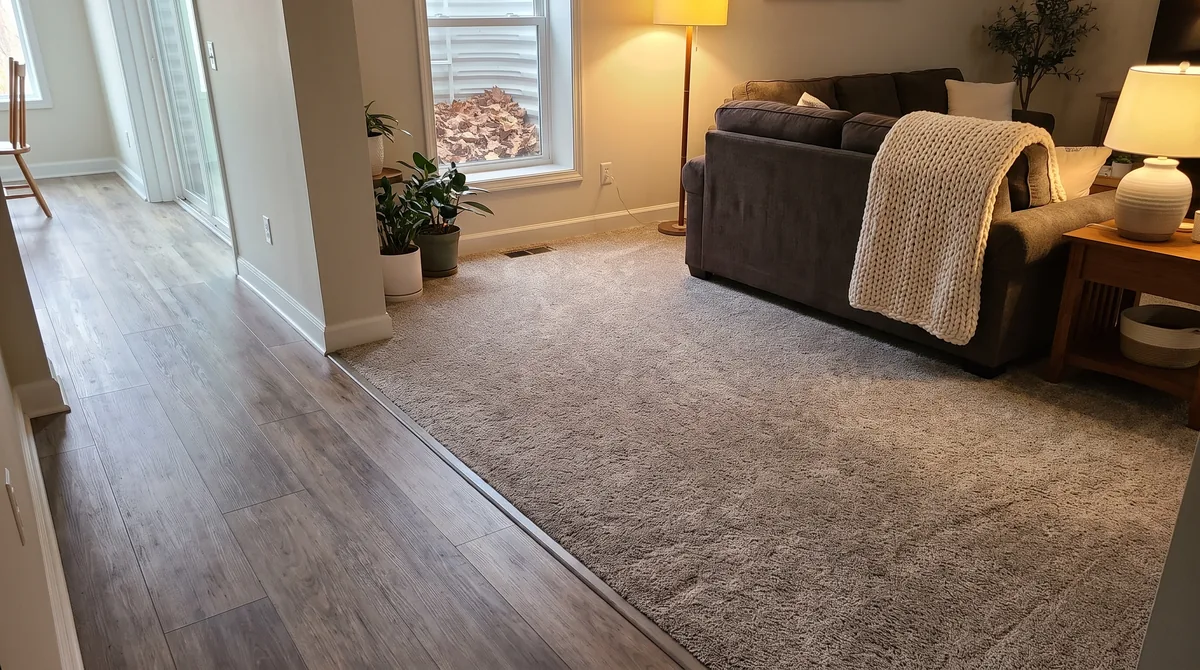
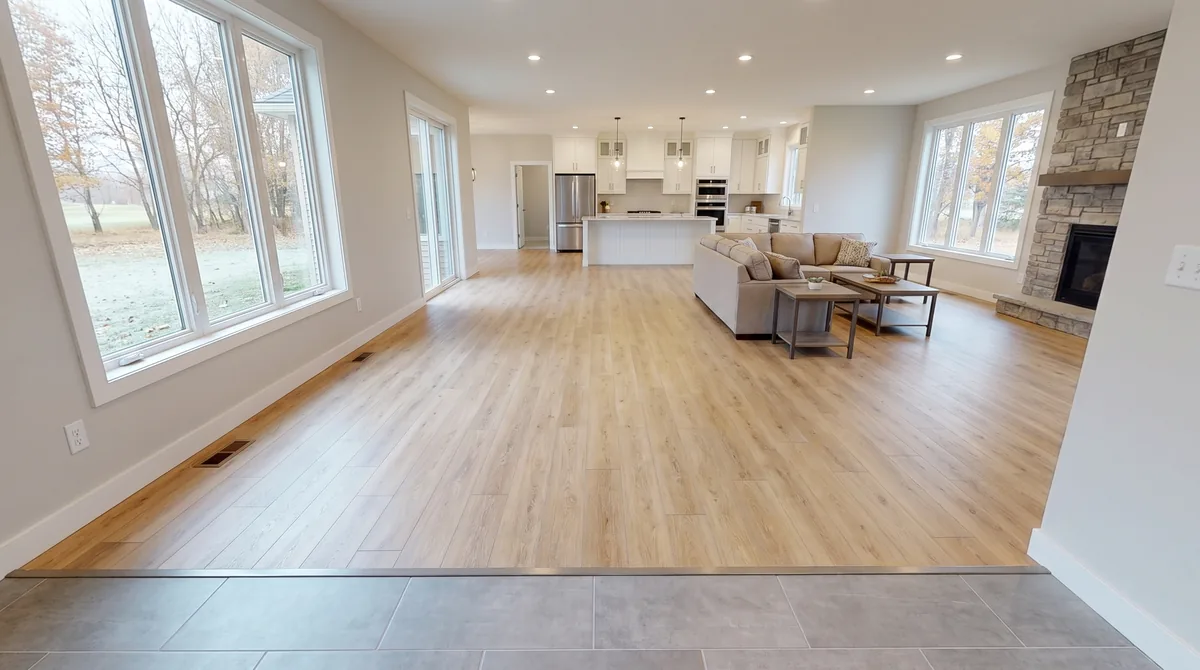
- A transition and height plan. Where the new floor meets tile, carpet, or a threshold, and how door clearances and stair noses will be handled.
For solid and engineered wood, the National Wood Flooring Association publishes installation guidelines that include checking the moisture content of both the wood and the subfloor before installation.
Questions to Ask Any Flooring Installer in Madison
The fastest way to compare flooring installers in Madison is to ask the same questions of each and listen for specifics. Vague answers are not always a red flag, but specific ones are a strong green flag. Use these eight questions as your checklist.
Question to ask |
What a good answer sounds like |
What should make you pause |
|
How will you check my subfloor? |
“We check flatness against the manufacturer’s tolerance and note anything that needs leveling or repair.” |
“It’ll be fine, we’ll see on install day.” |
|
How will moisture be checked, and can I see the result? |
“We take meter readings on wood, and on a slab we install only after a written test result from a testing firm or your general contractor.” |
No reading, or a plan to install over a slab with no written test result. |
|
Do you install per the manufacturer’s instructions? |
“Yes, because the product warranty usually depends on it.” |
Shortcuts described as “how we always do it.” |
|
Who moves furniture and removes the old floor? |
A clear answer, written into the scope. |
“We’ll figure it out that day.” |
|
How do you handle changes once work starts? |
“We stop, explain it, and get your approval in writing before continuing.” |
Surprise additions on the final invoice. |
|
Who do I call if something goes wrong later? |
One named point of contact. |
No single person accountable for the result. |
|
Who will actually do the install, and who answers for them? |
Named installers who work with this product regularly, and one company accountable for their work. |
A different crew every visit and nobody who answers for the result. |
|
Are the installers trained or certified on this product? |
Manufacturer training, or certification through a trade group such as the NWFA for wood or CFI for resilient flooring and carpet. |
No answer beyond years in business. |
Want a second set of eyes on any of these before you decide? Talk it through with us.
Licensing, Insurance, and Warranties in Wisconsin
Wisconsin does not issue a statewide license specific to flooring installation, so a “licensed flooring installer” claim deserves a follow-up question. What the state does have is a Dwelling Contractor certification, administered by the Department of Safety and Professional Services, for contractors who pull building permits on one- and two-family dwellings. Many floor replacements do not require a permit, but if yours is part of a larger remodel, ask who is pulling it. Your municipality is the final word on permit requirements.
Insurance is the more practical check. Ask for a certificate of insurance showing general liability coverage, check that the dates are current, and ask how workers are covered on your job.
Warranties come in two layers. The manufacturer’s product warranty covers the material, and it commonly depends on the floor being installed according to the manufacturer’s written instructions. The installation itself is a separate question, so ask who stands behind the workmanship and for how long, and get the answer in writing. Our guide to why a professional install is worth it covers how installation affects product warranties.
Choosing a Hardwood, LVP, Laminate, Carpet, or Tile Installer
The right installer for your project is one who works with your specific flooring type regularly, because hardwood, vinyl plank, laminate, carpet, and tile each go wrong in a different way when the prep or technique is off. Ask how often they install the exact product you chose.
Hardwood calls for an understanding of wood movement and NWFA practice. Browse the hardwood floors we carry in Madison. Our Madison hardwood guide covers species, finishes, and timing for local homes.
Rigid-core vinyl plank bridges small dips, but its click joints flex and can separate over a hump, while thinner glue-down vinyl shows every bump in the subfloor. See the vinyl plank floors at our Madison showroom. Carpet is about seams, stretching, and pad selection. Browse our Madison carpet collection.
Laminate and vinyl plank are different products, even though searches for laminate vinyl plank installers in Madison lump them together. Laminate has a wood-based core, while vinyl plank’s core is not, so the two should be discussed differently for kitchens, baths, and basements. Tile adds a third skill set: substrate prep, layout, and cure time. A good installer will tell you plainly when a product is a poor fit for the room. Browse laminate flooring in Madison, WI and tile flooring options in Madison.
Quotes, Scope, and Change Orders
A good flooring quote in Madison separates product from labor and spells out exactly what is included. Two quotes for the same room can look far apart simply because one includes subfloor prep, removal, and transitions and the other leaves them out. Compare scope, not just totals.
A written scope should cover:
- Product, quantity, and an overage for cuts and pattern
- Removal and disposal of the existing floor
- Subfloor prep, including leveling or repair if needed
- Underlayment or pad
- Transitions, trim, baseboard, and stair work
- Furniture moving, and which items are excluded
- How change orders are handled and approved
Change orders are normal, because hidden layers of old flooring or a soft subfloor turn up in older homes. What matters is that you approve the change before the work continues.
Install Day and the Final Walkthrough
On install day, a well-run project has no surprises because the scope already answered the questions. Installers typically move heavy furniture, while you clear small items, breakables, and closet floors. Our guide to getting your home ready covers the details.
Timelines depend on the product, the size of the job, and whether acclimation or subfloor work comes first. Our installation FAQ lays out typical timelines by flooring type.
The final walkthrough is your chance to look closely. Walk the whole floor with the installer and check these five things:
- Transitions and thresholds sit flush, with no lips to catch a toe.
- Doors swing freely and closet doors clear the new floor height.
- Baseboard and shoe molding are tight to the floor with no gaps or nail holes showing.
- Stair noses and any spot that felt soft before are solid underfoot.
- Care instructions and leftover product are handed over, which makes a future repair much easier.
Wisconsin Conditions That Change Which Installer You Pick
Wisconsin homes put flooring through conditions a national guide skips, so the right installer for a Madison home is one who plans for them. Dry forced-air heat, damp slabs, and a wide range of housing ages all change what good preparation looks like here.
From October into April, furnace heat pulls moisture out of indoor air, and wood floors shrink in response. An installer who ignores indoor humidity at install time sets a floor up for gaps or cupping later. Our moisture guide explains what to watch.
Basements and slab-on-grade rooms are the next test. Concrete can hold moisture you cannot see, which is why a real slab test from a testing firm or the general contractor matters before any floor goes down. Entries are the third: from November into April, salt and meltwater land on the first few feet inside the door, so ask how the installer will detail that threshold. Our entryway salt guide covers the care side.
Housing age matters too. Older Madison and Monona homes often have subfloors that have moved over decades, with dips, patched areas, and layers of past flooring. Much of Monona was built in the 1950s and 1960s, and its ranches and capes have smaller rooms and more doorways, so a good installer there spends as much care on transitions and door clearances as on the open floor. See flooring in Monona, WI for local service. Verona grew quickly after the Epic campus opened, and its late-1990s and 2000s subdivisions now need their builder-grade carpet and vinyl replaced, while newer phases still go up with builder-grade floors buyers want to upgrade. Our new-build guide covers that path. For local service, see flooring installation in Verona, WI.
Sources: NWFA Installation Guidelines, ASTM F2170, COREtec installation instructions, Wisconsin DSPS Dwelling Contractor certification.
Flooring Installer FAQs for Madison Homeowners
Should I buy flooring and installation from the same company?
Buying the floor and the installation from one company gives you a single point of accountability, because there is no argument later over whether a problem came from the product or the install. If you buy them separately, get both warranties in writing and confirm the installer will follow the manufacturer’s instructions for that exact product. Harmony Flooring supplies the floor and manages the install through vetted installation partners, so you have one point of contact for both.
What should a flooring installer check before giving a price?
Before giving a price, a flooring installer should measure every room in person, check the subfloor for flatness, soft spots and damage, and confirm moisture: a meter reading on wood, and on a concrete slab, a written test result from a testing firm or the general contractor. They should also see what is under the old floor, how the new floor will meet the floors beside it, and how doors and stairs will be handled. A price given without those checks is a guess, and the gap tends to show up later as a change order. At the free in-home visit, Harmony Flooring measures the rooms and checks the subfloor before you get one written price.
How much lead time does a flooring installer in Madison need?
Plan for two steps before install day: the in-home measure, then product arrival and any acclimation the manufacturer requires. Stocked products can move quickly, while special orders, hardwood that needs time in the home, and subfloor repairs add time. Fall calendars in Madison tend to fill with homeowners who want new floors before the holidays, so call early if you have a date in mind.
Do flooring installers in Wisconsin need a license?
Wisconsin does not have a statewide license specific to flooring installers. Contractors who pull building permits on one- and two-family dwellings need a state Dwelling Contractor certification, so ask whether your project needs a permit and who will pull it, and always ask for proof of insurance.
What should a flooring quote in Madison include?
A complete flooring quote in Madison separates product from labor and lists removal, subfloor prep, underlayment, transitions, trim, furniture moving, and how change orders are approved. If a quote leaves any of those out, ask whether it is excluded or simply not written down. Two quotes can only be compared when they cover the same scope.
How Harmony Flooring Works
Harmony Flooring is built around one accountable point of contact from start to finish. Our full-service model is Design · Measure · Install. Design means we help you choose a floor that fits how you live. Measure means we come to your home, check the subfloor, and plan transitions so nothing is guesswork. Install means Harmony manages the work through vetted installation partners, schedules the project, and checks the result with you at the walkthrough. That is what Covering Every Detail means on install day.
When you are ready to compare installers for your own home, schedule a free consultation or call or text us at 608-221-5500.
Questions About Your Floors?
Call or text 608-221-5500Schedule a Free Consultation
Shop our floors: Hardwood · Vinyl · Carpet · Tile · Laminate
Showroom: 2125 S. Stoughton Rd, Madison, WI 53716
You Might Also Like
-
- Installation and Project Planning
- Buying Guides
October 21, 2026
New Floors Before the Holidays in Madison: What’s Realistic
-
- Floor Care and Cleaning
- Buying Guides
October 19, 2026
Protect Entryway Floors From Salt and Ice Melt in Wisconsin
-

- Commercial Flooring
- Buying Guides
October 16, 2026
Municipal Building Flooring: A Wisconsin Buyer’s Guide

