- Buying Guides
Protect Entryway Floors From Salt and Ice Melt in Wisconsin
October 19, 2026

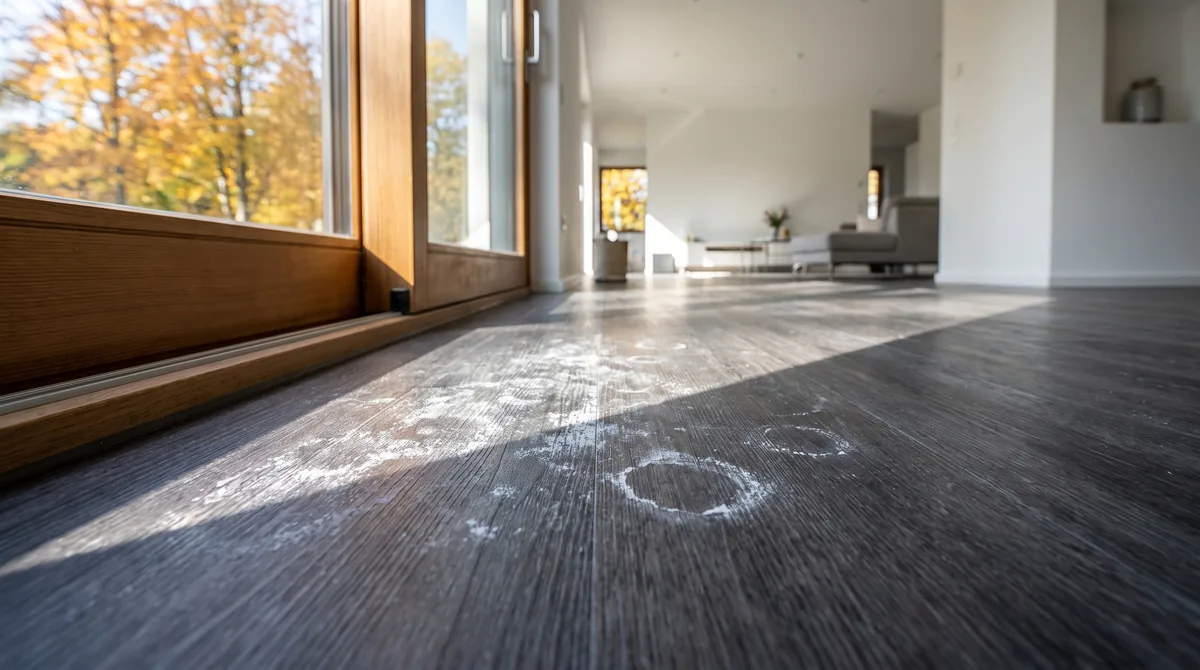
To protect entryway floors from salt and ice melt in a Wisconsin winter, stop the grit at the door with a long mat run, sweep before you mop, and clean with a pH-neutral product made for your floor. Madison-area entries take that beating from November into April, as boots carry road salt and slush onto the first ten feet inside the door. Harmony Flooring sees the result every spring: scratched finishes and a chalky white film that mopping will not lift.
The Short Version: Road salt and ice melt damage entryway floors two ways: the grit scratches like sandpaper, and the chloride residue pulls in moisture and dries to a white haze. Porcelain tile and luxury vinyl plank handle a Wisconsin winter best. Natural stone, site-finished hardwood, and laminate seams are the most vulnerable. The fix is a layered mat system, frequent dry sweeping, and a pH-neutral damp mop.
What Road Salt and Ice Melt Actually Do to Floors
Salt harms Wisconsin entryway floors through abrasion first and chemistry second. The pellets and the sand mixed with them are hard, angular grit, and every step drives it across your finish. Per the National Wood Flooring Association, salt leaves a white, abrasive residue that can scratch a hardwood surface, which is why sweeping matters more than mopping in January. Once the meltwater evaporates, that residue whitens grout, holds dampness against a wood or laminate finish, and works into unsealed stone.
Which Entryway Floors Handle Road Salt Best
Porcelain tile and luxury vinyl plank handle road salt best because neither surface absorbs meltwater, while hardwood, laminate, and natural stone need more care at a Wisconsin door. Here is how each floor we install holds up.
Floor type |
What salt does to it |
Winter routine |
|
Porcelain or ceramic tile |
Waterproof. Residue whitens grout |
Sweep daily, weekly pH-neutral mop, rinse grout |
|
Luxury vinyl plank |
Waterproof. Grit abrades the wear layer |
Sweep daily, pH-neutral vinyl cleaner, never flood |
|
Hardwood |
Not waterproof. Grit scratches, residue hazes the finish |
Dust mop daily, wipe water at once, hardwood cleaner only |
|
Laminate |
Not waterproof at seams. Water swells the core |
Sweep daily, barely damp mop, dry puddles immediately |
|
Natural stone |
Porous, needs sealing. Residue and acids etch it |
Sweep daily, pH-neutral stone cleaner, keep the seal current |
|
Carpet |
Holds salt and moisture instead of releasing it. White blooming by February |
Not a material we recommend at a Wisconsin entry |
The rule the table points to: if the first ten feet inside your door are hardwood, laminate, or stone, the mat system below is not optional.
How to Clean Salt Off Floors: A Daily and Weekly Routine
The routine that protects a Wisconsin entryway is short, and doing it often beats doing it hard. The NWFA’s advice on standing water: soak up a puddle and do not let it sit.
- Daily: sweep or dust mop the first ten feet inside every exterior door, then blot standing water.
- Weekly: damp mop with a pH-neutral cleaner made for your floor, wrung to damp rather than wet, and rinse tile grout with clear water.
- Every few weeks: wash the mats themselves, because a salt-stiffened mat holds the problem against your floor.
- In spring: check the traffic path in raking light (low light across the floor) for dull spots.
Our guide to cleaning luxury vinyl plank covers which cleaners and mops are safe on LVP.
Stopping Salt at the Door With a Layered Mat System
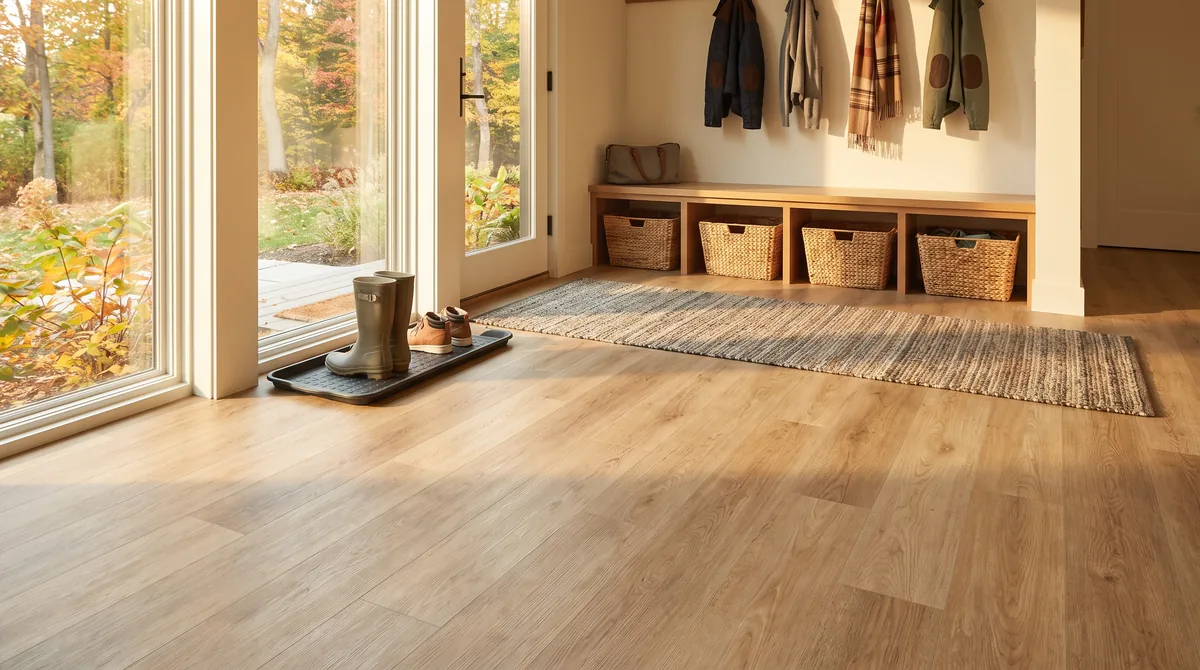
The most effective thing a Madison homeowner can do for an entry floor takes floor space, not product. Build three layers at each door: a coarse scraper mat outside, an absorbent mat just inside, and a boot tray or washable runner past that, where wet footwear lives all winter.
Length is what makes it work. A floor-care professional quoted in Sanitary Maintenance, a cleaning trade magazine, recommends 12 to 15 feet of matting split between the outside and inside of a commercial entrance. A home will not fit that, but one doormat is not a system: every extra stride of mat is grit that never reaches your floor.
Why Calcium Chloride Ice Melt Leaves a Film on Floors
Calcium chloride and magnesium chloride ice melts leave a tacky film on indoor floors because both are hygroscopic, so the residue never dries to a powder. Some blends sold as gentler on pavement or paws are built on these chlorides, which is why they can be harder on interior floors than plain rock salt. The film grabs the next round of grit and is harder to remove than the dry crust rock salt leaves.
What Not to Use on Salt-Stained Floors
Four common cleaning habits do more damage to a salt-stained floor than the salt itself.
- Steam mops on wood or laminate. Heat and forced moisture drive water into seams and finish.
- Vinegar on natural stone. Acid permanently etches marble, limestone, and travertine.
- High-alkaline all-purpose cleaners on luxury vinyl. They leave a dull film that is easy to mistake for salt haze.
- Wet mopping or abrasive pads to chase residue. Water spreads it into grout and seams, and a scouring pad takes the finish with it.
Salt Season in Madison and Dane County
Madison’s salt season runs from November into April, and it is heavier on some routes than others. Crews treat the Beltline and major arterials first, and if your commute uses them, your boots carry that salt home. Downtown and near-campus walk-ups sit on publicly salted sidewalks, and the floor inside the door takes it with no buffer.
Madison winters swing above and below freezing within the same week, so salty slush refreezes overnight and the entry floor runs a wet-dry-wet cycle for weeks. The volume of salt involved is easy to underestimate: the City of Madison reports that average chloride in Lake Wingra has risen about 2 mg/L per year since 1962 and topped 100 mg/L in 2016.
Housing stock matters too. Newer Cottage Grove subdivisions such as Westlawn Estates tend to have an attached garage and a mudroom, two catch points before the finished floor. In McFarland’s established neighborhoods, the 1960s to 1990s ranches and split-levels often open straight onto a hardwood or vinyl main floor with no landing. Those floors need the mat system most. For local service in both communities, see flooring in Cottage Grove, WI and flooring in McFarland, WI.
Harmony Flooring serves Madison, Dane County, and the surrounding communities through the full Design · Measure · Install process. If your entry is already showing wear, reach out for a free in-home consultation before the season starts again.
Signs Salt Has Damaged Your Entry Floor
Salt damage has moved past cleaning when you see any of these in the traffic path near the door:
- A haze or dull patch that survives a proper pH-neutral cleaning
- Scratches you can catch with a fingernail, or worn-through finish in the traffic path
- Water darkening the wood, or boards cupping, gapping, or lifting
- Swelling at laminate seams, crumbling grout, or tile loose near the door
None of these are homeowner fixes. Harmony Flooring can take a look and say whether the floor needs a refinish, a repair, or a replacement. Still choosing a material? Our mudroom and entryway flooring guide compares the options for Wisconsin homes. Browse our Madison tile collection and the vinyl plank flooring we carry in Madison, the two floors entry conversations usually start with.
Salt and Ice Melt Floor FAQs
What ice melt is safest for indoor floors?
No ice melt is harmless to a floor once it is tracked inside, so matting matters more than the product you spread. Plain rock salt dries to a crust that sweeps up. If you use a calcium or magnesium chloride blend for pets or pavement, lengthen the mat run at that door and sweep more often.
Will road salt permanently ruin my hardwood floors?
Not usually, if you address it during the season. Salt damages the surface first, with fine scratches and haze. Both live in the finish, and a professional refinish usually resolves them. Damage turns permanent once water reaches the wood and stains or cups it. Our refinish-or-replace guide explains how to tell the difference.
Does Wisconsin road salt damage luxury vinyl plank?
Road salt will not swell luxury vinyl plank, but the grit scratches and dulls the wear layer (the clear top layer that takes the abuse). A thicker wear layer resists it longer, and a matte, textured surface hides fine scratches better than a glossy one.
How do I protect hardwood floors by the front door in a Madison winter?
Keep wet boots off the wood entirely. Set the boot tray on a mat or tile landing, not on the hardwood, and run an absorbent runner as far into the room as the layout allows. Wipe meltwater the moment you see it, because salty water that sits in a seam is what turns surface wear into staining.
Before the First Salt Truck Rolls
Right now, while the ground is still bare, is the right time to set up a Wisconsin entry for the season. Three things to do this week:
- Put a scraper mat outside and an absorbent mat inside every door you use in winter.
- Set a boot tray or washable runner where wet footwear will live until spring.
- Buy a pH-neutral cleaner made for your floor type before the first treatment run.
If your entry floor did not survive last winter, Harmony Flooring can tell you what it needs, and if the answer is a new floor, we take it through Design · Measure · Install with installation coordinated through our vetted installation partners. Covering Every Detail is how we approach it.
Schedule your free in-home consultation or call or text us at 608-221-5500, and let’s get your entry ready before the salt starts flying.
Questions About Your Floors?
Call or text 608-221-5500Schedule a Free Consultation
Shop our floors: Hardwood · Vinyl · Carpet · Tile · Laminate
Showroom: 2125 S. Stoughton Rd, Madison, WI 53716
You Might Also Like
-

- Commercial Flooring
- Buying Guides
October 16, 2026
Municipal Building Flooring: A Wisconsin Buyer’s Guide
-
- Commercial Flooring
- Buying Guides
October 15, 2026
Apartment Turnover Flooring: A Madison Multifamily Guide
-