- Hardwood
Hardwood Floor Refinishing in Madison: Refinish or Replace?
June 2, 2026
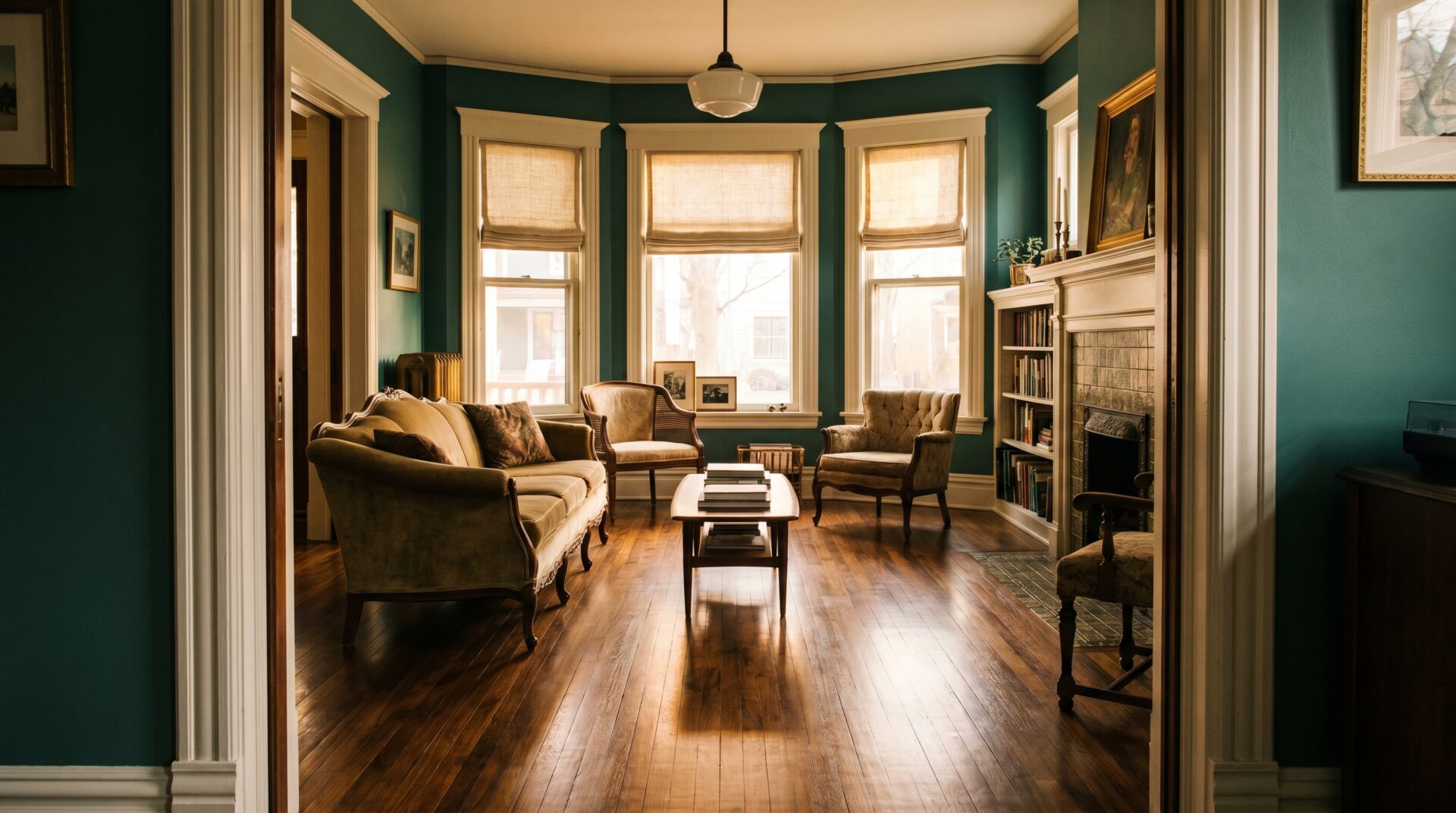
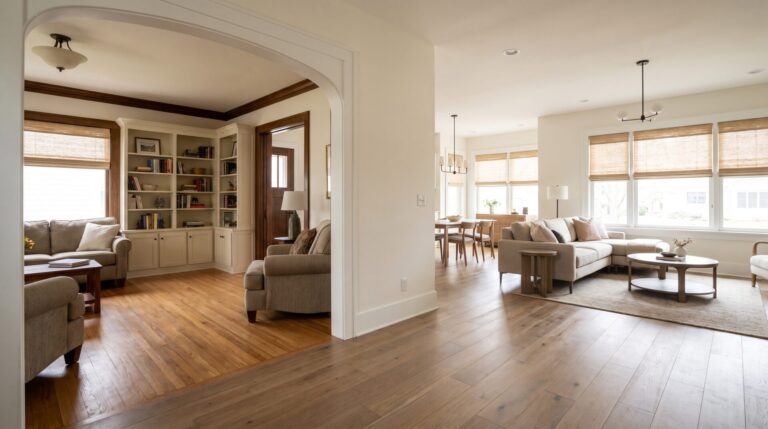
There’s a moment most homeowners with hardwood floors face eventually. The finish has worn through in the high-traffic lanes, the boards show scratches that no longer hide under a rug, and the question becomes: do we bring these floors back, or is it time for new ones? It is not always an obvious call. Real hardwood often has decades of life left in it, even when it looks tired. But not every floor is a refinishing candidate, and not every situation calls for the same answer.
This guide on hardwood floor refinishing for Madison homes walks you through how to make that decision. We will cover what to look for, when refinishing is the right call, when replacement makes more sense, and how the process actually works. The goal is to help you spend money on the path that gives you the best floor for the next twenty years, not just the next two.
The Short Version: Most solid hardwood floors with surface wear, light scratches, or a dull finish are excellent refinishing candidates and can be brought back beautifully. Replacement makes sense when the wood is sanded too thin, the boards are damaged structurally, or the floor is engineered with a thin wear layer. A professional assessment is the only reliable way to tell which path fits your home.
Key Takeaways
- Most solid hardwood floors can be refinished 5 to 10 times over their lifetime.
- Engineered hardwood can sometimes be refinished, but only once or twice depending on wear-layer thickness.
- The signs that point to refinishing (surface wear, dullness, light scratches) are different from the signs that point to replacement (cupping, deep damage, sanded-thin boards).
- Wisconsin’s humidity swings and salt-laden winters affect older floors in specific ways your refinisher should account for.
- The right call depends on the floor itself, not on a rule of thumb. A measure visit is where the decision gets made.
Signs Your Hardwood Floors Need Attention
Before you make any decision, take an honest look at the floor. The signs that something needs to happen fall into a clear set:
- Worn finish in traffic lanes. The clear coat is dulled or gone, but the wood underneath looks fine.
- Surface scratches that catch the light but do not cut deep into the wood.
- Color fade or graying in spots where sunlight has hit the floor for years.
- A finish that no longer cleans up the way it used to, even with proper care.
- Squeaking, popping, or movement when you walk across certain boards.
- Cupping or crowning (boards that have curled at the edges or bowed in the middle), often a sign of moisture issues underneath.
- Deep gouges, water stains, or burn marks that go through the finish into the wood.
The first four are the classic refinishing signals. The last three are red flags that need a closer look before any work happens, because they suggest something underneath the surface.
When Hardwood Floor Refinishing Is the Right Call
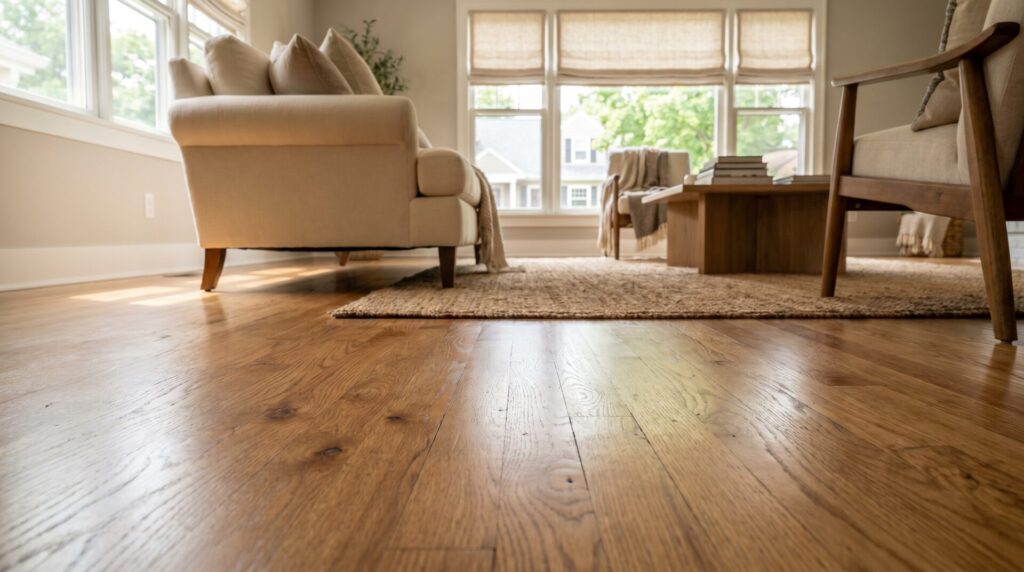
If your floors show surface wear without deep structural problems, refinishing almost always beats replacing. The wood is still good. The finish is what failed.
A solid hardwood floor with thickness left above the tongue-and-groove can be sanded and refinished anywhere from 5 to 10 times over its lifetime. That means a floor installed in 1950 may still have several refinishes left in it if it has been well cared for. You keep the original wood, often with grain and character that new hardwood cannot match, and you avoid the disruption (and waste) of a full tear-out.
Refinishing also opens up choices most homeowners do not realize they have. We can change the stain color, shift from a glossy finish to a matte or satin, and use modern waterborne finishes that cure faster, smell less, and hold up better than the polyurethane finishes used a generation ago. The floor that emerges often looks better than it ever did, especially in the older homes around Maple Bluff and Shorewood Hills where the original wood is genuinely beautiful under decades of buildup.
If you are weighing this decision before listing your home, our guide on whether new flooring increases home value covers the seller side specifically. For most Wisconsin homes with solid hardwood already in place, refinishing wins on both cost and return.
Cases Where Replacement Makes More Sense
There are situations where new flooring is the right answer, and it helps to know them before you spend money on a refinish that will not deliver.
Replacement is the call when:
- The hardwood has already been refinished multiple times and there is not enough wood left above the tongue to sand again. A flooring professional can measure this directly.
- The boards have suffered structural damage, water that has soaked deep into the wood, fire damage, or rot from a slow leak.
- Cupping or crowning is severe enough that sanding alone will not flatten the floor without sanding through to the subfloor.
- The existing floor is engineered hardwood with a thin wear layer that has already been refinished or is too thin to take a full sanding.
- You want a fundamentally different look, a new species, a wider plank, or a different installation pattern, that refinishing cannot deliver.
The honest version of this conversation is that most homes do not need replacement. A floor that looks rough is usually a refinishing project. The real value of a professional assessment is sorting out which situation you are actually in before you commit either way.
The Engineered Hardwood Question
Engineered hardwood is its own conversation, and it trips up a lot of homeowners. Engineered floors have a real wood top layer (the wear layer) bonded over a plywood or HDF core. The wear layer is what gets sanded during refinishing, and its thickness determines whether refinishing is even possible.
- 2 mm wear layer: Usually only one light sanding, if any. Often better to refinish in place with a screen-and-recoat rather than a full sand.
- 3 mm wear layer: Typically good for two to three light refinishes over the floor’s lifetime.
- 4 to 6 mm wear layer: Refinish-friendly, sometimes five or six times. These premium engineered products behave more like solid hardwood for refinishing purposes.
If you do not know what wear layer your engineered floor has, we can usually figure it out from a sample or a transition piece. This matters in newer construction around Sun Prairie where engineered hardwood is common, and the answer of “refinish or replace” depends entirely on what is sitting under that top wood layer.
If you are not sure what your floor is or what it can take, talk through your options with us and we will figure out the wear layer and the right call.
What the Hardwood Refinishing Process Actually Looks Like
For most residential projects, refinishing takes 3 to 5 days from the day our team arrives until you are walking on the floor again. The work breaks down into a clear sequence:
- Prep. Furniture comes out, baseboards are protected, and dust containment goes up.
- Sanding. Multiple passes with progressively finer grits, starting with a coarse cut to remove the old finish and any surface damage, finishing smooth and ready for stain.
- Stain (optional). If you are changing the color, this is where it happens, with dry time between coats.
- Finish coats. Modern waterborne finishes cure quickly and are low-odor compared to the oil-based finishes of past decades.
- Cure and walk-on. Light foot traffic is usually fine within a day of the final coat. Furniture and rugs come back a bit later to let the finish fully harden.
The process is dust-controlled but not zero-dust, no matter what anyone tells you. Plan to be out of the affected rooms during the work and for a day or two after the final coat. Most clients use the timing as an excuse for a short trip or to stay with family.
The Wisconsin Factor in Refinishing
A few local considerations matter when timing or planning a refinishing project in the Madison area:
- Humidity. Wisconsin summers run humid and winters run dry from forced-air heating. The best refinishing windows are late spring and early fall, when interior conditions are more stable and finishes cure predictably.
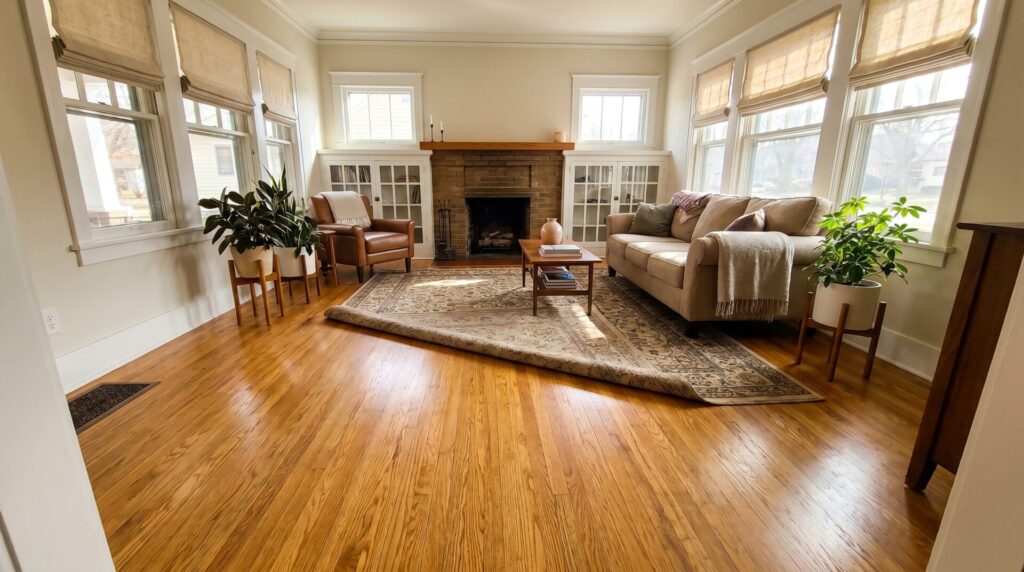
- Older homes with original hardwood. Many homes in Maple Bluff, Shorewood Hills, and Madison’s near-east side have original oak or maple floors worth saving. These are often the best refinishing candidates we see, because the wood quality from that era is hard to match with new product.
- Salt and ice-melt at entryways. If your hardwood runs to the front or garage door, expect heavier wear in those paths. Refinishing addresses the damage, and a thoughtful runner or rug at the entry helps protect the new finish.
If you are weighing whether to keep the existing floors or move to something else entirely, our guide on hardwood vs. LVP for Madison homes covers that comparison directly. For homes with real hardwood already installed, refinishing is almost always the better starting point.
Frequently Asked Questions About Hardwood Floor Refinishing
How do I know if my hardwood floors need refinishing or replacing?
Look at the wood itself. If the surface finish is worn but the boards are solid, flat, and not too thin from previous refinishes, you have a refinishing candidate. If the wood shows deep damage, severe cupping, or has been sanded to the point where the tongue is exposed, replacement is the call. A measure visit gets you a clear answer in about thirty minutes.
How many times can hardwood floors be refinished?
Solid hardwood floors can typically be refinished 5 to 10 times over their lifetime, depending on the original thickness and how aggressively each prior sanding cut. Engineered hardwood depends entirely on wear-layer thickness, usually 1 to 3 refinishes, sometimes more for premium products with thick wear layers.
Can engineered hardwood floors be refinished?
Often, but not always. The answer depends on the wear-layer thickness above the engineered core. A 2 mm wear layer may handle one light refinish or a screen-and-recoat. A 4 to 6 mm wear layer can handle multiple full refinishes. We can determine this on a measure visit.
How long does hardwood floor refinishing take?
A typical residential project runs 3 to 5 days from start to walk-on, plus another few days before furniture and rugs go back. Larger or multi-room projects may run longer. Most of that time is sanding, finish application, and cure between coats.
Is it worth refinishing old hardwood floors?
For most solid hardwood in good structural condition, yes. Refinishing keeps the original wood, costs less than full replacement, and often delivers a floor that looks better than it ever did. The original wood in older Madison homes is often higher quality than new product available today.
Will refinishing fix scratches and water stains?
Surface scratches and shallow stains, yes. Sanding removes the top layer where surface damage lives. Deep gouges that have penetrated past the finish into the wood, or water stains that have soaked deep into the grain, may persist or require board replacement before refinishing.
How Harmony Flooring Approaches Refinishing
Every refinishing project we do starts the same way: a real look at the floor in your home.
- Design: We help you decide on stain, sheen, and finish based on the wood you have and the look you want. Sample boards are part of the conversation so you see real results before any commitment.
- Measure: We come to your house, check the wood thickness, look at the subfloor, identify any board-level damage, and tell you straight whether refinishing is the right move or whether replacement makes more sense.
- Install: Our team handles the entire process from prep through final cure, with dust controls and a clear timeline you can plan around.
If your hardwood has seen better days and you are not sure which path makes sense, let us help you narrow it down. A measure visit costs nothing and gives you a clear answer for the floor you actually have, not a generic estimate based on a rule of thumb.