- Hardwood
Engineered Hardwood vs. Solid Hardwood for Madison Homes
June 11, 2026
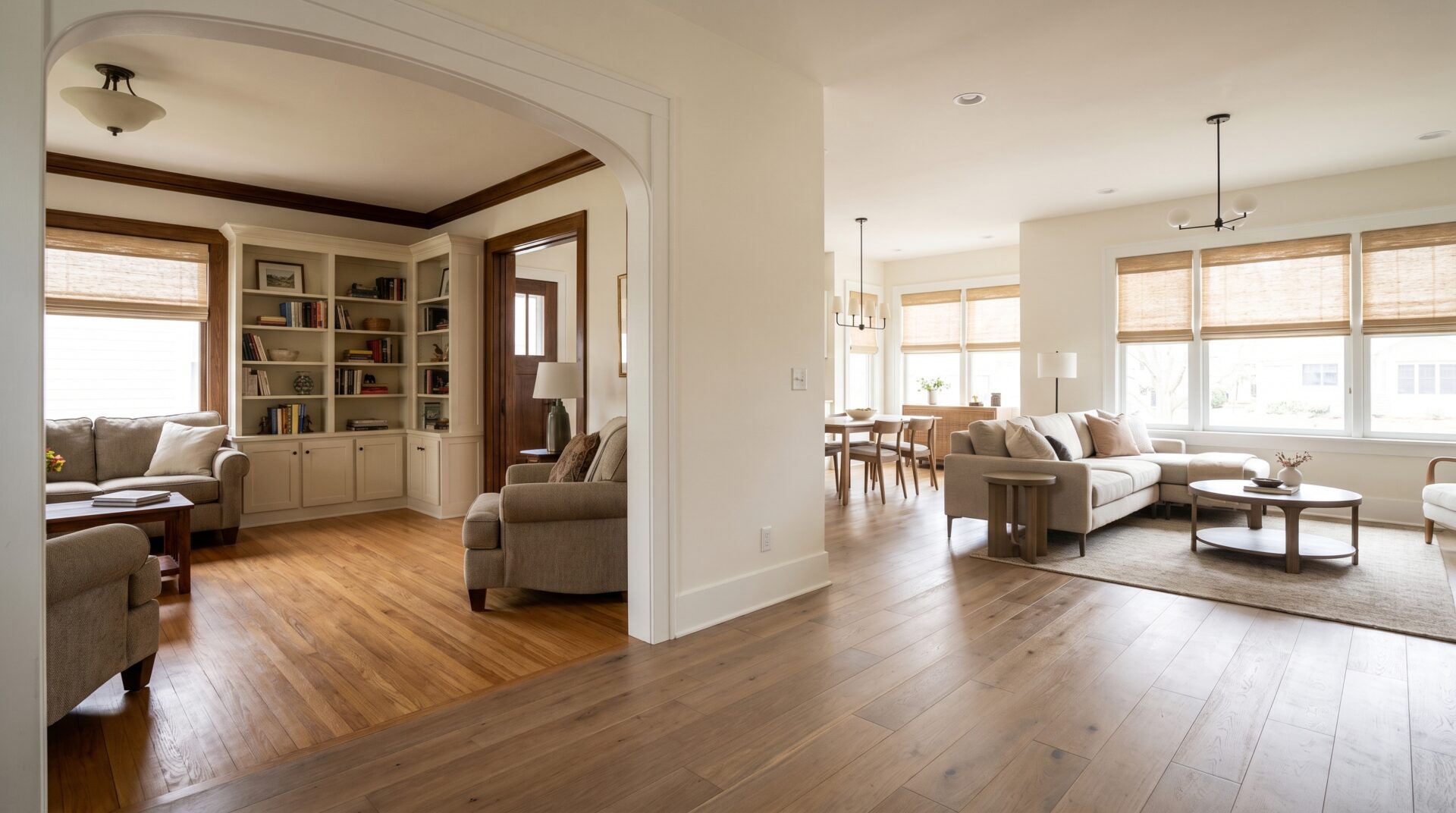
When Madison homeowners start looking at real wood floors, the decision usually narrows to two products quickly. Both look like hardwood. Both feel like hardwood. Both can last for decades when they’re the right product for the space. But solid hardwood and engineered hardwood are built differently, behave differently in a Wisconsin home, and the right call between them is rarely a coin flip.
This guide walks through engineered hardwood vs. solid hardwood for Madison homes: what each one is, where each one wins, and how the climate of our Wisconsin winters tips the decision in ways most national guides miss.
Quick Verdict
For most Madison homeowners installing real wood floors above grade in main living areas, solid hardwood is the traditional answer and still a strong one if the home maintains stable humidity year-round. For basements, anywhere over a concrete slab, in newer tightly-built homes where forced-air heating dries the air dramatically in winter, or anywhere you want a thinner profile with predictable performance, engineered hardwood is the safer call. Both are real wood. Both are premium. The right pick comes down to the room and the conditions.
Key Differences at a Glance
- Construction. Solid is one piece of wood, typically 3/4 inch thick. Engineered is a real wood top layer bonded to a multi-layer plywood or HDF core.
- Humidity response. Solid swells and contracts with seasonal humidity. Engineered handles humidity swings much better.
- Where it can go. Solid is for above-grade rooms. Engineered works above grade, on grade, and in many below-grade installations.
- Refinishing. Solid can be refinished 5 to 10 times. Engineered can be refinished 1 to 6 times depending on wear-layer thickness.
- Lifespan. Both can last 50+ years in the right conditions. Solid usually wins on absolute longevity in stable spaces. Engineered usually wins where humidity is unpredictable.
- Look and feel. Properly installed, the two are nearly indistinguishable underfoot.
Solid Hardwood: What You Get
Solid hardwood is exactly what it sounds like. Each plank is milled from one piece of wood, typically 3/4 inch thick, with the grain and character running all the way through the board. There’s nothing underneath the surface but more of the same wood.
The advantages are real. A solid hardwood floor in the right home is the closest thing flooring offers to a generational investment. With proper care, the floors installed in a Madison craftsman bungalow in 1950 are still in many of those homes today, often refinished multiple times to keep them looking new. Solid wood develops patina, ages beautifully, and can be brought back to life through refinishing many times over.
The trade-offs are also real. Solid hardwood reacts to humidity. In the Wisconsin winter, when forced-air heating drops indoor humidity into the 20-30% range for months, solid wood loses moisture and shrinks, opening gaps between boards. In summer, it absorbs moisture and expands, sometimes closing those gaps and sometimes causing cupping. Most homeowners can live with mild seasonal movement. Some homes magnify it more than others.
Engineered Hardwood: What You Get
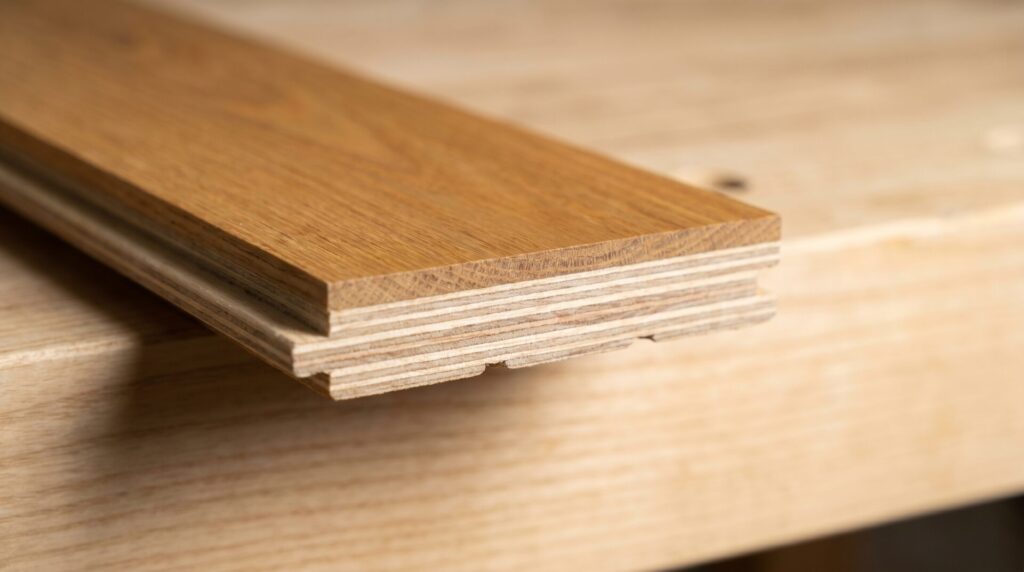
Engineered hardwood is a real wood floor built on a smarter foundation. The top layer (the wear layer) is real wood, often the same species and finish you’d see on a solid product. Below that wear layer is a multi-layer plywood or HDF core with grain running in alternating directions, which is what makes the product dimensionally stable.
The advantages: engineered hardwood handles humidity changes far better than solid. It can be installed in basements, over concrete slabs, and in rooms with radiant heat. It comes in wider planks than solid hardwood is built for, which fits modern open-floor-plan aesthetics. Installation is usually faster, since engineered can float, glue down, or nail down depending on the product and subfloor.
The trade-offs: refinishing depends entirely on wear-layer thickness. A 2 mm wear layer might handle one light refinish in its lifetime. A 4 to 6 mm wear layer can refinish multiple times, putting it on par with solid wood for longevity. Premium engineered products are not less expensive than solid hardwood, and the wear-layer spec is what determines whether you’re buying a long-term floor or a shorter-term product dressed up as one.
If you want to understand the refinishing differences in depth, our hardwood refinishing guide covers what each product can and can’t handle.
When Solid Hardwood Is the Right Call
There are clear situations where solid is the answer.
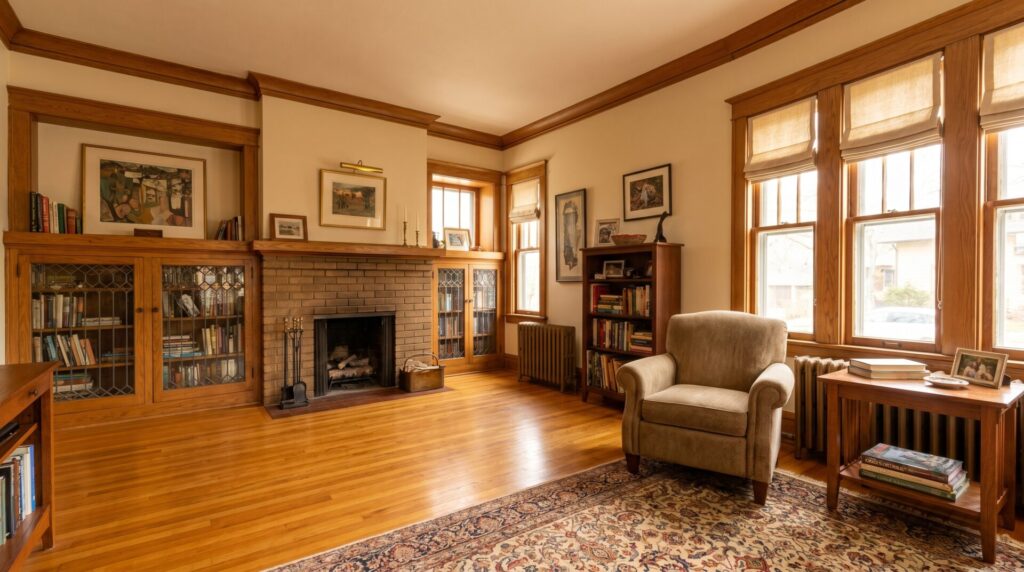
- Older Madison homes with existing solid hardwood floors. If you already have solid wood in your craftsman, Victorian, or Foursquare home, matching new solid hardwood to existing rooms keeps the floor cohesive and preserves the home’s character. Many homes around Maple Bluff and Shorewood Hills fall into this category.
- Main-floor rooms in homes with humidified central air. If your home has a whole-house humidifier and maintains 30-50% relative humidity year-round, solid hardwood will perform beautifully and last generations.
- Rooms where you’ll value patina and aging over time. Solid wood develops character with use that engineered products mimic but don’t fully replicate. For some homeowners, that aging is the point.
- Spaces where you want maximum refinishing capacity. A solid hardwood floor with 3/4 inch thickness has decades of refinishes ahead of it. That’s a real long-term asset.
Choosing Engineered Hardwood Instead
Engineered hardwood wins clearly in these situations.
- Basements and below-grade rooms. Solid hardwood cannot go on or below grade. Engineered can, and often does, in finished basements across the Madison area.
- Over concrete slabs anywhere in the house. Slab-on-grade construction or basement-level main floors call for engineered, period.
- With radiant floor heat. Engineered handles the heat cycles of radiant systems far more predictably than solid wood.
- In newer construction with aggressive HVAC. Tightly-built homes in newer Sun Prairie subdivisions and similar areas often dry out dramatically in winter. Engineered hardwood doesn’t react the way solid does.
- For wide-plank looks. If you want a 7-inch, 9-inch, or wider plank, engineered is built for it. Solid hardwood in wide-plank format is more prone to seasonal movement.
- When installation timing matters. Engineered can often be installed without long acclimation periods or floating over an existing subfloor, which speeds up the project.
If you’re weighing your options for a specific room or whole-house project, talk through your options with us and we’ll walk through which product fits your house.
The Wisconsin Climate Factor in This Decision
This is where the engineered vs. solid hardwood Madison question gets specific. Wisconsin is one of the harder climates in the country on solid hardwood, for one reason: dryness.
Forced-air heating in a Wisconsin winter pulls indoor humidity well below what solid hardwood is built for. The ideal humidity range for solid wood is roughly 30-50% relative humidity year-round. In an unmodified Wisconsin home running forced-air heat, indoor humidity in January and February often sits in the 15-25% range. That’s outside the comfort zone for solid wood, and it shows up as seasonal gapping, occasional cupping, and visible movement at the board edges.
A few ways homeowners handle this:
- Whole-house humidification. Adding a properly sized humidifier to the furnace keeps winter humidity in range. This is the right path for homeowners committed to solid hardwood throughout the house.
- Picking engineered for trouble rooms. Some homeowners do solid in main living areas and engineered in rooms that get hit hardest by dry air (mudrooms, family rooms with vaulted ceilings, basements). Mix and match is common.
- Going all engineered. The most predictable performance comes from picking engineered everywhere. The floors stay flat through every season without any active humidity management.
There’s no wrong answer here. Both products work in Wisconsin. The question is how much you want the home to work around the floor versus the floor work around the home.
How Harmony Flooring Helps You Decide
Every hardwood project we do starts the same way.
- Design: We help you decide between solid and engineered based on the specific rooms, your home’s HVAC setup, and the look you’re after. Sample boards come to your house so you see how the wood performs in your actual light.
- Measure: We come to your house, check the subfloor and slab where applicable, look at your HVAC and humidity setup, and tell you straight which product fits your conditions.
- Install: Our team handles the entire process with proper acclimation, subfloor prep, and finishing.
Most decisions get made on the measure visit, once we’ve seen the rooms and the conditions. The right answer for your kitchen may not be the right answer for your basement. Our job is to help you sort that out.
Frequently Asked Questions About Engineered vs. Solid Hardwood
Is engineered hardwood as good as solid hardwood?
For most modern installations, yes. Premium engineered hardwood with a thick wear layer performs at a level very close to solid hardwood, with significantly better humidity tolerance. For homes in Wisconsin, premium engineered is often the more practical answer.
Can you tell the difference between engineered and solid hardwood when walking on it?
No, in most cases. Properly installed, the two products feel essentially the same underfoot. The differences show up over time in how each handles humidity changes and how many refinishes they can take, not in daily feel.
Can engineered hardwood be refinished?
Yes, if the wear layer is thick enough. A 2 mm wear layer typically handles one light refinish. A 4 to 6 mm wear layer can handle multiple full refinishes, comparable to a solid hardwood floor.
Which lasts longer in a Madison home?
In stable humidity conditions, both can last 50+ years with proper care. In typical Wisconsin homes without whole-house humidification, engineered hardwood often outperforms solid over the long term because it doesn’t react to winter dryness.
Can solid hardwood go in a basement?
No. Solid hardwood is not rated for below-grade installation because of moisture and humidity issues at slab level. Engineered hardwood is the right call for finished basement floors.
Choosing the Right Hardwood for Your Madison Home
Solid hardwood and engineered hardwood are both real, premium products that can deliver beautiful floors for the long run in a Madison home. The right pick comes down to where the floors are going, how your home handles humidity, and what you value most. For most modern Madison homes, the honest answer leans engineered. For homes set up to maintain stable humidity year-round, solid still has a strong case.
If you’re ready to look at samples, talk through your specific rooms, and figure out which product fits your house, let us help you narrow it down. Harmony Flooring covers every detail of the Design · Measure · Install process, so the floor you choose performs the way it should from the day it goes down.