- Blog
Flooring for Historic Homes in Maple Bluff and Madison
July 23, 2026
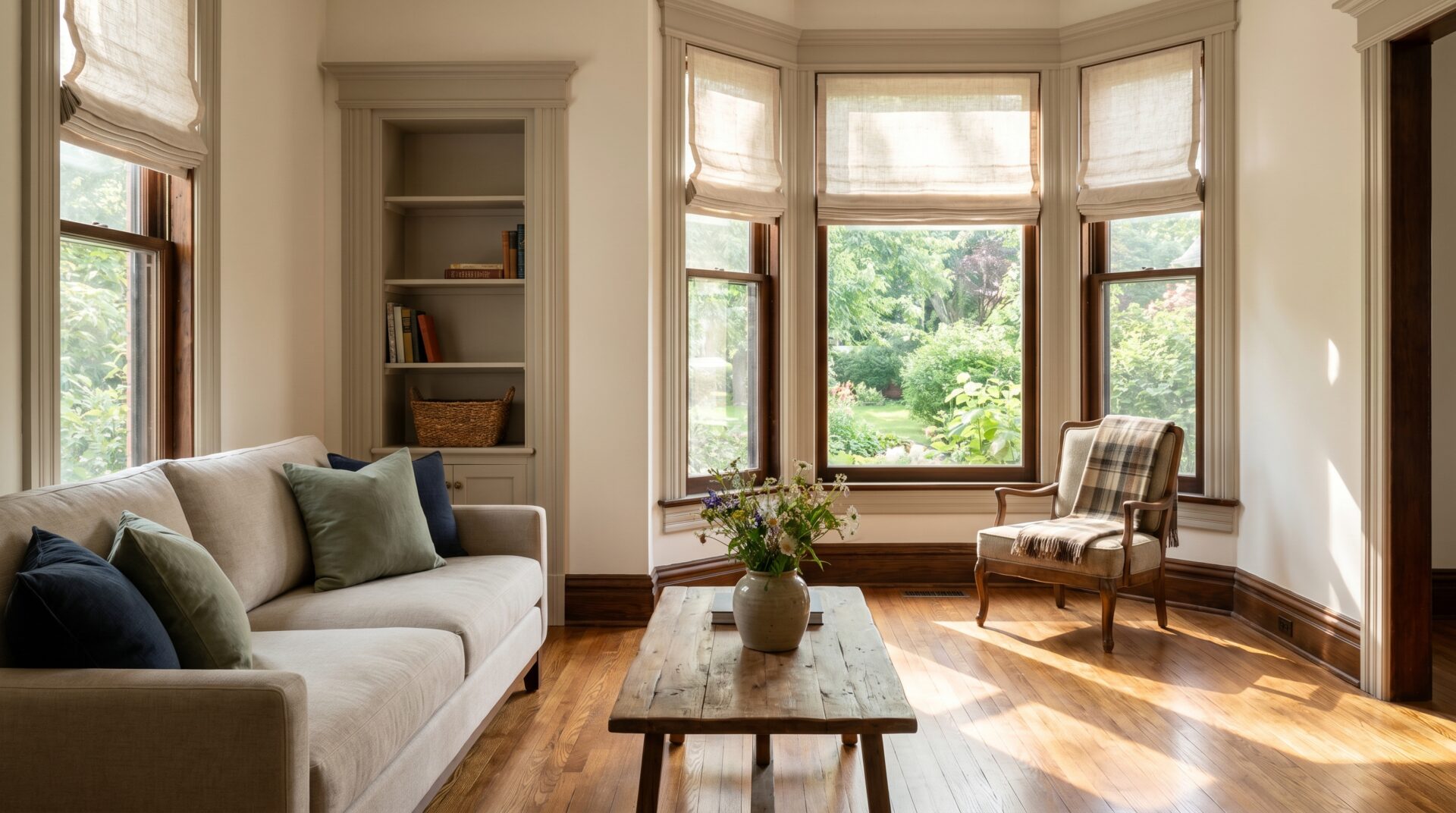
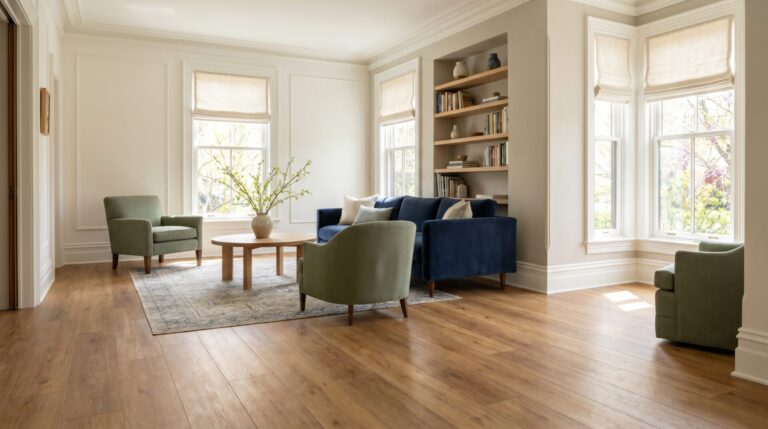
Drive the curved streets of Maple Bluff and you’ll pass Tudor Revivals, Colonials, and lakefront houses that have stood for nearly a century. You’ll find the same character in Shorewood Hills and the older blocks near the Capitol in Madison, WI. These homes were built with materials that are hard to find today, and the floors are a big part of that story. Flooring for historic homes is a different project than flooring a new build, and it deserves a different approach.
Flooring for Historic Homes Starts With What’s Already There
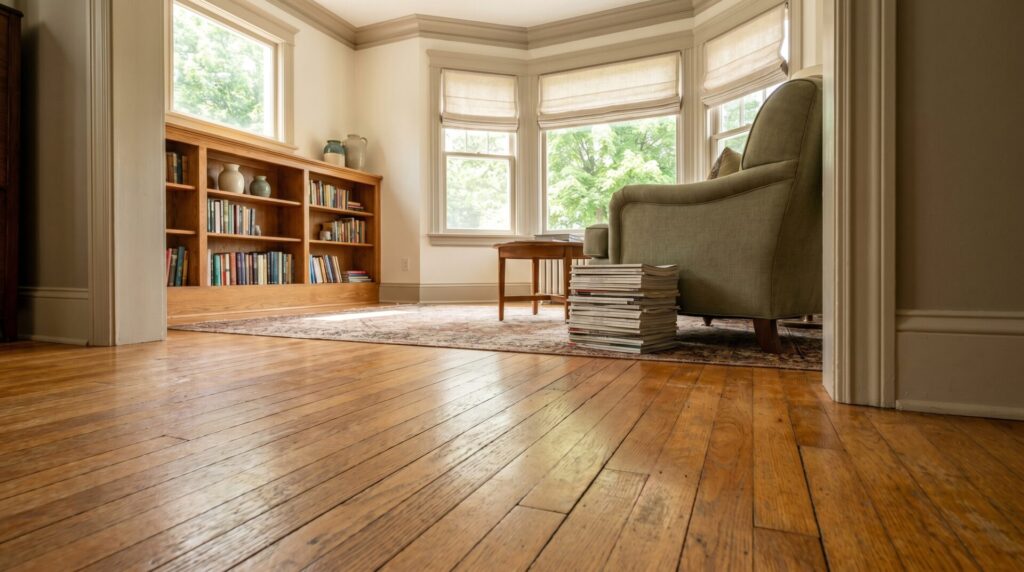
The first thing we look at in an older home isn’t a sample board. It’s what’s under the carpet. Plenty of Maple Bluff and near-Capitol homes still have original oak or maple hiding beneath old wall-to-wall carpet or a worn finish.
Here’s the part that surprises homeowners: a scratched, dull original floor is often worth more than a brand-new replacement. Floors from that era were milled from slow-growth lumber with tight, dense grain. That quality is hard to match today, so saving the wood is usually the smarter play.
Solid hardwood can typically be sanded and refinished three to five times over its life. Before we recommend anything, we check how much wood remains above the tongue, usually at floor vents and edges where past sandings leave evidence.
What Makes These Older Madison Homes Different
Houses from the plaster-and-lath era weren’t built on plywood. Their subfloors are individual boards, often laid diagonally across the joists. A century of settling adds gentle slopes and dips that any new floor has to account for. Skip that prep and you end up with squeaks, hollow spots, and seams that open up.
Radiators add another wrinkle. Changing floor height affects radiator feet, door swings, and stair nosings, so transitions need real planning. Original windows let in beautiful light along with drafts, which means bigger humidity swings and more direct sun on the wood. Our tips for preventing flooring fade from sunlight apply doubly in these sun-filled older rooms.
And small gaps between boards in February are normal, not alarming. Wisconsin winters run dry indoors, and old solid wood breathes with the seasons.
Wondering what’s possible in your older home? Schedule a consultation and we’ll walk the rooms with you.
Choosing New Flooring for Historic Homes When Replacement Makes Sense
Not every floor can be saved, and not every room had hardwood to begin with. When replacement is the right call, the goal is blending new flooring with the home’s character instead of fighting it.
- Main living areas: new solid or engineered hardwood in a traditional narrower width, with natural grain variation and a matte or satin finish, reads as original.
- Entries and bathrooms: porcelain tile in period patterns like hex or basketweave nods to the era and shrugs off Wisconsin slush. Tile runs cool underfoot, so pair it with radiant heat or a runner.
- Upstairs bedrooms: carpet adds quiet and warmth in rooms with original windows and long winters.
- Kitchens and mudrooms: luxury vinyl plank in a convincing wood visual brings waterproof protection to the spots where snow boots meet old construction.
Whatever direction you take, think in decades. Our guide to what flooring lasts the longest compares how each product holds up, the right timescale for a home like this.
Why Local Experience Matters in These Neighborhoods
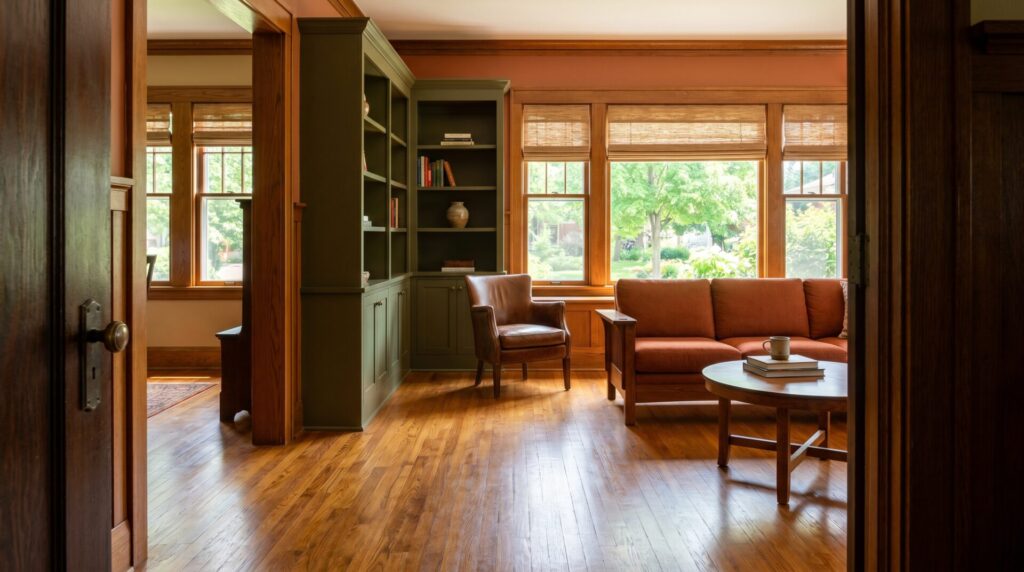
A crew that mostly works in new subdivisions can get caught off guard by a 1920s house. We expect board subfloors, out-of-square rooms, tight radiator clearances, and trim profiles that deserve protection. Measuring for those conditions up front solves surprises on paper instead of mid-project.
FAQ: Flooring for Historic Homes Around Madison
What’s the best flooring for older homes in Maple Bluff?
If original hardwood is present, refinishing it is usually the best move. Where replacement makes sense, traditional-width hardwood in main rooms, porcelain tile in entries and baths, and carpet in bedrooms keep the period feel intact.
Can the original hardwood in my Madison home be refinished again?
Usually, yes. Solid hardwood typically handles three to five refinishes over its lifetime. The real answer depends on how much wood remains above the tongue, which we measure before recommending refinishing or replacement.
How do you handle uneven floors in homes near the Capitol?
Settling is normal in century-old houses. Prep can include securing loose subfloor boards, addressing dips and slopes, and planning height transitions at doorways and radiators. All of that happens before installation begins.
Will new flooring look out of place in a historic home?
Not when it’s chosen with the house in mind. Width, species, color, and sheen all matter. Matte finishes and natural tones blend in, while high-gloss, ultra-wide modern looks tend to announce themselves.
How Harmony Flooring Works
- Design: We start with a one-on-one consultation and learn your home’s era, style, and how you live in it.
- Measure: We measure every room and inspect what’s underneath, including subfloor condition, height transitions, and radiator clearances.
- Install: Our installers handle the prep, the installation, and the details, through the final walkthrough.
In a home where details have been accumulating for a century, Covering Every Detail isn’t just our tagline. It’s the job description.
Ready to bring the floors in your Maple Bluff, Shorewood Hills, or near-Capitol home back to life? Contact Harmony Flooring to schedule your free consultation, or call 608-221-5500.