

Why Is My Vinyl Plank Flooring Separating in Winter?
Vinyl plank flooring separating in winter usually comes down to cold shrinking the planks, or something pinning, flexing or breaking the click joints.
This is Harmony Flooring’s guide to choosing floors that handle Wisconsin’s climate, from damp basements in summer to dry furnace air in winter. Below grade, the right answer starts with a moisture check, not a product: a concrete slab can let moisture vapor through, and a floor that traps it can lead to mold, cupping or failed adhesive. Above grade, heating season runs October into April, the air dries out and wood shrinks, so humidity and acclimation matter as much as the floor you pick.
Start here:
Basement flooring in Madison: a buyer’s guide
Why a basement floor gets wet with no leak
How to prevent a damp basement floor
Flooring that works over radiant heat
Choosing flooring for Wisconsin winters
Rigid core vinyl plank is a common basement choice once the slab checks out; see the vinyl plank flooring we carry in Madison.
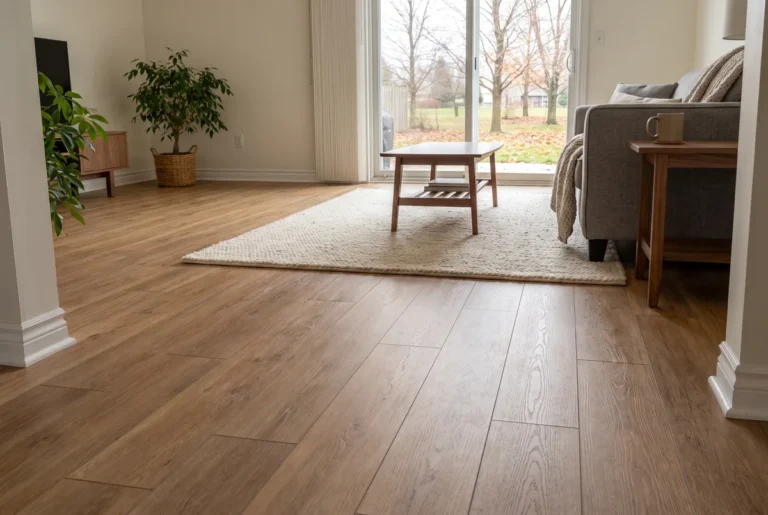
Vinyl plank flooring separating in winter usually comes down to cold shrinking the planks, or something pinning, flexing or breaking the click joints.
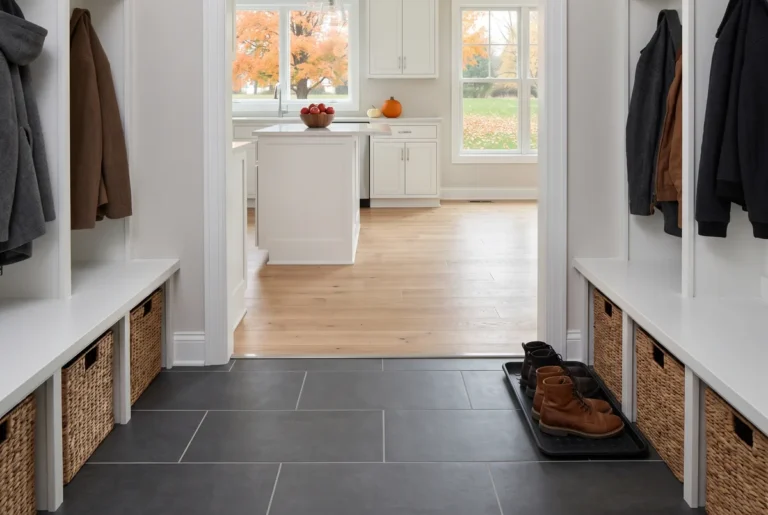
The best flooring for Wisconsin’s climate is not one floor: it is the right floor in each room, chosen for that room’s hardest season.

Finishing a basement is the single biggest jump in usable space most homes ever get. It’s also the room where flooring decisions go wrong most often. Below grade, the rules change, and a floor that performs beautifully upstairs can fail within a year or two downstairs.
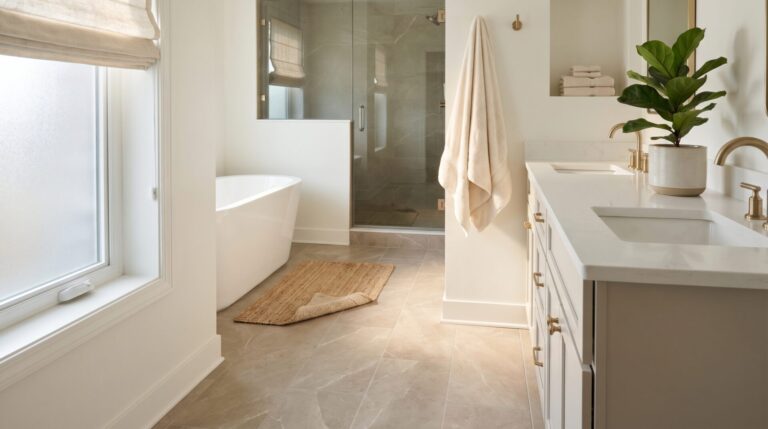
The best flooring for radiant heat is porcelain or ceramic tile, followed by engineered hardwood and luxury vinyl plank (LVP) that the maker rates for radiant use; solid hardwood and thick carpet over a soft pad are the weakest choices.

A basement floor that is wet with no obvious leak, or concrete with mold or a musty smell along the baseboards, usually means moisture is moving up through the slab or condensing on it.
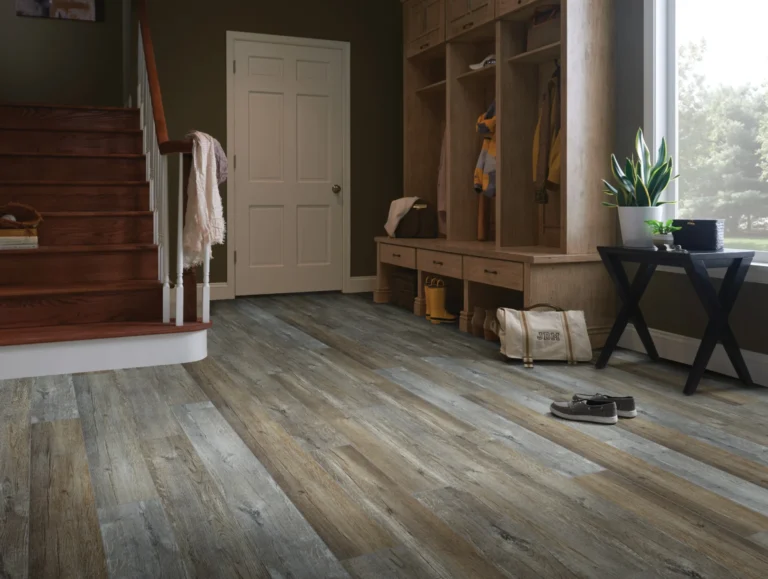
In south central Wisconsin, your floors have to feel good in January and July. Cold basements, drafty entries, hot sunrooms, dry indoor air, and plenty of snow and salt all play a part.
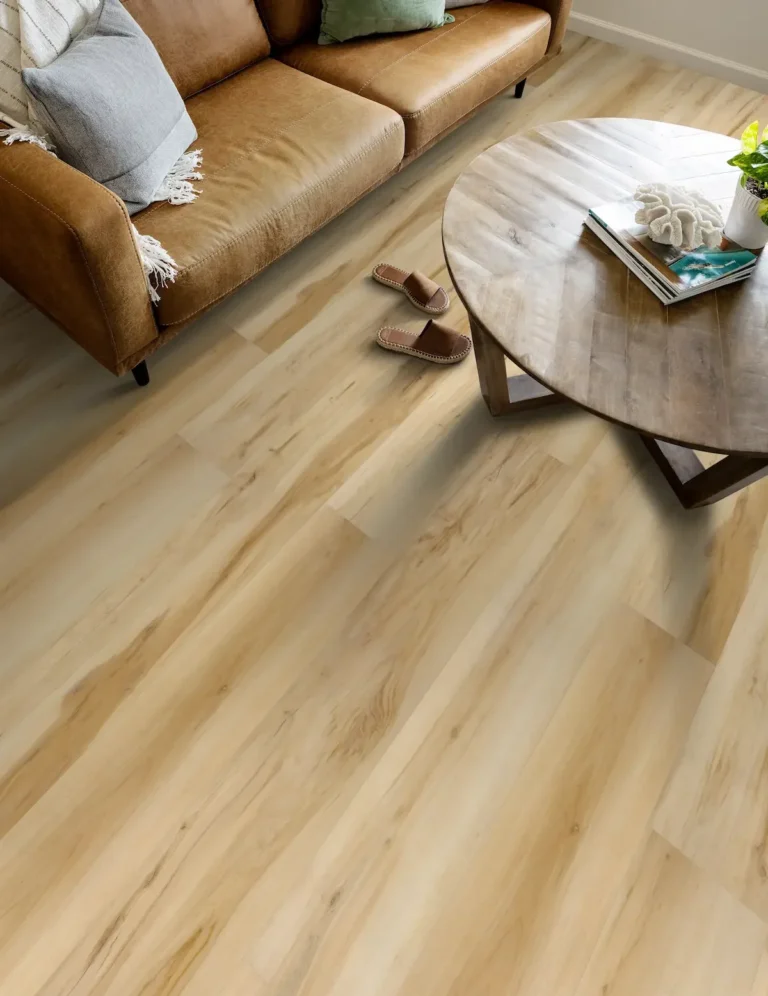
To prevent moisture damage in a basement floor, move water away from the foundation, keep basement humidity below 60 percent and ideally between 30 and 50, test the slab before any flooring goes down, and install a waterproof floor over a sealed vapor barrier. Prevention starts outside the house, not at the floor.
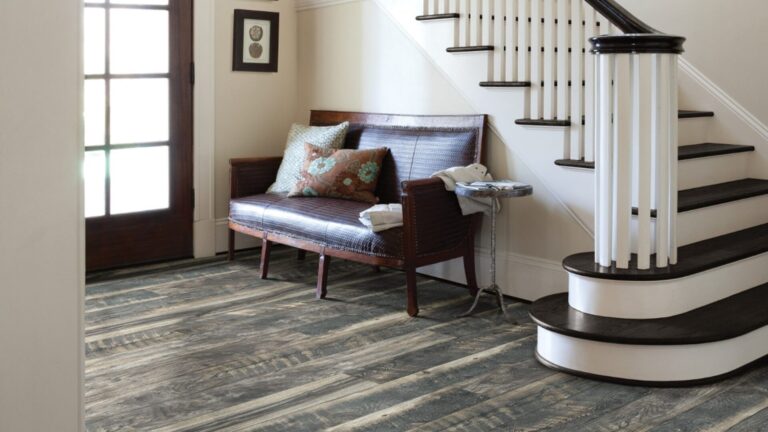
If you’ve lived in Wisconsin for even one winter, you know how harsh it can be. Between freezing temperatures, melting snow, road salt, and constant moisture, your floors go through a lot. What works in other parts of the country may not hold up to a Madison winter.
© 2026 Harmony Flooring. All rights reserved.
© 2026 Harmony Flooring. All rights reserved.

