- Hardwood
Why Hardwood Floors Gap in Winter in Wisconsin Homes
October 29, 2026
Reviewed by Kevin Sill, Owner, Harmony Flooring
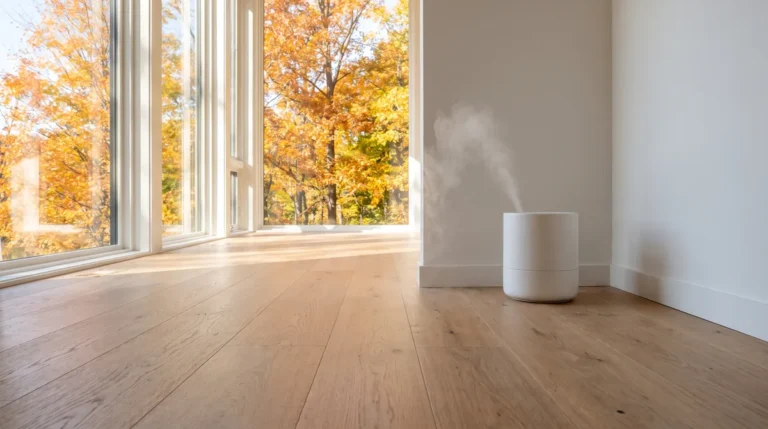
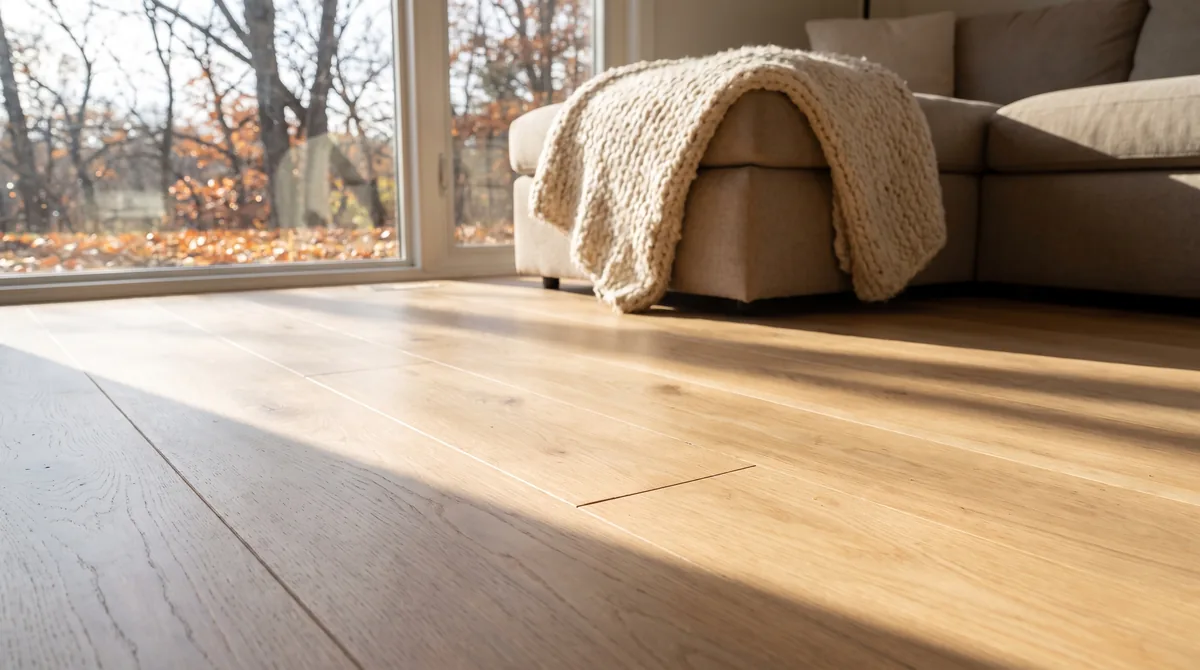
Hardwood floors gap in winter because Wisconsin furnace air is dry, and every board gives up moisture and shrinks across its width. Thin dark lines between boards that looked tight in September are usually seasonal movement, not damage.
The Short Version: In a Wisconsin winter, a drier board is a narrower board, so gaps that open in late fall and close by summer are normal. Keep indoor humidity steady, do not fill seasonal gaps, and call a professional if gaps stay open in July or come with cupping.
Why Hardwood Floors Gap in Winter in Madison Homes
Hardwood floors gap in winter because wood is hygroscopic, meaning it takes on water in humid air and gives it back when the air turns dry. A Madison furnace heats cold outdoor air that holds very little moisture, so indoor relative humidity (RH) drops and every board shrinks slightly.
Wood moves far more across a board’s width than along its length. Target ranges and how to measure them live in our full humidity guide.
Winter gaps are one of the first things Madison homeowners ask us about each heating season. To compare species and board widths in person, see the hardwood floors at our Madison showroom.
Which Floors Show the Widest Seasonal Gaps
Wide, flat-sawn, solid boards gap the most; narrow, quartersawn, or engineered boards gap the least. The USDA Wood Handbook explains why: wood shrinks more around its growth rings than across them, and a flat-sawn board’s width runs around the rings.
How wide is a normal gap? Using the handbook’s white oak shrinkage figure (10.5 percent across the rings) and its moisture table, a 5-inch flat-sawn board that dries from 50 percent RH (about 9 percent moisture) to 25 percent RH (about 5 percent) loses roughly 1/16 inch of width. A gap about the thickness of a dime fits that range. Gaps much wider than that point to more than seasonal movement.
A solid floor installed in August, at the humid peak of a Madison summer, often shows the widest winter gaps of all, because it went down at full width. That is why wood should be acclimated to your home’s average conditions, not the weather that week. Our guide to choosing flooring installers in Madison lists the moisture checks to ask for.
Normal Winter Gaps vs Gaps Worth a Professional Look
Normal winter gaps in hardwood are thin, even, and closed again by early summer; gaps that stay open into July, cluster in one spot, or come with cupping deserve a professional look.
What you see |
Usually means |
Next step |
|
Thin, even gaps from late fall to early spring |
Normal seasonal shrinkage |
Steady humidity, no repair |
|
Gaps still open in July or August |
Boards set permanently, or a lasting moisture change |
Professional assessment |
|
Gaps plus cupping (edges up) or crowning (center up) |
A moisture imbalance through the board |
Find the moisture source first |
|
Gaps concentrated near one wall |
A moisture source or an install issue |
Professional assessment |
|
Splintering edges or cracked boards |
Damage beyond normal movement |
Board repair or replacement |
|
A few wide gaps every several boards, the rest tight |
Side-bonding: the finish glued boards into panels |
Professional assessment; do not fill |
Summer cupping is the mirror image of winter gapping, covered in our cupping guide.
Filling Gaps in Hardwood Floors in Winter: Why It Backfires
You should not fill seasonal winter gaps in a hardwood floor, because wood filler or caulk gets crushed or pushed out when the boards swell back in summer.
Filling suits only permanent gaps, and that call belongs to a professional. For a permanent gap, a wood flooring pro usually glues thin slivers of matching wood into the wider ones and saves filler for the narrow ones. Not sure which kind you have? Let’s take a look at what your floor needs.
How Winter Gaps Look in Older and Newer Dane County Homes
When outdoor temperatures stay below freezing for weeks, forced-air heat can push indoor humidity well below the NWFA range. Around Madison the heating season often runs October into April, so winter gaps can stay visible for half the year.
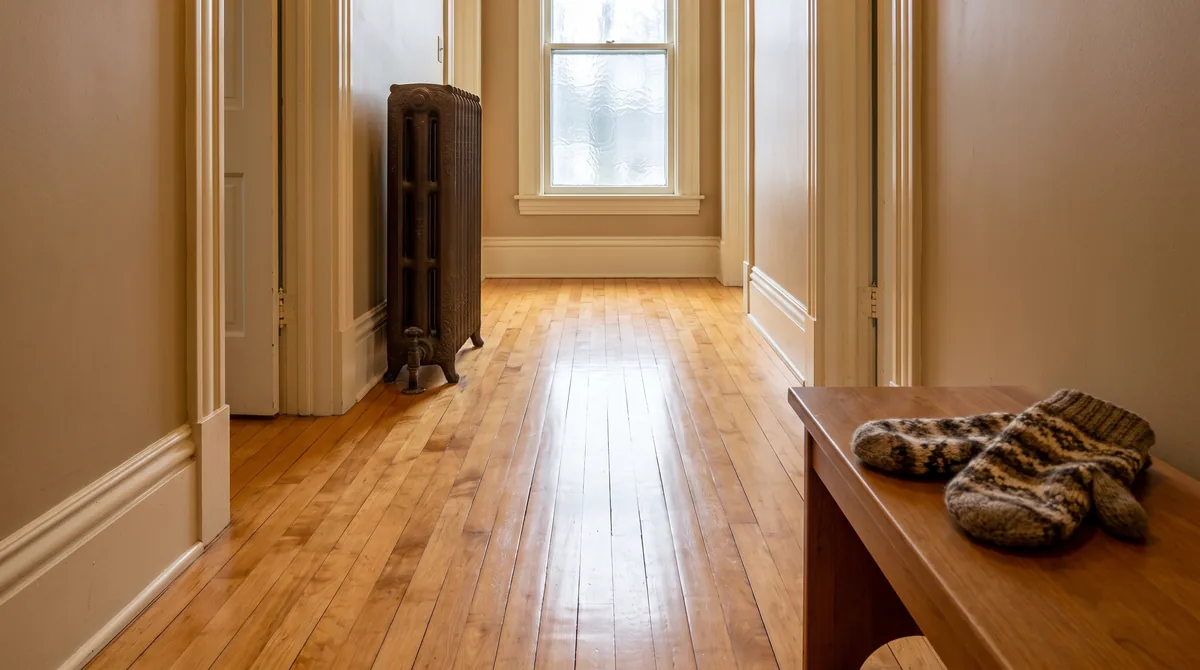
In Stoughton, many older homes still have original maple and oak strip floors, much like the historic homes in Maple Bluff. Some of that wood has opened and closed every winter for close to a century. Narrow strips gap modestly and close again each spring, which is part of why they have lasted.
In Waunakee, most homes date from the 2000s and 2010s, and wide engineered oak across an open main floor is a common pick. Its layered core steadies the oak top layer, so winter gaps stay finer than a solid board that wide would show.
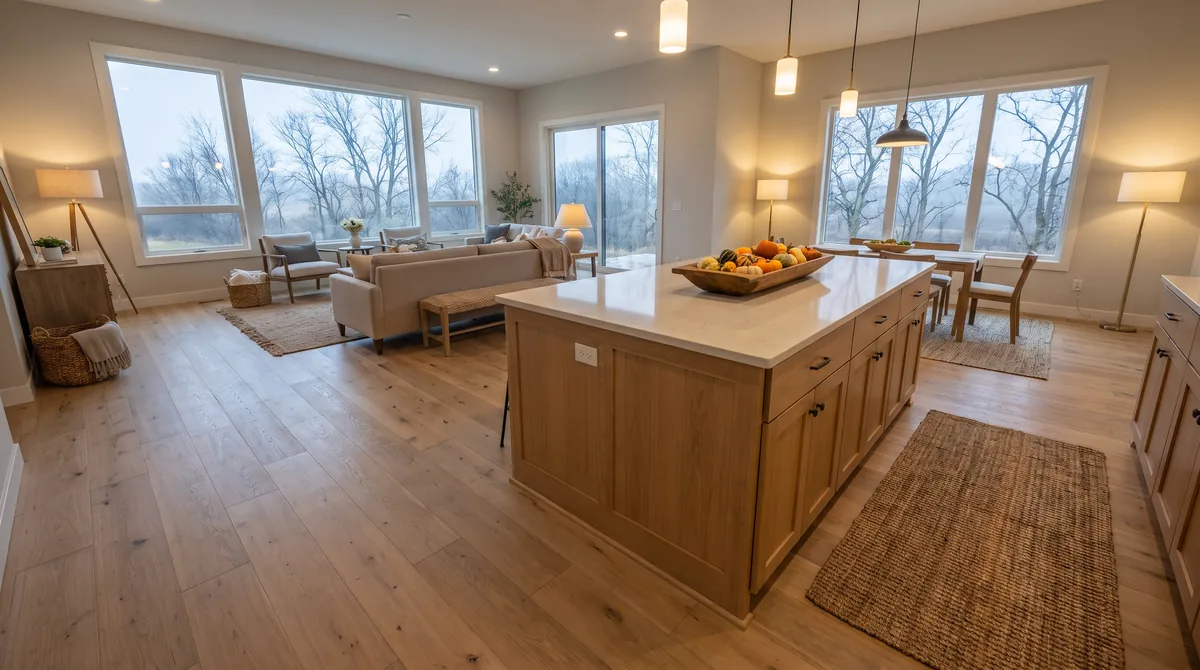
Harmony Flooring serves Madison and Dane County, including Stoughton and Waunakee, and sees both every heating season.
Fixing Gaps in Hardwood Floors in Winter
Fixing normal winter gaps in a hardwood floor takes steady indoor humidity, not floor repair. The NWFA recommends 30 to 50 percent RH, 60 to 80 degrees F, and holding that range keeps seasonal gaps small. Three things to do the week the furnace comes on:
- Put a hygrometer in the room and watch the reading, not the calendar.
- Start the humidifier now, not in January. A whole-home unit tied to the furnace is the most consistent.
- Photograph the widest gap next to a coin so you have a baseline to compare in July.
Permanent gaps or damaged boards need a professional diagnosis. Our refinish-or-replace guide walks through that decision.
Choosing Hardwood That Gaps Less in a Wisconsin Winter
Engineered construction, narrower boards, quartersawn cuts, and proper acclimation are the four choices that make a new floor gap less in a Wisconsin winter.
- Engineered hardwood moves less across the same swing. See our engineered vs solid guide.
- Narrower boards spread movement across more seams, so each gap stays smaller.
- Quartersawn or rift-sawn cuts move less across their width than flat-sawn boards.
- Proper acclimation brings wood close to your home’s normal conditions first, as our flooring acclimation guide explains.
Sources: USDA Forest Products Laboratory Wood Handbook, chapter 4, NWFA problem prevention, NWFA on winter weather and wood floors.
Winter Gap FAQs for Madison Homeowners
When do winter gaps in hardwood floors close in a Madison home?
Winter gaps in a Madison home usually close in late spring or early summer, once indoor humidity climbs back. If they are still open in July or August, the boards have likely set and that deserves a professional look.
Is it normal for a new hardwood floor in Waunakee or Madison to gap its first winter?
Yes. Some first-winter gapping is normal for a new solid hardwood floor in Waunakee or anywhere in Dane County, because the first heating season is the biggest swing the boards have seen. Acclimation before install and steady humidity after it keep those gaps small.
Why are the gaps in my hardwood floor wider near a heat vent?
Boards beside a forced-air heat vent dry faster than the rest of the room, so slightly wider gaps there are common in winter. If they close by summer, it is seasonal; if they stay open or the boards split or lift, have a professional look.
Why does my hardwood floor have a few wide gaps instead of many thin ones?
That pattern usually means side-bonding, also called panelization: the finish glued several boards together at their edges, so the group shrinks as one panel and opens a single wide gap. It mainly shows up on site-finished floors and is a finishing issue, not a humidity one, so have a professional look before anything is filled.
How Harmony Flooring Works
Harmony Flooring follows Design · Measure · Install, and a gapping floor starts with an honest diagnosis: we can look at it and tell you whether it needs steadier humidity, a refinish, a repair, or a replacement. For a new floor, we help you choose the wood, width, and construction, starting with our local hardwood guide. Then we measure, check the subfloor, plan acclimation, and coordinate the install through vetted installation partners, Covering Every Detail.
If your gaps are still open in July, or you want a floor built for Wisconsin winters, schedule your consultation or call or text us at 608-221-5500.
Planning New Floors in the Madison Area?
Get a free in-home estimate. We measure, bring samples to your kitchen table and give you one written price. No obligation.
Call or text 608-221-5500Schedule a Free Consultation
Shop our floors: Hardwood · Vinyl · Carpet · Tile · Laminate
Showroom: 2125 S. Stoughton Rd, Madison, WI 53716