

Waterproof Flooring Guide: Which Floor Handles Water Best
Reviewed by Kevin Sill, Owner, Harmony Flooring. Updated October 2026.
Waterproof flooring changed what people put in kitchens and basements. It’s also a label a lot of people read too much into. The word on the box describes the plank. Your floor is the plank plus every seam, every edge and the subfloor under it.
Waterproof vs Water-Resistant: The Real Difference
There’s no single rule every maker follows before calling a floor waterproof. Each maker sets its own meaning, so the fine print matters. In plain words, here’s how the two terms are usually used:
Water doesn’t hurt the material
- The plank or tile won’t swell, warp or break down from water on it.
- Rigid core vinyl, sheet vinyl and porcelain tile fit here.
- It’s about the material, not the room. Water can still get past seams and edges.
It holds off water for a while
- Spills are fine if you wipe them up. Water left sitting will do damage.
- Most standard laminate fits here. Regular hardwood, solid or engineered, is less forgiving. Wipe spills up right away.
- Some laminate and hardwood lines are now sold as waterproof for a set time. Check the exact line.
So don’t stop at “Is it waterproof?” Ask how long it can handle water, and where water can get past it.
How Long Each Floor Can Handle Water
Here’s how the common floors stack up. A longer bar means the floor can take more water before you have a problem.
Exact ratings depend on the product line. These are typical for each type.
Types of Waterproof Flooring Compared
Every floor below is sold as waterproof in some form. What changes from one to the next is how much of the floor is protected, how many seams it has, and how it feels to live on.
| Floor | What is waterproof | Seams | Standing water | Basement slab | Feel | Best rooms | Watch out for |
|---|---|---|---|---|---|---|---|
| Rigid core vinyl plank | Plank and core | Many click seams | Short term on top. Dry it before it reaches a seam or wall. | Good, after a moisture check | Warmer and quieter than tile | Kitchens, basements, main floors, homes with pets | Floating floors need a gap at the walls. Heavy appliances can dent it. |
| Sheet vinyl | The whole sheet | Few or none | Very good | Good, after a moisture check | Soft and warm | Laundry rooms, kids’ baths, back-door mudrooms | Fewer looks to choose from than plank or tile. Sharp objects can cut it. |
| Porcelain tile | The tile itself | Grout lines | Very good, with sealed or epoxy grout | Very good | Hard and cold without floor heat | Full baths, entries, laundry rooms, basement baths | Grout isn’t waterproof on its own. Polished tile is slick when wet. |
| Waterproof laminate | Surface, for a set time | Many click seams | Limited. Hours, not days. | Only lines rated for it | Warm, can sound hollow | Kitchens and main floors in busy homes | Ratings vary by line. Some need sealed edges at install. |
| Waterproof hardwood | Top surface | Many seams | Limited. Top only. | Only lines rated for it | Real wood feel | Kitchens and open main floors | Water over the edge or from below is usually not covered. |
Rigid Core Vinyl Plank: SPC vs WPC
Rigid core vinyl plank is the most common kind of luxury vinyl plank (LVP). It’s the floor most people mean when they say waterproof. The core is made from vinyl and minerals, not wood, so water doesn’t make it swell. That’s why it has taken over kitchens and basements.
There are two kinds of core. They are both waterproof. The difference is how they feel and how they handle dents.
A plank has either an SPC core or a WPC core, not both. They are shown together to compare.
Which Core Should You Pick?
Pick SPC for heavy traffic, rolling chairs, heavy furniture and spots where dents worry you. Pick WPC when you want a softer, quieter floor, like a basement family room or a second floor. Either one handles spills the same way. We carry rigid core lines from COREtec and Mannington Adura, and you can see both on our vinyl flooring page. For a deeper look at the vinyl side, read what waterproof really means for LVP.
Is Waterproof Laminate Really Waterproof?
Laminate has a wood-fiber core. Standard laminate swells if water gets into the seams, and that damage doesn’t go back down. Newer waterproof laminate uses tighter joints, coatings on the plank edges and a sealed surface.
The catch is that each line has its own limit. Many are rated for surface water for a set time, often 24 to 72 hours. Some require sealed edges around the room at install. None are built for a flooded basement. If you like the harder, more scratch-resistant feel of laminate, a waterproof line is a solid kitchen or main floor choice. Ask us for the exact rating of any line you are looking at. See our laminate flooring page for more.
Waterproof Hardwood: Where the Limits Are
Wood itself isn’t waterproof. What’s sold as waterproof hardwood is a real wood top layer over a core that resists water, with a finish that keeps spills from soaking in. It handles kitchen spills better than regular hardwood. Spills on top are what the label covers.
Read the limits, though. Water that runs over the edge of the floor, water from a leak below, and water from flooding are usually not covered. We don’t recommend wood floors in a full bathroom, waterproof or not. Learn more on our hardwood flooring page.
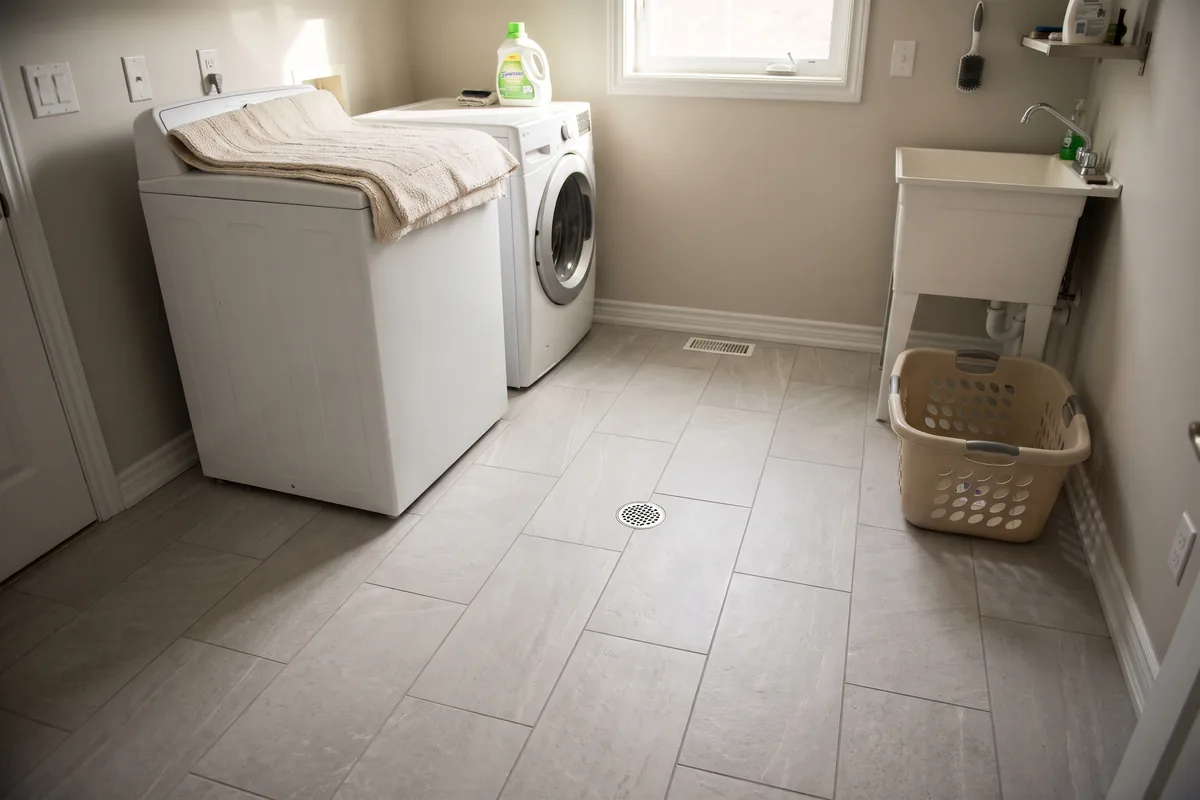
Porcelain Tile and Sheet Vinyl for Bathrooms and Laundry Rooms
Porcelain is made to absorb almost no water. Under the tile industry standard (ANSI A137.1), porcelain soaks up 0.5% of its weight in water or less. Ceramic soaks up more. Glazed ceramic still works well on most kitchen and bath floors.
The weak spot in a tile floor is the grout. Regular cement grout isn’t waterproof, even when it’s sealed. Sealing helps it shed spills and stains. Epoxy grout holds up better in laundry rooms. In a shower or a room that gets soaked, the real water barrier is a waterproof membrane under the tile. Pick a matte or textured tile for wet floors, because polished tile is slick when wet.
Sheet vinyl comes in one big piece, so water has few or no seams to find. It’s soft, warm and a smart choice for laundry rooms, kids’ baths and back-door mudrooms. See our tile flooring page.
Can Water Get Under Waterproof Flooring?
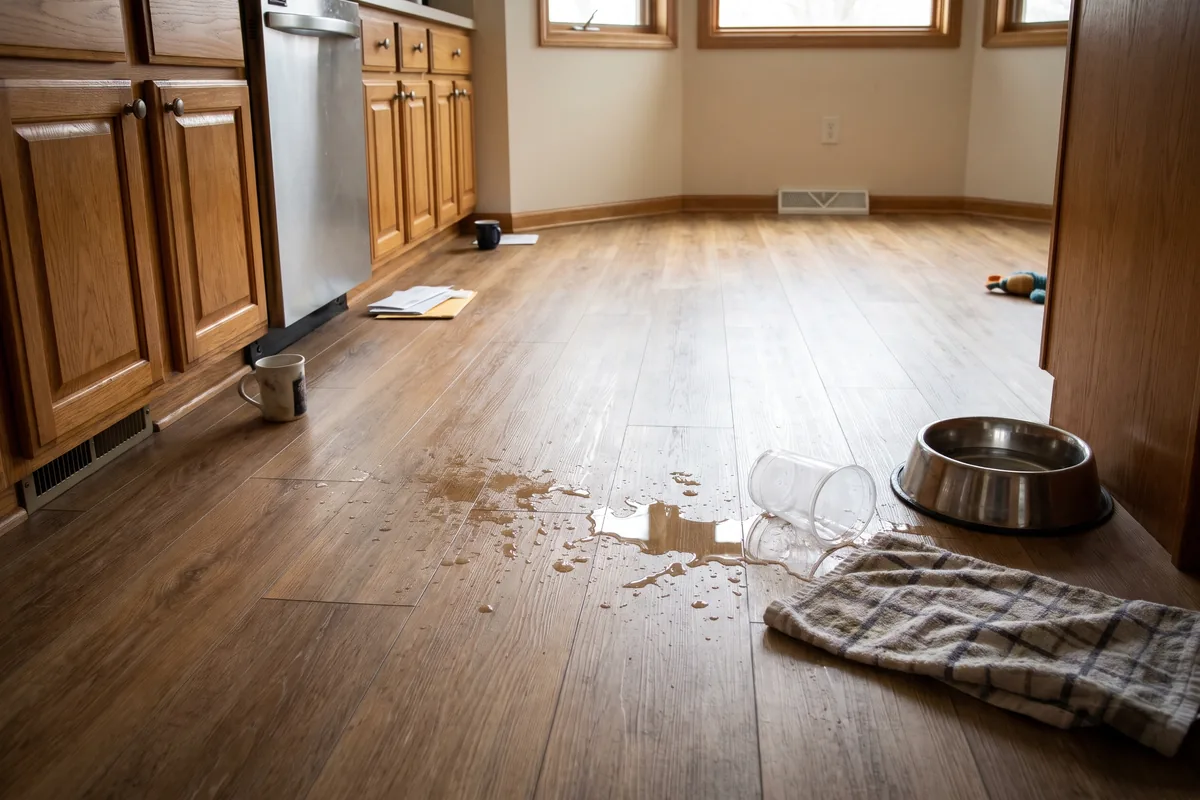
Most rigid core vinyl and laminate are floating floors. The planks click together and rest on the subfloor. They aren’t glued down. That’s great for comfort and for repairs, but it changes how water moves.
- 1Water on top. This is what waterproof covers. Wipe it up and the plank is fine.
- 2Water sitting on a seam. Click joints are tight, not sealed. Given time, water works down between planks.
- 3Water that reaches the wall. Floating floors need a small gap at the walls so they can move. Water that gets there goes under the floor.
- 4Moisture from below. A damp slab sends moisture up into the pad. A waterproof plank won’t dry the slab out. It traps the moisture underneath, where it can lead to mold and odor.
If Water Gets Under Your Floor
- Stop the water. Shut off the supply, or find where it is coming in.
- Act within a day or two. According to EPA guidance, mold can start growing within 24 to 48 hours.
- Lift what you need to. Floating planks can often be unclicked from the nearest wall, so the subfloor can dry.
- Dry it fully before you close it up. Fans and a dehumidifier help. Vinyl planks are often fine to reuse. Laminate that has swelled is not.
- Call for help with a big leak. See our page on water-damaged floors in Madison. Call or text 608-221-5500. We can talk with your insurance adjuster if there’s a claim.
Waterproof Flooring for Madison Basements
A basement is where waterproof flooring helps the most. It’s also where it gets blamed for water it was never meant to stop. Many Madison basements get damp in the spring thaw, even with no leak. A waterproof plank on a wet slab still traps moisture underneath.
Here’s the order we suggest for a basement:
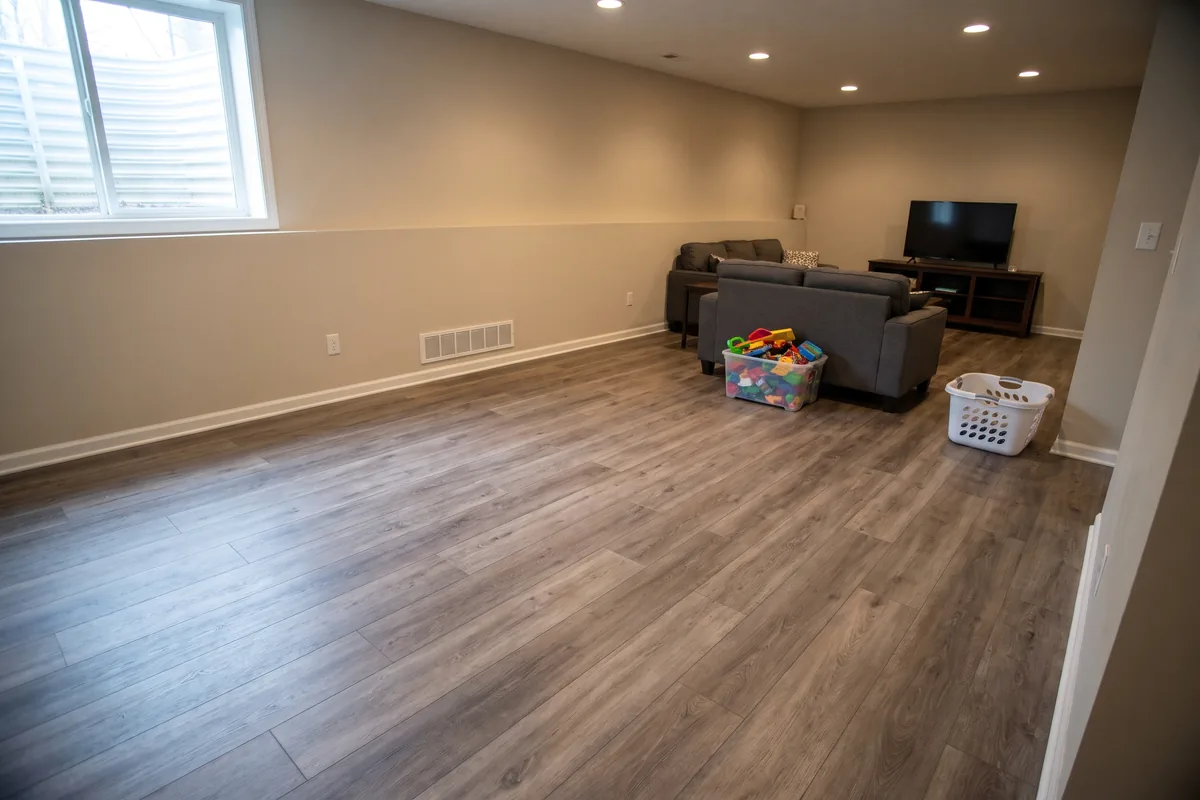
- Fix the water outside first. Gutters, downspouts and the grade around the house cause most wet basements.
- Check the sump pump. If you have one, make sure it runs and drains away from the house.
- Test the slab. A quick check: tape a 2-foot square of clear plastic flat on the bare concrete for 24 to 48 hours. Damp concrete or drops under it mean moisture. For a real number, flooring makers use relative humidity or calcium chloride tests.
- Follow the maker’s vapor rules. Some floors want a vapor barrier. Some say not to add one. The install guide decides.
- Choose a floor that can come up. If water ever gets in, a floating floor can be unclicked from the nearest wall to reach the wet spot. That’s a real advantage in a basement.
Our full basement flooring guide goes deeper, and why is my basement floor wet? covers the causes.
Entries and Mudrooms in a Wisconsin Winter
Snowmelt won’t hurt a waterproof floor. What comes in with it will. Road salt leaves a white film, and sand and grit act like sandpaper on the wear layer. Use a big walk-off mat inside the door from November into April, sweep grit often, and wipe salt film with a damp mop. Porcelain tile is the toughest entry floor. Rigid core vinyl plank is a warmer choice that can match the next room. See our guide to protecting entry floors from salt.
What Waterproof Warranties Usually Cover
Warranties differ by maker, so read the one for your floor. Most follow a similar pattern:
- Spills and splashes on top of the floor
- Damp mopping with the right cleaner
- The plank itself not swelling from topical water
- Flooding, burst pipes and appliance leaks
- Water that runs over the edge of the floor
- Moisture coming up from below
- Mold, and floors not installed or cleaned the maker’s way
That last line matters. Most warranties expect the floor to be installed by the maker’s guide, including the moisture test and the gap at the walls. Ask us which warranty comes with any floor you are looking at.
Waterproof Flooring Myths to Skip
Best Waterproof Flooring by Room
| Room | Top pick | Also good | Tip |
|---|---|---|---|
| Kitchen | Rigid core vinyl plank | Porcelain tile, waterproof laminate | Run the floor under the dishwasher and fridge spots so they can slide out later. |
| Full bathroom | Porcelain tile | Sheet vinyl, rigid core vinyl plank | Seal the edges at the tub and toilet. No wood or laminate in a full bath. |
| Half bath | Porcelain tile | Rigid core vinyl plank | A good place to match the floor in the hall. |
| Laundry room | Porcelain tile | Sheet vinyl | Washer hoses fail. A floor drain or a leak pan helps. |
| Basement | Rigid core vinyl plank | Porcelain tile, sheet vinyl | Test the slab first. Fix wet spots before any floor goes down. |
| Mudroom and entry | Porcelain tile | Rigid core vinyl plank, sheet vinyl | Use a big walk-off mat from November into April. |
| Pet areas | Rigid core vinyl plank | Porcelain tile | Wipe accidents fast. They can still reach the seams. |
For every room in the house, not just the wet ones, see our best flooring by room guide.
See Waterproof Floors in Person
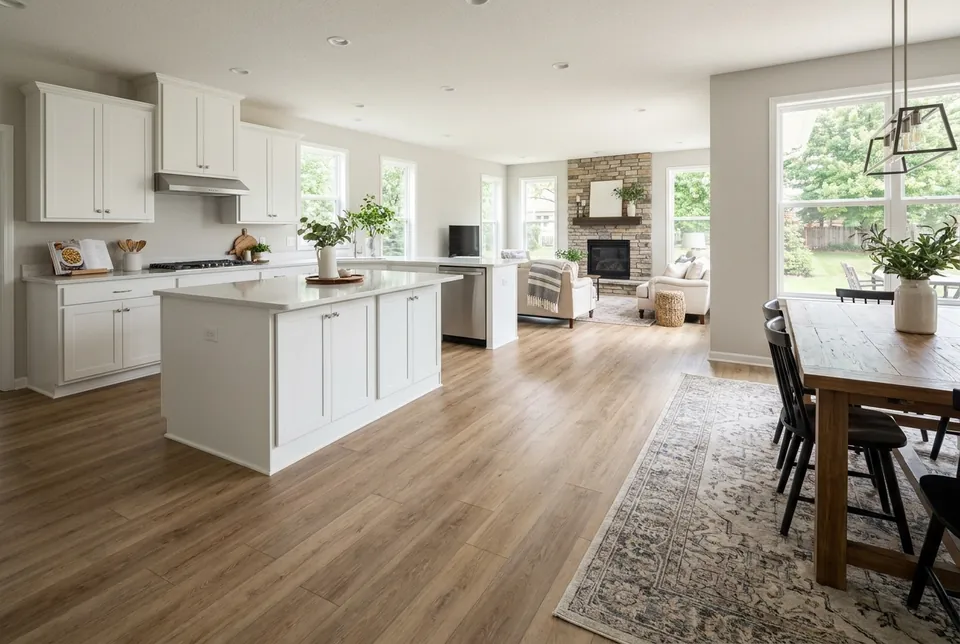
Photos only go so far. Come feel the difference between SPC and WPC, see porcelain next to vinyl, and bring a photo of your room. Our showroom is at 2125 S. Stoughton Rd in Madison, open Monday through Friday, 8 AM to 5 PM. Evening and weekend appointments available on request. Or try floors in your own photo with our room visualizer.
More Reading
Waterproof Flooring Questions
Is Any Flooring 100% Waterproof?
The material can be. Porcelain tile, sheet vinyl and rigid core vinyl plank aren’t harmed by water. The installed floor is different. Water can get through seams, past the edges at the walls, or up from a damp slab.
What Is the Difference Between Waterproof and Water-Resistant Flooring?
Waterproof means water doesn’t damage the material. Water-resistant means it holds off water for a while, so spills need to be wiped up. Most standard laminate is water-resistant. Regular hardwood, solid or engineered, needs spills wiped up right away.
Is SPC or WPC Better for a Basement?
Either one works, and both are waterproof. Pick WPC for a softer, quieter family room. Pick SPC where heavy furniture or gym gear could dent the floor. Either way, test the slab for moisture first.
Is Waterproof Laminate as Good as Vinyl Plank Around Water?
Not quite. Waterproof laminate handles surface water for a set time, often 24 to 72 hours depending on the line. Rigid core vinyl plank isn’t harmed by water at all. Laminate does resist scratches very well.
Can Waterproof Hardwood Go in a Bathroom?
We don’t recommend wood floors in a full bathroom, waterproof or not. Coverage is usually for water on top only. Porcelain tile or vinyl plank is a better fit.
What Happens If Water Gets Under a Floating Floor?
Stop the water and act within a day or two, because mold can start within 24 to 48 hours. Floating planks can often be lifted so the subfloor can dry. Vinyl planks can usually go back down. Swollen laminate can’t.
Do I Need a Moisture Test Before Flooring a Basement?
Yes. Many Madison basements get damp in the spring thaw. A quick plastic sheet check shows obvious moisture, and flooring makers use relative humidity or calcium chloride tests for a real number.
Does a Waterproof Warranty Cover a Burst Pipe or Flooded Basement?
Usually not. Most cover spills on top of the floor. Flooding, appliance leaks, water over the edge and moisture from below are usually excluded. Read the warranty for your exact floor.
Is Porcelain More Waterproof Than Ceramic Tile?
Yes. Under ANSI A137.1, porcelain absorbs 0.5% of its weight in water or less. Ceramic absorbs more. Either way, seal cement grout to resist stains, or use epoxy grout in very wet areas.
Will Winter Road Salt Hurt a Waterproof Floor?
Salt water won’t hurt the material, but salt film and grit can dull and scratch the top layer over time. Use a big walk-off mat inside the door and sweep often in winter.

