

- Commercial Flooring
Flooring for Rental Properties in Madison: A Value Guide
July 16, 2026
Reviewed by Kevin Sill, Co-owner, Harmony Flooring
Every Madison landlord eventually does the same math. A floor that needs replacing every few turnovers isn’t a flooring expense, it’s a recurring tax on the whole property. Choosing flooring for rental properties is less about picking a pretty surface and more about buying the most durable years per dollar of investment, with the least downtime between tenants. For whole buildings, see our commercial flooring services in Madison.
This guide is for landlords and property managers with units in the Madison, WI area, whether that’s a single duplex in Monona or a multifamily portfolio near campus. We’ll cover what actually drives flooring costs in rentals, which products survive tenants, and the turnover strategy that quietly saves more than any product choice. Want the general version first? Read what affects flooring cost in Madison.
The Short Version: Luxury vinyl plank is the default flooring for rental properties, because it’s waterproof, scratch-resistant, fast to install, and repairable plank by plank. The floor with the lowest upfront price is rarely the floor with the lowest cost per year. Durability, repairability, and turnover speed decide what a rental floor really costs.
What Actually Drives the Cost of Flooring for Rental Properties
Square footage matters less than landlords expect. The real cost drivers are these:
- Durability tier. Wear layers and surface ratings determine whether a floor survives three tenancies or eight. The difference between tiers is small at install and enormous over a decade.
- Repairability. When one corner of a unit gets damaged, can you fix the corner, or do you replace the room? Plank and tile formats repair locally. Sheet goods and worn carpet usually mean full replacement.
- Downtime. Every day a unit sits empty for flooring work costs more than the flooring. Products that install fast, without long cure or acclimation windows, protect rent.
- Subfloor condition. Older Madison rental stock often hides uneven or moisture-prone subfloors, and prep work is the line item that surprises first-time landlords. Our guide to what to expect from a flooring replacement covers the subfloor step.
- Standardization. Running the same product across units changes the economics, which we’ll get to below.
The Best Flooring for Rental Properties, Ranked by Value
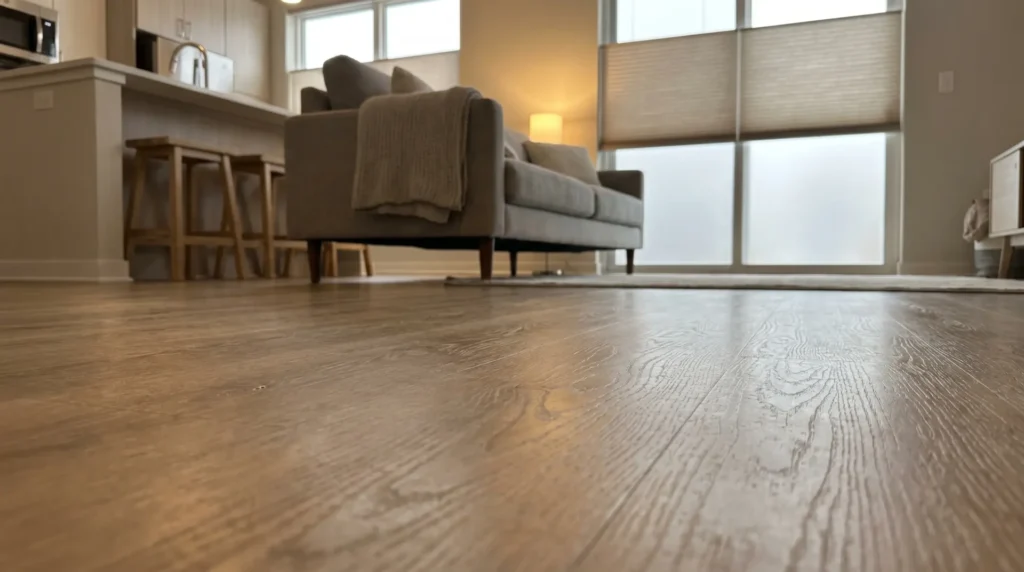
Luxury vinyl plank: the rental workhorse. Waterproof, scratch-resistant, attractive enough to help a listing, and forgiving of tenant life. The spec that matters on vinyl plank flooring in Madison rentals is the wear layer: rental-grade LVP should carry a thicker commercial-rated wear layer, not the thin entry-level surface made for quiet households. When damage happens, individual planks swap out. If you’re new to the product, our guide on what to know before buying LVP covers the specs in detail.
Laminate: the mid-tier look upgrade. In dry rooms of well-kept units, laminate delivers a convincing wood look with strong scratch resistance. When you compare laminate flooring in Madison, ask for an AC4 rating, which is built for busy homes and light commercial spaces. Its moisture sensitivity makes it a poorer fit for kitchens and entries in rentals, where spills don’t get wiped up promptly. The North American Laminate Flooring Association advises against laminate in high-moisture areas unless the maker rates it waterproof, and our laminate vs vinyl comparison covers the trade-off.
Carpet: bedrooms only, and plan the lifecycle honestly. Carpet is warm, quiet between floors, and easy to like at install time. It’s also the surface most likely to need replacement at turnover. Modern solution-dyed carpet cleans far better than older products, but in rentals, carpet belongs in bedrooms, where wear and staining are slowest. Of the fibers in the carpet lines at our Madison showroom, nylon is the toughest and triexta handles stains well.
Sheet vinyl: the bathroom standby. Nearly seamless, fully waterproof, and practical for rental baths and laundry areas. Less repairable than planks, but in small rooms, replacement is quick.
What to skip: solid hardwood and anything high-maintenance. Hardwood’s refinishing cycle and moisture sensitivity make it a liability under tenant use, and if a unit already has original hardwood, protecting it under area rugs or transitioning it out at the next major refresh is usually the smarter play.
Choosing a look for your units? Upload a photo of a unit to our room visualizer to preview plank colors, then bring the looks you like to your free in-home visit.
Value by Tier: What You Get at Each Level
- Entry-level: Thin wear layers and basic looks. Lowest install cost, shortest life, most turnover work. Makes sense for properties you plan to renovate or sell soon.
- Mid-range: Rental-rated LVP and quality laminate. The value sweet spot for most Madison rentals: durable enough for back-to-back tenancies, attractive enough to support strong listings.
- Premium: Commercial-grade wear layers, better cores, quieter underfoot. Earns its keep in higher-rent units, common areas, and buildings where flooring noise between floors draws complaints.
The Turnover Math Most Landlords Miss
Here’s the insight that changes how portfolios buy flooring: standardize on one product across every unit. When all your units share the same LVP, you keep one box of spare planks per property, repairs match perfectly years later, and any turnover refresh uses leftover stock instead of a new order. Mismatched flooring across units means every repair is a special order and every turn is a project.
Madison adds its own wrinkle: the August lease cycle, when most student-area leases end August 15. With so many units turning over in the same few weeks around the UW calendar, flooring contractors and materials get booked out. Landlords who plan flooring work for the off-season months get better scheduling, and their units are ready when the leasing window opens instead of losing prime weeks to a floor install. Our apartment turnover flooring guide for Madison shows how to phase that turn season.
For occupied multifamily buildings, phased work makes upgrades possible without vacancies. Our guide to commercial flooring installation without shutting down explains how zone-by-zone scheduling works.
Why Professional Guidance Pays for Landlords
A flooring partner who knows rental properties does three things a box-store transaction can’t. They spec the right wear layer for tenant traffic rather than the prettiest sample. They flag subfloor problems before installation instead of during it. And they plan installs around your leasing calendar, which is where the real money hides. For larger holdings, see our commercial flooring for Madison property managers, which covers multifamily and mixed-use buildings across the area, from Sun Prairie duplexes to downtown properties.
The long-term value frame is simple: divide what you invest by the years of tenant-proof service you get back, and add the rent you didn’t lose to downtime. On that math, the mid-range and premium tiers win far more often than the entry-level price tag suggests. If you’d like help running that math for your units, talk through your properties with us.
Sources: North American Laminate Flooring Association: Laminate FAQs and City of Madison: August Moving Days.
Flooring for Rental Properties FAQs
What is the best flooring for a rental property?
Luxury vinyl plank with a commercial-rated wear layer is the best all-around pick. It’s waterproof and scratch-resistant, and it installs fast between tenants. You can also swap one damaged plank instead of redoing the room.
Is carpet or LVP better for a rental?
LVP is better for most rental spaces. It handles spills, pets and moving furniture. It also doesn’t hold odors. Carpet still makes sense in bedrooms, where it wears the slowest.
Is laminate or vinyl better for a rental property?
Vinyl, in most cases. Laminate resists scratches well. But it’s water-resistant, not waterproof. Tenants don’t always wipe up spills right away. Keep laminate to dry rooms in well-run units.
How long does flooring last in a rental?
It depends on the product tier and the tenants. Rental-grade LVP usually lasts through many turnovers. Entry-level products and carpet often need attention much sooner. The wear layer you pick on day one decides most of it.
Should I use the same flooring in every unit?
Yes. One product across all your units means spare planks always match. Repairs go fast, and turnovers can use stock you already have. It’s one of the smartest flooring moves a landlord can make.
A rental floor has one job: stay presentable through tenant after tenant while costing you as little attention as possible. Buy durability by the year instead of price by the square foot, standardize across units, and schedule around your leasing calendar. Get those three right and flooring quietly stops being a problem category.
Ready to spec floors that survive turnover? Get a portfolio consultation with our commercial team.
Planning New Floors in the Madison Area?
Get a free in-home estimate. We measure, bring samples to your kitchen table and give you one written price. No obligation.
Call or text 608-221-5500Schedule a Free Consultation
Shop our floors: Hardwood · Vinyl · Carpet · Tile · Laminate
Showroom: 2125 S. Stoughton Rd, Madison, WI 53716
You Might Also Like
-
-
-

- Commercial Flooring
- Buying Guides
October 16, 2026
Municipal Building Flooring: A Wisconsin Buyer’s Guide

