

School and Childcare Flooring in Madison
Flooring for K-12 schools, preschools and childcare centers across Madison and Dane County. We help you pick the right floor for each room. Then we plan the work around summer break, closure weeks and your hours.
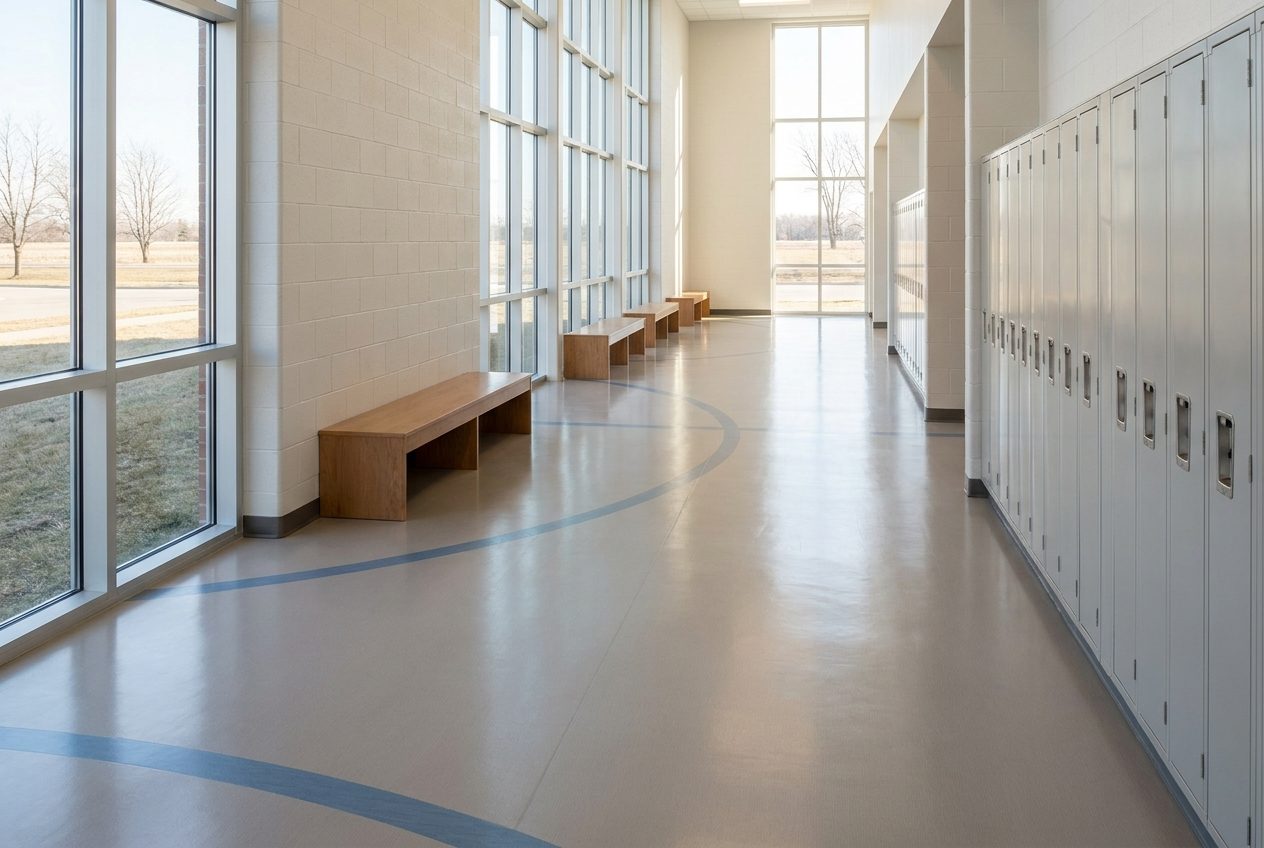
- Who we work with: Facility directors, childcare owners and directors, architects and general contractors.
- Floors we source: Carpet tile, commercial LVT, porcelain tile and rubber.
- How the work runs: Room by room, timed for breaks, evenings or weekends.
- Where: Madison and towns within about 45 minutes of the Capitol.
What School and Childcare Floors Have to Handle
Kids are hard on floors. They spill, they run, they sit on the floor for story time. Then staff clean it all every night. Plan for a few things up front and the floor holds up much longer.
Daily Cleaning
Floors in classrooms, lunchrooms and restrooms get cleaned every day. Some get disinfected several times a day. Pick a floor that suits the cleaners and machines your staff already use. Check the maker’s care guide before you set the routine.
Wet Floors and New Walkers
Toddlers run across floors that were mopped a few minutes ago. For tile, ask for the wet DCOF rating. ANSI A326.3 sets 0.42 as the minimum for level indoor floors that get wet. It’s a starting point, not the whole answer.
Noise in Classrooms
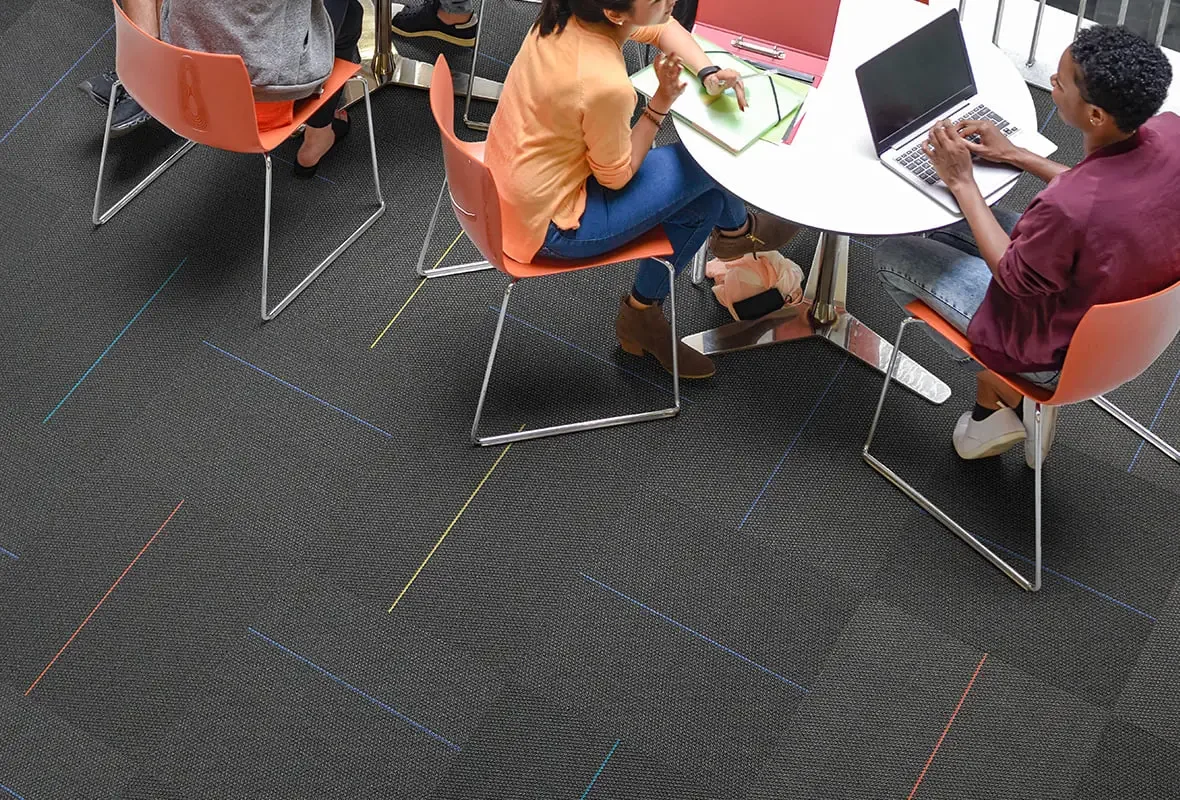
Chairs scrape and footsteps carry. Carpet tile soaks up a lot of that noise. It also gives kids a soft place for floor time. Where you need a hard floor, felt pads on chair legs help.
Winter at the Door
Students, bus riders and parents track salt and slush inside from November into April. A long run of walk-off flooring at each entry catches it. That protects the halls behind it. Our entrance walk-off guide covers the layout.
Low Edges
Strollers, carts and wheelchairs all cross transitions. The ADA floor guide caps carpet pile at 1/2 inch. It allows a 1/4 inch edge, or 1/2 inch with a bevel. Your architect confirms code. We plan the transitions to match.
Cleaner Air for Little Ones
Infants and toddlers spend a lot of time close to the floor. Ask for low-emission products. FloorScore covers hard floors and adhesives. The Carpet and Rug Institute’s Green Label Plus covers carpet. Ask for the certificate, not just the sales sheet.
Which Floor Goes Where
Most schools and centers use three or four floors. Here’s where each tends to fit.
| Space | Floors That Tend to Work | What We Watch For |
|---|---|---|
| Entries and vestibules | Walk-off carpet tile, then porcelain tile or rubber | Salt, slush and grit from November into April |
| Classrooms | Carpet tile, with an LVT zone at the door and sink | Noise, floor time, spills by the sink |
| Science and art rooms | Glue-down commercial LVT | Spills and cleaning. Check the chemical data. |
| Corridors | Glue-down commercial LVT | Heavy traffic, carts, nightly scrubbing |
| Lunchrooms | Glue-down commercial LVT | Spills, table carts, slip resistance by the serving line |
| Libraries and offices | Carpet tile | Quiet, comfort, LVT at the front desk |
| Restrooms and locker rooms | Slip-resistant porcelain tile | Water, daily disinfecting, wet DCOF |
| Weight and fitness rooms | Rubber | Dropped weights, thickness matched to the equipment |
| Infant and toddler rooms | Glue-down commercial LVT | Easy cleaning, low emissions, a warm feel for crawling |
| Nap rooms | Carpet tile | Quiet, swap a stained tile instead of a room |
| Diapering and toileting | Porcelain tile or glue-down LVT with sealed edges | Water and constant disinfecting |
| Indoor play rooms | Rubber | Falls, traction and noise |
Childcare Centers and Preschools
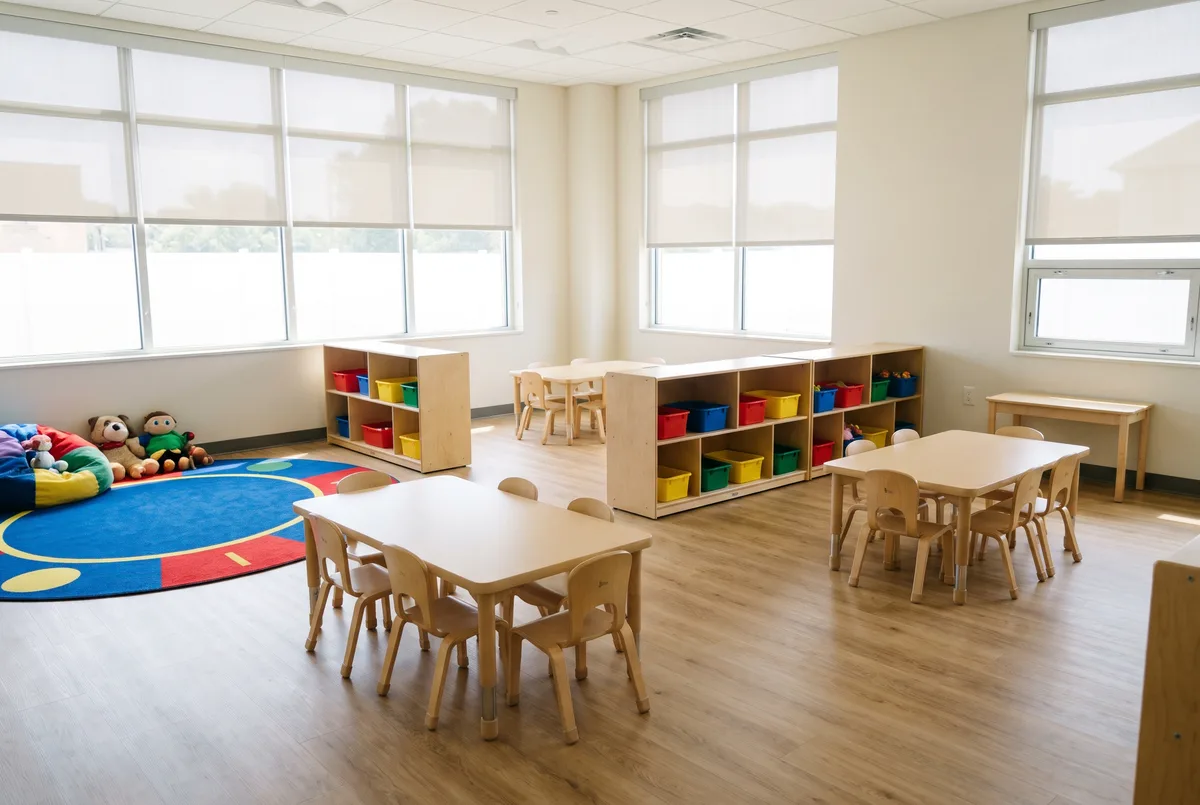
Wisconsin’s licensing rules for group centers, chapter DCF 251, don’t name a floor type. They do require floors you can wash and disinfect. Diapering has to happen on an easily cleaned surface. So the real test is simple. Can the floor take daily disinfecting for years?
Glue-down LVT works well in most rooms. Porcelain tile fits toileting and food areas. Carpet tile fits nap rooms and keeps them quiet. Rubber handles indoor play rooms. Confirm the details with your licensing specialist and building official. Our daycare flooring guide goes room by room.
Opening a new center in Sun Prairie or Fitchburg? Moving into an older church basement or retail suite? Either way, the slab needs a moisture test before a glue-down floor goes in. A testing firm or your general contractor handles that part.
Planning Around Summer Break
Schools have one big window each year. Childcare centers rarely close at all. So the schedule matters as much as the floor.
- Walk the building in the fall or winter. We walk it with you or your facilities lead. We look at each room, the floor underneath and how it gets cleaned.
- Set the spec. We work from your architect’s spec or help you build one. We turn in samples and product data when your team needs them.
- Order early. Many Wisconsin districts bid in late winter and spring. The school fiscal year starts July 1. We check lead times so product is on hand before the last day of school.
- Plan the room order. We line up the rooms with custodians and summer programs. Childcare centers can go room by room, or on evenings, weekends and closure weeks.
- Walk it again at the end. We walk the finished rooms with you before staff come back. The punch list stays open until every item is closed out.
How long will it take? It depends on the floor, the rooms and the prep work. Your consultant gives you install dates before anything is ordered.
Our school flooring guide covers the full school calendar and old floor tile.
What We Hand Off
A school or childcare job often has parts outside our scope. We’ll tell you up front.
- Old floor tile. Older 9 by 9 inch tiles and black glue may contain asbestos. Have them tested first. If the result is positive, we refer removal to a certified abatement company.
- Slab moisture testing. A testing firm or your general contractor runs it.
- Gym floors. Wood and synthetic sports floors are a specialty trade.
- Heat-welded sheet vinyl. We don’t supply it. If a room needs a fully seamless floor, plan a specialty contractor for that room.
Commercial Lines We Source
We carry J+J Flooring, Patcraft, Shaw Contract and Mannington Commercial. For tile, we source Daltile. You can see them at our Madison showroom at 2125 S. Stoughton Rd. A second room there holds our commercial lines. Already have a spec? We’ll match it. We can also suggest an equal if a product is hard to get.
One coordinator stays with you from the first walkthrough to the punch list. The trusted local installers we coordinate do the work.
More Guides for Schools and Centers
Walk Your Building With Us
Bring your spec, your floor plan or just a list of problem rooms. We look at the floor underneath, the entries and the busiest halls. Then we follow up with floor options for each room and a clear order of work.
Call, Text or Email Us. Our office is open Monday through Friday, 8 to 5.
School and Childcare Flooring Questions
Do you handle school flooring projects in the Madison area?
Yes. We walk the building, choose floors room by room and plan the work around summer break. Most schools land on carpet tile in classrooms, commercial LVT in halls and lunchrooms, and porcelain tile in restrooms. Our school flooring guide covers each space.
What is the best flooring for a daycare center?
Most centers use a mix. Glue-down commercial LVT works in infant, toddler and preschool rooms. Porcelain tile fits toileting and food areas. Carpet tile fits nap rooms, and rubber fits indoor play rooms. Our daycare flooring guide goes room by room.
Does Wisconsin require a certain floor in childcare centers?
No. Chapter DCF 251 doesn’t name a floor type. It requires floors that can be washed and disinfected, and diapering on an easily cleaned surface. Your licensing specialist and building official confirm the details.
When should a school plan a summer flooring project?
Start in the fall or winter. Many Wisconsin districts bid in late winter and spring, and the school fiscal year starts July 1. Ordering early means product is on hand before the last day of school.
Can you replace flooring without closing our childcare center?
In most cases, yes. We can go room by room or plan the work for evenings, weekends and closure weeks. Cure times for adhesive and grout shape the schedule.
Is carpet tile a good choice for classrooms?
Yes, in most classrooms. It cuts chair and footstep noise and gives kids a soft spot for floor time. You can swap one stained tile instead of a whole room. Use LVT by the sink and door.
Do you remove old school floor tile?
Old 9 by 9 inch tiles and black glue may contain asbestos, so have them tested first. If the result is positive, we refer removal to a certified abatement company. The new floor goes in after that.
What areas do you serve?
We serve Madison and towns within about 45 minutes of the Capitol. That includes Middleton, Fitchburg, Sun Prairie, Verona, Waunakee and Stoughton.

