

- Basements and Wisconsin Climate
- |
- Buying Guides
How to Prevent a Damp Basement Floor and Moisture Damage
December 11, 2025
Reviewed by Kevin Sill, Co-owner, Harmony Flooring
How to Prevent Moisture Damage in a Basement Floor
To prevent moisture damage in a basement floor, move water away from the foundation, keep basement humidity below 60 percent and ideally between 30 and 50, test the slab before any flooring goes down, and install a waterproof floor over a sealed vapor barrier. Prevention starts outside the house, not at the floor.
If your basement floor is already damp or wet, start with why a basement floor gets wet with no leak to find the source, then come back here for the plan that keeps it dry. At Harmony Flooring, we plan every basement floor around the slab’s moisture, because a floor that goes down without that step can warp, buckle or trap mold.
Basement Moisture Prevention Checklist
Work from the outside in. Each step lowers the load on the next one, and the floor is the last line of defense, not the first.
- Grade the soil away from the house. University of Minnesota Extension guidance calls for the ground to slope away from the foundation at least 1 inch per foot for the first 6 feet.
- Move roof water out. Keep gutters clear and send downspouts well away from the walls; the same Extension guidance says extensions should discharge at least 4 feet beyond the wall.
- Seal cracks and keep the sump pump working. Test the pump before spring thaw and after heavy rain.
- Control humidity. Run a dehumidifier to keep the basement below 60 percent relative humidity, ideally 30 to 50 percent, as the EPA recommends.
- Test the slab before new flooring. A plastic sheet test shows whether moisture is present; flooring makers rely on ASTM F2170 or F1869 tests for their warranties.
- Choose the floor last. Waterproof LVP or porcelain tile over a sealed vapor barrier, or carpet tile if you want a soft surface.
Why Basement Floors Get Damp in Wisconsin
Most basement floor moisture is water vapor rising through the slab or humid air condensing on cool concrete, not flooding. Knowing which one you have tells you which prevention step matters most.
- Groundwater Seepage: Water in the soil can push through small cracks or pores in your foundation.
- Condensation: When warm, humid air hits cool concrete, moisture collects on the surface.
- Plumbing Leaks: Even a small drip from a water heater or pipe can cause big problems over time.
- Improper Grading or Gutters: If water flows toward your house instead of away from it, it can pool along the foundation and soak into the concrete.
Soil type matters too. University of Minnesota Extension notes that capillary action can draw moisture up 12 to 16 feet in silt soils, while gravel draws it up less than a few inches, which is why two houses on the same street can have very different basements.
How to Prevent Moisture in a Basement: Start Outside
The most effective way to prevent basement moisture is to keep water from soaking the soil next to the foundation. Before you even think about new flooring, make sure your basement is as dry as possible.
Start outside. Walk around your home during or after a rainstorm and watch how water drains. If it pools near your walls, the grading or the downspouts need attention. Ground that settles next to the foundation over time can slope back toward the house, so check it again after the frost leaves in spring.
- Grading: soil should fall away from the house, at least 1 inch per foot for the first 6 feet.
- Downspouts: extend them so roof water lands well away from the walls, at least 4 feet out and farther on heavy clay soil.
- Window wells: clear leaves and add covers so wells do not collect rain against the foundation.
- Landscaping: avoid heavy watering of beds right next to the foundation.
Inside, check for cracks in your basement walls or floor and seal small gaps with a concrete patch or sealant made for the job. If you have a sump pump, test it regularly to make sure it is working correctly. If water already got in, see what to do with water-damaged floors.
How to Stop Condensation on a Basement Floor
Condensation forms when warm, humid air touches cool concrete, so the fix is drier air and fewer moisture sources. Wisconsin summers can be muggy, and basements trap that moisture.
- Run a dehumidifier through the humid months and keep basement relative humidity below 60 percent, ideally 30 to 50 percent.
- Keep basement windows closed on warm, humid days. University of Minnesota Extension advises keeping them shut in summer whenever it is warmer outside than in the basement, because that air condenses on the cool floor.
- Vent moisture sources outside: dryers, bathroom fans and any humidifier in the basement.
- Insulate cold water pipes so they stop dripping condensation onto the floor.
- Keep air moving with open HVAC vents and a fan in muggy months.
A simple humidity meter shows whether the dehumidifier is keeping up. Our indoor humidity guide covers the rest of the house.
How to Test a Basement Slab for Moisture
Even if your basement feels dry, the slab may not be. Concrete is porous and can carry moisture you cannot see, so test before any new floor goes down.
The Plastic Sheet Test
Tape a two-foot-square piece of clear plastic to your basement floor. Seal all edges tightly and leave it for at least 24 hours. If condensation appears under the plastic, you have moisture vapor coming through the concrete. If the top of the plastic is wet instead, the problem is humid air condensing on the floor. This is a quick version of the ASTM D4263 plastic sheet method, which shows that moisture is present but not how much.
Professional Slab Tests
Handheld moisture meters give a quick relative reading on concrete, but flooring makers base their warranties on two lab-grade tests: ASTM F2170, which measures relative humidity inside the slab with probes, and ASTM F1869, the calcium chloride test. Each product has its own limit. Our underlayment and carpet pad guide explains what those limits mean for the layer under your floor.
If your test shows significant moisture, plan a vapor barrier and a floor made for basements, and fix any outside water source first.
Moisture Barrier for a Basement Floor
A vapor barrier, also called a moisture barrier, is a plastic or rubber membrane between the concrete slab and the finished floor that blocks vapor rising into the flooring. It is a small part of the job that protects everything above it.
Flooring makers specify the barrier for their products. COREtec, for example, calls for 6 mil polyethylene under its floating floors on concrete. Some luxury vinyl lines have a built-in barrier, but the maker’s installation guide decides whether a separate one is still needed.
Harmony Flooring Tip: Always make sure your vapor barrier is properly sealed at seams and edges. Even small gaps can allow moisture to sneak through.
Basement Flooring That Holds Up to Moisture
Waterproof luxury vinyl plank and porcelain tile are the safest basement floors, because slab vapor and the occasional spill do not hurt them. Basements need flooring that can handle damp air and a little water, and solid hardwood and traditional carpet simply do not hold up there.
| Floor | Slab vapor | Spill or small leak | Basement verdict |
|---|---|---|---|
| Rigid core LVP | Handles it over a vapor barrier | Wipes up | Best all-around pick |
| Porcelain tile | Handles it | Wipes up | Best for durability; add rugs or radiant heat for warmth |
| Carpet tile | Fair with a moisture-resistant backing | Swap the wet tiles | Best soft option |
| Rubber or vinyl composite | Handles it | Wipes up | Gyms, playrooms and laundry areas |
| Engineered hardwood | Only after slab testing and the right barrier | Wipe up fast | Possible, not the first choice |
| Standard laminate | Poor | Swells at the seams | Avoid below grade |
| Solid hardwood | Poor | Cups and warps | Avoid below grade |
Luxury Vinyl Plank (LVP)
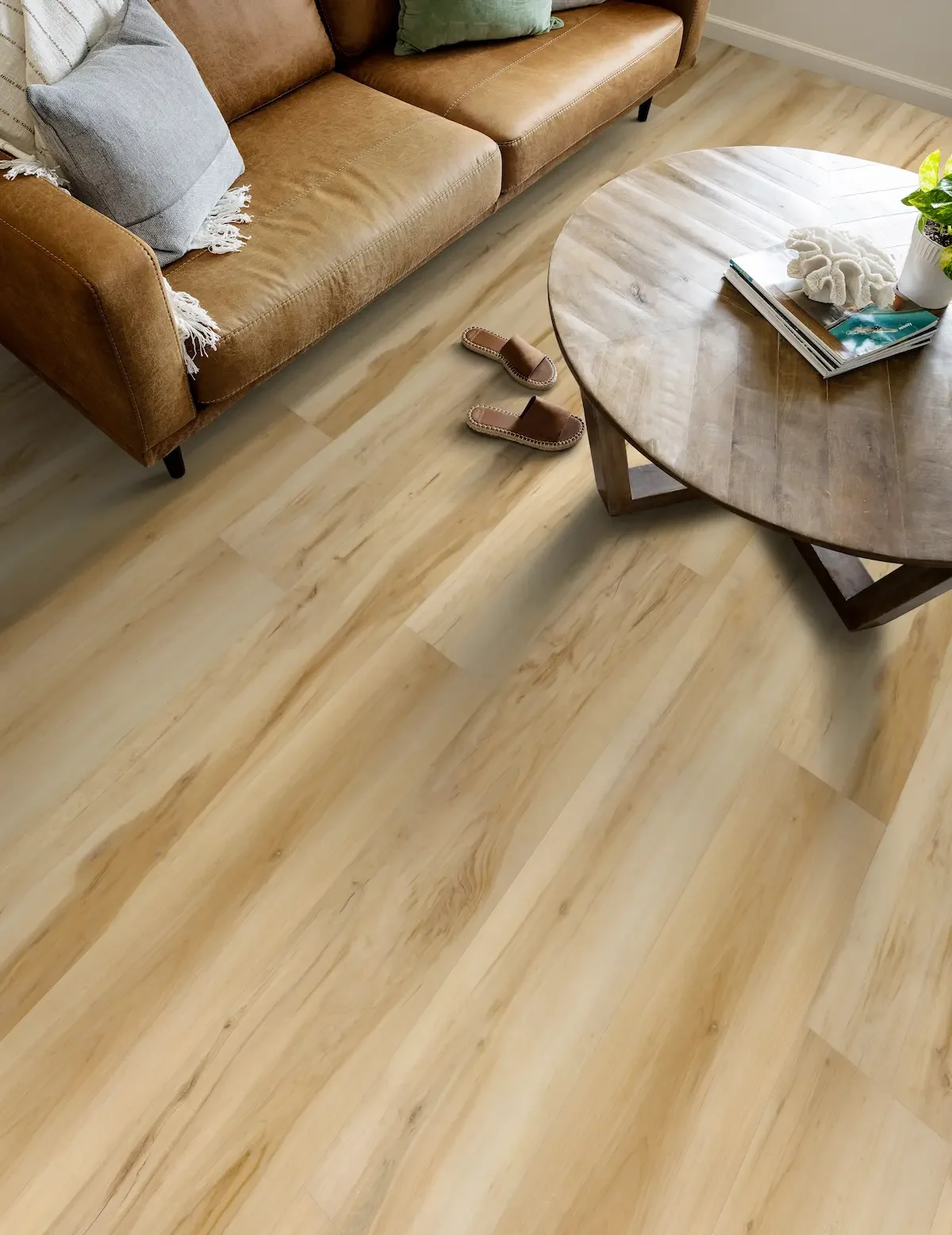
This is one of the most popular choices for finished basements. LVP is waterproof, durable, and warm underfoot compared to tile. It comes in hundreds of styles, including realistic wood and stone looks. See the vinyl plank flooring in Madison we carry for basements.
Ceramic or Porcelain Tile
Tile is another excellent choice because it is waterproof and easy to clean. Porcelain is the one we like on a basement slab, and you can see it among the tile flooring options in our Madison showroom. If you want to make the space warmer, consider pairing it with radiant floor heating.
Carpet Tile
If you prefer a soft surface, carpet tile is safer than traditional carpet because individual tiles can be replaced if they get wet. Choose tiles made with moisture-resistant backing.
Rubber or Vinyl Composite Flooring
Great for playrooms, home gyms, or laundry areas. These materials resist water, offer good traction, and are easy to maintain.
Avoid materials like solid hardwood or traditional laminate. They tend to warp or swell when exposed to moisture and are not recommended below grade.
Seasonal Basement Moisture Checklist for Wisconsin
Basement moisture in Wisconsin follows the seasons, so prevention does too. Moisture prevention is not a one-time project; make these checks part of your home maintenance routine.
- Spring: snowmelt and spring rain soak the soil. Test the sump pump, reconnect downspout extensions, and refill any spots where soil settled against the foundation.
- Summer: run the dehumidifier, empty or drain it, clean its filter, and keep basement windows closed on humid days. Watch the floor edges and cold water pipes for sweating.
- Fall: clean the gutters after the leaves drop, check window wells and covers, and make sure downspouts still discharge away from the house before the ground freezes.
- Winter, October into April: heated air dries the basement, so the dehumidifier can usually rest. Look for new cracks, stains or discoloration on the floor and walls.
Do this now (fall):
- Clean the gutters and confirm every downspout empties well away from the foundation.
- Walk the foundation and fill low spots where water could pool before the ground freezes.
- Test the sump pump by pouring water into the pit and watching it cycle.
Catching small issues early can save you from costly repairs later.
Keep Reading
- Basement Flooring in Madison: A Complete Buyer’s Guide
- How to Choose the Right Flooring for Wisconsin Winters
- Flooring Underlayment and Carpet Pad: A Madison Guide
- Vinyl Flooring in Madison, WI: waterproof plank styles and brands
The Best Long-Term Investment for Wisconsin Homes
Protecting your basement flooring from moisture is one of the smartest home investments you can make. It keeps your space comfortable, improves indoor air quality, and prevents expensive damage down the road.
At Harmony Flooring, we specialize in basement flooring solutions that are both beautiful and durable. We can help you choose waterproof materials, plan the vapor barrier, and coordinate an install with our vetted installation partners so your floor performs well in every season. We’ve worked with homeowners across Madison, Sun Prairie, Verona, and nearby towns who want basements that feel like an extension of their main living space, not a damp storage area.
If you are planning a basement renovation or just want to make sure your current floors are protected, we are happy to help.
Harmony Flooring: Covering Every Detail.
Sources: University of Minnesota Extension: Moisture in Basements, EPA: A Brief Guide to Mold, Moisture and Your Home, ASTM F2170 concrete moisture test and COREtec Scratchless installation instructions.
Basement Moisture Questions
How do you prevent moisture in a basement?
Start by moving water away from the house with good grading and downspout extensions. Seal cracks and keep your sump pump working. Run a dehumidifier to keep humidity between 30 and 50 percent.
How do I stop moisture coming up through a concrete basement floor?
Keep the soil under the slab drier and stop the vapor before it reaches your floor. Moisture usually rises through concrete as vapor you cannot see, so keep downspouts and grading sending water away and seal cracks in the slab and along the wall joint. Before a new floor goes down, test the concrete and use a vapor barrier sealed at the seams and edges, or a floor with one built in. If the slab still tests wet, our team can look at it and tell you which floors make sense.
How do I stop condensation on my basement floor?
Lower the humidity with a dehumidifier and keep air moving. Keep basement windows closed on warm, humid days, because that air condenses on the cool floor. Aim for 30 to 50 percent relative humidity, the range the EPA recommends.
How can I test for moisture under my basement floor?
Tape a two-foot square of clear plastic to the slab and seal the edges. Leave it for at least 24 hours. If moisture forms under it, vapor is coming through the concrete. Before a new floor, flooring makers rely on ASTM F2170 or F1869 tests for an exact reading.
How do you fix a damp basement floor?
Find the source first: outside water, condensation or vapor through the slab. Then fix it in order: grading and downspouts outside, a dehumidifier inside, and a sealed vapor barrier under any new floor. A damp floor that keeps coming back after those steps needs a waterproofing contractor before any flooring goes down.
Should I open basement windows to dry out a damp basement?
Not in warm, humid weather. University of Minnesota Extension advises keeping basement windows closed in summer whenever it is warmer outside than in the basement, because the humid air condenses on cool concrete. A dehumidifier dries the space more reliably.
Planning New Floors in the Madison Area?
Get a free in-home estimate. We measure, bring samples to your kitchen table and give you one written price. No obligation.
Call or text 608-221-5500Schedule a Free Consultation
Shop our floors: Hardwood · Vinyl · Carpet · Tile · Laminate
Showroom: 2125 S. Stoughton Rd, Madison, WI 53716
You Might Also Like
-
- Floor Care and Cleaning
- Buying Guides
November 5, 2026
Protect Floors During the Holidays: A Wisconsin Guide
-
- Vinyl Plank
- Basements and Wisconsin Climate
November 3, 2026
Why Is My Vinyl Plank Flooring Separating in Winter?
-
- Basements and Wisconsin Climate
- Buying Guides
October 30, 2026
Best Flooring for Wisconsin’s Climate: A Four-Season Guide

