

Home › Water-Damaged Floors
Water-Damaged Floors in Madison
Floor got wet? Here’s what to do right now, and how we get the right new floor in once everything is dry.
What to Do in the First 48 Hours
A dishwasher line lets go. A pipe bursts in January. Water seeps through the basement wall in spring, or an ice dam sends melt down the kitchen wall. It happens in Madison every week. The first two days matter most, and none of it starts with picking a new floor.
- Stop the water. Shut the valve under the sink, the appliance supply or the main shutoff. If water is near outlets or cords, shut off power to that area first.
- Take photos and video. Get the floor, the baseboards, the leak itself and anything else that got wet. Take more than you think you need. Your adjuster will want them.
- Call your insurer. Ask how they want the claim handled and whether they’ll send an adjuster. Write down your claim number.
- Get it dried out. Water removal and drying come first, and they’re a separate trade. A water mitigation company pulls wet materials and runs fans and dehumidifiers until the structure is dry. We don’t do that work. Your insurer can usually point you to someone.
Call us whenever you’re ready to talk about the floor. Early is fine. A lot of people call the same week so they know what comes next.
Why the New Floor Waits Until Everything Tests Dry
Subfloors and concrete slabs dry much slower than the room feels. The wet carpet may be gone and the air may feel normal. The plywood or slab underneath can still be holding water.
Put a new floor over that and the trouble comes back. Wood swells and cups. Glue lets go. Vinyl plank can trap moisture underneath, and that’s where odor and mold start. Tile can lose its bond. Even a waterproof floor needs a dry, sound base. Every flooring maker sets moisture limits for the subfloor, and going over them can void the warranty.
So we test. We take moisture meter readings on the subfloor or slab and compare them to the limits for the floor you picked. If the numbers aren’t there yet, we wait and test again. A few extra days now beats tearing out a brand-new floor next year.
What We Do on the First Call and Visit
When you call or text, tell us what happened, which rooms got wet and where the drying stands. We’ll set up a free visit at your house.
At the visit we measure every affected room. We check the subfloor for soft spots, stains and damage the water left behind. We take moisture readings so we know if it’s ready or when to come back. Then we bring samples to your kitchen table so you can see colors in your own light.
One coordinator handles your project from that first visit to the final walk-through. Our trusted local installers do the work.
We’ll Talk to Your Insurance Adjuster
We’ll talk to your insurance adjuster. We also write up the flooring scope in plain terms. That covers the rooms, the square footage, what comes out, what goes in and the prep the subfloor needs. That way the claim matches the actual job, and nothing gets missed halfway through. Your policy decides what’s covered. We make sure the flooring side is clear and complete.
Matching the Floor That’s Left
Water rarely stays in one room. It rarely hits a whole level either. That leaves a question. Do you patch in a match, or replace more?
Sometimes a match works. Save a piece of the old floor, or we’ll look at it on the visit. We can often find the same line or something very close, especially with carpet and tile.
Often it doesn’t. Older floors get discontinued. Wood and vinyl fade over the years, so even the same product can look different next to old boards. A doorway seam where two floors almost match tends to look worse than two floors that clearly differ. Running one new floor through the whole level usually looks better and makes the house feel bigger. Ask your adjuster how your policy handles matching. We’ll show you both options so you can decide.
Which Floors Make Sense for the Rebuild
Pick for the room and for what happened. If water got in once, plan for it to try again.
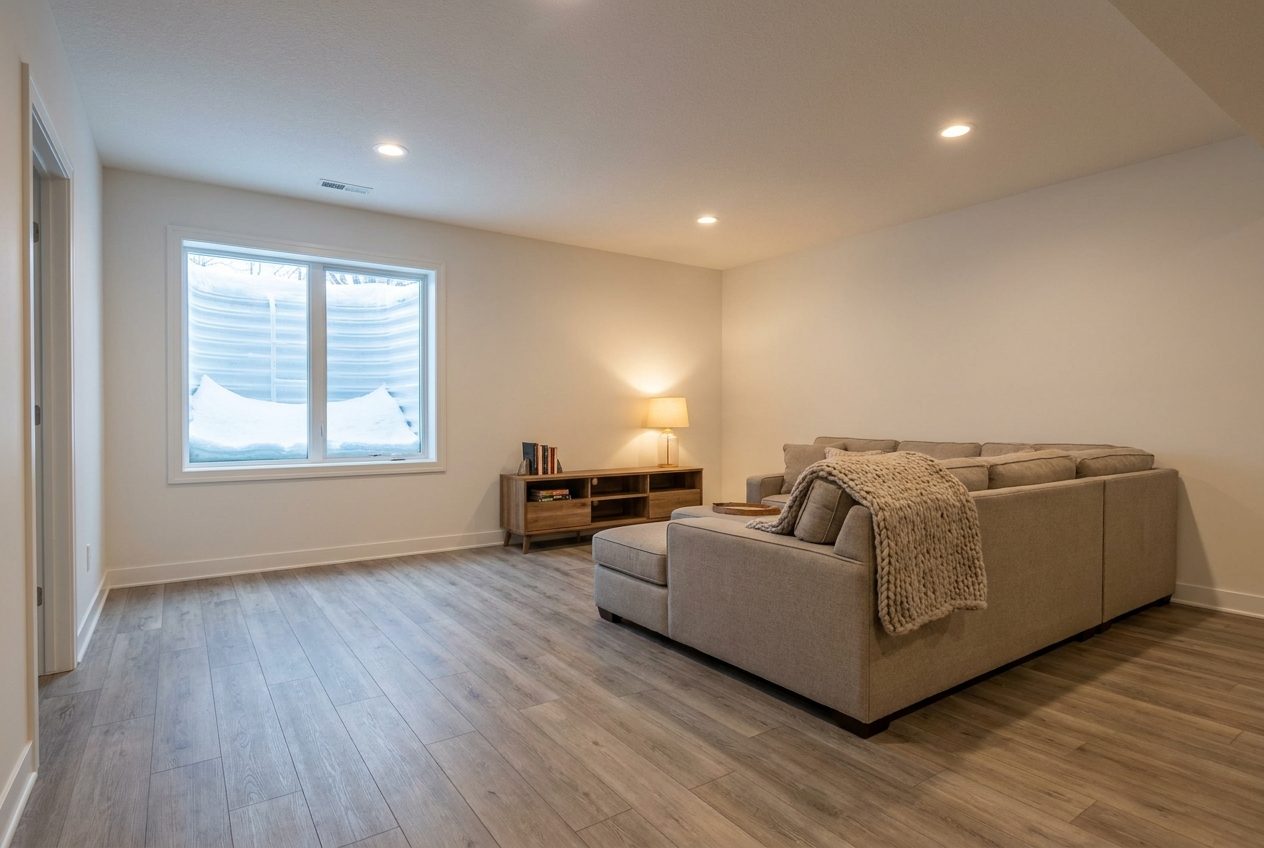
- Kitchens and basements. Waterproof rigid core luxury vinyl plank is the most common pick. It shrugs off spills and the odd leak, and it goes right over a concrete slab. Porcelain tile is the other strong choice.
- Bathrooms and laundry rooms. Tile or waterproof vinyl plank. Both handle standing water far better than wood or laminate.
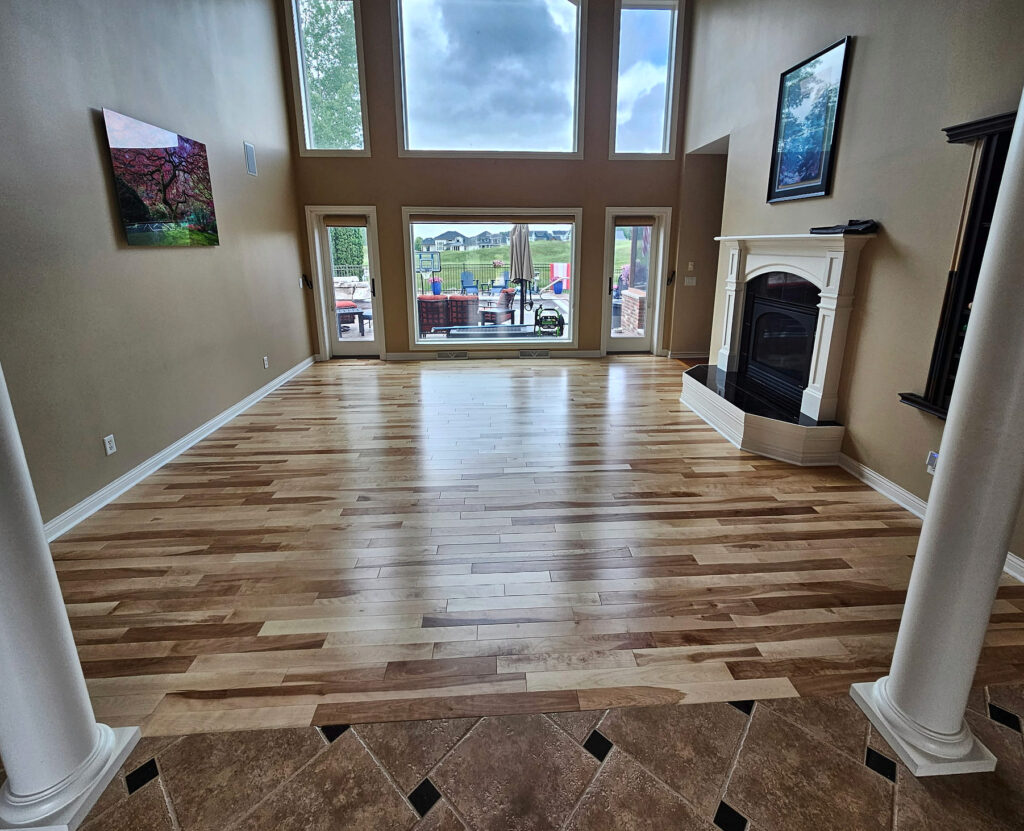
- Living rooms, dining rooms and halls. Hardwood is a great fit away from water. Engineered hardwood handles Madison’s humidity swings better than solid. Laminate is water-resistant, not waterproof, unless the line says so.
- Basement carpet. It can work for a family room you want soft and warm. Only do it once the slab tests dry and the water source is truly fixed, and use the right pad. Plenty of people put vinyl plank down there and add an area rug.
We work in Madison and the towns within about 45 minutes of the Capitol. See our service areas. When you’re ready, call, text or send us a note about what happened, and we’ll take it from there.
What We Don’t Do
We’re a flooring store. We don’t do water removal, drying or mold work. Call a mitigation company for that first.
We come in after, for the new floor. We’ll talk to your insurance adjuster.
The Showroom
2125 S. Stoughton Rd, Madison, WI 53716. Monday through Friday, 8 AM to 5 PM. Evening and weekend appointments available on request.
Floors That Fit
Every floor below is in the showroom. Borrow samples, or we bring them to you.
- Luxury Vinyl PlankWaterproof rigid core. Kitchens, basements, entries and baths. See vinyl plank
- TilePorcelain and ceramic for baths, laundry rooms, mudrooms and kitchens. See tile
- HardwoodSolid and engineered for living rooms, dining rooms and halls. See hardwood
- CarpetSoft and warm for bedrooms and family rooms. See carpet
- LaminateWood looks that are water-resistant and tough on scratches. See laminate
Water Damage Flooring Questions
Straight answers. See all our FAQs, or call and ask.
Do you do water removal or drying?
No. Water removal, drying and mold work are a separate trade, called water mitigation. Your insurer can usually recommend a company. We come in after the space is dry to replace the floor.
How soon can new flooring go in after a leak?
As soon as the subfloor or slab tests dry for the floor you picked. That can take days or a few weeks, depending on how much water there was and how it was dried. We take moisture readings and tell you when it’s ready.
Will you work with my insurance company?
Yes. We’ll talk to your insurance adjuster. We write up the flooring scope so the claim matches the job. Your policy decides what’s covered.
Can you match the floor in my other rooms?
Sometimes. Save a piece of the old floor and we’ll look for the same line or a close match. If it’s discontinued or faded, running one new floor through the whole level often looks better.
What’s the best floor for a basement that has had water?
Waterproof rigid core vinyl plank or porcelain tile, once the water source is fixed and the slab tests dry. Carpet can work in a basement family room, but only with care.
How much does it cost to replace a water-damaged floor?
It depends on the rooms, the floor you choose and how much subfloor prep the water left behind. We measure and check the subfloor on a free visit, then give you a written quote. Call or text 608-221-5500 for a real number.
Keep Reading
- Why Is My Basement Floor Wet or Moldy?: find the source before the new floor goes in
- Flooring Replacement in Madison: What to Expect: each step from measure to final walk-through
- What Does “Waterproof” Really Mean for LVP Floors?: what the label covers and what it doesn’t
- Vinyl Plank Flooring in Madison: the most common pick for kitchens and basements
Dealing With a Damaged Floor? Let’s Fix It Right.
Tell us what happened and we’ll help you pick the right replacement floor.

