- Commercial Flooring
Senior Living Flooring: A Guide for Madison Facilities
August 25, 2026
Flooring carries more weight in senior living than in almost any other building type. The right senior living flooring reduces fall risk, quiets busy corridors, and makes a community feel like home rather than a hospital. The wrong choice shows up in incident reports, resident complaints, and early replacement cycles. This guide is for administrators, facilities managers, and developers of senior living, assisted living, and memory care communities in the Madison, WI area. Whether you’re planning a new community in Sun Prairie’s growing corridors or renovating an established building in Middleton, the decision factors are the same. We’ll walk through them in plain language. See our commercial flooring page.
The Short Answer: The best flooring for senior living common areas and corridors is slip-resistant luxury vinyl or low-pile carpet tile with acoustic backing. Pick matte finishes to cut glare. Keep transitions flush for walkers and wheelchairs. Use carpet tile in dining rooms and lounges for quiet. Use welded sheet vinyl in bathing areas.
Key Takeaways
- Slip resistance and fall reduction come first. Textured luxury vinyl and low-pile carpet tile outperform hard, polished surfaces.
- Matte, low-glare finishes matter for aging eyes. Shiny floors can read as wet and change how residents walk.
- Flush, low-profile transitions keep walkers and wheelchairs moving safely between rooms.
- Acoustic performance shapes daily life in corridors and dining rooms.
- Cleanability is a round-the-clock reality in care environments, not an afterthought.
- Phased installation lets occupied communities upgrade without relocating residents.
Senior Living Flooring Options Worth Considering
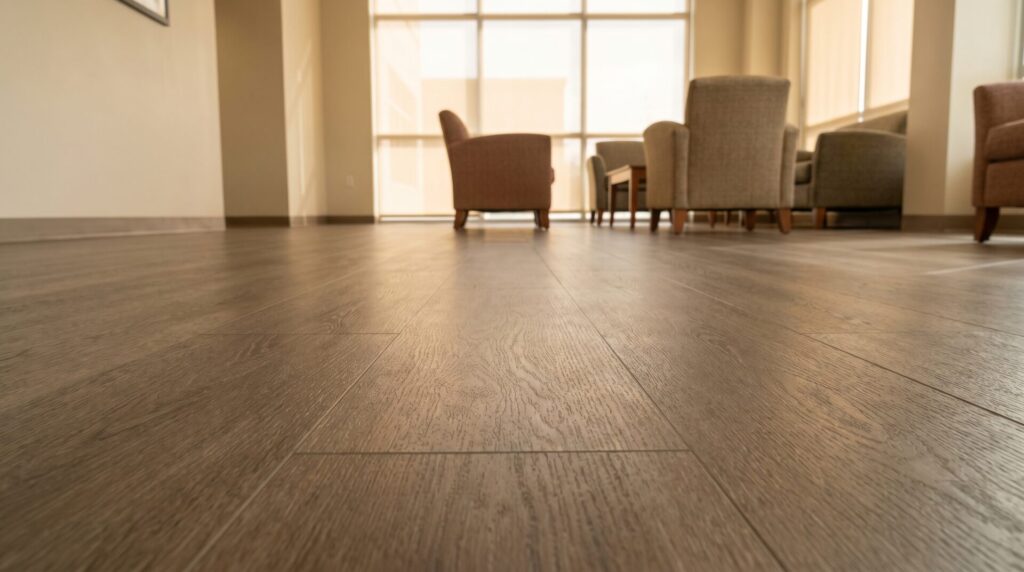
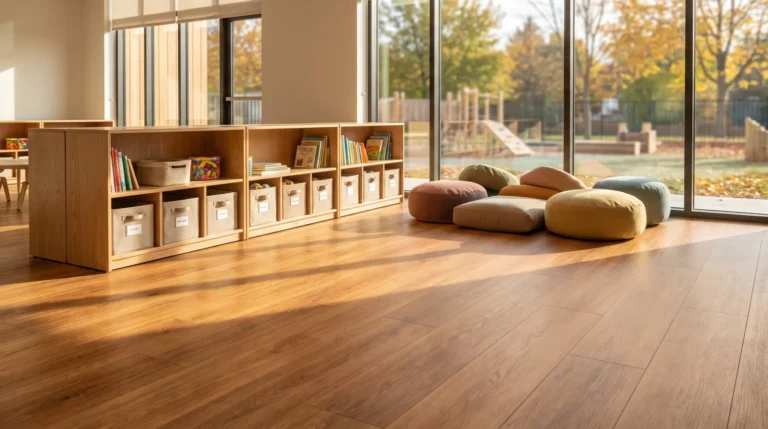
Luxury vinyl plank and tile (LVP/LVT) leads most senior living projects today, and for good reason. It’s waterproof, available with slip-resistant textures, and comes in warm wood and stone visuals that feel residential instead of institutional. Quality commercial lines handle wheelchair traffic, med carts, and daily cleaning.
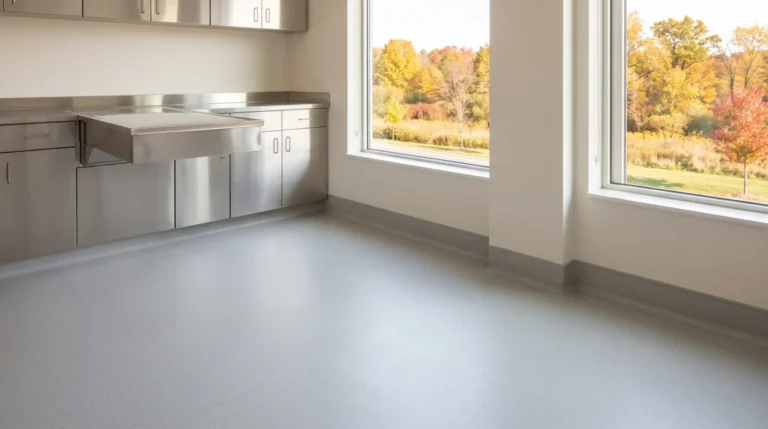
Sheet vinyl with heat-welded seams belongs in bathing suites, care areas, and anywhere water and hygiene protocols dominate. Welded seams leave no place for moisture to hide, which housekeeping teams appreciate.
Carpet tile earns its place in dining rooms, lounges, and resident corridors where acoustics and warmth matter most. Modern solution-dyed carpet tile resists stains, releases spills with proper extraction, and lets your team replace a single damaged tile instead of an entire room.
Rubber flooring offers comfort underfoot, quiet, and forgiving impact absorption, which suits fitness rooms, therapy spaces, and service corridors.
Porcelain tile still has a role in lobbies and entry vestibules, where winter slush from a Wisconsin November demands a truly waterproof surface. Choose textured, matte finishes and keep it out of resident living areas, where harder surfaces are less forgiving.
What to Weigh Before You Choose
Slip resistance and fall reduction sit at the top of the list. Look for commercial products with documented slip-resistant ratings, and let your flooring partner help you confirm the specs fit each space. A floor that performs well dry but turns slick under a spilled drink is the wrong floor for a dining room.
Glare deserves far more attention than it usually gets. Aging eyes are more sensitive to reflected light, and a glossy corridor floor under bright windows can look wet even when it’s dry. Residents respond by shortening their stride or stopping, which raises fall risk. Matte and low-sheen finishes keep walking surfaces readable.
Here’s a point that surprises many administrators: softer is not automatically safer. Thick, plush carpet with a soft cushion feels luxurious, but it makes wheelchair propulsion exhausting and can catch the toes of residents with a shuffling gait. Low-pile carpet over a firm, appropriate cushion gives you cushioning for falls without dragging down mobility.
Transitions are where the details earn their keep. Walker wheels and wheelchair casters catch on raised edges that most of us would never notice. One thing our trusted local installers check that facility tours never show: the exact height change at every doorway and material change, because even a small lip becomes a daily obstacle for hundreds of trips. Flush or low-profile transitions, planned across the whole floor plan, work with current accessibility and safety requirements and make movement easier for everyone.
Acoustics shape how a community feels. Hard corridors bounce cart noise, call signals, and conversation into resident rooms. Carpet tile, acoustic-backed vinyl, and the design principles we cover in our piece on quiet flooring solutions apply directly to senior living corridors and dining rooms. Quieter dining spaces support easier conversation, which keeps mealtimes social instead of stressful.
Finally, weigh residential warmth against institutional durability. Today’s commercial products no longer force that trade. Wood-look vinyl, soft-toned carpet tile, and coordinated color palettes can meet care-environment performance standards while still feeling like home. That balance matters to residents and to the families touring your community.
If you’re comparing products for a renovation or a new build, reach out for a consultation and we’ll help you narrow the field to options that fit each space.
Matching Flooring to Each Space in Your Community
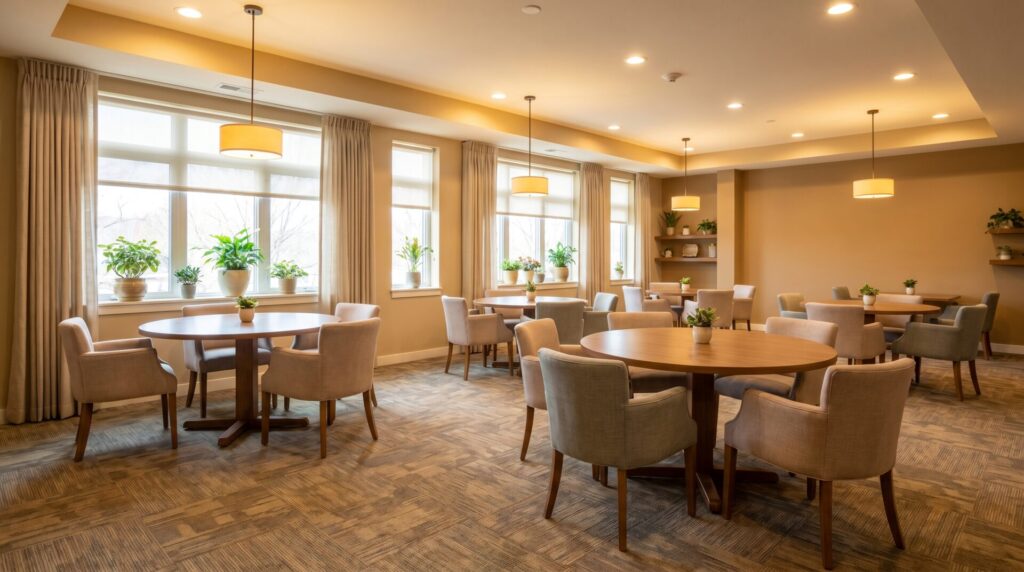
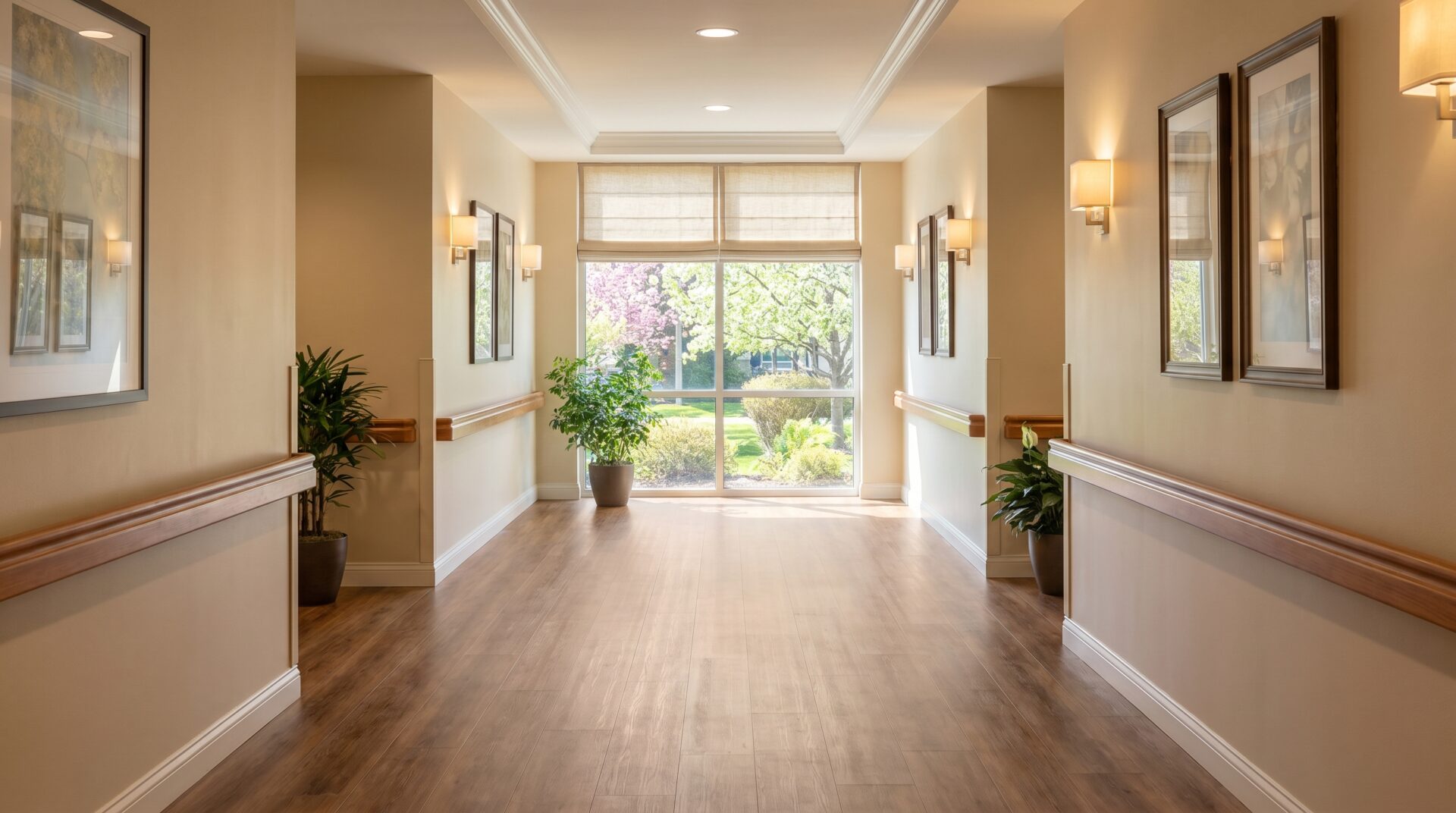
- Corridors: slip-resistant LVT or low-pile carpet tile with acoustic backing. Consistent visuals from end to end help residents navigate confidently.
- Dining rooms: solution-dyed carpet tile or acoustic-backed vinyl. Plan for daily spills and quarterly deep cleaning.
- Resident rooms and apartments: carpet for warmth and sound, or wood-look LVP for residents who use wheelchairs full time.
- Memory care: continuous, matte flooring with minimal pattern. Strong contrast changes or dark borders can be perceived as holes or steps, so keep color values consistent across thresholds.
- Bathing suites and spas: slip-resistant sheet vinyl with welded seams and integral cove base.
- Lobbies and entries: textured porcelain or premium LVT with generous walk-off matting for Wisconsin winters.
Communities around Madison each bring their own conditions. Newer developments in Waunakee and Sun Prairie often start with clean concrete slabs that still need moisture testing before anything goes down. Established buildings in Middleton and Monona frequently hide multiple old flooring layers and uneven subfloors that must be corrected first. The product is only half the decision. The building underneath is the other half.
What Drives the Value of Senior Living Flooring
No two projects price out the same way, and the differences rarely come from the flooring material alone. The biggest drivers are subfloor condition and prep, moisture mitigation on concrete slabs, acoustic underlayments, transition details, and the logistics of working in an occupied building. Performance tier matters too. Entry-level commercial products cover the basics, while mid-range and premium lines add thicker wear layers, better acoustic ratings, and longer service life.
Think in lifecycle terms rather than first cost. A floor that lasts through two extra renovation cycles, cleans faster every single day, and prevents even a handful of falls returns its value many times over. Maintenance labor is a real line item in care environments, and the right surface choice shrinks it.
Phased Installation in an Occupied Facility
Most senior living flooring projects happen in buildings that never close, and that’s a planning problem before it’s an installation problem. The work gets sequenced wing by wing or floor by floor. Egress routes stay open, dust containment goes up, and low-odor adhesives protect residents with respiratory sensitivities. Night and weekend work can keep dining rooms and common areas available during waking hours.
We’ve outlined how this works across business settings in our guide to commercial flooring installation without shutting down, and senior living adds one more layer: communication. Residents do better when changes are predictable, so a clear schedule shared with staff and families is part of the installation plan, not a courtesy.
Working With a Commercial Flooring Partner
A good consultation starts in your building, not in a showroom. Expect your flooring partner to walk the corridors at different times of day, check glare from the actual windows, measure transitions, and test slab moisture before recommending anything. Expect honest talk about which spaces justify premium products and where mid-range performs just as well. Our commercial flooring team works with Madison-area facilities through exactly that process, from product selection through phased scheduling around your care operations.
How Harmony Flooring Works
- Design: We start with a walkthrough of your community and a conversation about residents, traffic, care levels, and the look you want, then recommend products matched to each space.
- Measure: Our team field-measures every area, tests slab moisture, and documents subfloor and transition conditions so the quote reflects reality.
- Install: Our trusted local installers execute a phased schedule built around your operations, with containment, protected routes, and a final walkthrough wing by wing.
You get one accountable partner from first walkthrough to final inspection. That’s what we mean by Covering Every Detail.
Ready to build a flooring plan your residents, staff, and families will feel every day? Contact Harmony Flooring to schedule a consultation for your Madison-area community.
Senior Living Flooring Questions
What flooring works best for senior living common areas and corridors?
Slip-resistant luxury vinyl or low-pile carpet tile with acoustic backing works best. Keep visuals consistent from end to end so residents can find their way. Matte finishes cut glare that can look like a wet floor.
What is the best flooring for assisted living facilities?
Most communities use slip-resistant luxury vinyl and low-pile carpet tile, matched room by room. Vinyl handles corridors and bathing areas. Carpet tile brings warmth and quiet to dining rooms and lounges.
Is carpet or vinyl better for assisted living?
It depends on the space. Vinyl wins where spills and wheeled traffic are constant. Carpet wins where quiet and warmth matter most, like dining rooms and resident rooms.
What flooring is safest for seniors who use walkers or wheelchairs?
Firm, smooth and slip-resistant surfaces with low-profile transitions are safest. Luxury vinyl and low-pile carpet tile both work well. Thick plush carpet resists wheels and catches shuffling feet.
What flooring works best for memory care units?
Use continuous matte flooring with little pattern and steady color from room to room. Strong contrast changes can look like holes or steps to residents with dementia. Low glare and flush thresholds matter even more here.
Can you replace flooring in senior living without moving residents?
Yes, and it’s the normal approach. Work is phased wing by wing with dust containment and low-odor adhesives. Clear schedules shared with staff and families keep routines steady.
What drives the cost of senior living flooring?
Subfloor prep and moisture control on slabs often matter as much as the product. Acoustic underlayment and transition work add to it. Working in an occupied building also shapes the budget.
Questions About Your Floors?
Call or text 608-221-5500Schedule a Free Consultation
Shop our floors: Hardwood · Vinyl · Carpet · Tile · Laminate
Showroom: 2125 S. Stoughton Rd, Madison, WI 53716