- Buying Guides
One Flooring Throughout the House: Pros and Cons for Wisconsin Homes
March 3, 2026
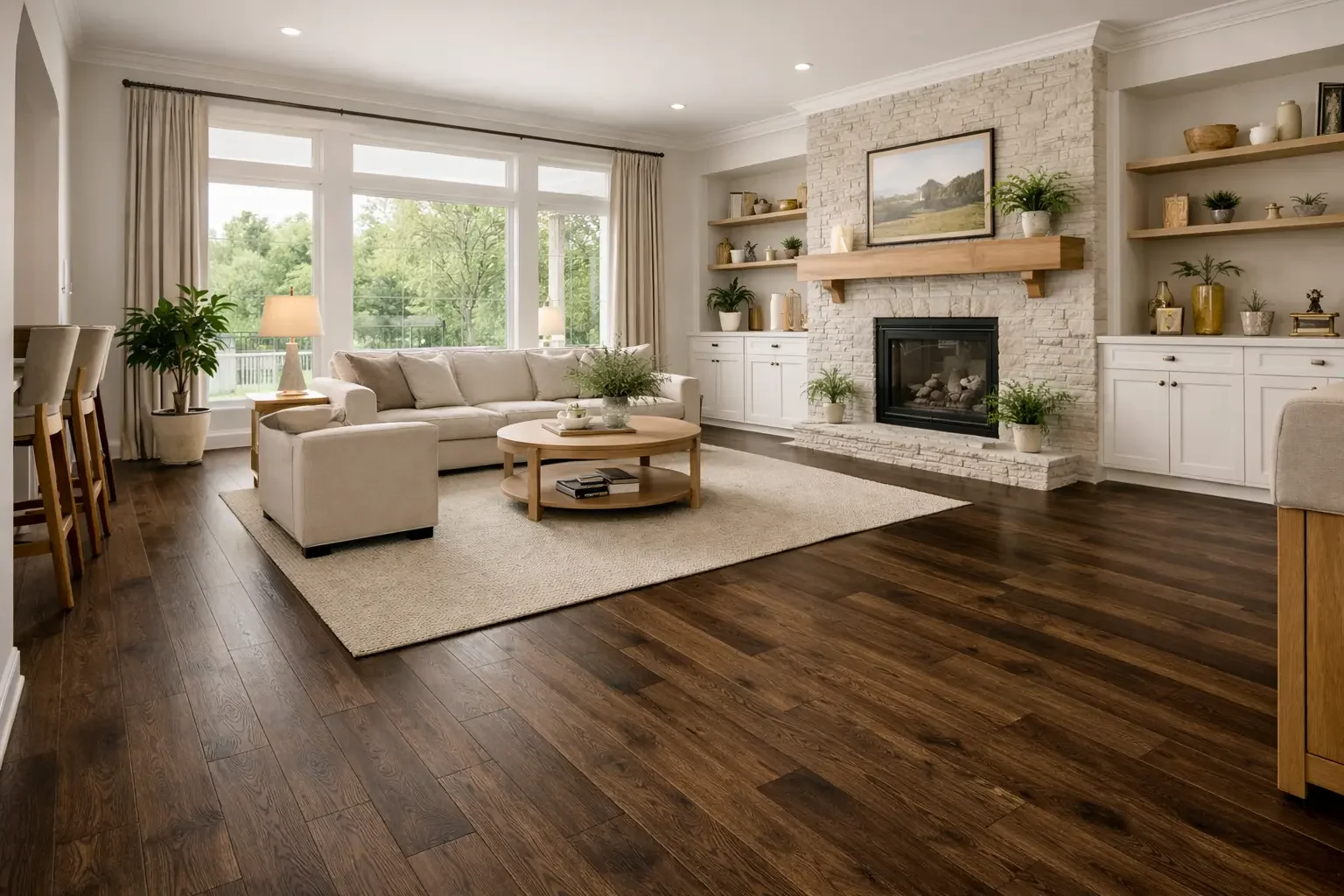
If you’ve been scrolling through home design inspiration lately, you’ve probably noticed a trend: the same flooring flowing seamlessly from the front door all the way through the living room, kitchen, and even into bedrooms.
It’s clean. It’s modern. It feels spacious.
But is choosing one flooring throughout the house actually the right move for your Wisconsin home?
At Harmony Flooring, we help homeowners across Madison, Verona, Sun Prairie, Middleton, and surrounding communities weigh this exact decision every week. The truth is, there are real advantages and real trade-offs. Let’s walk through both so you can make the smartest choice for your space.
Why Homeowners Love One Flooring Throughout
Using a single flooring material across most or all of your home has become increasingly popular, especially in open-concept floor plans.
Here’s why.
Pro #1: A Seamless, Cohesive Look
One of the biggest benefits is visual continuity.
When you use the same flooring throughout:
- Rooms feel connected
- Sight lines stay clean
- Spaces appear larger
- Transitions are minimized
In many Madison-area homes with open layouts, a continuous hardwood or luxury vinyl plank floor can make the entire main level feel expansive and unified.
This design approach works especially well in:
- Ranch homes
- Open-concept remodels
- New construction
- Smaller homes where you want to maximize visual space
If you love a modern, streamlined aesthetic, one consistent floor delivers that effortlessly.
Pro #2: Fewer Transitions and Thresholds
Every time you switch flooring types, you need a transition strip.
That means:
- More visible breaks in the design
- Potential tripping points
- Extra installation components
Using one flooring type eliminates most of those breaks. It creates smooth movement from room to room, which many homeowners appreciate both visually and functionally. Moving into a new place? See our guide to flooring for a new house.
Pro #3: Easier Cleaning and Maintenance
When your home has three or four different flooring materials, you often need:
- Different cleaning products
- Different maintenance routines
- Separate repair strategies
One flooring simplifies everything.
For busy families in places like Fitchburg, Cottage Grove, and Waunakee, that consistency can be a huge time saver.
Pro #4: Potential Cost Efficiency
In some cases, purchasing larger quantities of a single flooring product can simplify ordering and installation.
It can also:
- Reduce leftover material waste
- Streamline labor scheduling
- Avoid the cost of multiple transition materials
That said, this depends on the flooring type and layout.
The Downsides of One Flooring Throughout
Now let’s talk about the trade-offs. Because there are some.
Con #1: Not Every Room Has the Same Needs
This is the biggest consideration.
Different rooms experience different conditions.
In Wisconsin homes, especially around Madison where winters bring snow and salt, moisture matters.
For example:
- Bathrooms see water daily
- Kitchens see spills and humidity
- Basements may have moisture concerns
- Entryways handle wet boots and debris
Installing traditional hardwood in every single room may not be practical if certain spaces need waterproof protection.
That’s why many homeowners choose waterproof luxury vinyl plank throughout instead of solid hardwood when they want a single-floor look.
Con #2: Higher Material Cost if You Choose Premium Flooring
If you fall in love with a premium hardwood or high-end tile and decide to run it through the entire house, the total project cost increases.
Sometimes, using:
- Hardwood in living areas
- Tile in bathrooms
- Carpet in bedrooms
can be more cost-effective overall.
One flooring throughout works best when the chosen product fits both your style and your budget.
Con #3: Less Design Contrast
While cohesion is a benefit, contrast can add character.
Different flooring in specific rooms can:
- Define spaces
- Add texture variety
- Highlight architectural features
For example, tile in a mudroom can create a durable, practical entry zone. Patterned tile in a bathroom can add personality. Carpet in bedrooms can create warmth and softness.
Using one flooring everywhere removes those opportunities for contrast.
Con #4: Moisture and Climate Considerations in Wisconsin
Southern Wisconsin’s climate adds another layer of complexity.
Homes in Madison, Monona, Stoughton, and surrounding towns face:
- Dry winters
- Humid summers
- Snow and ice
- Salt exposure
If you choose one flooring throughout, it must handle all of those conditions equally well.
For instance:
- Solid hardwood throughout the house requires proper humidity control year-round.
- Laminate may not be ideal for moisture-prone spaces.
- Tile throughout can feel cold without radiant heat.
The material must be carefully selected for our region.
Best Flooring Options for a Whole-House Approach
If you’re set on one flooring throughout your home, here are the options that tend to perform best in Wisconsin.
Luxury Vinyl Plank (LVP)
One of the most popular whole-house solutions.
Why?
- Waterproof
- Scratch resistant
- Comfortable underfoot
- Works in kitchens, bathrooms, basements, and living areas
For active households in Madison and surrounding communities, LVP offers flexibility and durability without sacrificing style.
Engineered Hardwood
A great option if you want real wood but need more stability than solid hardwood.
It handles seasonal humidity shifts better and can be installed in more areas of the home.
Porcelain Tile
While less common for bedrooms, some modern homes use large-format tile throughout.
This works particularly well with radiant heating systems.
When It Makes Sense to Mix Flooring Instead
There are times when mixing materials is the smarter long-term choice.
You may want to consider multiple flooring types if:
- Your home has a moisture-prone basement
- You prefer softer surfaces in bedrooms
- You want bold design features in bathrooms
- You are working within a tight budget
Blending materials strategically can protect your investment while still maintaining visual harmony.
A common solution is keeping one flooring throughout the main living areas, then switching materials only where necessary.
Design Tips for Using One Flooring Throughout
If you decide to go with a single flooring material, here are a few professional tips:
- Choose a neutral tone that works with multiple room styles
- Avoid extremely trendy colors that may date quickly
- Select a durable wear layer if using vinyl
- Ensure proper acclimation and installation
- Add warmth and variety with area rugs
Area rugs are especially helpful for defining spaces without changing flooring.
Frequently Asked Questions
Should you use the same flooring throughout your house?
It’s a great fit for many homes, especially open layouts you want to feel connected. If some rooms see a lot of water or you want soft bedrooms, mixing materials can work better.
What’s the best flooring to run through a whole house?
Waterproof luxury vinyl plank is the most popular whole-house pick. It handles kitchens and baths as well as living areas and basements. Engineered hardwood is the choice if you want real wood. It handles humidity better than solid.
Does one floor throughout make a home look bigger?
Yes. Fewer breaks between rooms keep sight lines clean, so spaces feel larger. It’s a big reason one floor works so well in ranch homes and open-concept remodels.
Is one flooring throughout a good idea in Wisconsin?
It can be, if the floor handles every room’s conditions. Wet boots and salt test the entry. Dry winters and humid summers test the rest. Solid hardwood needs steady humidity control, and laminate isn’t ideal where water sits.
Can I keep one main floor and use other flooring in some rooms?
Yes, and it’s a common plan. Run one floor through the main living areas. Then switch to tile in a bathroom or carpet in bedrooms where it makes sense. You can compare the five floors to see what fits.
So, Should You Use One Flooring Throughout Your House?
There’s no universal right answer.
If you want a modern, open, and cohesive look with simplified maintenance, one flooring throughout can be an excellent choice.
If your home has varied functional needs or you enjoy design contrast, mixing materials may serve you better.
The key is balancing:
- Durability
- Moisture resistance
- Comfort
- Budget
- Long-term value
At Harmony Flooring, we help homeowners across Madison, Verona, Sun Prairie, Middleton, and beyond evaluate these factors carefully before making a decision.
Because the best flooring plan is the one that fits your lifestyle, not just a design trend.
If you’re considering updating your home’s flooring and want expert guidance tailored to Wisconsin living, visit our Madison showroom or schedule a free consultation.
We’ll walk you through samples, talk through real-world pros and cons, and help you design a solution that works beautifully from room to room.
Questions About Your Floors?
Call or text 608-221-5500Schedule a Free Consultation
Shop our floors: Hardwood · Vinyl · Carpet · Tile · Laminate
Showroom: 2125 S. Stoughton Rd, Madison, WI 53716