- Buying Guides
2026 Flooring Trends for Madison Homes: What’s Showing Up
June 16, 2026
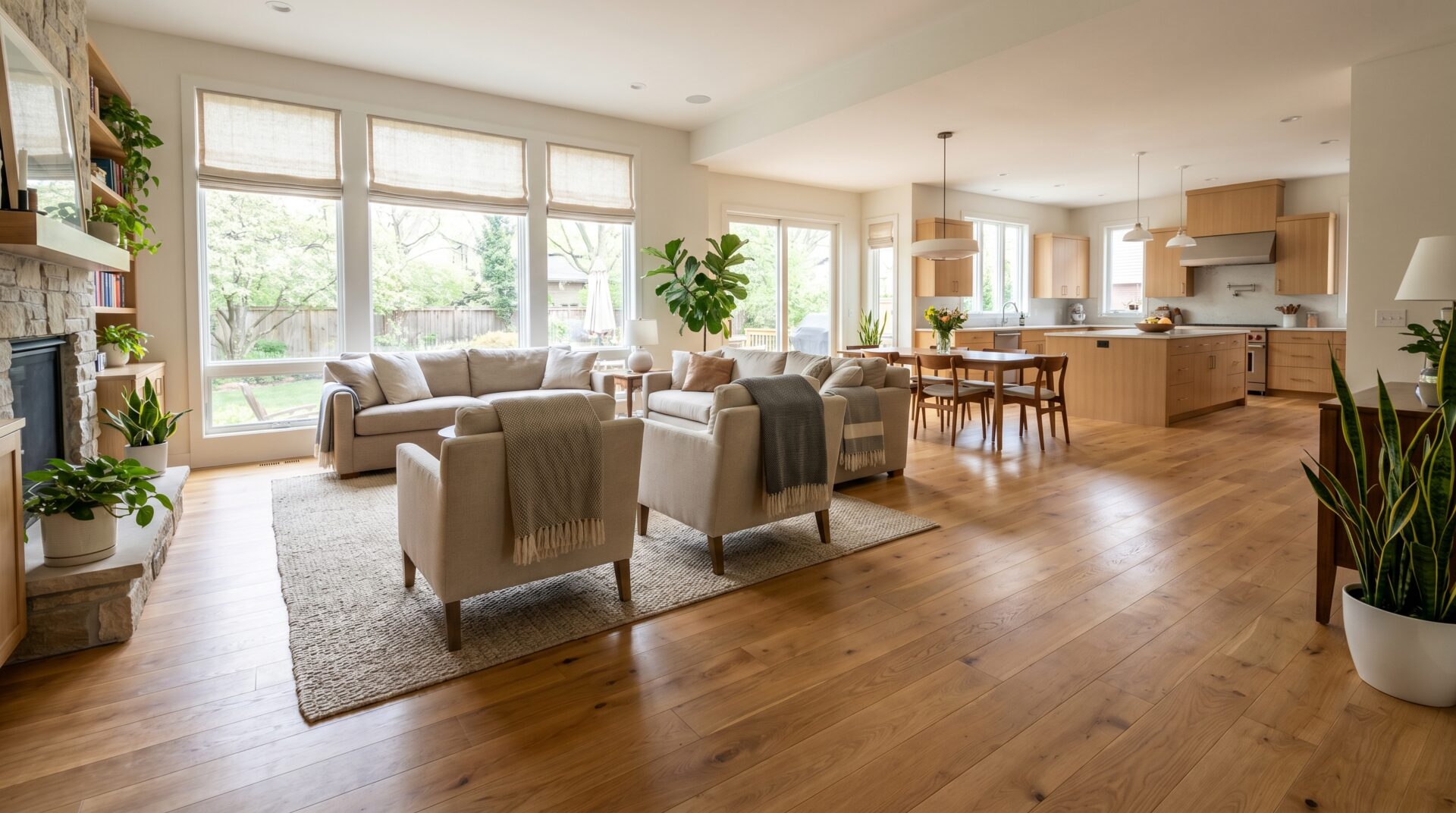
Flooring trends used to move slowly. A look would land, take five years to spread, and another five to fade. That’s not the world we’re in anymore. The styles showing up in Madison homes today moved fast, and several of them are already mature enough that anyone walking into a showroom can see them everywhere. Some of these are short-term moments. Several are longer shifts that will define how Madison homes look for the next decade. Warm white oak is leading the way, and you can see it in the hardwood floors we carry.
The Short Answer: Luxury home design trends in Wisconsin for 2026 lean warm and natural. Wide-plank white oak in honey tones leads the way. Matte finishes have replaced gloss. Stone-look LVP is taking over mudrooms and baths. Large format porcelain and heated tile are rising too. Cool gray floors and high gloss are on the way out.
This is our 2026 flooring trends for Madison homes guide: what’s showing up in real local houses this year, what’s fading, and the design and product shifts that matter most if you’re thinking about a flooring project. We’ve grouped this by product type and pattern so you can skim to the categories you care about, or read the whole thing for a full picture of where flooring is heading. To see every category in one place, compare flooring types for Madison homes.
Key Takeaways
- The defining color shift of 2026 is warm tones. Cool gray hardwood is fading. Honey, natural, and warm greige are the new defaults.
- Wide-plank hardwood (7 inches and wider) is the new normal, especially in white oak.
- Matte and satin finishes have replaced gloss as the expected sheen across hardwood and tile.
- Luxury vinyl plank continues to dominate, with stone-look LVP gaining real share in mudrooms, baths, and laundry rooms.
- Tile is getting bolder. Large format porcelain is winning in main spaces, while patterned tile is making a comeback in powder rooms.
- Carpet is returning, but only the good stuff. Quality wool and high-end nylon in bedrooms and family rooms, less of it in main living areas.
- Sustainability matters more in 2026 than it did three years ago. Buyers are asking about wood sourcing, VOC certifications, and lifespan in ways they didn’t before.
The Big Themes Shaping 2026 Flooring
Before the product specifics, three themes connect everything we’re seeing this year.
Warmth is back. The cool gray hardwood and stark white interior look that dominated from roughly 2015 to 2022 has fully reversed. Homeowners are picking warm honeys, natural oaks, and earthy tones across every product category. This isn’t a small shift, it’s the dominant story of the year.
Realism keeps closing the gap. Modern LVP and porcelain tile that mimic real wood and stone have advanced again. Better print technology, deeper embossing, and longer planks have pushed visual quality to a place where most people genuinely cannot tell the difference between premium LVP and real hardwood unless they look closely.
Texture beats shine. Matte and satin finishes have replaced gloss almost universally. Wire-brushed hardwood, hand-scraped texture, and matte porcelain tile all hide dust and footprints better than glossy surfaces and look intentional rather than slick.
These themes show up in different ways across each product category. Here’s how.
Hardwood Trends Defining 2026
If 2025 was about engineered hardwood gaining ground, 2026 is about the look of hardwood shifting in a few clear directions.
Wide planks are now the default. Seven-inch planks were a premium option five years ago. Today they’re the starting point for most new hardwood installs in Madison-area homes. Eight, nine, and even ten-inch planks are showing up regularly in modern open-concept main floors and primary suites. Wide planks elongate a room visually, reduce seam count, and give floors a sense of intentional scale that narrower strip flooring cannot match. Wider planks need engineered construction to stay flat through Wisconsin humidity swings, which is part of why engineered has become the default in this format.
White oak has become the default species. A few years ago, red oak was the dominant residential hardwood. Today, white oak is the most-requested species we see in Madison homes. The reasons: a tighter, calmer grain pattern, better ability to take a wider range of stains, and a versatile color palette that fits modern, transitional, and traditional design equally well. Red oak isn’t gone, particularly in homes matching existing floors, but white oak is what most homeowners are asking for in new installations.
Warm tones are back. The cool gray hardwood that defined the late 2010s has fully receded. The warm honeys, natural oak tones, and softly amber greiges that homeowners are picking now feel more timeless and play better with the warmer color palettes returning to interior design overall. Limewashed and whitewashed oak is also seeing a resurgence in some design-forward Madison homes, though that look is more polarizing than the warm-natural majority trend.
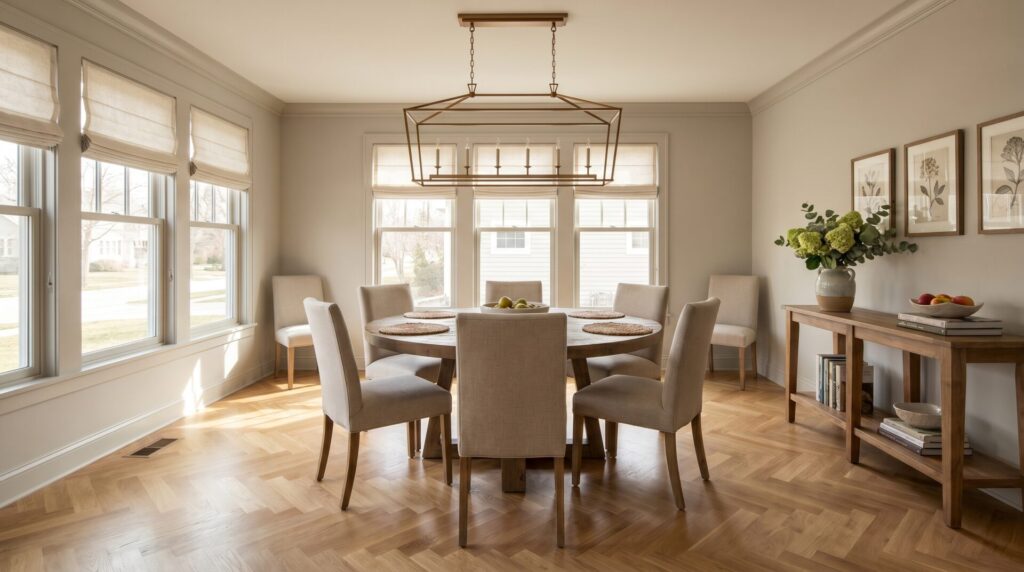
Herringbone and chevron patterns keep showing up. Pattern installs have moved from a luxury-only feature to something we’re specifying in more standard projects, especially in entries, dining rooms, and primary bedrooms. Herringbone in particular has reached the point where a wide-plank herringbone in a Madison craftsman or modern home reads as classic rather than trendy, which is the sign of a pattern that’s going to age well.
If you’re weighing solid hardwood, engineered hardwood, or a refinish on what you already have, our engineered hardwood vs. solid hardwood guide covers the decision in detail for Madison conditions.
LVP and Vinyl: The Year of Realism and Scale
Luxury vinyl plank has been the dominant residential flooring story for several years running. 2026 is more of a deepening than a pivot, but a few things have genuinely changed.
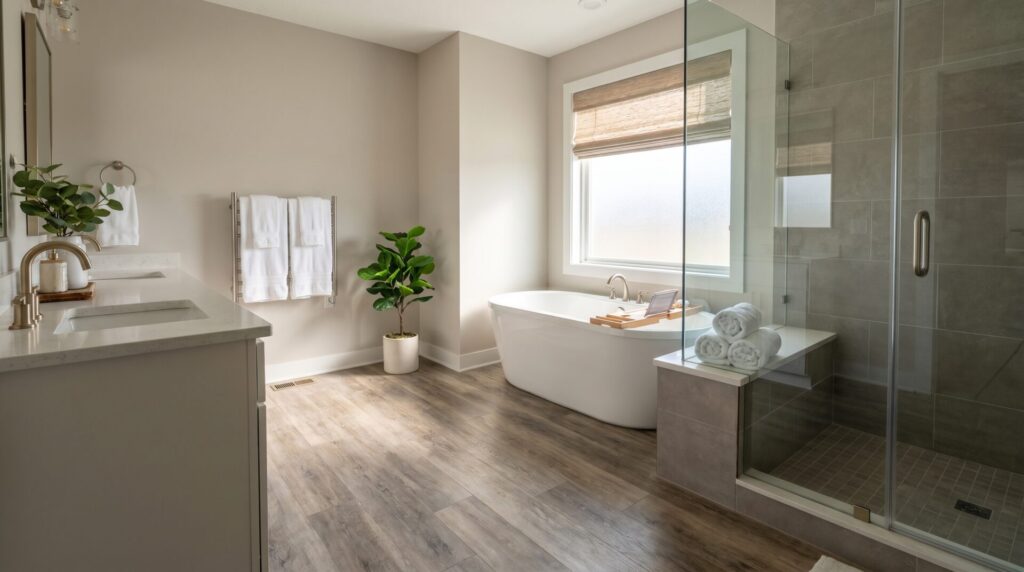
Stone-look LVP has arrived as a category. For a long time, LVP meant wood-look planks. In the past two years, stone-look and tile-look LVP have become a serious category of their own, and we’re seeing them specified for primary bathrooms, mudrooms, laundry rooms, and powder rooms across Madison homes. The look has gotten convincing enough that most clients pick stone-look LVP over actual stone tile when comfort underfoot, warmth, and water performance matter together.
Planks keep getting bigger. Five years ago, a 6-inch wide, 48-inch long plank was a standard LVP size. Today, 9-inch wide, 72-inch or 78-inch long planks are common. The bigger format works the same magic as wide-plank hardwood, fewer seams, larger visual scale, more intentional design. It also raises the bar on subfloor flatness, which is where installation quality matters more than ever.
Premium has become the standard tier. A few years ago, premium LVP with a 20-mil-plus wear layer was the upgrade product. Today it’s where most projects start. Active families, pet owners, and homeowners thinking long-term are skipping the entry tier entirely and going straight to the higher-performance products, because the wear difference over a decade is significant. We rarely recommend anything below 20 mil for main living areas these days.
If you want a deeper read on LVP in real Madison rooms, our LVP guide for Madison homes walks through room-by-room performance.
Tile Trends: Color, Geometry, and Heat
Tile is having a moment in 2026. After several years where porcelain wood-look tile dominated and not much else got specified, the category has come back into focus with three clear shifts.
Large format porcelain is winning in main spaces. Twenty-four by forty-eight inch tile, and even 30 by 60, has moved from commercial specs into residential. In Madison-area kitchens, mudrooms, and primary baths, large format porcelain creates a clean, modern feel with fewer grout lines and a more architectural sense of scale. The trade-off is installation difficulty, large format tile demands a perfectly flat subfloor and skilled installers who know how to lippage-check across long planes. When it goes in right, it’s striking.
Patterned tile is back in powder rooms and accent spaces. After a decade of restraint, encaustic-look porcelain, hand-painted-style ceramic, and bold geometric patterns are showing up again in powder rooms, mudrooms, and small accent zones. The look adds personality without committing the whole house to a strong pattern. Black-and-white encaustic, terra cotta tones, and ocean-blue geometric prints are all making appearances in homes that wouldn’t have considered them five years ago.
Heated tile floors are becoming standard, not an upgrade. Radiant floor heat under tile, particularly in bathrooms, has moved from luxury feature to expected for many Madison renovations. Once a homeowner stands on a heated tile floor in February, the conversation usually ends right there. The combination of tile’s durability with radiant warmth solves the long-standing “tile is too cold for Wisconsin” objection completely. For new bathroom renovations, we’re specifying radiant heat as the starting point and letting clients opt out, rather than the other way around.
Carpet Returns to Quality Over Quantity
For several years, the trend was less carpet. Hard surfaces everywhere, with maybe carpet in a few bedrooms if anywhere. In 2026, that has shifted into something more nuanced.
The category is shrinking but premium-ing up. Less wall-to-wall carpet overall in the average Madison home, but the carpet that’s specified is much higher quality than what would have gone in five years ago. Wool, high-end nylon, and luxury textured products are showing up in primary bedrooms, family rooms, and dedicated comfort zones, where carpet’s softness and warmth genuinely matter. The volume is down, the per-square-foot quality is up.
Patterned and textured carpets are gaining share. Solid neutrals are still common, but patterned and textured carpets, geometric weaves, subtle motifs, and tonal stripes, are showing up more often in primary bedrooms and dedicated rooms. The look reads as designed rather than default, which is what discerning homeowners increasingly want from carpet when they choose it.
Design Patterns and Installation Approaches Changing in 2026
Beyond product categories, a few cross-cutting design and installation trends are reshaping how flooring decisions get made.
Mixed flooring across an open plan is now expected. A few years ago, the rule of thumb was one floor everywhere across a main level. Today, more clients are intentionally mixing materials, hardwood in living and dining, tile in the kitchen and pantry, premium LVP in the mudroom, with thoughtful transitions in between. Done well, this reads as intentional zoning rather than a compromise. The transitions have become an actual design element instead of a piece of trim to hide.
Sustainability is a real factor in product selection. FSC-certified hardwood, low-VOC adhesives and finishes, FloorScore and GREENGUARD certifications, and reclaimed or domestic-sourced product are showing up in more conversations than they did three years ago. Some clients lead with sustainability questions. Others want to know what’s in the product before they commit. Either way, the conversation has shifted, and the product offerings have caught up. A premium LVP that’s also certified for low VOC emissions is a real category now, not a marketing claim.
Custom transitions and stair details are getting more attention. Stair noses, room-to-room transitions, and floor-to-wall details that used to be afterthoughts are now part of the design conversation from the start. A custom-fit hardwood stair tread that matches the floor exactly costs more in time and skill, and clients are increasingly choosing to spend on those details rather than letting them default to generic. The result is homes that feel meaningfully more finished than the same homes a generation ago.
Trends Heading Out in 2026
It’s worth naming what’s fading, because some of these looks were everywhere five years ago and are now showing their age fast.
- Cool gray hardwood. The driftwood-look gray oak that dominated for a decade has fully receded. Homes installed with gray hardwood are often the first floors clients want to refinish or replace when they redo a space.
- High-gloss finishes. Polyurethane gloss in residential hardwood is essentially gone in new installs. The look reads as dated, shows every footprint, and feels less luxurious than a matte or satin finish.
- Faux-rustic distressed wood. Heavy distressing, fake worm holes, and over-the-top hand-scraping that defined some 2010s wood-look products are giving way to subtler natural character. A little texture reads as intentional, too much reads as costume.
- Standard 3.5-inch oak strip flooring in new construction. Narrow strip still has a place in matching existing floors in older homes, but it’s rarely the first choice for new installs the way it was a generation ago.
- Tan and beige berber as the default carpet. Builder-grade neutral berber in main living areas is fading. When carpet goes in today, it’s better quality and more often patterned or textured.
- One-floor-everywhere thinking. The instinct to run a single product through the entire main level is giving way to thoughtful zoning, with hard surface in wet rooms and high-traffic zones and different products in living and bedroom areas.
What These 2026 Flooring Trends Mean for Madison Homes
National trend reports are useful but only get you part of the way. Madison-area homes have a few specific conditions that shape which of these trends actually translate well.
Wisconsin humidity favors engineered over solid hardwood, especially in wide planks. The wide-plank trend pairs particularly well with engineered hardwood because of dimensional stability across the dry winter, damp summer cycle that defines our climate. Solid wide-plank hardwood can work in homes with whole-house humidification but is more prone to seasonal movement at wider widths. For most new installs in newer Madison-area homes in Sun Prairie or Middleton, engineered wide-plank in warm-tone white oak is becoming the default specification.
Older Madison homes with original hardwood are seeing more refinishing, not replacement. The warm-tone trend has been a gift to homes around Maple Bluff and other neighborhoods with original oak and maple floors. The natural color of well-refinished old-growth oak is exactly the warm honey and amber tone the broader market is moving toward. Many homeowners who would have considered ripping out old floors a few years ago are now refinishing and keeping them, sometimes adding a runner up the stairs for the carpet trend at the same time.
Heated tile floors solve the Wisconsin tile objection. Madison-area homeowners who pushed back on tile for decades because of the winter cold are now revisiting tile in primary baths and mudrooms once they see how reasonable radiant heat has become as part of a tile project. The combination of large format porcelain with radiant heat is a particularly strong fit for our climate.
Stone-look LVP in mudrooms is genuinely transformative. Wisconsin winters bring salt, slush, and tracked-in moisture from November through April. A premium stone-look LVP in a mudroom outperforms almost everything else in that specific space, looks more refined than commercial-grade flooring, and handles seasonal abuse without complaint.
Where to Start If You’re Planning a 2026 Flooring
Project
Trends are useful as orientation, not as a checklist. The right floor for your house comes from the conditions of your specific rooms, how you live in them, and the design direction of the home. A few practical starting points for homeowners thinking about flooring this year.
- Pick your color direction before your product. The warm-tone shift is broad enough that picking your tone first, before deciding between hardwood, LVP, or tile, helps narrow the field. Warm white oak, soft natural, amber greige, and rich honey are all directions worth holding up against the rest of your interior.
- Specify wide-plank if you’re doing hardwood or LVP. Seven inches or wider for hardwood, eight inches or wider for LVP. Narrower planks now look immediately dated in modern interiors.
- Think about transitions during design, not after. If you’re mixing materials across an open plan, sketch the transitions early. They affect product selection and installation more than most homeowners expect.
- Ask about wear-layer thickness, finish type, and certifications. These three specs separate premium product from entry-level dressed up to look premium. A 20-mil-plus wear layer on LVP, a hard finish like aluminum oxide on engineered hardwood, and a real certification (FloorScore, GREENGUARD) tell you you’re buying a long-term floor.
- Plan the project for spring or early fall in Wisconsin. Indoor humidity is most stable in these windows, which matters for hardwood acclimation and finish curing. Winter installs work but require more attention to climate control during the project.
If you’re ready to think about which trends fit your house and which to skip, explore your options with us and we’ll walk through what’s actually right for your specific space.
Looking Ahead: Where 2026 Trends Are Heading
A trend report is only useful if it helps you decide what to do this year. The honest take: most of what’s defining 2026 is a long-term shift, not a one-year style cycle. Warm tones, wider planks, matte finishes, premium LVP, sustainability awareness, mixed flooring across open plans, these aren’t fads. They’re how flooring is going to look and behave for the rest of the decade.
The looks that feel like 2026 specifically rather than longer arcs are the bolder pattern moves in tile, the resurgence of herringbone hardwood, and the return of higher-quality carpet in primary bedrooms. Those are likely to stick but in less universal ways than the broader shifts above.
If you’re planning a flooring project for this year or next, the safest direction is the long-arc trends. Warm tones, wide planks, matte finishes, real wood or convincing alternatives, and quality products that earn their place for the next 15 or 20 years. That’s the floor that will look intentional in 2030 the same way it does today. Selling soon? See what flooring to put in before you sell.
If you’d like to look at samples in your own light, talk through which of these directions fit your home, and get a clear picture of what would actually work in your specific rooms, start the conversation with our team at Harmony Flooring. We’ll bring you what’s working in real Madison homes this year and help you pick the one that fits yours.
2026 Flooring Trends Questions
What are the biggest flooring trends for 2026?
Warm tones lead the list. Wide-plank white oak, matte finishes and premium LVP are the other big shifts. Bolder tile and higher quality carpet are growing too.
Is gray flooring out of style in 2026?
Yes, cool gray hardwood has largely faded. Homeowners are choosing warm honey, natural oak and soft greige instead. Gray floors are often the first ones people replace when they redo a room.
What hardwood color is most popular in 2026?
Warm natural tones are the most popular. White oak in honey or soft amber finishes is the top request in Madison homes. These tones fit modern and traditional rooms alike.
Is LVP still popular in 2026?
Yes. LVP remains one of the most chosen floors, and stone-look LVP is now common in mudrooms and baths. Planks are wider and longer, and premium wear layers have become the starting point.
Are heated tile floors worth it in Wisconsin?
Many Madison homeowners think so. Radiant heat under tile solves the cold floor problem in winter. It’s becoming a standard part of bathroom remodels rather than an upgrade.
Questions About Your Floors?
Call or text 608-221-5500Schedule a Free Consultation
Shop our floors: Hardwood · Vinyl · Carpet · Tile · Laminate
Showroom: 2125 S. Stoughton Rd, Madison, WI 53716
- 2026 design
- carpet
- engineered hardwood
- flooring trends
- hardwood
- LVP
- Madison flooring
- sustainability
- tile
- Wisconsin homes