- Flooring
7 Flooring Myths Madison Homeowners Still Believe
June 5, 2026
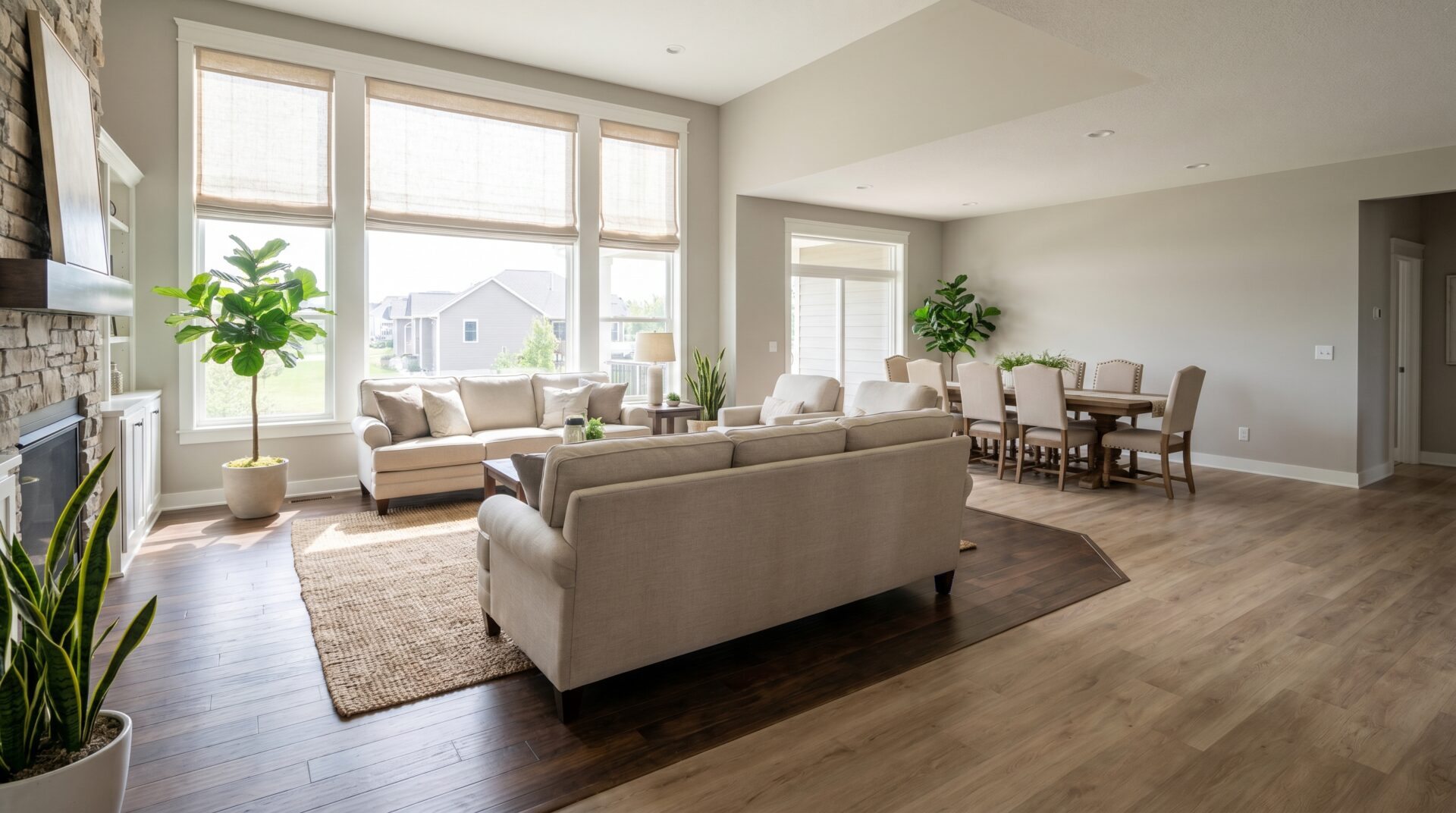
Most homeowners step into a flooring decision carrying a few ideas they picked up somewhere along the way. From a neighbor, a forum thread, a memory of how their parents’ house felt twenty years ago. Some of those ideas are right. Several are flat out wrong, and they tend to push people toward the wrong floor for their home.
After thousands of conversations in Madison kitchens and living rooms, the same myths keep coming up. Here are seven of the most stubborn flooring myths Madison homeowners still believe, what’s actually true, and what it means for your house.
The Most Stubborn Flooring Myths in Madison Homes
Myth 1: Hardwood Can Never Go in a Basement or Bathroom
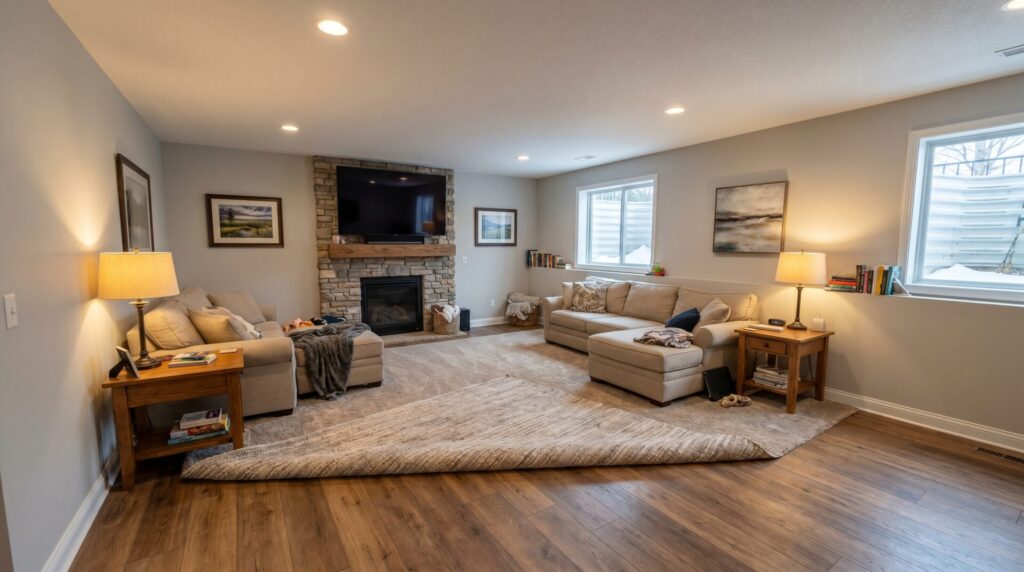
The Truth: Solid hardwood cannot, but engineered hardwood often can. Engineered hardwood is built on a multi-layer plywood or HDF core that handles humidity changes far better than a solid plank. With the right product and proper subfloor prep, engineered hardwood works in many below-grade basements and even some bathrooms.
That said, this is not a blanket green light. The space needs to be reasonably dry, the subfloor needs the right preparation, and the product has to match the conditions. The point is just that “no wood downstairs” is outdated thinking. Many Madison-area homes have beautiful engineered floors in finished basements and bathrooms that have performed for years.
Myth 2: Luxury Vinyl Plank Always Looks Fake
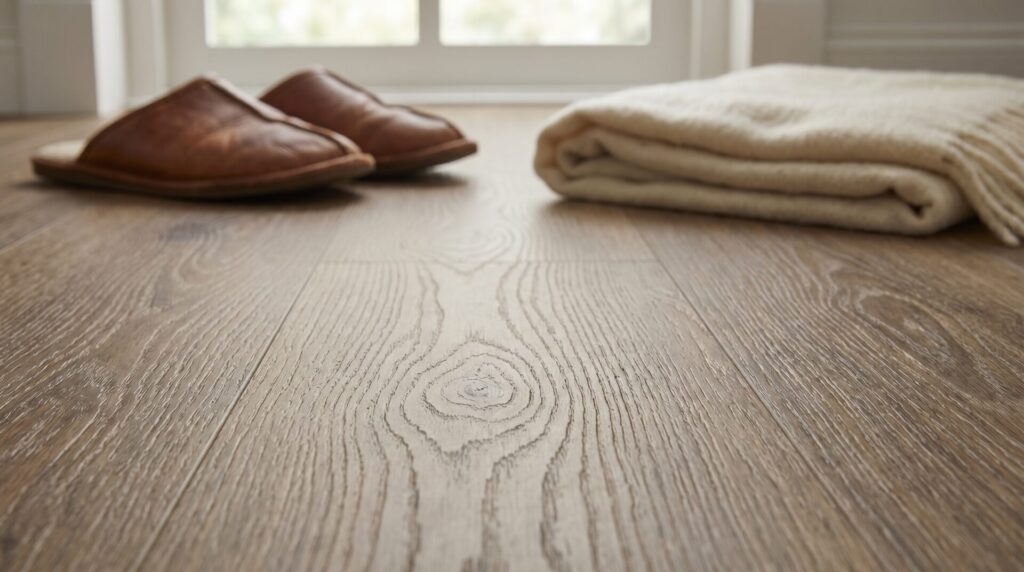
The Truth: Premium luxury vinyl plank has closed the gap with real hardwood to a point where most people genuinely cannot tell the difference until they get on their hands and knees. Modern embossing creates real texture you can feel. High-resolution printing captures the variation of real wood grain. The result is a floor that reads as designer hardwood from across the room.
The myth comes from older vinyl products and from the entry-level tier still on the market today. Those products do look like vinyl. Premium LVP with a 20-mil or thicker wear layer is a different category, and the visual quality has come a long way in the last five years.
Myth 3: Tile Is Too Cold to Live With in Wisconsin
The Truth: Tile is cold underfoot only when there is nothing under it. Radiant floor heat changes the conversation completely, and adding it during a tile project is one of the better comfort investments you can make for a Wisconsin winter. Even without radiant heat, a matte porcelain in a mudroom or kitchen is one of the most practical floors available in our climate.
The other half of this myth is the assumption that all tile is hard, slippery, and unforgiving. Matte and textured porcelain handles wet boots, dog paws, and dropped mugs without complaint. It is the workhorse for the spaces in your house that take the most abuse, especially from November through April.
If you are still weighing how tile compares to LVP in a real Wisconsin home, explore your options with us and we can walk through what fits your space.
Myth 4: Carpet Is Always Bad for Allergies
The Truth: This one surprises people. Modern carpet, properly vacuumed, can actually trap allergens and hold them in place rather than letting them recirculate. Hard surface floors do not absorb dust and pollen, but they let those particles move through the air more easily until they get cleaned up.
That does not mean carpet is the right call for every household. For homes with severe allergy concerns, hard floors with a strong vacuuming routine often work better. But the broad “carpet is bad for allergies” myth is not as clean as it sounds. The real answer depends on cleaning habits, household members, and which rooms we are talking about.
Myth 5: Waterproof Flooring Means Damage-Proof Flooring
The Truth: Luxury vinyl plank and rigid core products are genuinely waterproof at the surface. The plank itself does not swell, warp, or stain when water sits on it. What the marketing rarely covers is that water can still find its way under the planks at seams or transitions, and once it is under the floor, the subfloor and installation are what determine whether you have a problem.
This matters most in real-world scenarios: a dishwasher leak that runs for hours, a sustained basement seepage event, a child who turns on a shower without a curtain. Waterproof flooring handles spills and splashes beautifully. It is not a substitute for fixing the actual water source. Good installation and proper subfloor prep matter as much as the product itself.
Myth 6: Refinishing Hardwood Is the Messy Nightmare It Used to Be
The Truth: Hardwood refinishing has changed completely in the last decade. Dust-controlled sanding has replaced the old open-air method that filled every room in the house with fine particles. Modern waterborne finishes cure faster, smell far less, and hold up better than the oil-based polyurethanes from a generation ago.
For most homes, a refinishing project runs three to five days from start to walk-on. The crew sets up containment, sands cleanly, applies finish that smells more like fresh paint than old polyurethane, and leaves you with floors that often look better than they did when they were new. The messy reputation belongs to a different era.
Myth 7: Any Floor Can Go Over Any Subfloor
The Truth: The subfloor is where most flooring problems start. Every floor type has tolerances for how flat, dry, and sound the surface beneath it has to be. Skip the subfloor prep, and you get squeaks, telegraphing imperfections, premature failure at the seams, or in the worst case, a manufacturer warranty that does not pay out because installation conditions were not met.
This is the part of the job that does not show up in a product brochure. When our team measures your space, we are checking flatness with a long straightedge, testing concrete slabs for moisture, and looking at what needs to happen before installation. In older Madison homes, particularly in Maple Bluff and Shorewood Hills, that work matters more than the floor product you choose.
The Truth Behind These Flooring Myths
Most flooring myths exist because they were true once. Hardwood used to swell in basements. Vinyl used to look obviously fake. Tile used to be impossible to keep warm. Carpet used to trap allergens with nowhere for them to go. Refinishing used to coat the whole house in dust for a week.
The flooring world has moved on. The products today are better built, the installation methods are more refined, and the answers are more nuanced than a one-line rule. If you want to go deeper on any of these categories, our LVP guide for Madison homes and our hardwood refinishing guide both cover the modern reality in detail.
If you are weighing a flooring decision and want a real conversation instead of a quick assumption, start the conversation with our team at Harmony Flooring. We will tell you straight what works for your house, your rooms, and how you actually live.