- Flooring
Pet-Friendly Flooring for Madison Homes: What Actually Works
June 4, 2026
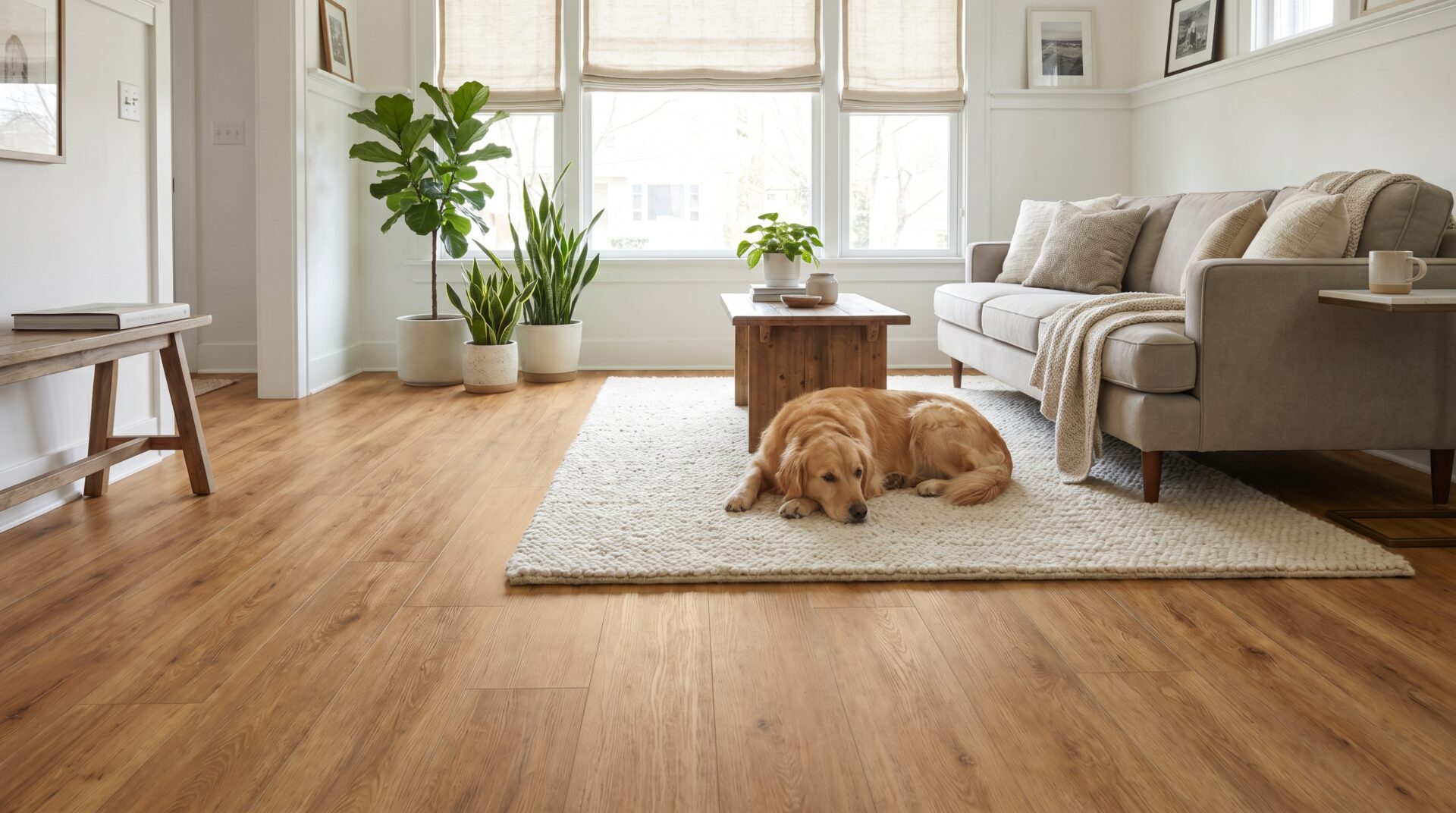
The dogs and cats living in most Madison homes were not consulted when the floors went in. They have opinions anyway. Claws scratch hardwood. Wet paws after a winter walk track water across LVP seams. Accidents soak into carpet padding and stay there. Cats throwing up at 2 a.m. land on whatever floor happens to be underneath. If you have pets and a flooring project on the horizon, the question is not whether the floor will get tested. It is which floors actually pass.
This guide on pet-friendly flooring for Madison homes walks through the options that hold up in real households, what each one is good and bad at, and what most homeowners get wrong when they pick. The goal is a floor that looks great in your home, handles real pet life in Wisconsin, and stays looking that way for years.
The Short Version: The best pet-friendly flooring options are luxury vinyl plank with a thick wear layer, porcelain tile, and certain engineered hardwoods with hard-cured commercial-grade finishes. The worst are solid hardwood in soft species like pine, glossy tile (slippery for dogs), and standard wall-to-wall carpet in main living areas. The right pick depends on your pets, your rooms, and how you live with them.
Key Takeaways
- LVP with a 20-mil or thicker wear layer is the workhorse pet floor for most Madison homes.
- Porcelain tile is the most durable option, but glossy finishes can be slippery for dogs.
- Solid hardwood, particularly soft species, scratches under claws and shows wear quickly in active homes.
- Wall-to-wall carpet in main pet zones traps odor and stains in ways that even professional cleaning cannot fully reverse.
- The right floor depends on your pets, your rooms, and your tolerance for maintenance, not on a one-size answer.
What Pet Owners Actually Need From a Floor
Most pet-friendly flooring guides skip the part where you decide what matters most. The honest list looks like this:
- Scratch resistance. Nails, especially on dogs over 30 pounds, will scratch most finishes over time. The harder and tougher the surface, the longer it stays looking new.
- Water and accident resistance. Vomit, urine, drinking-bowl splashes, and tracked-in slush all need to be wiped up without seeping into the floor or its seams.
- Traction. A dog running on slippery flooring can hurt itself, particularly older or large breeds. Floors should have some grip.
- Sound. Hard floors amplify clicking nails. Some homeowners care more about this than others.
- Cleanability. How easily does the floor recover from a mess that sat for an hour? For carpets, this is usually the dealbreaker.
- Comfort. Pets spend a lot of time lying on floors. Some surfaces are warmer and softer than others. This matters more for older pets than younger ones.
A floor that wins on one or two of these and loses on the rest is the wrong pick. The strongest pet-friendly options win on most of them.
The Pet-Friendly Flooring Options That Actually Work
After installing thousands of floors in Madison-area homes, including plenty for households with multiple dogs, cats, and the occasional indoor rabbit, these are the options we recommend most often.
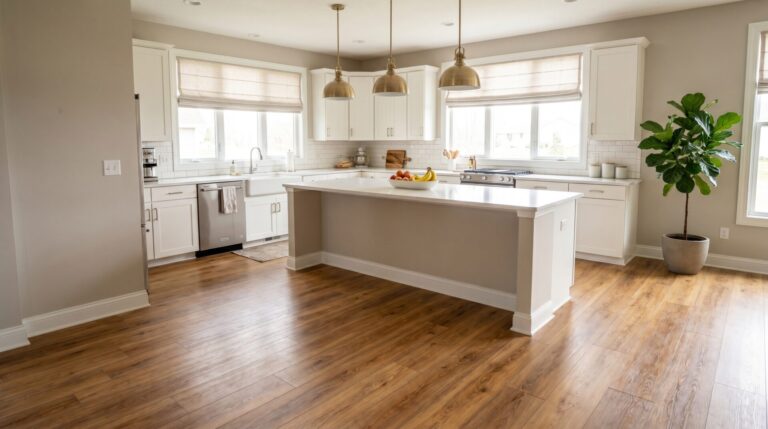
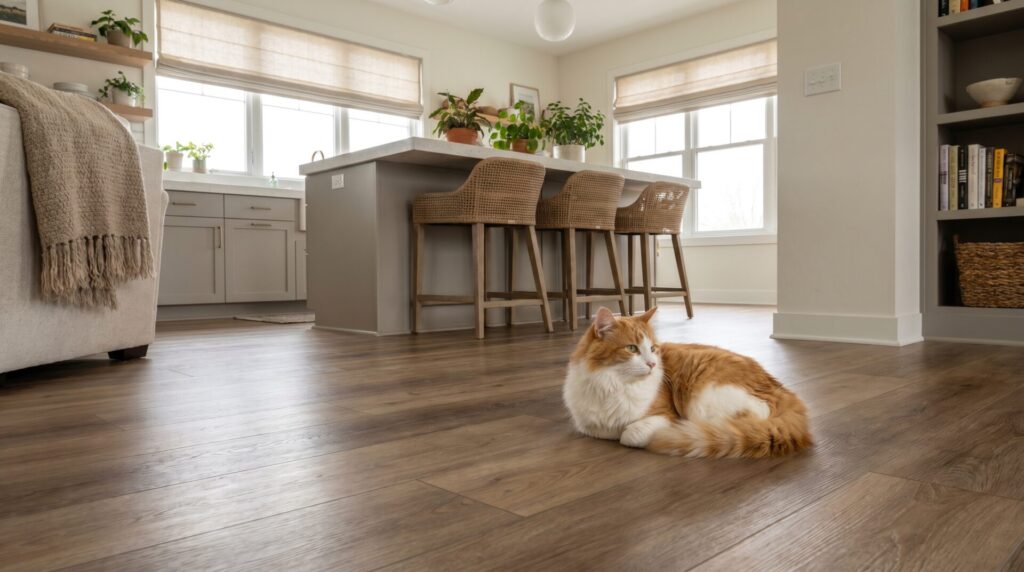
Luxury vinyl plank (LVP). The most consistent winner. A premium LVP with a 20-mil or thicker wear layer handles claws, accidents, and tracked-in moisture better than almost anything else, and it does it at a comfortable price tier. The waterproof construction means the seams do not swell from spills, and the slightly softer feel underfoot is easier on older dogs. For most active families in Madison, Sun Prairie, and Middleton, this is where the conversation starts.
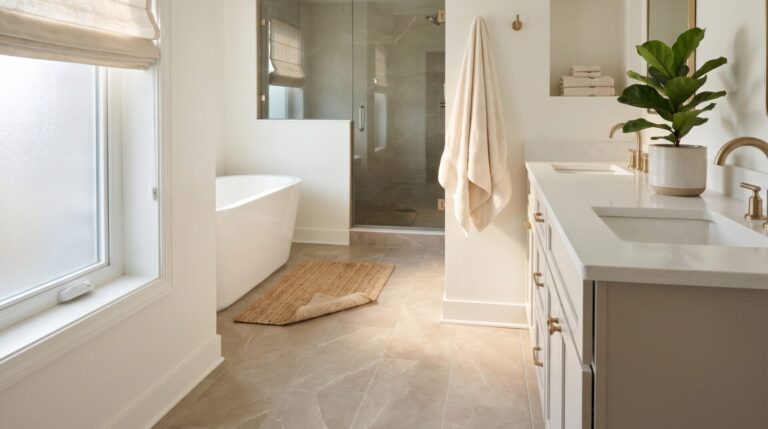
Porcelain tile. The most physically durable pet floor on the market. Tile does not scratch from claws, does not absorb urine, and cleans up completely. The two trade-offs: tile is hard and cold (older dogs may not love it without a rug), and glossier finishes can be slippery for dogs running through the house. A matte porcelain with some surface texture solves the traction problem. For mudrooms, kitchens, and bathrooms where mess is constant, tile is a strong long-term choice.
Engineered hardwood with a hard finish. Engineered hardwood can work in pet homes if the species is hard enough and the finish is rated for high traffic. Oak and hickory are common species that hold up. Avoid soft woods like pine or American cherry, which dent and scratch quickly under claws. A modern commercial-grade aluminum oxide finish lasts longer than the older oil-based finishes used in past decades. Engineered also outperforms solid hardwood in Wisconsin’s dry winters, which matters when forced-air heating pulls moisture out of the wood.
Premium laminate. Modern laminate has come a long way. The best products today have scratch-resistant top layers and water-resistant cores that handle pet life in lower-traffic rooms. Laminate is a strong fit for guest rooms, home offices, or finished basements where pets visit occasionally but do not live full-time. For main pet zones, LVP is usually a better fit because of how it handles standing water.
If you want a deeper look at how LVP fits into a Madison home room by room, our LVP in Madison Homes guide covers the room-by-room performance in more depth.
What to Avoid in a Pet Home
Some floors look great in a sample but will frustrate you within a year in a real pet household. The ones we tell homeowners to think hard about:
- Solid hardwood, especially softer species. Pine, American cherry, and soft maple dent and scratch under claws. Even harder species like oak show wear in traffic lanes faster in pet homes than in pet-free ones. Engineered hardwood with a hard finish handles this better.
- Glossy or polished tile. The look is striking. The traction is poor. Dogs running on glossy tile slip, which is hard on aging joints and dangerous for large breeds. If you love the look, pair it with runners or rugs in main traffic paths.
- Standard wall-to-wall carpet in main living zones. Carpet padding is a sponge for urine, and even professional cleaning cannot always pull odors out once they have soaked in. Carpet still has a place in bedrooms and quiet spaces, but it is rarely the right call where pets eat, drink, or spend most of their time.
- Bamboo and cork. Both have fans, but neither holds up to claws and traffic the way premium LVP or tile does. They look great in low-traffic rooms but disappoint in main pet zones.
If you are weighing a few flooring types for your home, talk through your options with us and we will help you match the right product to the way your household actually runs.
The Wisconsin Angle Most Pet Guides Miss
National guides on pet-friendly flooring rarely talk about salt, slush, and winter mud. Wisconsin homeowners know better.
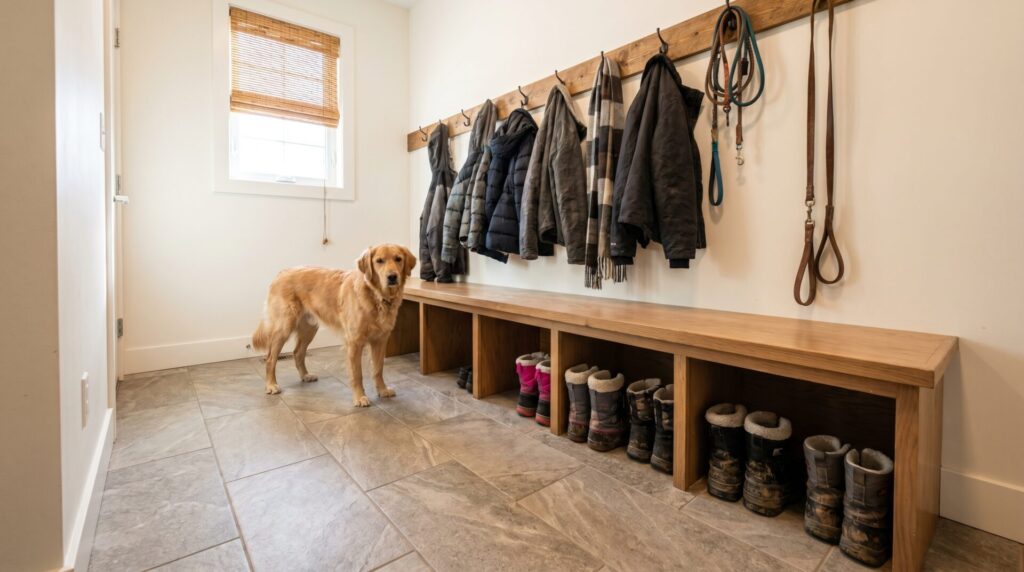
From November through April, every dog walk ends with wet, sandy, salt-laden paws coming back inside. That salt residue is genuinely brutal on finished surfaces. It dulls hardwood finishes, leaves a film on tile, and stains poorly sealed flooring. The right pet-friendly floor handles this without complaint. LVP rinses clean. Porcelain tile does not absorb the salt at all. Hardwood needs more attention, and a quality entryway runner becomes a meaningful part of the system.
Forced-air heating in a Wisconsin winter also pulls humidity well below what solid hardwood is built for. That is why engineered hardwood and LVP, which do not react to seasonal humidity swings, have become so common in Madison homes with pets. The floor stays the floor, summer and winter.
For mudrooms and entryways in homes with active dogs in Fitchburg, Middleton, or anywhere in the Madison area, a few feet of waterproof flooring at the door is one of the better investments you can make in your house.
Frequently Asked Questions About Pet-Friendly Flooring
What is the best flooring for dogs?
For most homes, premium luxury vinyl plank with a 20-mil or thicker wear layer is the best balance of scratch resistance, waterproofing, traction, and comfort. Porcelain tile is more durable but cooler and harder underfoot. Engineered hardwood with a hard finish also works well in active homes if the species and finish are right.
Is LVP good for dogs and cats?
Yes, and it is one of the most popular flooring choices for pet households. LVP resists scratches from claws, handles water and accidents at the seams, dampens the sound of clicking nails, and feels softer underfoot than tile or hardwood. The wear layer thickness is the key spec to get right, 20 mil or higher for serious pet households.
Can pets scratch luxury vinyl plank?
Premium LVP is highly scratch-resistant but not entirely scratch-proof. The wear layer protects against everyday clawing, sliding, and high-traffic wear. Very large dogs with long unfiled nails on a thin-wear-layer product will eventually leave marks. Keep nails trimmed, and choose a 20-mil or thicker wear layer for the best long-term result.
Is tile too cold and slippery for dogs?
It can be both, depending on the product. Matte and textured porcelain tiles provide much better traction than glossy finishes and are safer for dogs running through the house. Tile is firm and cool, which older pets may not love, so consider a runner or area rug in their favorite spots. Radiant heat under tile is a strong upgrade for pet owners but adds installation cost.
Should I avoid carpet if I have pets?
In main living areas, kitchens, and entryways, yes. Pet accidents soak into padding and trap odors that are hard to fully remove. In bedrooms and quiet spaces where pets visit occasionally rather than live, modern stain-resistant carpets can still work well. Cleanability and ease of replacement matter as much as the carpet itself.
Will pet-friendly flooring really hold up to multiple dogs?
Yes, with the right product. We routinely install premium LVP and porcelain tile in homes with multiple large dogs and active households. The keys are picking a high-performance product, paying attention to the subfloor and installation quality, and keeping a runner or rug at the main entry points.
How Harmony Flooring Approaches Pet-Friendly Projects
Every pet-friendly flooring project starts with understanding how you actually live with your pets.
- Design: We help you pick a product that fits your pets, your rooms, and the way mess and traffic move through your home. Sample boards come home with you so you can see how the product looks in your actual light.
- Measure: We come to your house, check the subfloor, plan transitions between rooms, and identify any prep work that needs to happen before installation. We also point out small details that matter in pet homes, like where a transition strip lives relative to a water bowl.
- Install: Our team handles the entire process and leaves you with a clean, properly installed floor that performs the way it should from the first day.
If you are weighing flooring options for a home with pets and want a clear answer for your house, let us help you narrow it down. A measure visit costs nothing and gives you a real recommendation built around your home and your pets, not a generic estimate.