- Blog
Flooring for Aging in Place: The 6 Best Options
July 9, 2026
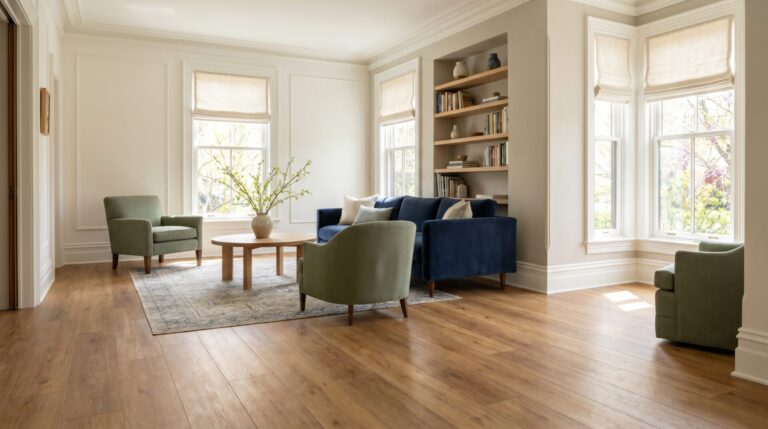
More Madison homeowners are choosing to stay in the homes they love rather than move, and flooring for aging in place is one of the smartest updates they can make. The right floor reduces fall risk, works with walkers and wheelchairs, and keeps every room comfortable for decades. Whether you’re planning ahead for yourself or helping your parents update a longtime home in Stoughton or McFarland, this ranked list covers the options that actually work, and the ones to retire.
The Short Version: Luxury vinyl plank is the best all-around flooring for aging in place: firm, slip-resistant, smooth-rolling, and warm underfoot. Low-pile carpet earns its place in bedrooms, and textured tile with radiant heat shines in bathrooms. The real safety wins come from flush transitions and the right surface texture, not any single product.
1. Luxury Vinyl Plank: The Best Flooring for Aging in Place
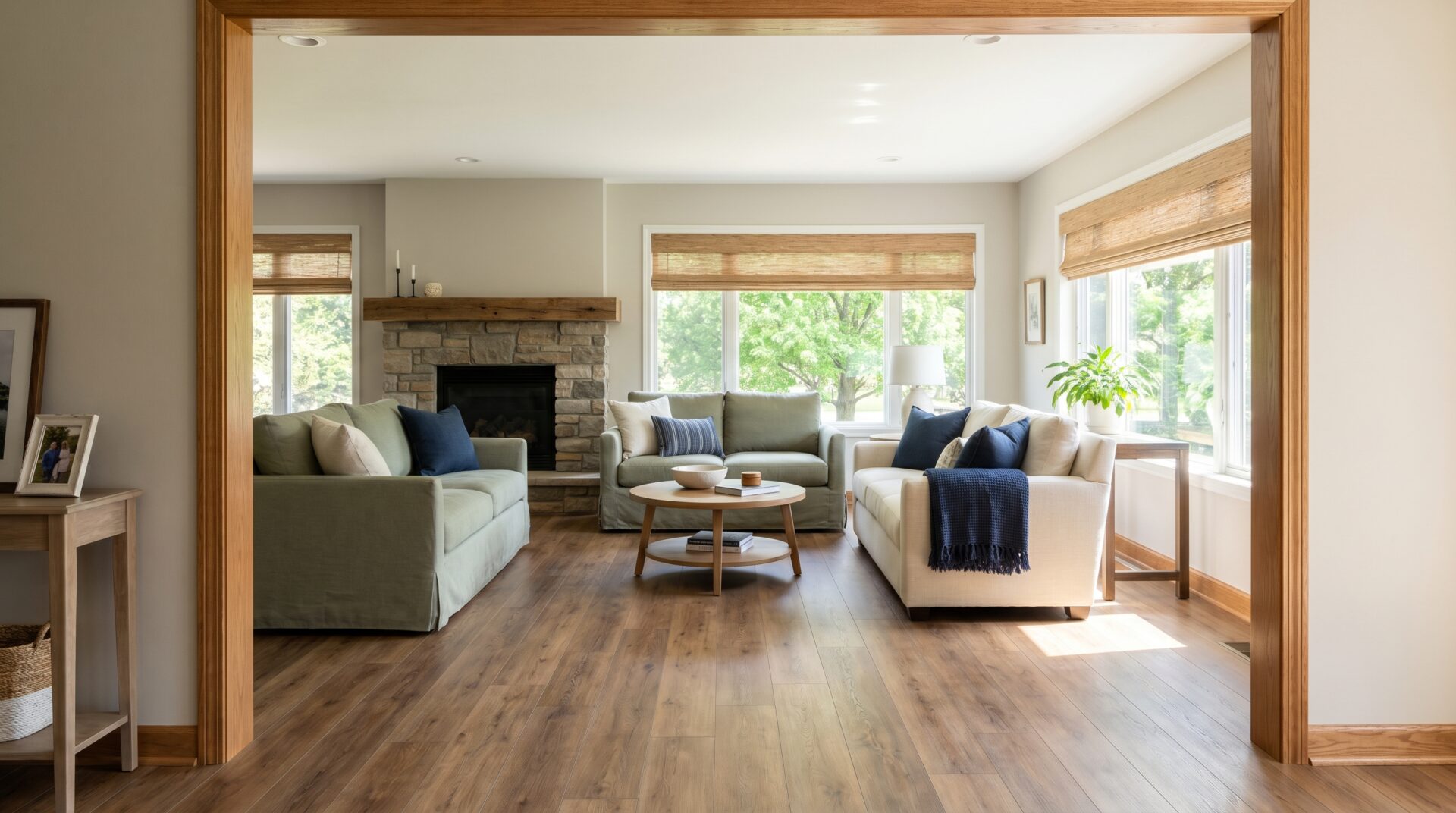
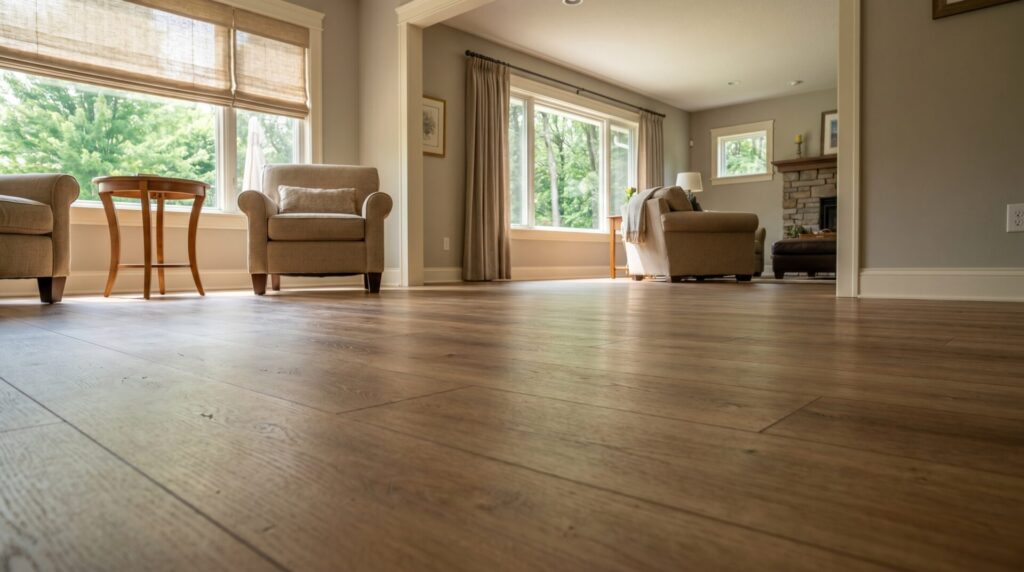
LVP checks nearly every aging-in-place box. It’s firm enough for steady footing and smooth rolling, textured enough to grip a slippered foot, warmer than tile, and waterproof everywhere from the kitchen to the bathroom. It also installs with minimal height change, which keeps thresholds low.
One detail most lists skip: how the floor is installed matters as much as what it is. Standard click-together LVP can flex and separate under constant concentrated wheelchair traffic. For homes where wheels are part of daily life, we spec glue-down LVP or commercial-grade products, which roll like a single solid surface. That’s a conversation to have before installation, not after. Browse options on our vinyl page.
2. Low-Pile Carpet: The Bedroom Specialist
Carpet cushions falls better than any hard surface, and in bedrooms, where bare feet meet the floor at 2 a.m., that matters. The key word is low-pile. Here’s the counterintuitive part: the plush, thick carpet that feels safest is actually one of the riskier floors for stability. Deep pile and soft padding let feet sink and tip, and they grab walker legs and wheelchair casters. A dense, low-pile carpet over firm padding gives you the soft landing without the wobble. See what that looks like on our carpet page.
3. Textured Tile with Radiant Heat: The Bathroom Solution
Bathrooms are where most household falls happen, so this room deserves the most thought. Matte, textured porcelain tile grips wet feet far better than glossy finishes, and smaller tiles add traction with every grout line. Pair it with in-floor radiant heat and the bathroom floor goes from cold hazard to the warmest, most comfortable surface in the house. Tile is a hard landing, which is the honest trade-off, so grab bars and smart layout share the safety load here.
4. Sheet Vinyl: The Seamless Sleeper Pick
Sheet vinyl rarely makes glossy design lists, and it deserves better. It installs as one continuous surface with almost no seams, edges, or height changes, which is exactly what shuffling feet and rolling wheels want. Modern sheet vinyl looks far better than its reputation, cleans easily, and pairs well with a slightly cushioned backing that softens both footsteps and falls.
5. Laminate: The Familiar Wood Look, Firm and Flat
Quality laminate gives you a realistic wood look on a firm, flat, easy-rolling surface, and its matte textured finishes offer better traction than many polished wood floors. Choose a thicker plank with a quality underlayment for quieter, more comfortable footfalls. Keep it out of bathrooms, and you’ll get years of stable, low-maintenance service in living areas and bedrooms.
6. Engineered Hardwood: The Long-Term Beauty Play
For homeowners who want real wood while planning ahead, engineered hardwood offers a firm and stable rolling surface with timeless style. The caveats: choose a matte or low-gloss finish for traction, and skip it in bathrooms. High-gloss wood floors, especially with rugs scattered over them, are a classic fall setup. A continuous run of matte engineered hardwood with flush transitions is a different story entirely.
The Floors to Avoid (and the Hidden Hazard)
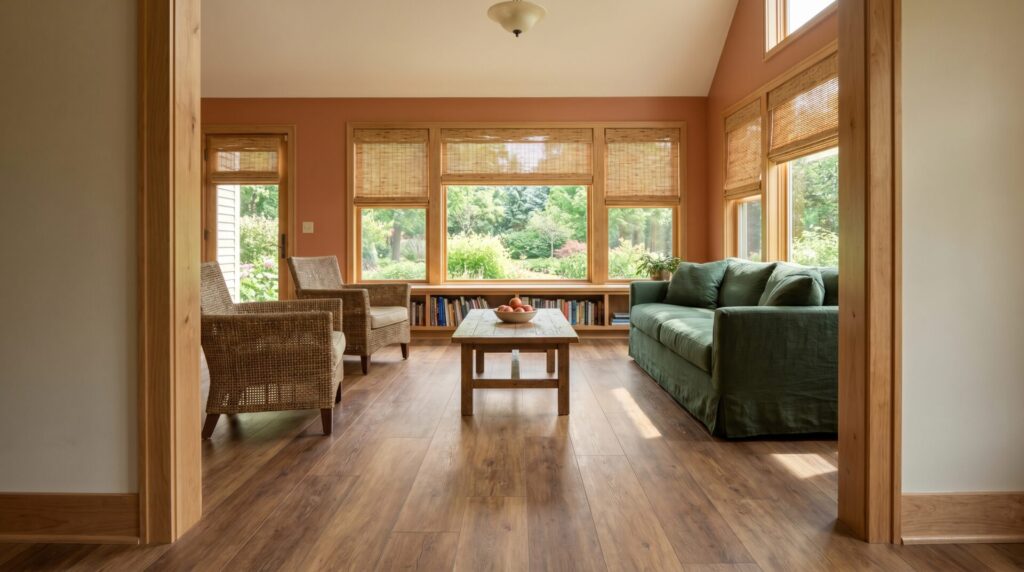
Thick plush carpet, high-gloss polished surfaces, and natural stone with uneven texture all work against stability. But the biggest hazard in most Madison homes isn’t a flooring type at all. It’s transitions: the half-inch threshold between rooms, the metal strip that worked loose, the area rug with a curled corner. Toes catch on quarter-inch height changes. If you do only one thing, make floor heights match from room to room. Running one flooring throughout the main level is the cleanest fix, and our guide to one flooring throughout the house covers how that works.
How to Plan Flooring for Aging in Place, Room by Room
A few Wisconsin-specific notes from our installs around the Madison area. Warm floors matter more here than in most climates, because cold tile and concrete-slab floors are genuinely uncomfortable for older feet five months of the year. Radiant heat or naturally warmer surfaces like LVP and carpet solve that. Multigenerational setups are also on the rise, with basement in-law suites in Sun Prairie and Oregon homes, and those below-grade spaces need moisture-smart choices like glue-down LVP or tile.
This is one decision where professional guidance pays for itself. The product is half the answer. The other half is installation details: flush transitions, glue-down specs where wheels roll, firm padding under carpet, texture ratings in wet rooms. Get expert guidance before you decide, and we’ll help you plan room by room.
Flooring for Aging in Place FAQs
What type of flooring is best for seniors?
Luxury vinyl plank is the best overall flooring for seniors and aging in place. It’s slip-resistant, firm enough for walkers and wheelchairs, warm underfoot, and waterproof. Low-pile carpet in bedrooms and textured tile in bathrooms round out a safe whole-home plan.
Is luxury vinyl plank good for wheelchairs and walkers?
Yes, with the right installation. Glue-down or commercial-grade LVP handles constant wheelchair traffic best, rolling like one solid surface. Standard click-together planks can flex under concentrated wheel loads, so mention mobility needs during your consultation.
Is carpet or hard flooring safer for older adults?
Each is safer in different rooms. Low-pile carpet cushions falls, which makes it strong in bedrooms. Firm hard surfaces like LVP are safer for walking stability and wheel mobility in main living areas. Thick plush carpet is the option to avoid, since it destabilizes feet and mobility equipment.
What flooring should you avoid for aging in place?
Avoid thick plush carpet, high-gloss tile or polished wood, and any layout with frequent height changes between rooms. Loose area rugs are the most common and most preventable trip hazard of all.
How do you fix trip hazards between rooms with different flooring?
Flush transitions are the fix: matching floor heights so thresholds disappear. A professional installer can level subfloors and select transition pieces that taper smoothly, or run a single flooring through connected spaces to remove transitions entirely.
The best aging-in-place floor is the one that lets you stop thinking about your floor. Firm where you walk, soft where you sleep, grippy where it’s wet, and level everywhere in between. Get those four things right and your home stays your home for the long run.
Planning ahead for your home or a parent’s? See what fits your home with a free consultation.