- Buying Guides
Kitchen Flooring in Madison Homes: A Complete Buyer’s Guide
June 25, 2026
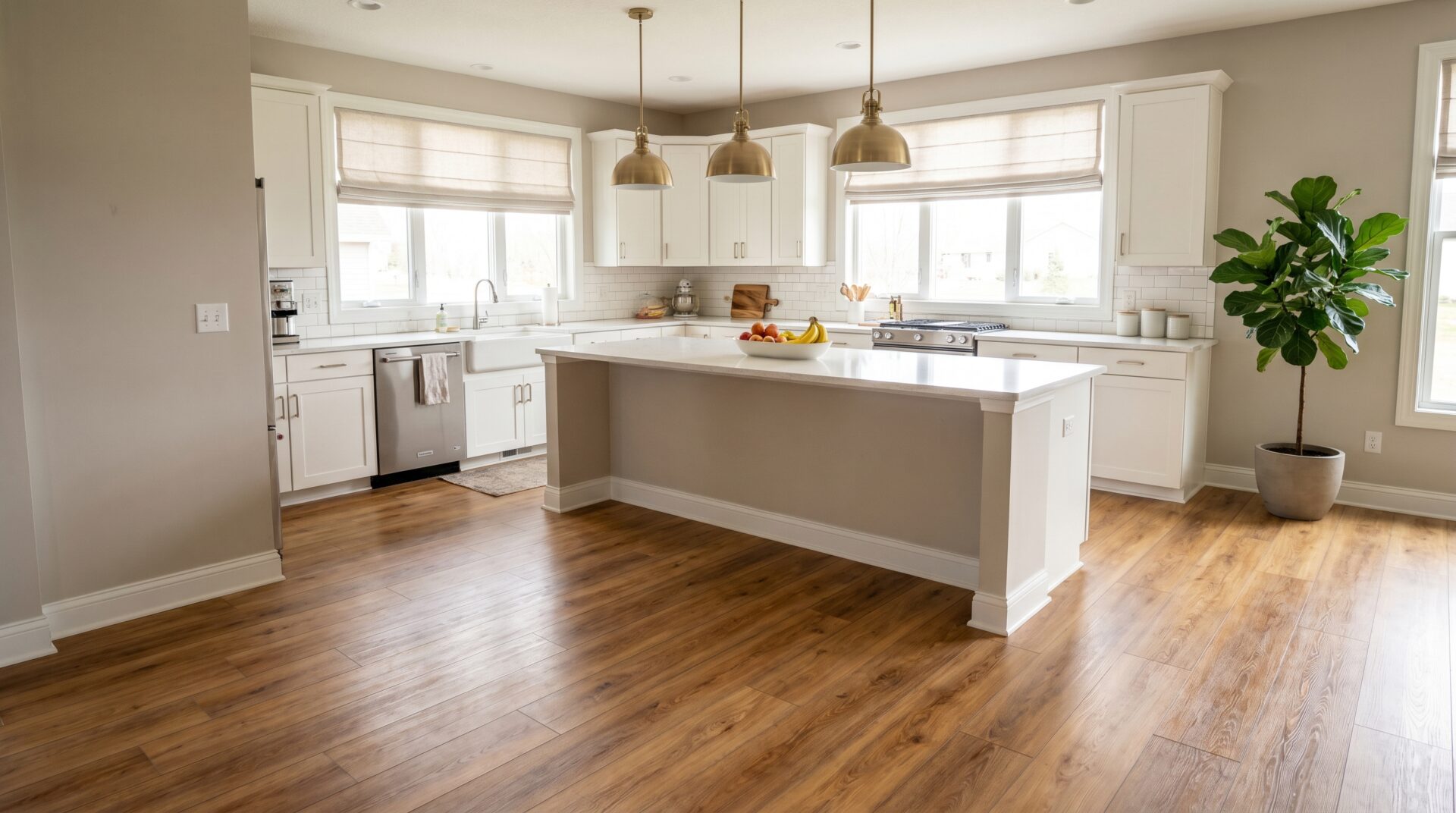
The kitchen is the hardest-working floor in most Madison homes. It takes spills, dropped pans, dishwasher drips, foot traffic from morning coffee to late-night snacks, and the chair scrape of a table that gets used every day. It also happens to be one of the most visible floors in the house, often flowing straight into the dining and living areas. So the kitchen floor has to do two jobs at once: survive real life and look like something you chose on purpose.
This guide on kitchen flooring for Madison WI homes walks through what a kitchen floor actually has to handle, the products that hold up, and how to choose the one that fits the way you cook and live. The goal is a kitchen floor you are happy with for fifteen-plus years, not one that disappoints by year three.
The Short Version: The strongest kitchen flooring options for Madison homes are premium luxury vinyl plank, engineered hardwood, and porcelain tile. LVP is the most forgiving all-rounder, engineered hardwood delivers real-wood warmth, and porcelain tile is the most durable. Solid hardwood can work but is more sensitive to kitchen moisture, and standard laminate and carpet are not the right call for a hard-working kitchen.
Key Takeaways
- A kitchen floor has to handle water, dropped objects, constant traffic, and easy cleanup, all at once.
- Premium luxury vinyl plank is the most forgiving choice for most Madison kitchens.
- Engineered hardwood gives you real wood that handles kitchen conditions and Wisconsin humidity better than solid hardwood.
- Porcelain tile is the most durable and fully waterproof, with comfort underfoot as the main trade-off.
- The right pick depends on how much you cook, whether the kitchen flows into other rooms, and what matters most to you: comfort, durability, or real wood.
What a Kitchen Floor Has to Handle
Before comparing products, get clear on the job. A kitchen floor faces a specific combination of stresses that most other rooms do not.
Water and spills. Dishwasher leaks, sink splashes, dropped glasses of water, the puddle by the fridge water dispenser. A kitchen floor needs to handle moisture without swelling, staining, or warping at the seams.
Dropped objects. Cast iron pans, ceramic bowls, cans straight from the pantry. Kitchen floors take more direct impact than any other floor in the house. The product needs to resist denting and the finish needs to resist chipping.
Constant traffic and cleaning. The kitchen is a daily-use room from early morning to late evening. The floor needs to clean up fast and hold its finish under repeated mopping and foot traffic.
Comfort underfoot. If you cook real meals, you stand in your kitchen for long stretches. How a floor feels under your feet after 45 minutes of cooking is a real factor, not a minor one.
Get a floor that handles all four and you have a kitchen that works. Miss one and you will notice it every day.
The Best Kitchen Flooring Options for Madison Homes
Three products consistently work in Madison kitchens. Each has a clear best-fit situation.
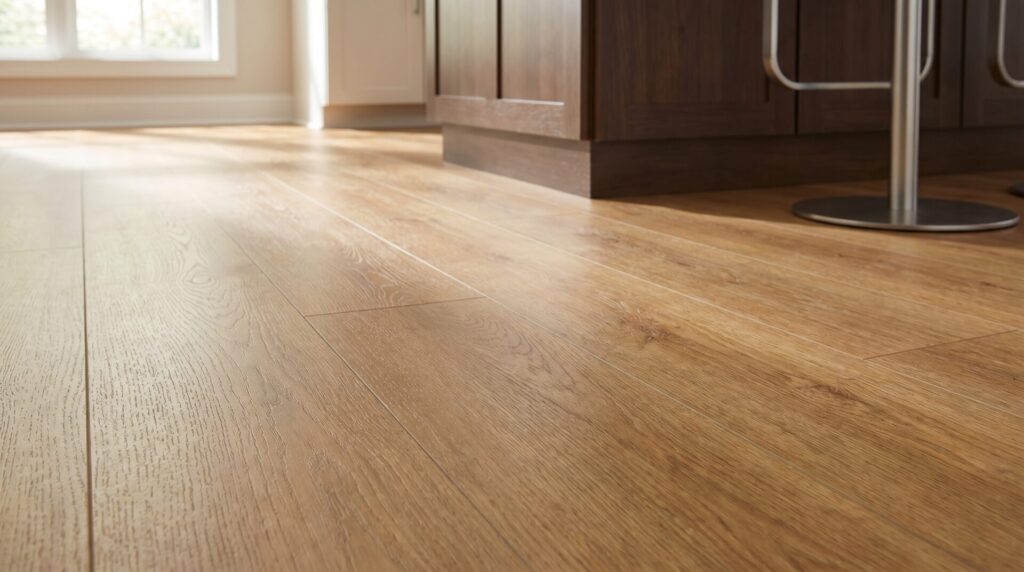
Premium luxury vinyl plank (LVP). The most forgiving all-rounder and the most popular kitchen floor we sell. Premium LVP with a 20-mil or thicker wear layer is waterproof, resists scratches and dents, cleans up fast, and feels softer and warmer underfoot than tile. It also handles dropped pans far better than most products. For families who cook daily and want a floor that simply does not care about real life, LVP is where the conversation starts. Our LVP guide for Madison homes covers product specifics in depth.
Engineered hardwood. The choice for homeowners who want real wood in the kitchen. Engineered hardwood handles the humidity swings of a Wisconsin home far better than solid hardwood, and a quality product with a hard finish stands up to normal kitchen use. It will not match tile or LVP for pure water resistance, so it suits careful households and kitchens that flow into hardwood living areas where continuity matters. Wipe up spills promptly and engineered hardwood delivers warmth and character nothing else quite matches.
Porcelain tile. The most durable and fully waterproof option. Tile is very scratch-resistant, does not stain, does not care about standing water, and lasts for decades. The trade-offs are comfort and warmth: tile is hard underfoot during long cooking sessions and cold in a Wisconsin winter unless you add radiant heat beneath it. For homeowners who want maximum durability and either do not mind the firmness or plan to add radiant heat, porcelain tile is hard to beat.
What to be cautious about. Solid hardwood can work in a kitchen but is the most moisture-sensitive of the wood options and reacts to Wisconsin humidity; engineered is the safer wood choice. Standard laminate is not built for a room with this much water risk. Carpet does not belong in a working kitchen. If you are comparing tile against vinyl specifically, our tile vs. vinyl guide for kitchens and bathrooms goes deeper on that head-to-head.
How to Choose the Right Kitchen Floor
A simple framework for narrowing it down.
- If you cook a lot and stand for long stretches, prioritize comfort underfoot. Premium LVP or engineered hardwood beat tile here. If you love tile, plan for radiant heat or anti-fatigue mats at the sink and stove.
- If your kitchen flows into hardwood living and dining areas, engineered hardwood gives you the cleanest visual continuity across the open space.
- If the kitchen takes heavy daily abuse from kids, pets, and real cooking, premium LVP is the most forgiving and the easiest to live with.
- If durability is your single top priority and comfort matters less, porcelain tile outlasts everything, especially paired with radiant heat.
- If you want real wood but worry about spills, engineered hardwood with a hard finish is the balance point. Solid hardwood is the riskier wood pick in a kitchen.
When in doubt, the question to ask is how you actually use the kitchen day to day, not what looks best in a showroom photo. The right floor follows from honest answers about cooking, traffic, and what the space connects to.
The Wisconsin Kitchen Factor
A few Madison-specific considerations shape the kitchen flooring decision.
Humidity swings. Wisconsin kitchens go from humid summers to dry, forced-air winters. Solid hardwood reacts to that cycle. Engineered hardwood and LVP do not, which is part of why they have become the default for kitchens in Madison-area homes.
Kitchens near entries. Many Madison homes have the kitchen close to a garage or back entry, which means salt, slush, and tracked-in winter moisture reach the kitchen floor from November through April. Waterproof LVP or porcelain tile handle that without complaint.
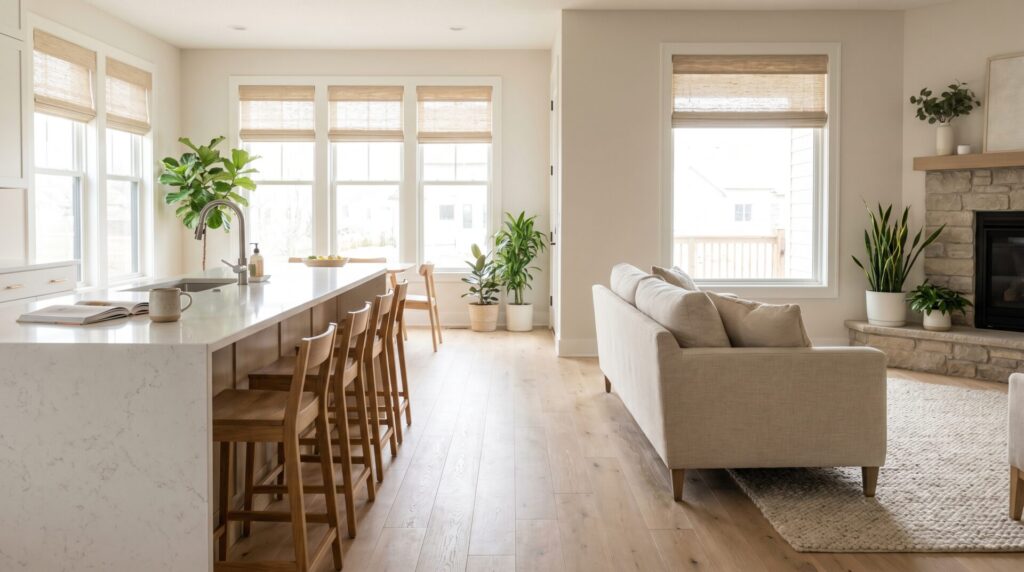
Open-concept layouts. Newer homes in Sun Prairie, Middleton, and across the Madison area often have the kitchen open to the main living space. That makes flooring continuity a real design factor. Either run one floor across the whole space or plan an intentional transition at the kitchen edge.
If you are weighing a few options for your kitchen, talk through them with us and we can walk through what fits your layout and the way you cook.
How Harmony Flooring Approaches a Kitchen Project
Every kitchen flooring project we do follows the same path.
- Design: We help you choose the product that fits how you cook, your kitchen layout, and how the space connects to the rest of the home. Sample boards come to your house so you see the floor in your own light.
- Measure: We come to you, check the subfloor and any moisture concerns, plan transitions and appliance clearances, and identify prep work before installation.
- Install: Our trusted local installers handle the full process, working around appliances and cabinetry, so the finished kitchen floor performs from the first day.
Most kitchen flooring decisions get clearer once we have seen the space and talked through how the kitchen actually gets used.
Keep Reading
- How to Choose Flooring That Matches Your Cabinet and Wall Colors
- Tile Flooring for Madison Homes: The Complete Guide
- Tile Flooring in Madison, WI: porcelain, ceramic and stone-look options
Frequently Asked Questions About Kitchen Flooring
What is the best flooring for a kitchen?
For most Madison homes, premium luxury vinyl plank is the best all-around kitchen floor: waterproof, scratch-resistant, comfortable underfoot, and easy to clean. Engineered hardwood is the best choice if you want real wood, and porcelain tile is the most durable if comfort underfoot is less of a priority.
Is luxury vinyl plank good for kitchens?
Yes. Premium LVP with a 20-mil or thicker wear layer is one of the best kitchen flooring choices available. It is waterproof, handles dropped pans and spills, cleans up quickly, and feels warmer and softer underfoot than tile.
Can you put hardwood floors in a kitchen?
Engineered hardwood works well in a kitchen, especially when the kitchen flows into hardwood living areas. Solid hardwood can be used but is more sensitive to moisture and Wisconsin humidity, so engineered is the safer wood choice. Wipe up spills promptly with either.
Is tile too hard for a kitchen floor?
Porcelain tile is firm and can be tiring during long cooking sessions, and cold in a Wisconsin winter. Many homeowners solve both by adding radiant heat under the tile or using anti-fatigue mats at the sink and stove. If durability is your top priority, tile is still an excellent choice.
What flooring should I avoid in a kitchen?
Carpet does not belong in a working kitchen. Standard laminate is not built for the water risk of a kitchen. Solid hardwood is workable but the most moisture-sensitive of the realistic options.
Choosing the Right Kitchen Floor for Your Madison Home
The kitchen floor is one of the highest-stakes flooring decisions in the house because it does the most work and shows the most. Get it right and the kitchen feels good to cook in and looks intentional for years. The honest answer for most Madison homeowners is premium LVP for everyday forgiveness, engineered hardwood for real-wood warmth, or porcelain tile for maximum durability, with the final pick coming down to how you cook and what the kitchen connects to.
If you are planning a kitchen project and want to talk through what fits your space, let us help you narrow it down. Harmony Flooring covers every detail of the Design, Measure, and Install process so the floor you choose performs the way a kitchen floor needs to.
Questions About Your Floors?
Call or text 608-221-5500Schedule a Free Consultation
Shop our floors: Hardwood · Vinyl · Carpet · Tile · Laminate
Showroom: 2125 S. Stoughton Rd, Madison, WI 53716