- Blog
Laminate Flooring: A Buyer’s Guide for Madison Homes
July 7, 2026
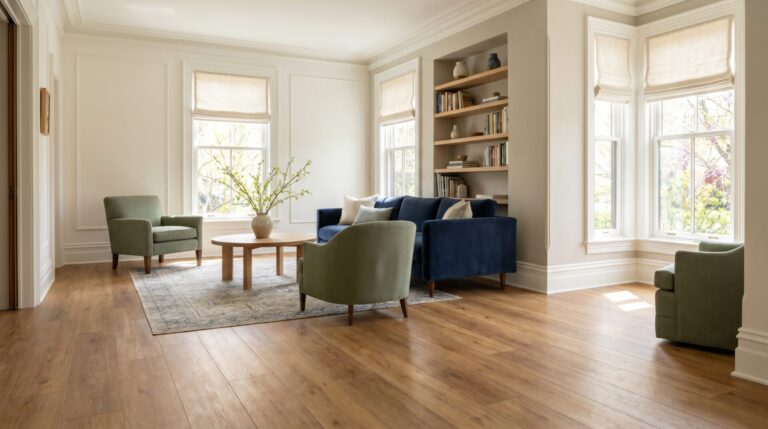
Laminate flooring might be the most misunderstood floor in the showroom. Plenty of Madison homeowners walk in carrying a fifteen-year-old impression of laminate: hollow-sounding, plasticky, the floor you settle for. Then they see what today’s laminate flooring actually looks like, and the conversation changes fast.
This guide is for anyone considering laminate for a main floor, bedroom, or family room in the Madison, WI area. We’ll cover what modern laminate does well, how to spot quality, where it fits, and where we’d honestly point you to a different product.
The Short Version: Modern laminate flooring is durable, highly scratch-resistant, and far more realistic than it was a decade ago. It’s a strong choice for living rooms, bedrooms, hallways, and home offices. Choose a water-resistant core for kitchens, and skip laminate in full bathrooms, where luxury vinyl or tile is the safer call.
Key Takeaways
- Today’s laminate looks and feels dramatically better than the product most people remember.
- Laminate’s wear layer is one of the most scratch-resistant surfaces in flooring, which makes it a workhorse for busy households.
- Quality shows up in three specs: AC rating, plank thickness, and core type.
- Water-resistant laminate has real limits. It buys you time against spills, not immunity.
- Laminate cannot be refinished, so the right quality tier upfront matters more than with hardwood.
Why Laminate Flooring Deserves a Second Look
Laminate flooring is a layered product: a dense fiberboard core, a photographic design layer, and a hard transparent wear layer fused on top. That construction is the source of both its strengths and its limits, so it’s worth understanding in plain terms.
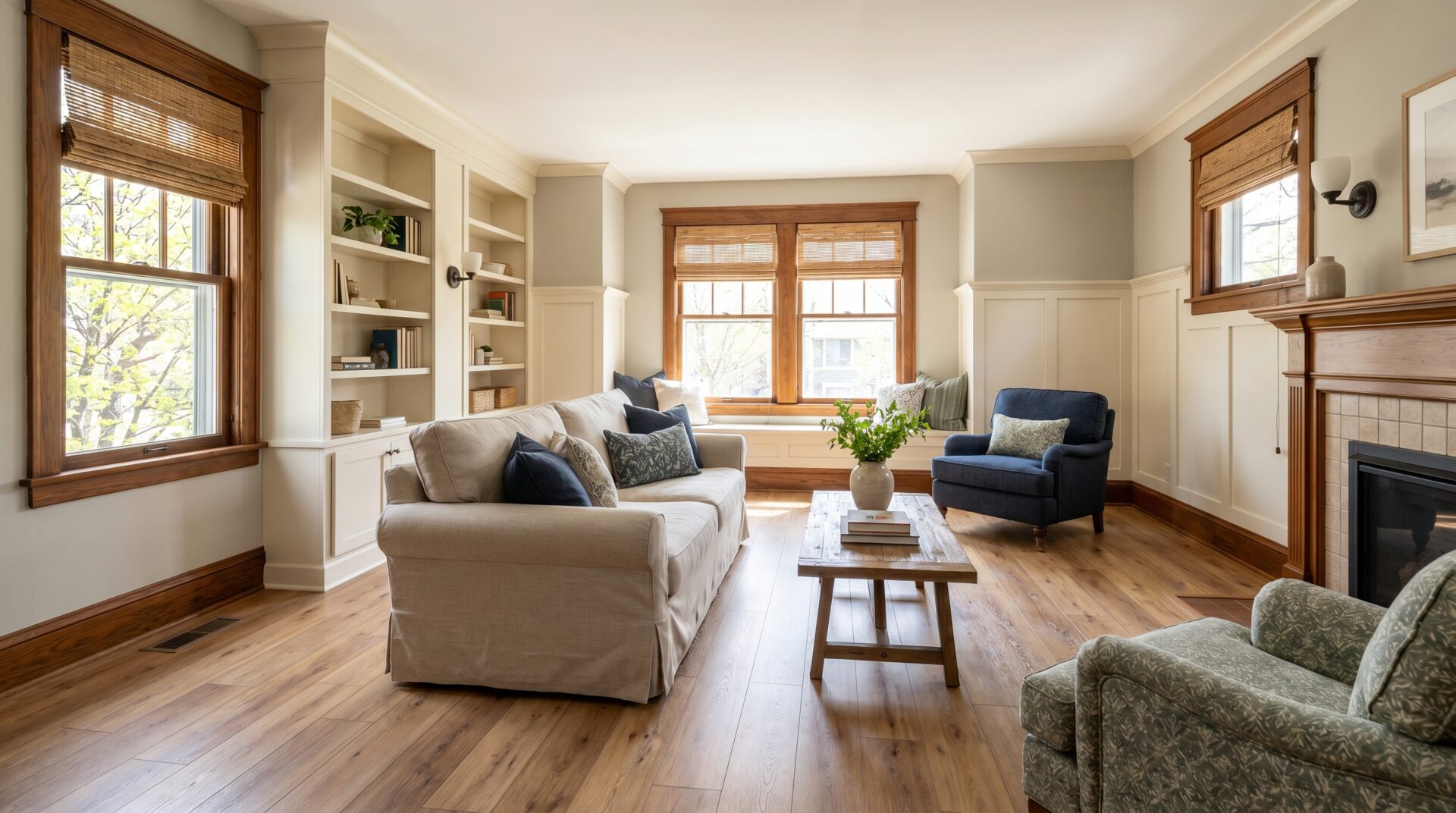
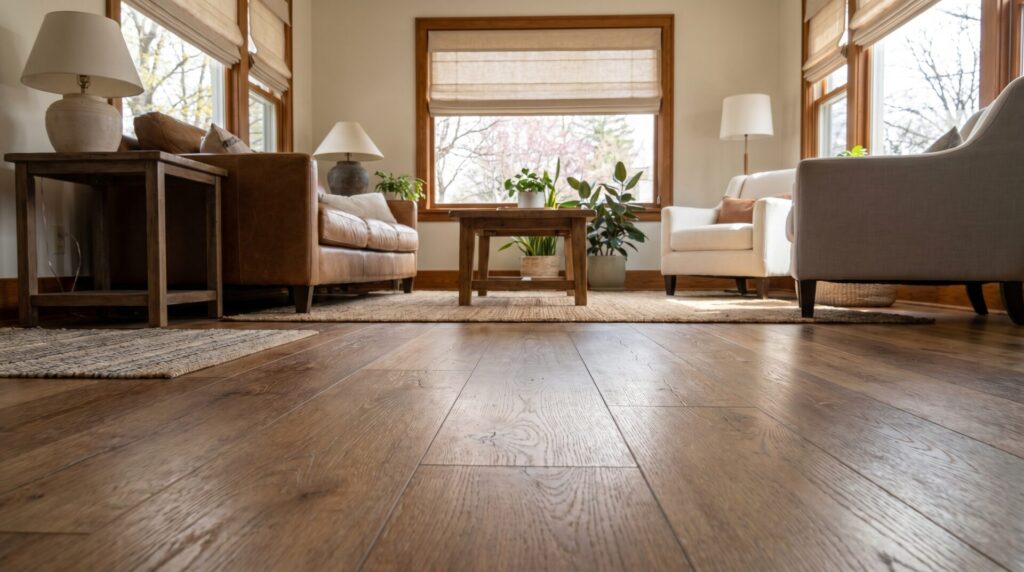
The design layer is where the last decade changed everything. High-resolution printing and embossed-in-register texture mean the surface you feel now matches the grain you see. Wide planks, matte finishes, and realistic color variation have closed most of the visual gap with hardwood. You can see the current styles on our laminate page.
The wear layer is laminate’s quiet superpower, and here’s the part that surprises people: a quality laminate surface resists scratches better than a hardwood finish does. Dog nails, chair legs, dropped toys, the daily grind of a busy Middleton family room. Laminate takes that abuse with less visible wear than the wood floor it’s imitating. What it gives up in exchange is repairability. Hardwood can be refinished when it finally shows its age. Laminate cannot, so when a plank is damaged deeply, the fix is replacement.
How to Judge Laminate Flooring Quality
Two laminate floors can look identical in a sample and live completely different lives in your house. Here’s what professionals check.
AC rating. Laminate carries an abrasion class rating from AC1 to AC5. For real households, AC3 is the baseline and AC4 is the sweet spot for busy homes with kids and pets. AC5 is commercial-grade. If a product doesn’t advertise its AC rating, that silence usually means something.
Plank thickness. Thicker planks, in the 10 to 12 millimeter range, feel more solid underfoot, sound quieter, and bridge small subfloor imperfections better than thin entry-level boards. Thickness doesn’t change scratch resistance, but it changes how the floor feels and sounds every single day.
Core type. Standard high-density fiberboard cores swell if water reaches them and stays. Newer water-resistant cores and tighter edge treatments resist moisture much longer, which is what makes today’s laminate reasonable in kitchens. The core is the spec to scrutinize if spills are part of your life.
Underlayment. The pad beneath the floor controls sound, comfort, and moisture behavior. A quality underlayment turns the hollow click people remember into a quiet, solid footfall. It’s an unglamorous line item that shapes your impression of the whole floor.
Where Laminate Fits in a Madison Home
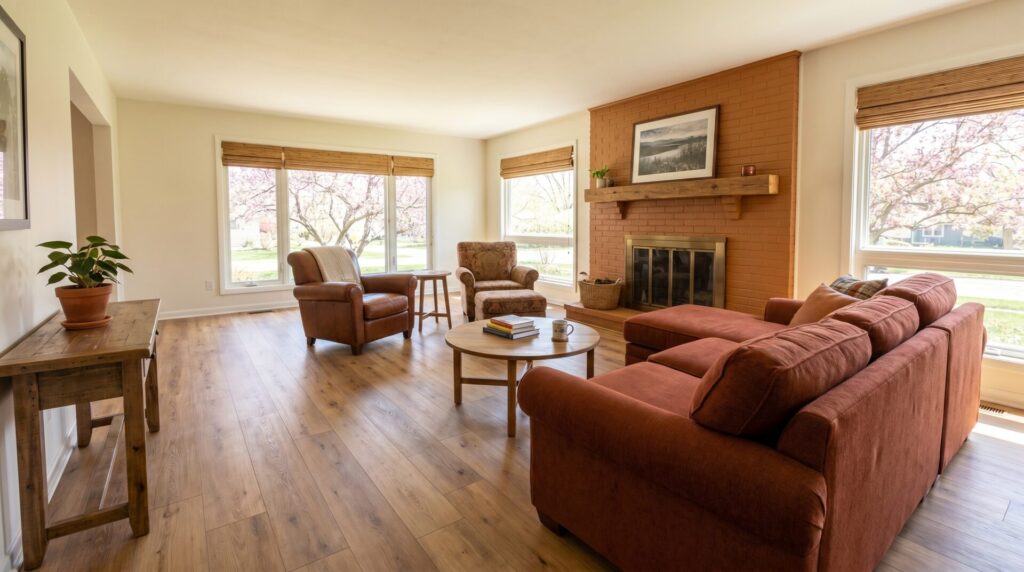
- Living rooms, family rooms, and hallways: Laminate’s best rooms. High traffic, low moisture, maximum payoff from that scratch-resistant surface.
- Bedrooms and home offices: An easy yes. Warm underfoot feel with the right underlayment, and quieter than people expect.
- Kitchens: A qualified yes, with a water-resistant core and prompt spill habits. If your kitchen sees daily splash chaos, luxury vinyl removes the worry entirely.
- Full bathrooms: No. Even water-resistant laminate is vulnerable at the seams under standing water. Our laminate vs vinyl comparison explains the difference that matters here.
- Basements: Sometimes, with caveats about moisture and subfloor prep. We wrote a full guide to laminate in Wisconsin basements covering when it works and when to skip it.
One Wisconsin-specific note: laminate handles our humidity swings better than solid hardwood, but it still wants proper acclimation before installation and correct expansion gaps at the walls. Skipping those steps is the most common cause of buckling we see in homes around Verona and DeForest, and it’s entirely preventable.
What Drives Laminate’s Value
Laminate sits in an appealing spot: hardwood looks at a friendlier investment level, with durability that suits real life. Within the category, value tracks the specs above. Entry-level products deliver the look with thinner boards and shorter lifespans. Mid-range and premium laminates add thicker planks, better cores, longer warranties, and texture you’d have to touch to disbelieve.
Here’s the honest framing we give clients: because laminate can’t be refinished, you’re choosing the floor’s entire lifespan on day one. Stretching for the better tier usually costs less than replacing a floor that wore out early. Premium laminate in the right room routinely outlives the furniture around it.
And yes, plenty of beautiful, higher-end Madison homes use laminate, usually in bedrooms, lower levels, and high-traffic family spaces where its toughness earns the spot. The idea that laminate signals compromise is one of those fifteen-year-old impressions worth retiring.
If you’re weighing tiers and not sure where the smart money lands for your rooms, talk through your options with us before you decide.
Working With a Flooring Professional
Laminate is a floating floor, which tempts people to treat it casually. The floors that disappoint usually trace back to preparation: subfloors that weren’t flattened, planks that never acclimated, missing moisture barriers on concrete, transitions that don’t account for seasonal movement.
A professional consultation also solves the spec problem. Instead of decoding AC ratings on a box label, you describe your household, your rooms, and your plans, and the right tier gets matched to the way you actually live. That conversation is short, and it prevents the two most expensive mistakes: overbuying quality you don’t need, and underbuying durability you do.
Laminate Flooring FAQs
What is the downside to laminate flooring?
The main downsides are moisture sensitivity at the seams and the fact that laminate can’t be refinished. Deep damage means replacing planks rather than sanding out the wear. Choosing the right quality tier and keeping it out of full bathrooms addresses both.
Is laminate flooring waterproof?
Standard laminate is not waterproof. Its surface resists moisture, but water that reaches the seams or core causes swelling. Water-resistant laminate products extend that protection window considerably, but for truly wet spaces, luxury vinyl or tile is the right tool.
Is laminate flooring good for kitchens?
Modern water-resistant laminate works in kitchens for households that wipe up spills promptly. If you want zero moisture worry, luxury vinyl delivers a similar look with a fully waterproof core.
Do high-end homes use laminate flooring?
They do, more than most people assume. Premium laminate shows up in bedrooms, finished lower levels, and busy family spaces of upscale Madison-area homes, chosen for its scratch resistance and realistic styling.
How long does laminate flooring last?
Quality laminate in the right room typically serves well for many years, with lifespan tracking the AC rating and thickness you choose. Because it can’t be refinished, the tier you buy determines the lifespan you get.
Which is better, vinyl or laminate flooring?
It depends on the room. Laminate feels more like real wood underfoot and resists scratches exceptionally well. Vinyl wins anywhere moisture is involved. Our full laminate vs vinyl comparison breaks down the decision room by room.
How Harmony Flooring Works
- Design: We help you find the right laminate, at the right tier, for how your household actually lives.
- Measure: We come to you. A professional measure visit checks subfloor flatness, moisture, and transitions so there are no surprises.
- Install: Our team handles acclimation, prep, and installation from start to finish.
Laminate earned its second look. Pick the right tier, put it in the right rooms, and it delivers the hardwood feeling with everyday toughness that real households need. That’s the kind of fit we love finding, Covering Every Detail along the way.
Ready to see what modern laminate looks like in person? Let us help you narrow it down with a free consultation.