- Buying Guides
Radiant Heat Flooring for Madison Homes: A Complete Guide
June 23, 2026
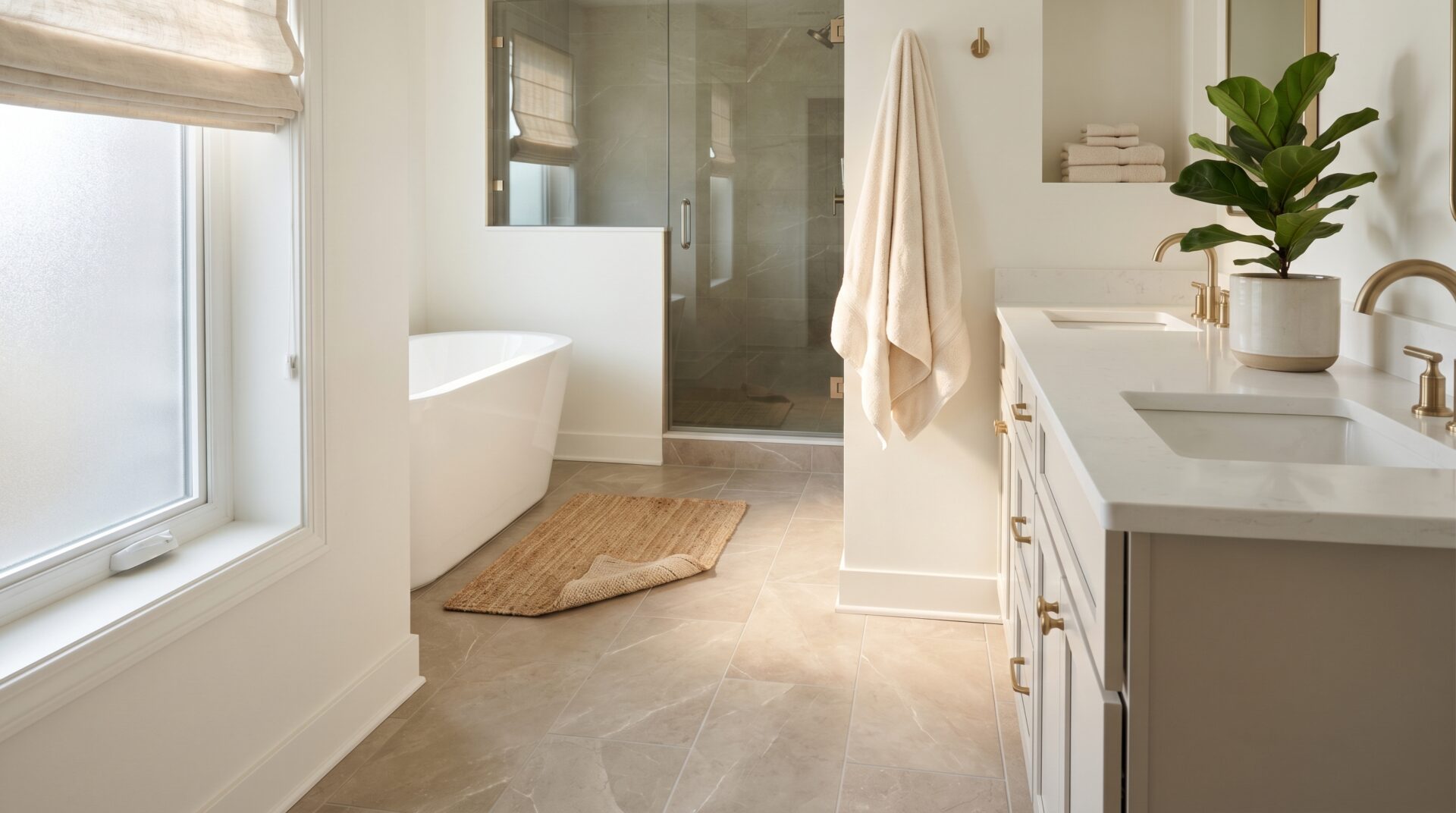
In a Wisconsin winter, no upgrade in your house earns its keep faster than stepping out of bed onto a warm bathroom floor. Radiant heat under your floors does what nothing else in home design quite manages: it removes the worst single moment of a cold-weather morning and replaces it with comfort that quietly persists for the rest of the day. Once you’ve lived with it, you don’t want to be in a house without it again. See the tile we carry.
This guide on radiant heat flooring for Madison WI homes covers how the system actually works, which floors pair well with it, where it makes the most sense in a Madison home, what drives the investment, and what to expect from the process. The goal is enough information to decide whether radiant heat belongs in your next flooring project, before you sit down with a designer or contractor.
The Short Answer: The best flooring for radiant heat is tile or porcelain. It moves heat fast and doesn’t react to warm and cool cycles. Engineered hardwood and radiant-rated LVP are good picks too. Skip solid hardwood and thick carpet. Over hydronic radiant heat, keep the surface within the maker’s temperature limit.
Best Flooring Over Hydronic Radiant Heat
Tile and stone conduct heat best, so they are the top pick over hydronic radiant heat. Engineered hardwood and some LVP also work when the maker rates them for radiant heat. Keep the floor surface within the maker’s temperature limit. Skip thick carpet pad, which blocks the heat.
Key Takeaways
- Radiant heat works best with tile and porcelain, well with engineered hardwood and premium LVP, and poorly with carpet.
- Electric mat systems are easier to install in single rooms (bathrooms, mudrooms, kitchens) and heat up faster.
- Hydronic systems use warm water and are more efficient for whole-floor or whole-house heating.
- Radiant heat is one of the highest-comfort upgrades available for a Wisconsin home and is becoming standard in primary bathroom renovations.
- The right time to install radiant heat is during a new floor install, when adding it costs a fraction of what retrofitting later would.
What Radiant Heat Actually Is
Radiant floor heat is a heating system installed directly under the finished floor surface that warms the room by warming the floor itself. Instead of pushing hot air through ducts (the way most Wisconsin homes are heated), it radiates warmth upward from the floor, which then warms the bodies and objects in the room.
The experience is different. Forced-air heat warms the room unevenly, with warm air at the ceiling and cooler air at the floor. Radiant heat does the opposite. The floor is the warmest surface, the air near the floor is warmer than the air at the ceiling, and the entire space feels evenly comfortable. There’s no draft, no cycling fan noise, and no cold spot to step on when you get out of bed or out of the shower.
Two basic systems handle this differently. The right choice depends on the project.
Electric vs Hydronic: The Two Main Systems
Every radiant heat installation falls into one of two categories.
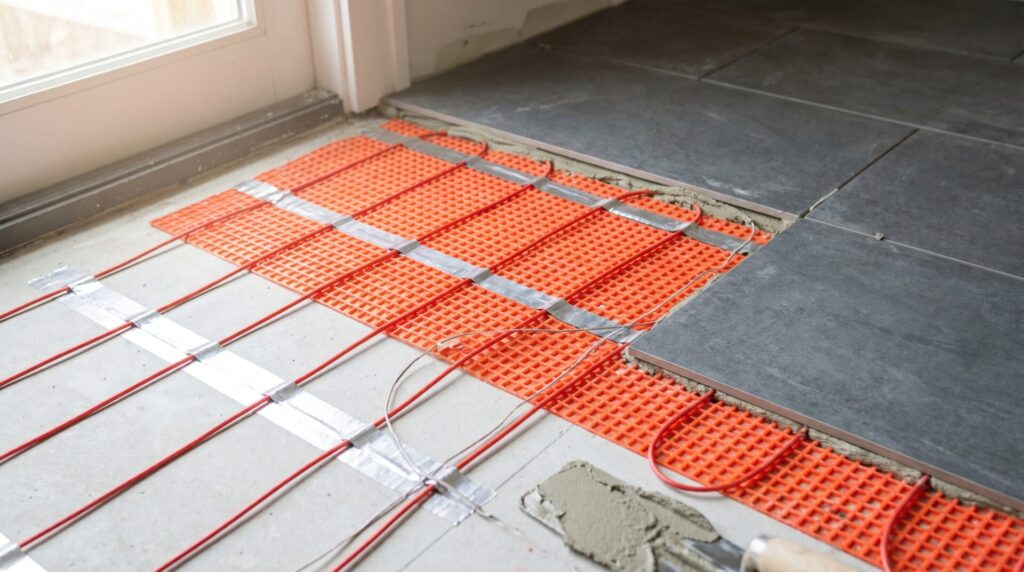
Electric radiant. Thin electric heating mats or cables install directly under the floor, typically in mortar under tile or in a thin underlayment under engineered hardwood or LVP. The system runs on standard household electricity, heats up quickly (warm floor within 30 to 60 minutes of turning it on), and is straightforward to install in a single room. The trade-off is operating cost. Electric resistance heat is more expensive to run continuously than a hydronic system, which is why electric radiant is typically used as supplemental heat in specific rooms rather than as the primary heat source for a whole house.
Hydronic radiant. Cross-linked PEX tubing carries warm water from a dedicated boiler through coils embedded in the floor or subfloor. The system runs more efficiently than electric for larger areas, can serve as a primary heating system for a whole house, and pairs well with high-efficiency boilers. The trade-off is installation complexity. Hydronic systems involve plumbing, a boiler, and dedicated mechanical space, which makes them best for new construction, additions, or major renovations rather than single-room retrofits.
For most Madison homeowners thinking about radiant heat for the first time, the question is usually: am I doing one room or the whole house? One room or a few rooms means electric. Whole house or a major renovation means hydronic. The decision usually flows directly from the scope of the project.
Which Floors Work With Radiant Heat
Not every flooring product behaves well over radiant heat. Some thrive, some are workable, and some fail.
Tile and porcelain: ideal. Tile is the natural partner for radiant heat. It has high thermal conductivity, which means heat passes through it efficiently and the floor surface warms up quickly. The tile itself doesn’t react to the heat cycles. Large-format porcelain in particular pairs beautifully with radiant systems in primary bathrooms, mudrooms, and kitchens. If you’ve ever wondered why heated bathroom floors are almost always tile, this is why.
Engineered hardwood: very good. Engineered hardwood is rated for radiant heat by most major manufacturers. The multi-layer construction handles the temperature changes far better than solid hardwood, and the look is identical to non-radiant installations. Specify a product that’s explicitly rated for radiant, follow the manufacturer’s installation requirements (including a maximum surface temperature, typically 80 degrees Fahrenheit), and engineered hardwood performs beautifully.
Premium luxury vinyl plank: good with the right product. Some premium LVP products are explicitly rated for radiant heat, with maximum surface temperature limits similar to engineered hardwood. The product spec matters here. Standard entry-level LVP often is not radiant-rated, and using a non-rated product can cause warping or warranty issues. If you want LVP over radiant heat, confirm the product is rated before purchase.
Solid hardwood: not recommended. Solid hardwood reacts too strongly to the temperature cycles of radiant heat. The risk of seasonal movement, gapping, and cupping is too high. If you want hardwood over radiant heat, choose engineered.
Carpet: works against you. Carpet has a high insulation value, which is the opposite of what you want over radiant heat. The carpet effectively blocks the heat from reaching the room. A heated carpet floor wastes most of the energy you’re paying for and doesn’t deliver the warm-floor experience you’re after.
Our LVP guide for Madison homes covers which LVP products fit which conditions, including radiant-compatible specs.
Where Radiant Heat Makes the Most Sense in a Madison Home
A few rooms in particular are where radiant heat delivers the most value in a Wisconsin home.
Primary bathrooms. This is the single most popular room for radiant heat in Madison renovations, and for good reason. Stepping out of the shower onto a warm tile floor in February is the kind of small luxury that quietly improves daily life for years. Heated primary bathroom floors have moved from upgrade to expected in many higher-end renovations we’re doing now.
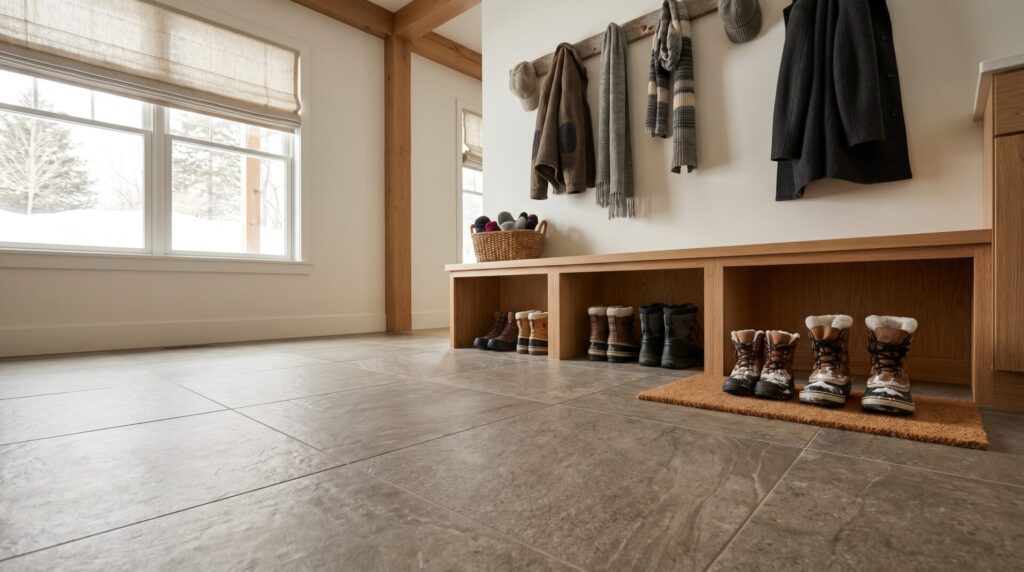
Mudrooms and entryways. Floors that take winter slush, salt, and tracked-in snow benefit twice from radiant heat. The warmth dries out wet boots and floors faster, and the room becomes more comfortable for the daily ritual of taking off coats and shoes. Tile or porcelain over radiant heat in a Madison mudroom is one of the better functional upgrades available.
Kitchens. For homeowners who stand and cook for long stretches, a warm floor underfoot makes a meaningful difference, especially in winter when kitchen tile would otherwise feel cold. Radiant heat under a tile or porcelain kitchen floor adds quiet daily comfort that adds up over years.
Basements. Basement floors are typically the coldest in a Madison home, sitting directly over a concrete slab that draws warmth out of the room. Radiant heat in a finished basement transforms the comfort of the space and makes the lower level genuinely livable in winter rather than a place that runs five degrees cooler than the rest of the house.
Whole-house new construction or major renovations. If you’re building new or doing a major main-floor renovation, hydronic radiant for the entire main level is worth a serious look. The system pairs naturally with high-efficiency mechanicals and delivers comfort that no forced-air system matches.
Three rooms that usually don’t need it: bedrooms (you’re under blankets and don’t feel the floor), formal living rooms that don’t get heavy daily use, and any room with wall-to-wall carpet.
What Drives the Cost of a Radiant Heat Project
Without quoting specific numbers, a few honest factors shape what a radiant heat project actually involves.
System type. Electric mat systems for a single bathroom are a relatively modest add to a tile installation. Hydronic whole-house systems involve a boiler, mechanical space, and full house plumbing, which is a meaningfully larger investment in both materials and labor.
Scope. A 60-square-foot primary bath is a different project than a 2,000-square-foot main floor. The materials cost scales roughly with square footage. The labor cost scales less predictably because larger projects can sometimes be more efficient per square foot than smaller ones. For the full picture, see what affects flooring cost in Madison.
Floor type. Some flooring installations require additional underlayment to host radiant heat properly. Some don’t. The combination of floor product and heat system affects the total project cost more than either alone.
Timing. Installing radiant heat during a new floor install is meaningfully less expensive than retrofitting later. Once a finished floor is in place, adding radiant heat means tearing the floor up. This is why the right time to think about radiant heat is when you’re already planning a floor replacement, not as a separate project years later.
If you’re thinking about a flooring project where radiant heat might fit, explore your options with us and we can walk through the specific costs for your house.
The Wisconsin Climate Case for Radiant Heat
Radiant heat makes more sense in Wisconsin than it does in most of the country, and the reasons go beyond just “it’s cold here.”
Forced-air heating systems struggle with comfort during a long Wisconsin winter. The air cycles on and off, the warm air collects at the ceiling, the floors stay cold, and the perceived temperature in the room is often several degrees cooler than the thermostat reading. Radiant heat solves all of this by warming the surface you actually touch, which is the floor.
The energy efficiency story matters too. A well-designed hydronic radiant system can operate at lower water temperatures than a traditional baseboard system, which pairs well with high-efficiency boilers. For homeowners thinking about long-term comfort and energy use across many Wisconsin winters, radiant systems often pay back in both comfort and operating costs.
The seasonal usage pattern fits. Radiant heat in a primary bathroom only really runs heavily from November through March, which is when you want it most. The system can be set to come on briefly before your morning routine, hold a comfortable surface temperature during the day, and idle the rest of the time. The energy cost of this kind of zoned use is modest compared to running the whole house warmer.
For Madison homeowners in newer construction in Sun Prairie or Middleton where the home is already tightly insulated, radiant heat in the right rooms is the kind of upgrade that consistently shows up in higher-end resale listings. In older Madison homes where retrofitting forced-air can be disruptive, a hydronic radiant system in a renovated basement or main floor can be a genuine modernization that respects the home’s character.
What the Process Looks Like
A radiant heat project breaks into clear stages.
For an electric mat system in a single room, the install integrates directly with the tile or floor installation. The mats lay over the prepared subfloor, the new floor goes down over them, the thermostat wires into a wall location, and the system commissions before grout cures. Adding radiant heat to a new bathroom tile job typically adds a day or two to the overall project timeline.
For a hydronic system, the process is more involved. The boiler and mechanical space need to be sized and located, the PEX tubing layout designed for the floor plan, the subfloor prepared to host the tubing (in some cases on top of the existing subfloor, in some cases as part of new construction), and the finished floor installed over the heating layer. For a whole-house project, this is typically coordinated with the home’s broader mechanical design rather than treated as a single-trade install.
Either system, once it’s in, requires almost no maintenance. The thermostat handles the daily operation. The system runs quietly underfoot. The floor stays the temperature you set it to.
If you’d like to think through whether radiant heat fits a project you’re planning, our 2026 flooring trends guide covers the broader context of where heated floors are showing up in Madison homes right now.
Keep Reading
- Heated Tile Floors: Cost and Comfort for Wisconsin Homes
- Tile Flooring for Madison Homes: The Complete Guide
- Tile Flooring in Madison, WI: porcelain, ceramic and stone-look options
Is Radiant Heat Right for Your Madison Home?
Radiant floor heat is one of the few home comfort upgrades that consistently exceeds expectations once it’s in place. The question is rarely “will I like it” (everyone does) and usually “does it fit this specific project at this specific time.” For new floor installs in bathrooms, mudrooms, kitchens, basements, and whole-floor renovations, the answer is increasingly yes. The investment is modest relative to the daily comfort improvement, and it’s specifically suited to the conditions of a Wisconsin winter.
If you’re planning a flooring project and want to think through whether radiant heat belongs in the scope, start the conversation with our team at Harmony Flooring. We’ll walk through the rooms, the products that fit, and the realistic picture of what adding radiant heat would mean for your specific home.
Radiant Heat Flooring Questions
What is the best flooring for radiant heat?
Tile and porcelain are the best match because they move heat well and don’t react to warm and cool cycles. Engineered hardwood and radiant-rated LVP also work. Avoid solid hardwood and thick carpet.
What flooring can go over hydronic radiant heat?
Tile and stone are the top picks over hydronic radiant heat. Engineered hardwood and some LVP work too when the maker rates them for radiant use. Keep the floor surface within the maker’s temperature limit.
What are the types of heated floors?
There are two main types. Electric radiant uses thin mats or cables under the floor and suits single rooms. Hydronic radiant runs warm water through tubing and suits whole floors or whole houses.
Is radiant floor heat worth it in Madison?
It usually is in a primary bathroom, mudroom or finished basement. Adding it during a new floor project keeps the added cost modest. For whole-house heat, hydronic radiant is worth a look in new builds or big remodels.
Can you put radiant heat under hardwood floors?
Yes, under engineered hardwood that’s rated for radiant use. Solid hardwood isn’t a good fit. It moves too much with the heat cycles and can gap or cup.
How long does radiant floor heat take to warm up?
Electric mats usually warm a tile floor in 30 to 60 minutes. Hydronic systems take longer to come up to temperature. They hold heat more evenly once warm.
Do you need radiant heat in every room?
No, it pays off most in bathrooms and mudrooms. Kitchens and basements are good fits too. Bedrooms and carpeted rooms rarely need it.
Can radiant floor heat replace a furnace?
A whole-house hydronic system built for that job can. When radiant heat covers just a few rooms, it adds comfort. Your furnace still does the main heating.
Questions About Your Floors?
Call or text 608-221-5500Schedule a Free Consultation
Shop our floors: Hardwood · Vinyl · Carpet · Tile · Laminate
Showroom: 2125 S. Stoughton Rd, Madison, WI 53716