- Blog
Does New Flooring Increase Home Value? What Wisconsin Sellers Need to Know
May 7, 2026
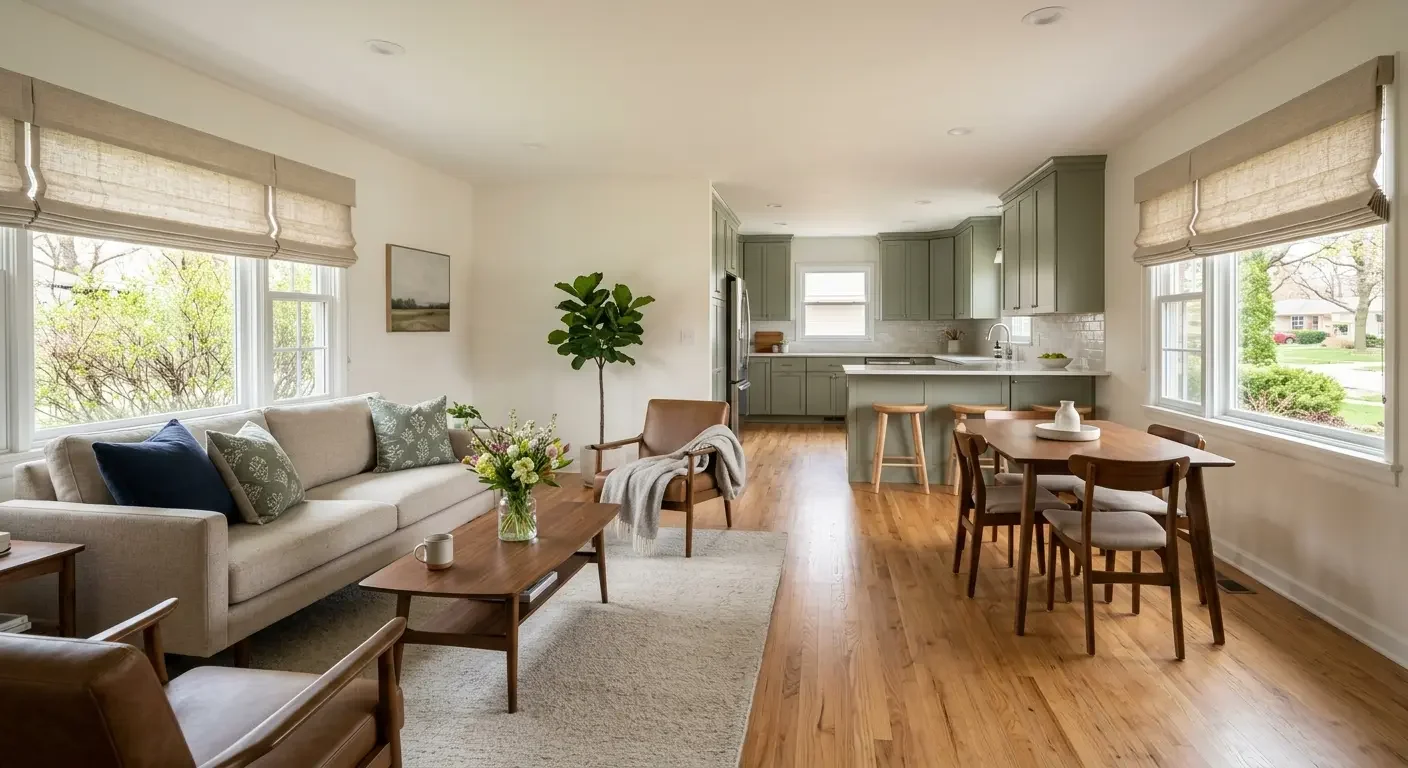
If you’re preparing a Madison-area home for the spring market, flooring is probably on your list. Maybe the carpet looks tired. Maybe the hardwood has lost its finish. At some point, every seller asks the same question: does new flooring actually increase home value, or is it just one more cost before closing?
The answer is yes, with some important caveats that most national advice skips.
The Short Version: New flooring can increase home value, but the return depends on the material, the room, and what you’re starting with. In Wisconsin homes, hardwood and engineered wood deliver the strongest buyer response. Condition matters as much as material. And for some floors, refinishing beats replacing every time.
Does New Flooring Increase Home Value? What the Data Shows
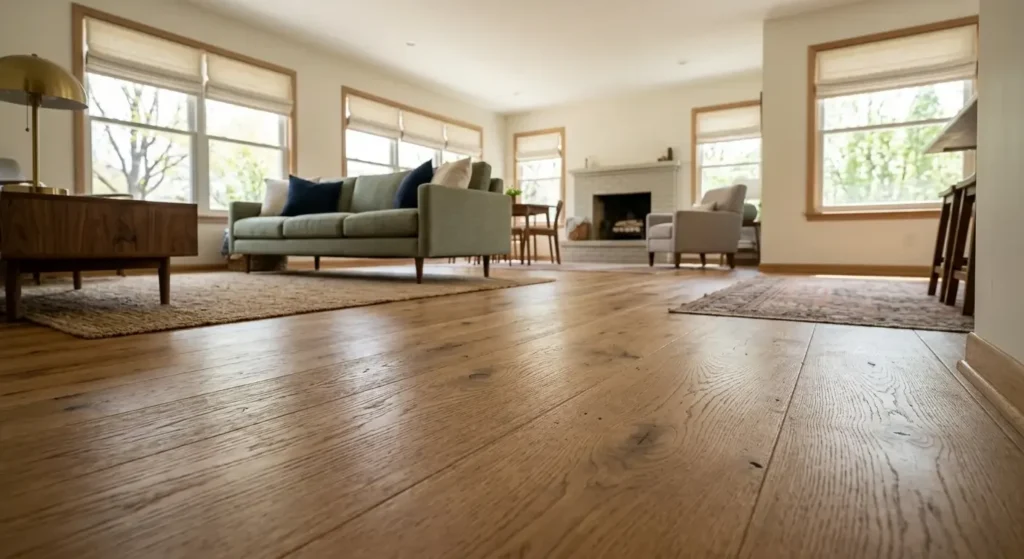
Research from the National Association of Realtors puts hardwood floors among the highest-return investments sellers can make. Refinishing existing hardwood typically returns more than its cost, and roughly 54% of buyers say they’re willing to pay a premium for a home with hardwood floors. That’s not a marginal preference. That’s a significant share of buyers actively factoring it into their offer.
Luxury vinyl plank (LVP) and engineered hardwood add measurable value in rooms where hardwood isn’t practical. Tile holds neutral to positive in kitchens and bathrooms, where buyers expect clean, hard surfaces. Carpet in main living areas is a more complicated story: many buyers today see older carpet as a future project, not a feature.
The key distinction worth understanding is that flooring return isn’t just about what you install. It’s about the gap between what buyers expect and what your home currently delivers.
Which Floors Add the Most Resale Value
Hardwood floors, solid or engineered, consistently earn the strongest buyer response and the most favorable treatment from appraisers. In higher-priced Madison-area neighborhoods like Maple Bluff or Shorewood Hills, hardwood is less of a selling point and more of a baseline expectation.
Engineered hardwood closes the gap in homes where solid hardwood isn’t practical, and it handles Wisconsin’s seasonal humidity swings better. Summers here are humid; winters run dry from forced-air heat. That cycle causes solid hardwood to expand and contract more than most sellers realize. For a home being prepped for listing, that’s a relevant factor when choosing which product to install.
Quality LVP performs well and photographs cleanly. Buyers increasingly understand what they’re looking at, and a well-installed LVP floor in a current style signals low-maintenance living, which carries real weight with today’s buyers.
What pulls value down: worn, stained, or mismatched flooring in any material. Buyers form impressions quickly, and condition is what they see first.
Room Priority: Where New Floors Make the Biggest Difference
Not every room delivers the same return. Focus your investment where it shows most:
- Main living area and open floor plan: Buyers form their first real impression here. Flooring continuity through the main floor signals quality and photographs better. If you update one area before listing, make it this one.
- Kitchen: Buyers scrutinize kitchens carefully. Worn or mismatched kitchen flooring raises questions about how well the whole home has been maintained.
- Primary bedroom: Buyer preferences have shifted. Hard surface flooring in the primary bedroom is increasingly expected in the mid-to-upper price range. If your primary still has dated carpet over a solid subfloor, a change here can move the needle.
- Entry and foyer: First impressions start at the door. Damaged or mismatched flooring at the entry undermines the rest of the showing before buyers move past the threshold.
Rooms where new flooring rarely returns its full cost: guest bedrooms, unfinished basements, and utility areas. Condition matters in those spaces, but full replacement rarely changes what buyers offer.
If you’re thinking about how the flooring reads across your main level, our guide on running one floor throughout the house covers when consistency helps and when mixing materials makes sense.
If you’d like a quick professional read on what your floors actually need before listing, connect with our team at harmonyflooring.com/contact/ and we’ll take a look.
When Refinishing Beats Replacing
Here’s something most sellers don’t hear until it’s too late: if you have solid hardwood in reasonably good condition, refinishing almost always delivers a better return than replacing it.
Professional refinishing removes years of wear, scratches, and finish buildup and brings the floor back close to its original look. Buyers respond to well-refinished hardwood the same way they respond to new hardwood. And the process typically costs less than a full replacement.
The case for full replacement is clearest when the existing material is beyond sanding depth, when the floor has structural problems, or when it’s older carpet or worn vinyl that buyers will read as outdated. In those situations, replacement is the right call.
This is one of those decisions worth getting right before you spend money. A professional assessment tells you quickly which path gives you the best return on your pre-sale investment.
Wisconsin Timing and the Spring Listing Window
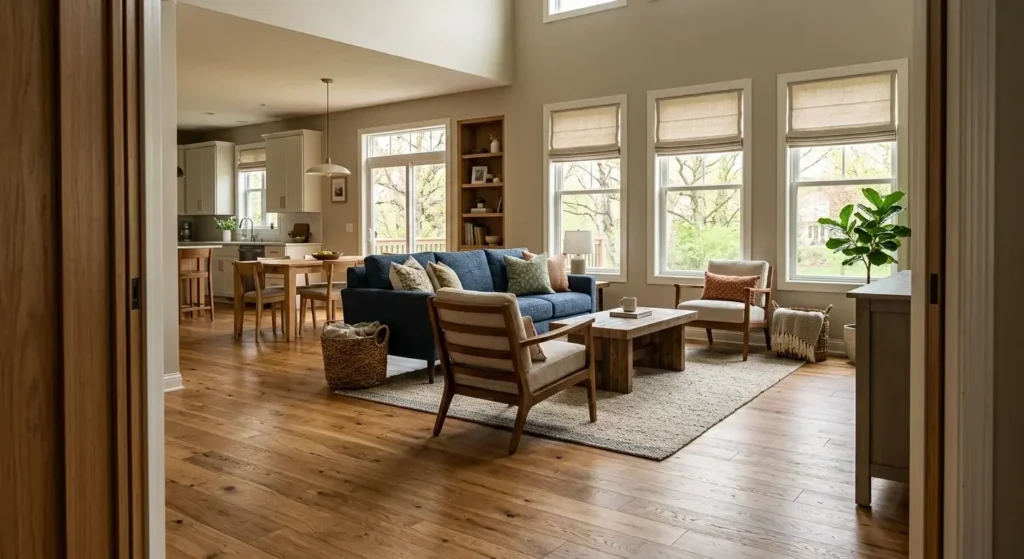
Spring is peak listing season in Madison. If you’re targeting a March, April, or May listing date, plan your flooring project in January or February.
Most flooring projects need four to eight weeks from material selection through installation, and popular products can have lead times that catch sellers off guard when they wait until late winter. Homeowners in Fitchburg, Middleton, and Sun Prairie tend to face heavier contractor scheduling pressure in April, when spring projects converge and timelines get compressed.
One detail worth knowing: solid hardwood needs time to acclimate to your home’s indoor conditions before installation. If your home has been running forced-air heat all winter, the air is significantly drier than it will be by spring. A professional installation builds in proper acclimation. That step matters more in Wisconsin homes than in more stable climates, and it’s a detail that gets skipped when installation is rushed.
How Harmony Flooring Works
Our full-service process follows a straightforward sequence: Design · Measure · Install.
- Design: We help you figure out which floors to update, which materials make sense for your goals, and how to approach your pre-sale project with the return in mind.
- Measure: We come to your home. A professional measure means accurate scope and no surprises on materials or timeline.
- Install: Our team handles everything from start to finish. You’re listing a finished home, not managing a project.
Frequently Asked Questions
Does new flooring increase home value?
Yes, but the return depends on the material, the room, and your starting condition. Hardwood and engineered hardwood consistently deliver the strongest buyer response. LVP and tile perform well in the right rooms. Carpet in living areas can dampen buyer enthusiasm in today’s market. A professional assessment of what you actually have gives you the clearest picture of where to invest.
What type of flooring adds the most resale value?
Hardwood floors, solid or engineered, deliver the strongest return and the widest buyer appeal. In Wisconsin homes, engineered hardwood has a practical edge because of the state’s seasonal humidity swings. Quality LVP is a strong pre-sale choice in rooms where hard-surface durability matters and hardwood isn’t the right fit.
Should I replace flooring before selling my house?
It depends on what you have and its condition. Worn or dated flooring in main living areas is worth addressing before you list. But if you have solid hardwood that can be refinished, that’s often the smarter path. A quick professional look at your floors before committing to either decision can save you significant time and money.
How much value does new flooring add to a home?
There’s no single number, because it depends on your home’s price point, the local market, the material, and the room. What the data shows consistently is that hardwood delivers strong ROI, LVP adds value in the right spaces, and the condition of whatever you install matters as much as the material itself.
Is LVP a good choice for resale value?
Yes, particularly in rooms where hardwood isn’t practical. Quality LVP holds up well, photographs well, and signals low-maintenance living to buyers. In Wisconsin homes with basements, kitchens, or high-traffic areas, LVP can be a smart pre-sale upgrade when professionally installed.
When the floors are right, the whole home shows better. Schedule a consultation with Harmony Flooring at harmonyflooring.com/contact/ and we’ll help you figure out exactly what’s worth doing before you list. Covering Every Detail. 608-221-5500.