- Carpet
What to Expect During Carpet Installation, Start to Finish
April 23, 2026

Carpet installation day can feel like a mystery if you’ve never been through it before. Most Madison homeowners know they want new carpet. They just aren’t sure what the process actually looks like, or how much of it they need to manage themselves. See the carpet we carry.
The short answer: your carpet installation process has a clear beginning, middle, and end. This guide walks you through every stage, from your first product conversation to the moment the installers pack up and leave your space looking completely different.
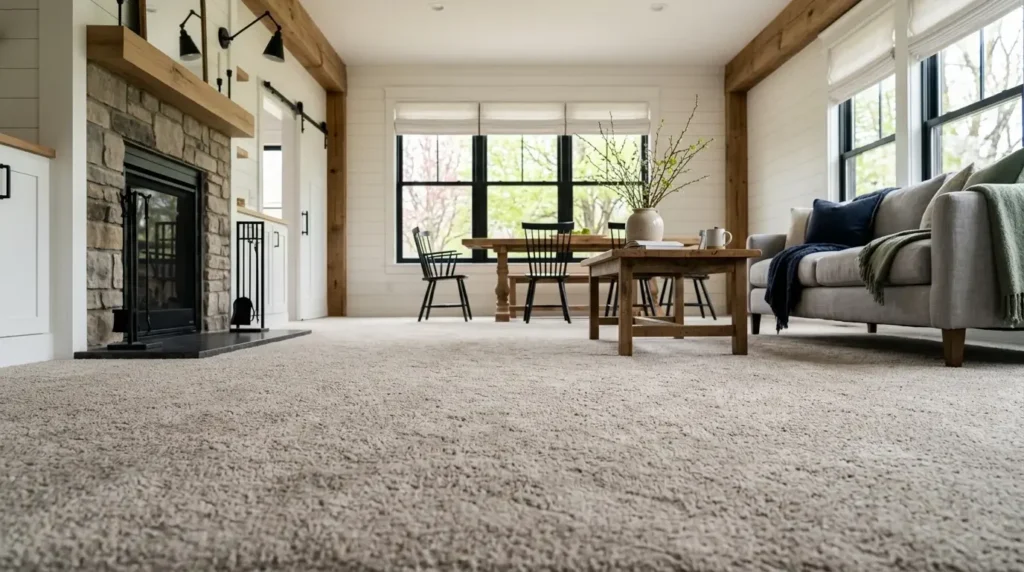
The Carpet Selection Process
The carpet installation process starts well before any installer arrives at your door. It begins with a selection consultation, where you and a flooring professional work through fiber type, pile height, performance rating, and style for your space.
Bedroom carpet prioritizes softness. Living areas demand more from stain protection and durability. For active households in Middleton or Fitchburg where foot traffic and pets are part of daily life, soil-hiding patterns and tighter loop constructions tend to hold up better over time. A good selection conversation works through all of it before a single yard is ordered.
Your Professional Measure Visit
Once you’ve landed on the right product, a professional measure visit is scheduled. A member of the team visits your home and takes precise measurements of every room and area being carpeted.
This step matters more than most people realize. Room dimensions on paper and real-world square footage rarely match, especially in older homes with offset closets, angled walls, or irregular layouts. Accurate field measurements ensure the carpet is ordered correctly the first time, with enough material to cover seams cleanly without waste. Skipping this step or relying on rough estimates leads to shortfalls and delays.
How to Prepare for Carpet Installation Day
Your prep list is straightforward. Clear the rooms being carpeted of small items: decor, electronics, lamps, books, and anything stored in closets. The installers typically handle heavier furniture like sofas, bed frames, and dressers. Confirm the specifics when you schedule so everyone’s on the same page.
Make sure the rooms are accessible and that your home is at a normal indoor temperature. In colder months, running your heat as usual is enough. For a more detailed walkthrough of how to get your home ready, this pre-installation guide covers what to expect across all flooring types.
Ready to talk through what your project involves? Contact Harmony Flooring and we’ll walk through the details with you. Schedule a free consultation or call or text 608-221-5500.
Removing Old Carpet and Inspecting the Subfloor
Installation day starts with removal. The installers pull up your old carpet and pad, roll it, and haul it away. You don’t manage disposal.
After removal comes the subfloor inspection, which is one of the most important steps in the entire carpet installation process. The installer checks for soft spots, squeaks, protruding fasteners, and any signs of moisture damage. In older Madison-area homes, and particularly in homes with basements beneath the main living level in areas like Waunakee or Monona, subfloor issues that weren’t visible under the old carpet occasionally appear here. Repairs needed before the new carpet goes down are addressed at this stage.
Here’s what most homeowners don’t know: the quality of your carpet installation depends as much on what’s happening at the subfloor as on the carpet itself. A premium carpet installed over a compromised subfloor will never perform the way it should, no matter how good the product is. That’s why this inspection step is non-negotiable for professional work.
Installing the Carpet Pad
Before the carpet is laid, a new pad goes down across the entire floor area. Carpet padding adds softness underfoot, absorbs impact, extends the life of the carpet above it, and provides a layer of thermal and sound insulation.
Padding thickness and density are matched to the specific carpet being installed. Your installer handles that pairing based on product specs and room use. A denser pad isn’t always the right call. The combination matters more than either spec in isolation.
Stretching and Securing the Carpet
With the pad in place, the carpet is measured, cut, and laid into the room. The most critical step in this phase is the stretch.
Professional installers use a power stretcher to pull the carpet taut across the room and lock it into tack strips along the perimeter walls. This is what prevents rippling, buckling, and premature wear patterns. It’s where professional installation earns its value. Seams are positioned carefully, typically away from direct traffic paths and primary sightlines, to be as invisible as possible. When the stretching is done right, the carpet lies flat from wall to wall and stays that way for years. It’s worth reading more about why professional installation makes a long-term difference: Why Hiring a Flooring Pro Is Worth It
The Final Walk-Through
Once the carpet is stretched, trimmed at the edges, and finished at transitions, your installer walks the rooms with you. This is your chance to check the seams, doorway transitions, and the overall lay before the installers pack up.
Point out anything that looks off. Good installers expect this conversation and welcome it. After the walk-through, the room is ready to move back into.
How Long Does the Carpet Installation Process Take?
For a single room, installation typically runs a few hours. A full floor or multiple rooms usually fills a day. Larger homes, or those with stairs and multiple levels, may run into a second day. Your installer will give you a realistic timeframe before the project starts.
The installation timeline is only part of the picture, though. After you select your product, plan for a delivery lead time of one to three weeks depending on the material and availability. Build that into your project window, especially for spring renovation work when scheduling tends to fill quickly across the Madison area.
Timing Your Installation in Wisconsin
Spring is a popular time to schedule carpet installation in the Madison area, and homeowners across Fitchburg, Waunakee, and the surrounding communities tend to plan projects in March and April before summer picks up. Wisconsin spring conditions, though, introduce one factor that often gets overlooked: acclimation.
Carpet, like hardwood, adjusts to the temperature and humidity of the space it’s installed in. Professional installers allow time for the carpet to acclimate before cutting and laying, especially in spring when indoor humidity is rising faster. Skipping or compressing this step in humid conditions can cause issues after installation, including stretching problems and irregular pile behavior. Your installers manage this timing. It’s just worth knowing that installers who build in acclimation time are doing it right.
After the Installers Leave
New carpet sheds loose fibers in the first few weeks. Vacuuming regularly in that initial period clears those fibers and helps the pile stand up properly. Felt pads or furniture glides under heavy legs prevent compression points in the pile.
For ongoing care, routine vacuuming and periodic professional cleaning keep carpet performing well and extend its lifespan significantly. If you have pets at home, there are also some specific strategies for keeping carpet looking its best. This guide on removing pet hair from carpet covers what actually works.
By the time the process is done, you’ll have a clear read on every phase and exactly what your installers handled. The installation itself is the part that surprises most homeowners. It’s not complicated. It’s just more thorough than they expected.
Keep Reading
- Flooring Installation FAQs for Madison Homeowners
- Does Carpet Cost Less Than Hard Flooring?
- Carpet Flooring in Madison, WI: styles, fibers and brands to compare
Frequently Asked Questions
How long does carpet installation take?
A single room typically takes a few hours. Multiple rooms or a full floor plan is usually a full day. Larger homes, stairs, or complex layouts may extend into a second day. Your installer will walk you through a realistic timeline before the project starts.
Do I need to move my furniture before carpet installation?
You handle the small items like decor, lamps, electronics, books, and personal belongings. The installers manage heavier furniture like beds, sofas, and dressers. Confirm specifics at the time of scheduling so everyone arrives prepared.
What happens to my old carpet?
Removing and hauling away your old carpet and padding is part of the installation. The installers pull it up, roll it, and dispose of it. You don’t need to manage that part.
Do I need to be home during carpet installation?
You don’t have to be present the whole time, but being available at the start and at the final walk-through is a good idea. The walk-through at the end gives you a chance to review the work and raise anything before the installers leave.
Can carpet be installed in spring in Wisconsin?
Yes, carpet can be installed year-round in Madison. The main variable is acclimation time. Spring brings rising indoor humidity levels, which affects how carpet materials settle before installation. Professional installers account for this by allowing appropriate acclimation time for the product and conditions. That step protects your installation long-term.
How Harmony Flooring Works
Every Harmony Flooring project follows our Design · Measure · Install process.
Design: We start by learning your space, your lifestyle, and what you’re after. Then we help you find the right carpet for how you actually live.
Measure: We come to you. A professional measure visit captures exact dimensions and surfaces any subfloor issues before they become a problem.
Install: Our trusted local installers handle everything, from hauling out the old floor to the final walk-through. Covering Every Detail is how we work.
When you’re ready to get started, schedule your consultation and we’ll take it from there. Call or text 608-221-5500 or send us a quick message.
Questions About Your Floors?
Call or text 608-221-5500Schedule a Free Consultation
Shop our floors: Hardwood · Vinyl · Carpet · Tile · Laminate
Showroom: 2125 S. Stoughton Rd, Madison, WI 53716