- Flooring
Best Flooring for Restaurants and Cafés in Wisconsin: Durable, Slip-Resistant, and Easy to Clean
January 8, 2026
Restaurant Floors Have a Tough Job in Wisconsin
If you run a restaurant or café in Madison or nearby towns like Verona, Middleton, Sun Prairie, Fitchburg, or Waunakee, your flooring faces more than foot traffic. It handles wet boots, salt and slush, grease splatter, chair movement, rolling carts, constant cleaning, and long shifts on your feet. See our commercial flooring page.
At Harmony Flooring, we help Wisconsin restaurants choose commercial flooring that looks great out front, holds up in back-of-house, and doesn’t become a maintenance headache six months later. This guide breaks down the best options by area, plus real-world pros and cons so you can pick what fits your space and budget.
What the Best Restaurant Flooring Needs to Do
Before we talk materials, here’s what matters most in restaurant and café flooring:
- Slip resistance for safety in kitchens, dish areas, bars, and entryways
- Water and stain resistance (spills, mopping, tracked-in slush)
- Durability against chairs, dropped plates, and heavy foot traffic
- Easy cleaning and sanitizing without special treatments
- Comfort underfoot for staff standing all day
- Fast installation and minimal downtime for remodels
- Style that fits your brand and still hides everyday wear
Wisconsin tip: winter grit is brutal. Even the best floor wears faster if you don’t plan for entry mats, transitions, and cleanable zones near doors.
Best Flooring by Restaurant Area
Most restaurants get the best results by mixing materials. What works in the dining room is not always right for the kitchen.
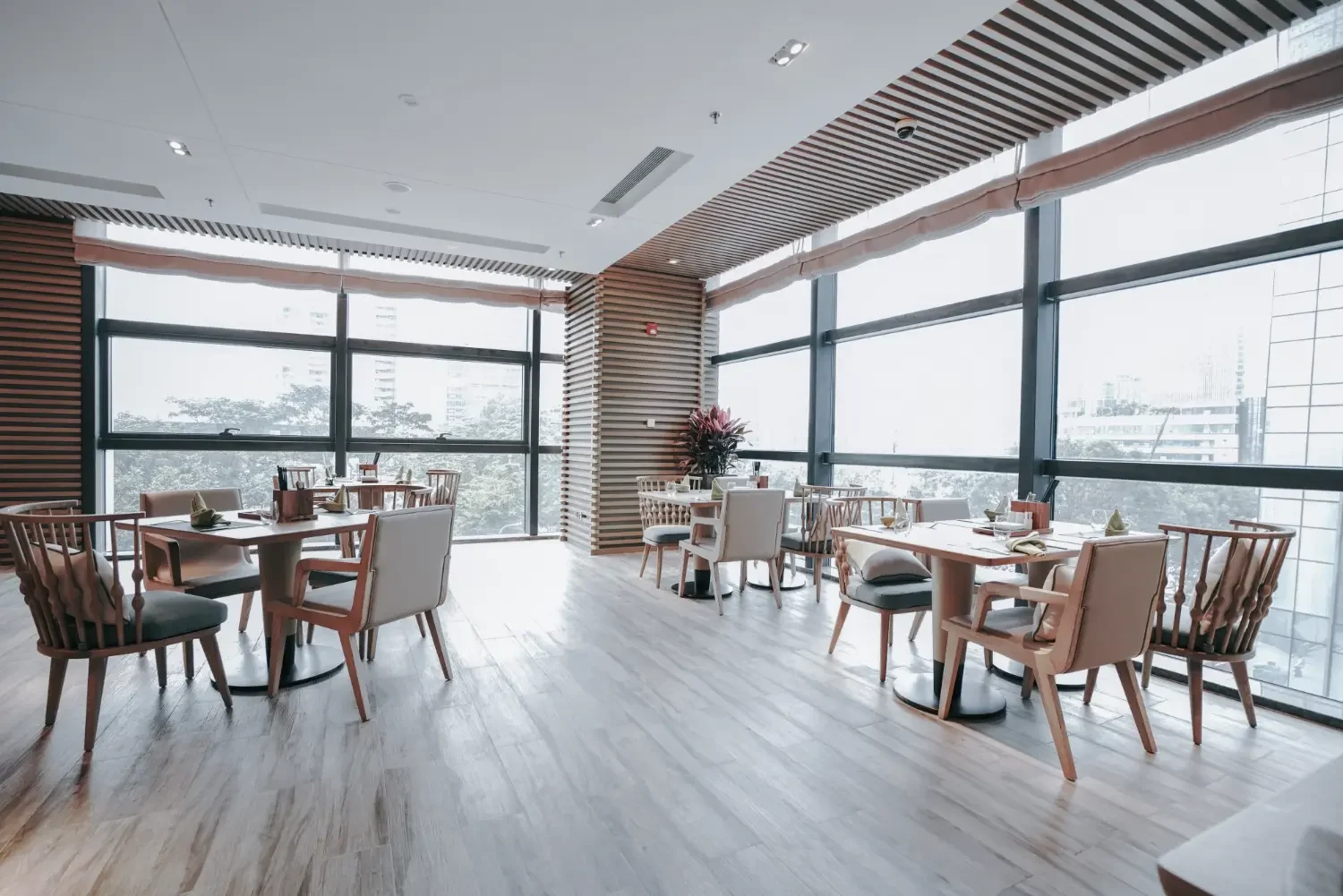
Front of House: Dining Areas, Waiting Areas, Seating Zones
This is where you want the best balance of design, durability, and cleanability.
1) Commercial Luxury Vinyl Tile (LVT) and Luxury Vinyl Plank (LVP)
Commercial-grade LVT/LVP is one of the most popular choices for restaurants because it’s:
- Durable and scratch resistant (great for chair movement)
- Easier to clean than grout-based floors
- Often water resistant or waterproof, depending on the system
- Available in wood, stone, and concrete looks
Best for: dining rooms, cafés, coffee shops, host stands, hallways
Why Wisconsin restaurants like it: it handles slush and salt better than many people expect, especially with proper entry mats and routine cleaning.
What to look for:
- Commercial wear layer and a product rated for high-traffic commercial use
- A finish that resists scuffs and cleans easily
- The right installation method for your subfloor and traffic patterns
2) Porcelain Tile
Porcelain tile is a classic for restaurants because it’s:
- Extremely durable
- Highly stain and moisture resistant
- Great for entry zones and high-traffic paths
Best for: entryways, corridors, restrooms, some dining spaces
Tradeoffs:
- Harder underfoot (staff comfort matters)
- Grout lines need maintenance and can discolor over time
- Dishes break more easily if dropped
If you love tile in the dining room, consider a tile that hides dirt well and a grout color that won’t show every mark.
3) Polished or Sealed Concrete
Concrete can look great in modern cafés and breweries:
- Very durable in high-traffic spaces
- Minimal seams
- Fits industrial, modern, and minimalist design styles
Best for: cafés, counter-service restaurants, bar areas, modern dining rooms
Tradeoffs:
- Can feel hard and loud without acoustic planning
- Needs proper sealing to resist stains
- Can be slippery if not finished correctly
Back of House: Kitchens, Dish Rooms, Prep Areas, Storage
Back-of-house flooring is all about safety, sanitation, and durability. This is not the place to choose a product only because it looks good.
1) Quarry Tile or Commercial Slip-Resistant Tile
These are workhorse floors for commercial kitchens:
- Built for wet, greasy conditions
- Strong traction and durability
- Handles heat and heavy cleaning schedules
Best for: commercial kitchens, dishwashing areas, behind the line
Tradeoffs:
- Grout maintenance is real, especially with grease
- Installation cost is higher than many resilient options
2) Epoxy Flooring Systems
Epoxy and resinous floors are common in commercial kitchens and dish areas because they can be:
- Seamless (or nearly seamless) for easier sanitation
- Highly resistant to moisture and many chemicals
- Built with slip-resistant textures
Best for: dish rooms, prep kitchens, storage, walk-ins (depending on system)
Tradeoffs:
- Requires careful prep and skilled installation
- Downtime during curing matters, so timing is important
If your operation needs the easiest cleanup possible and you want fewer seams, epoxy is worth considering for specific zones.
3) Commercial Sheet Vinyl
Sheet vinyl in commercial specs can work well in certain back-of-house areas:
- Fewer seams than tile
- Easy to clean and maintain
- Often a lower upfront cost for large spaces
Best for: prep areas, storage rooms, staff areas, some corridors
Tradeoffs:
- Not always ideal for extreme heat or heavy grease near fryers
- Performance depends heavily on the product and installation details
Restrooms: Moisture, Traction, and Easy Cleaning
Restrooms should be simple to clean and resistant to moisture.
Top picks:
- Porcelain tile (durable, water resistant, classic choice)
- Commercial LVT (warmer underfoot, fewer grout issues, easy maintenance)
If your restrooms see a lot of traffic, lean toward finishes that hide scuffs and choose slip-resistant surfaces where needed.
Entries and Vestibules: The Wisconsin Winter Zone
This is where floors take the worst abuse from snow, salt, sand, and wet boots.
Best options:
- Porcelain tile with appropriate traction
- Commercial LVT designed for high traffic
- Sealed concrete in the right finish
The real secret here is planning:
- Commercial-grade entry mats (outside and inside)
- A “transition zone” where water can drip without damaging your main floor
- Easy-to-clean baseboards and trim details
Quick Comparison: Tile vs Vinyl for Restaurants
If you’re stuck between tile and vinyl, here’s the practical difference:
- Commercial LVT/LVP: softer underfoot, easier to clean, fewer grout issues, faster install, great design options
- Porcelain tile: ultra durable, great for entries and restrooms, but harder, colder, and grout adds maintenance
Many Wisconsin restaurants choose a hybrid plan: tile where water is constant, vinyl where comfort and speed matter.
Keep Reading
- Spring Flooring Renovations for Madison Hotels and Restaurants
- How to Choose Flooring for High-Traffic Businesses
- Commercial Flooring in Madison, WI: how we help businesses plan floors
Common Restaurant Flooring Questions
What is the most durable flooring for a restaurant kitchen?
For many kitchens, quarry tile or a properly designed epoxy system is hard to beat. The best choice depends on how wet and greasy your kitchen gets, your cleaning routine, and how much downtime you can tolerate during installation.
What is the best flooring for a small café or coffee shop?
Commercial LVT is often the best fit because it looks great, handles traffic, cleans easily, and feels better underfoot during long shifts. It’s also a popular choice for quick remodels.
What flooring is best for restaurant entryways in Wisconsin winters?
Porcelain tile or commercial-rated LVT works well, but the biggest factor is your entry mat system and how you manage salt and grit.
How do I choose flooring that’s slip-resistant but still looks good?
Look for commercial products with traction ratings designed for the area. Front-of-house can prioritize design with sensible slip resistance. Back-of-house should prioritize safety first.
What We Recommend Most Often for Wisconsin Restaurants
If you want a simple starting point, here’s a common “best practice” layout:
- Dining room / café seating: commercial LVT/LVP or sealed concrete
- Bar area: commercial LVT or porcelain tile (depending on spill volume)
- Restrooms: porcelain tile or commercial LVT
- Kitchen / dish area: quarry tile or epoxy system
- Entry / vestibule: porcelain tile or commercial LVT + heavy-duty matting
This mix keeps your space attractive, durable, and easier to maintain long-term.
Ready to Plan a Restaurant Flooring Upgrade?
The best restaurant flooring is not one perfect product. It’s the right combination for your space, your staff, and your maintenance realities.
If you’re opening a new café in Madison, remodeling a restaurant in Middleton, or upgrading a busy dining room in Sun Prairie, Harmony Flooring can help you choose the right materials, plan installation around your schedule, and deliver a finish that holds up. We’re “Covering Every Detail,” from product selection to professional installation.
Want help choosing restaurant flooring that actually lasts?
Visit our Madison showroom or schedule a consultation with Harmony Flooring.
Questions About Your Floors?
Call or text 608-221-5500Schedule a Free Consultation
Shop our floors: Hardwood · Vinyl · Carpet · Tile · Laminate
Showroom: 2125 S. Stoughton Rd, Madison, WI 53716