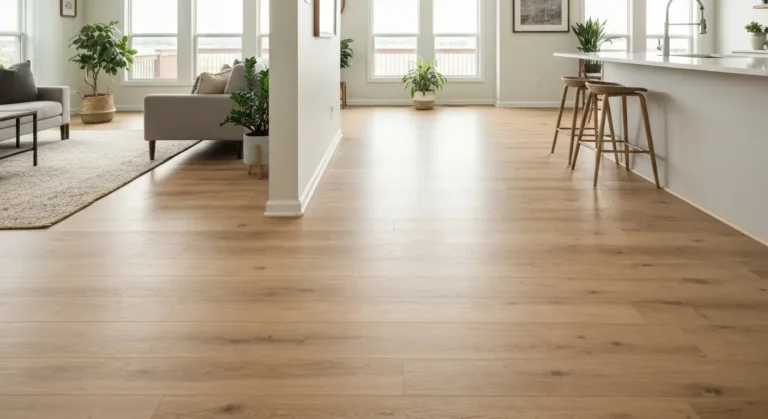
- Vinyl Plank
How to Clean LVP Floors: Best Way to Mop Vinyl Plank
January 7, 2026
Reviewed by Kevin Sill, Co-owner, Harmony Flooring
How to Clean Luxury Vinyl Plank Flooring
The best way to clean luxury vinyl plank (LVP) is to dry mop or vacuum the grit off most days, then damp mop about once a week with a well-wrung microfiber pad and a pH-neutral cleaner made for vinyl. Skip steam mops, vinegar, oil soaps, wax and anything abrasive, and never leave water standing in the seams. See the options at our vinyl plank flooring store in Madison.
The Short Version:
- Most days: dry microfiber mop or vacuum with the beater bar off, focusing on entries and the kitchen.
- Weekly: damp mop with a microfiber pad and a pH-neutral vinyl cleaner mixed to the label.
- Monthly or seasonally: deep clean with a clean-water rinse pass to lift built-up residue.
- Never: steam mops (unless your manufacturer approves them), vinegar, oil soaps, wax or polish, ammonia, bleach or abrasive pads.
- Winter: walk-off mats without rubber or latex backing, and salty slush wiped up the same day.
At Harmony Flooring in Madison, we design, measure and coordinate installation of LVP for kitchens, living rooms, basements and commercial spaces across south central Wisconsin. This guide covers the routine that keeps those floors looking new, plus what to do about Wisconsin road salt.
Why LVP Needs a Gentle Cleaning Routine
LVP shrugs off spills, but its top coat and wear layer (the clear protective film, explained in our guide to luxury vinyl layers) can be dulled by grit, residue and harsh chemicals. Most day-to-day “damage” isn’t damage at all. It’s usually:
- Grit and salt acting like sandpaper (classic Wisconsin winter problem)
- Cleaner buildup that makes floors look cloudy or streaky
- Rubber marks from shoes or furniture feet
- Too much water sitting in seams or edges
The goal is simple: remove grit often, clean with a gentle product, and never flood the floor.
Daily LVP Cleaning: Get the Grit Up First
Daily cleaning for LVP is a quick dry pass with a microfiber dust mop or a vacuum with the beater bar off, because grit under shoes is what scratches the finish. Do this most days, especially in winter:
- Dry mop with microfiber or vacuum with a soft-floor setting
- Avoid vacuums with rotating beater bars, which can scuff some hard surfaces over time
- Focus on entry paths: mudroom, kitchen walkways, around the sink
Why it matters: Shaw‘s resilient flooring care guide says daily removal of dirt and dust keeps particles from abrading the surface, and to always vacuum or dust mop before any wet cleaning. Dry cleaning first also makes damp mopping work better.
How to Mop LVP Floors: The Weekly Method
To mop LVP, dry clean first, then go over the floor with a microfiber mop that is damp, not wet, using a pH-neutral cleaner made for vinyl, and let it air dry. Shaw recommends cleaning luxury vinyl weekly, and more often in high-traffic areas.
Step 1: Dry clean first
Sweep, microfiber dust mop, or vacuum.
Step 2: Damp mop, not wet mop
- Use a lightly damp microfiber mop
- Wring it out well, and rinse or swap the pad when it looks dirty
- Mop along the length of the planks, working toward the door
- Do not leave puddles or standing water (especially near toilets, tubs, and exterior doors)
Step 3: Use a pH-neutral cleaner
Shaw and COREtec both call for a pH-neutral cleaner, one that is neither acidic nor alkaline. Mix it to the label. Extra cleaner does not clean better; it leaves the film that makes floors look hazy and feel sticky.
Pro tip for streak-free floors:
After damp mopping, do a quick pass with a clean, barely damp mop pad, then let it air-dry. If the floor got wetter than you meant, run a fan. Shaw’s guide suggests an air mover or fan to speed drying after rinsing.
Best Tools for Cleaning Luxury Vinyl Plank
Keep it simple. Here’s what works best:
- Microfiber dust mop (daily grit control)
- Microfiber mop with washable pads (weekly damp mop)
- Soft bristle broom (quick cleanup)
- Vacuum safe for hard surfaces (no beater bar)
- Soft cloths for spot cleaning
- Felt pads under chair and table legs, the kind our furniture pads guide recommends
Avoid: abrasive scrub pads or rough brushes that can scratch the wear layer.
What to Clean LVP With, and What Never to Use
Clean LVP with a pH-neutral cleaner made for vinyl, ideally the one your flooring brand names, and never with steam, vinegar, oil soap, wax or abrasives.
Usually safe options
- Manufacturer-recommended vinyl cleaners
- Neutral pH floor cleaners (follow dilution instructions)
What Never to Use on LVP
Never use |
Why |
Use instead |
|
Steam mop |
Heat and moisture can harm the top coat and weaken adhesives. COREtec says not to steam unless the manufacturer approves it. |
A damp microfiber mop |
|
Vinegar |
It is slightly acidic. COREtec and Shaw both say not to use it on their vinyl floors. |
A pH-neutral vinyl cleaner |
|
Oil soap or wood soap |
Leaves a film on the surface. Shaw’s resilient care guide says not to use oil soaps. |
A pH-neutral vinyl cleaner |
|
Wax, polish or one-step mop and shine |
LVP is not made to be waxed, and these build into a cloudy layer. Shaw rules out one-step cleaner and polishes; COREtec rules out wax and floor polish. |
Nothing. The factory top coat is the finish. |
|
Detergent or dish soap |
Shaw warns detergents leave a dull residue, and COREtec lists detergent among products to avoid. |
A pH-neutral vinyl cleaner |
|
Ammonia, bleach and harsh chemicals |
Shaw lists ammonia-based products and harsh chemicals to avoid. They can dull the finish. |
A pH-neutral vinyl cleaner |
|
Abrasive pads, steel wool, scouring powder |
They scratch the wear layer and dull the surface. |
A soft cloth or microfiber pad |
|
Rubber or latex-backed mats |
Shaw warns certain rubber compounds can permanently stain vinyl. |
Mats with a backing labeled safe for vinyl |
Vinegar on LVP: Skip It
You’ll see vinegar recommended online, but the flooring brands disagree. COREtec says vinegar is slightly acidic and can harm LVP, and Shaw says not to use vinegar as a cleaning agent on its resilient floors.
Best practice: follow your flooring brand’s care guide. If you’re not sure what LVP you have, Harmony Flooring can help you identify it and recommend a safe cleaner.
How to Remove Scuffs, Stains and Sticky Spots From LVP
Most LVP spots come up with warm water and a pH-neutral cleaner. Step up to rubbing alcohol or mineral spirits only for stubborn marks, and test in a hidden spot first.
Scuff marks (shoes, chair legs, rubber soles)
Try, in order:
- Damp microfiber cloth with warm water
- Small amount of manufacturer-approved cleaner
- For stubborn scuffs, Shaw’s care guide suggests rubbing alcohol (isopropyl) on a clean white cloth. Test in a hidden spot first and rinse after.
Sticky residue (spills, syrup, “mystery spots”)
- Warm water + pH-neutral cleaner
- Let it sit for 1 to 2 minutes, then wipe
- Rinse with clean water on a cloth and dry
Marker, ink, dye, or crayon
Shaw’s resilient care guide lists mineral spirits for some tough spots. Use a small amount on a clean cloth, then wipe clean. Always spot-test first.
Paint drips
- If water-based, try warm water first
- If dried or stubborn, a tiny amount of mineral spirits can help, used carefully and wiped clean after
Grease near the stove
- pH-neutral cleaner
- Microfiber mop pad, not a scrubby sponge
Important: Never use steel wool or abrasive pads on LVP.
How to Deep Clean LVP Floors
Deep clean LVP when it looks hazy or feels sticky, usually once a season and always at the end of salt season, because the cause is almost always built-up cleaner or ice melt residue rather than dirt.
Try this:
- Dry mop or vacuum first
- Damp mop with a neutral pH cleaner
- Do a second pass with clean water on a well-wrung mop pad
- Let it dry completely before putting mats back down
Cleaning LVP After Installation
New LVP needs a thorough dry clean first. Vacuum or sweep up the dust and debris from the install, and remove any adhesive residue the way the manufacturer directs. Glue-down floors need time before wet cleaning (Shaw’s guide for its resilient floors says not to wash a new installation for 5 days), so check your product’s care guide before the first damp mop.
Salt and Ice Melt on LVP: Wisconsin Winter Care
From November into April, road salt and ice melt are the biggest threat to LVP in Madison entries, and our guide to salt and ice melt at Wisconsin entries covers the matting plan. The grit scratches, and the residue leaves a white or tacky film that ordinary mopping just spreads around. Here’s what helps most:
- Use a walk-off mat outside and another inside every entry. Shaw recommends walk-off mats at all entrances to catch soil and moisture.
- Choose inside mats and runners without rubber or latex backing, since certain rubber compounds can permanently stain vinyl.
- Vacuum or dry mop entry paths daily during salt season.
- Wipe up melted snow and salty slush the same day so moisture doesn’t sit at the seams.
- Set boots on a boot tray instead of the bare floor, and don’t let slush collect under shoe racks.
- To remove white salt haze: damp mop with a pH-neutral cleaner, follow with a clean-water pass on a well-wrung pad, and dry the area. Repeat the rinse rather than adding more cleaner.
One more Madison detail: forced-air heat from October into April dries the air, but that does not move vinyl the way it moves hardwood, so winter care for LVP is about salt and grit, not humidity. If you are still choosing a floor for a busy entry, our Wisconsin mudroom and entryway flooring guide compares the options.
Keep Reading
- Cleaning Mistakes That Ruin Floors (and What to Do Instead)
- Maintenance Tips for Long-Lasting Floors
- What Does Waterproof Really Mean for LVP Floors?
- Vinyl Flooring in Madison, WI: waterproof plank styles and brands
The Takeaway: The Best LVP Cleaning Plan
If you want your luxury vinyl plank flooring to stay beautiful:
- Dry mop or vacuum often
- Damp mop weekly with a neutral pH cleaner
- Avoid steam, vinegar, oil soaps, wax, abrasives and harsh chemicals
- Use walk-off mats without rubber or latex backing, and clear salt residue promptly
- Spot-clean stains carefully and always test first
Keep Your LVP Looking New
If you’re in Madison, Verona, Middleton, Sun Prairie, Fitchburg, Waunakee, or DeForest and want help choosing the right cleaner, identifying your product, or replacing worn flooring, Harmony Flooring is here for you.
Stop by our Madison showroom or schedule a free consultation with Harmony Flooring. We’ll help you protect your investment, “Covering Every Detail.”
Sources: Shaw Floors: Vinyl Care and Maintenance and COREtec: How to Clean LVP Flooring.
LVP Cleaning Questions
What is the best way to mop LVP flooring?
Dry mop or vacuum first so grit doesn’t scratch the surface. Then damp mop with a microfiber pad and a neutral pH cleaner. Never flood the floor.
Can you mop LVP floors with plain water?
Yes, a damp mop with warm water works for light cleaning. Wring the pad well so water doesn’t sit in the seams. Use a neutral pH vinyl cleaner when the floor needs more.
Can I use a steam mop on LVP?
Most care guides say no, unless your maker clearly allows it. High heat and moisture can harm the protective layer. They can also weaken adhesives.
What should you not clean vinyl plank flooring with?
Do not clean vinyl plank with a steam mop (unless your manufacturer approves it), vinegar, oil soap, wax or polish, detergent, ammonia, bleach or abrasive pads. Shaw and COREtec warn against several of these because they dull the finish or leave residue. A pH-neutral cleaner made for vinyl is the safe choice.
Why does my vinyl plank floor look streaky or feel gritty after mopping?
Streaks and a sticky or gritty feel usually come from too much cleaner, cleaner that was not rinsed, or grit that was not vacuumed up before mopping. A dirty mop pad makes it worse. Dry clean first, mix the cleaner to the label, and finish with a clean-water pass on a well-wrung pad.
How often should you mop LVP floors?
Damp mop about once a week in most homes. Dry mop or vacuum most days, especially in winter when salt and grit get tracked in.
Planning New Floors in the Madison Area?
Get a free in-home estimate. We measure, bring samples to your kitchen table and give you one written price. No obligation.
Call or text 608-221-5500Schedule a Free Visit
Shop our floors: Hardwood · Vinyl · Carpet · Tile · Laminate
Showroom: 2125 S. Stoughton Rd, Madison, WI 53716
You Might Also Like
-
-
- Vinyl Plank
- Basements and Wisconsin Climate
November 3, 2026
Why Is My Vinyl Plank Flooring Separating in Winter?
-