- Blog
Hardwood Flooring in Madison Homes: The Complete Guide
July 21, 2026
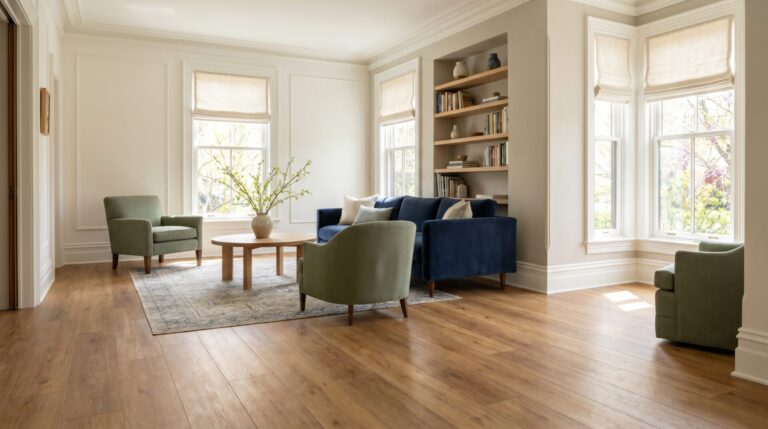
Few flooring decisions carry as much weight as hardwood. It shapes how your home looks, how it feels underfoot, and how it holds up over decades. For homeowners in Madison, WI, hardwood flooring also has to handle something many national guides skip entirely: a climate that swings from humid summers to bone-dry heated winters. That swing changes which products make sense, where they belong, and how they should be installed.
This guide walks through everything a Madison-area homeowner should know before committing to hardwood for a main floor or whole-home project. We’ll cover solid versus engineered construction, species and finish choices, where hardwood works (and where it really doesn’t), and the refinish-or-replace question that comes up constantly in older Madison neighborhoods.
The Short Version: Hardwood flooring remains the benchmark for main living areas in Madison homes. Solid hardwood offers the longest life and can be refinished three to five times. Engineered hardwood handles Wisconsin’s humidity swings better and works over concrete. Neither belongs in full bathrooms, and basements call for a different product entirely.
Key Takeaways
- Solid hardwood can be sanded and refinished three to five times, which means a single floor can last generations.
- Engineered hardwood is real wood on top, with a layered core that resists seasonal movement. It can often be refinished once or twice, though some products cannot be refinished at all.
- Wisconsin’s humid summers and dry heated winters make stability a bigger factor here than in milder climates.
- Hardwood belongs in living rooms, dining rooms, bedrooms, hallways, and most kitchens. It should never go in full bathrooms, and we generally steer it away from basements.
- In older Madison homes, refinishing original hardwood is often smarter than replacing it.
- Professional installers check subfloor condition and moisture, acclimate the wood, and leave hidden expansion gaps. Skipping those steps is where most hardwood problems start.
Why Hardwood Flooring Still Sets the Standard
Hardwood flooring has outlasted every trend for a simple reason: nothing else ages quite like it. A quality wood floor develops character over time instead of simply wearing out. Scratches and dents become part of the patina, and when the surface finally looks tired, refinishing brings it back.
That long lifespan changes the math on value. Many flooring products are replaced on a 10 to 20 year cycle. A well-maintained solid hardwood floor can stay in service far longer, which is why it consistently ranks among the longest-lasting flooring options for Wisconsin homes.
There’s also the resale conversation. Real wood remains one of the most requested features among Madison-area buyers, especially for main living levels and open floor plans. It reads as permanent in a way that printed surfaces don’t.
Solid vs. Engineered: Two Ways to Get Real Wood
Both options give you a genuine hardwood surface. The difference is everything underneath it.
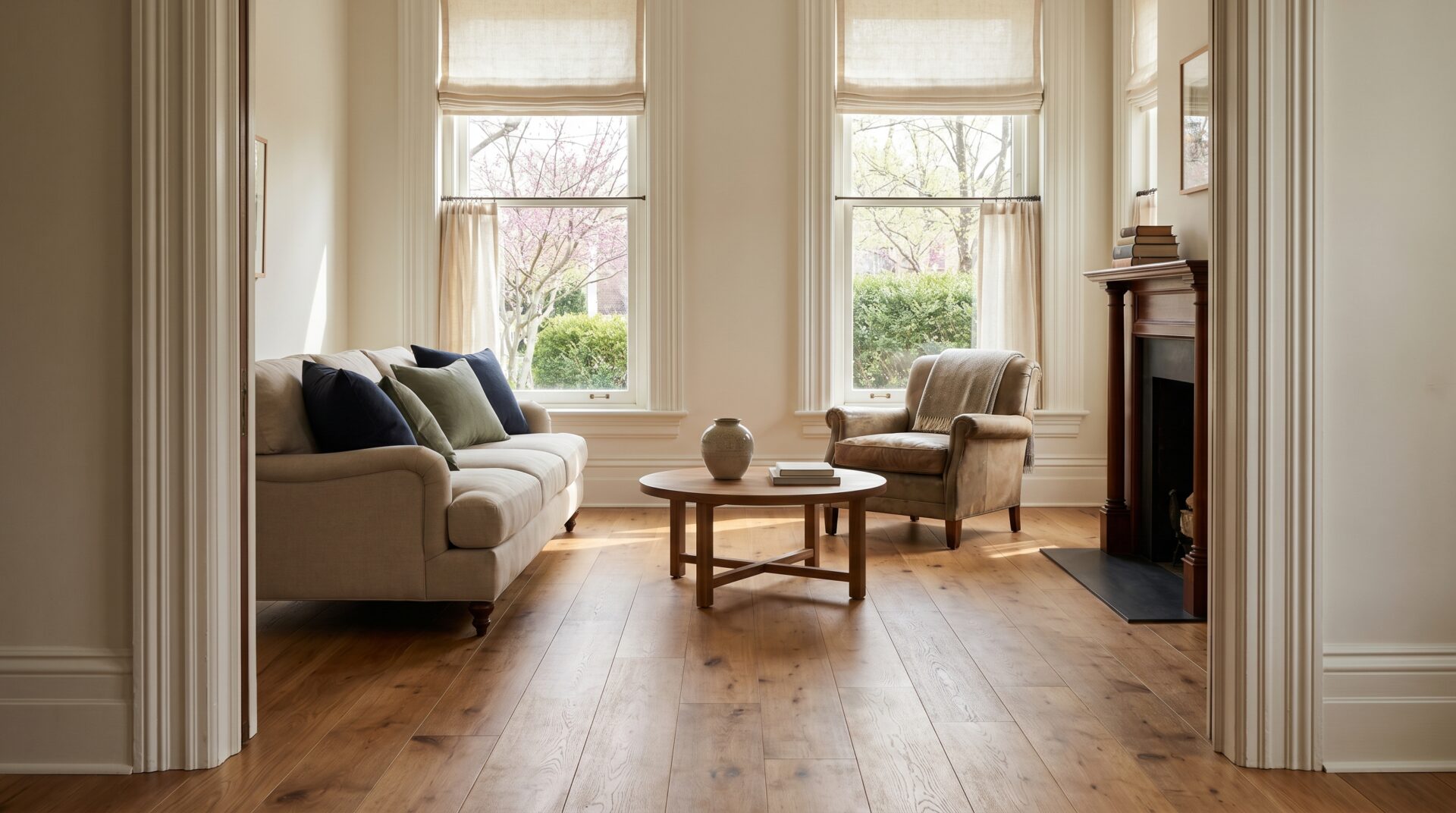
Solid hardwood is exactly what it sounds like: one thick piece of wood, top to bottom. Because there’s so much material, it can be sanded and refinished three to five times over its life. That’s the floor you hand down to the next owner. The trade-off is movement. Solid wood expands and contracts noticeably as humidity changes, and it must be nailed to a wood subfloor, which rules out concrete slabs.
Engineered hardwood puts a layer of real wood over a plywood or high-density core built in cross-directional layers. Those layers pull against each other, so the plank stays flatter and more stable when humidity shifts. Engineered floors can often be refinished, typically once or twice depending on the thickness of the top layer, though some thinner products cannot be refinished at all. That’s the single most important spec to ask about before you buy.
Here’s the counterintuitive part most homeowners don’t expect: the premium choice isn’t automatically solid wood. In a home with a concrete slab, in-floor radiant heat, or wide temperature and humidity swings, a high-quality engineered plank with a thick wear layer is often the smarter long-term floor, not the compromise.
Choosing Species, Width, and Finish
Once you’ve settled on construction, three decisions shape how the floor actually looks and lives.
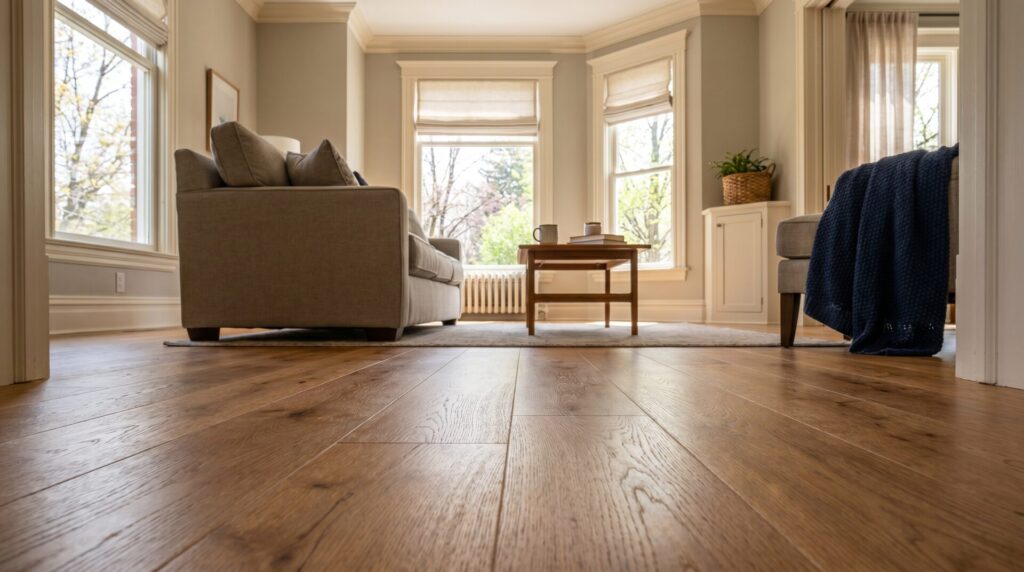
Species comes first. Oak dominates Wisconsin homes for good reason: it’s hard, its grain hides everyday wear, and it takes stain evenly. Maple offers a cleaner, more uniform look that suits modern spaces, though it shows scratches a bit more readily. Hickory is the workhorse for busy households with dogs and kids, thanks to its hardness and varied grain. Walnut brings deep, rich color for a luxury feel but is softer, so it’s best in lower-traffic rooms.
Width is next. Narrow strips (around two to three inches) suit traditional and historic homes. Wide planks of five inches and up feel current and make rooms read larger. One trade note worth knowing: the wider the plank, the more visible seasonal movement becomes, because each board shrinks and swells as one wide piece. In our climate, wide-plank projects favor engineered construction for exactly that reason.
Finish ties it together. Site-finished floors are sanded and sealed in your home for a smooth, custom look with no pre-made edges. Factory-finished planks arrive cured and ready to walk on, with extremely durable surfaces. Sheen matters too: matte and low-gloss finishes hide dust, pet hair, and small scratches far better than glossy ones, which is why they’ve become the default in busy Madison households.
Wisconsin’s Climate and Your Wood Floors
Madison summers are humid. Madison winters are dry, and forced-air heating dries homes out even further. Wood responds to both. Boards absorb moisture and expand in July, then release moisture and shrink in January. Small, even gaps between boards in midwinter are normal behavior, not a defect.
Problems start when the swings get extreme or the floor wasn’t installed to accommodate them. Excess summer moisture can cause cupping, where board edges rise. Severe winter dryness can open wide gaps or crack boards. This is why engineered hardwood has become so popular here: its layered core simply moves less than solid wood through the same seasonal cycle.
You can help either floor live a longer life by managing indoor humidity. Running a humidifier in winter and dehumidifying or air conditioning in summer keeps wood in its comfort zone. Homes in Waunakee and other newer developments often have this handled through modern HVAC systems, while older homes may need a standalone solution.
If you’re weighing wood against other options for a busy household, our comparison of hardwood versus LVP for Madison homes breaks down where each one wins.
Where Hardwood Belongs (and Where It Doesn’t)
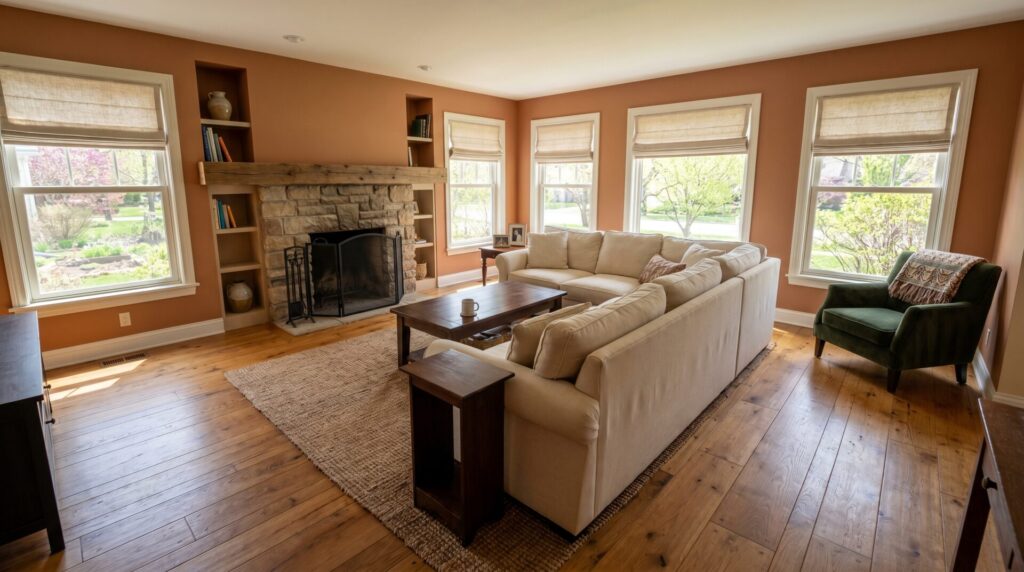
Hardwood is at its best in main living areas: living rooms, dining rooms, family rooms, hallways, and bedrooms. It also performs well in most kitchens, provided spills get wiped up promptly and the finish is maintained. Running one wood floor through an open main level is one of the strongest design moves available, and it’s a look we install constantly in Middleton’s newer open-concept homes.
Full bathrooms are a hard no. Daily steam, standing water, and splash zones will eventually find their way into seams and ruin wood, no matter the finish. Tile or luxury vinyl is the right call there.
Basements are generally off the list too. Below-grade spaces in the Madison area carry moisture through concrete year-round, and solid hardwood should never go below grade. Some engineered products are rated for below-grade installation, but in most basements we’d point you toward products built for that environment instead.
Mudrooms and entryways are judgment calls. Wisconsin winters mean salt, sand, and slush from November through April, and that grit is hard on any wood finish. Many homeowners run hardwood up to the entry, then switch to tile right where the boots land.
Not sure how your floor plan maps to all this? Reach out for a consultation and we’ll walk the space with you, no pressure and no obligation.
Refinish or Replace? A Question for Older Madison Homes
Madison’s older neighborhoods are full of hidden hardwood. Homes in Maple Bluff and Shorewood Hills from the early and mid 1900s often have original oak or maple under decades of carpet, and those floors are frequently worth saving. Old-growth wood of that era is denser than much of what’s milled today.
Refinishing makes sense when boards are structurally sound and the wear is cosmetic: surface scratches, dullness, finish wear, or dated stain color. A full sand and refinish makes a 90-year-old floor look new while keeping the character that makes these houses special.
Replacement becomes the better path when there’s deep water damage, widespread pet staining that has soaked into the wood, severe cupping or buckling, or boards that have already been sanded down to the nail heads. A floor only has so much wood above the tongue and groove, and once it’s gone, it’s gone.
The honest answer often comes down to an inspection. We’ve seen floors that looked hopeless clean up beautifully, and floors that looked fine but had too little material left for another sanding. Before assuming either way, have a professional take a look at your hardwood options, including whether what’s under your carpet deserves a second life.
What Pros Check Before a Hardwood Flooring Installation
Most hardwood failures trace back to installation day, not the product. Here’s what a professional crew verifies that homeowners rarely see.
Subfloor condition comes first. The crew checks that the subfloor is flat, structurally sound, and dry, using moisture meters on both the subfloor and the new wood. The two readings need to be close. Install dry wood over a damp subfloor and the boards will cup within months.
Acclimation is next. Hardwood needs several days inside your home, at normal living temperature and humidity, before installation. The wood adjusts to your house’s conditions so it isn’t installed at one moisture level and then forced to change immediately after.
Expansion gaps are the detail nobody notices and everybody needs. Pros leave a deliberate gap around the room’s perimeter, hidden under baseboard and shoe molding, so the floor has room to expand in humid months. A floor installed tight to the walls has nowhere to go, and the pressure shows up as buckling in the middle of the room.
Timing matters too. Winter installations work fine in the Madison area, but only with the heat running and proper acclimation time built into the schedule. A good installer plans for that rather than rushing the wood in from a cold truck.
Hardwood Flooring FAQs for Madison Homeowners
Is engineered hardwood as good as solid hardwood?
For many Madison homes, yes, and sometimes it’s the better fit. Engineered hardwood gives you a real wood surface with a layered core that handles Wisconsin’s humidity swings more gracefully than solid wood. Solid hardwood wins on total lifespan because it can be refinished three to five times, while engineered floors can often be refinished only once or twice, and some not at all. The right choice depends on your subfloor, your rooms, and how long you plan to stay.
How many times can hardwood floors be refinished?
Solid hardwood can typically be sanded and refinished three to five times over its life, depending on plank thickness and how aggressive each sanding is. Engineered hardwood depends entirely on the thickness of its top wood layer: thicker wear layers allow one or two refinishes, while thin ones can only be lightly buffed and recoated. If refinishing matters to you, ask about wear layer thickness before you buy.
Should I refinish or replace my old hardwood floors?
Refinish when the damage is cosmetic: scratches, dull finish, or an outdated stain color. Replace when there’s deep water damage, soaked-in pet stains, severe cupping, or so little wood left that another sanding would expose nails. Original hardwood in older Madison neighborhoods is often dense, high-quality material worth saving, so it’s worth an inspection before you commit either way.
Can you put hardwood flooring in a bathroom or basement?
We don’t recommend hardwood for full bathrooms under any circumstances, since daily moisture will eventually damage the wood. Basements are also a poor fit for solid hardwood because concrete carries ground moisture year-round. Certain engineered products are rated for below-grade use, but for most Madison basements, products designed for moisture are the safer long-term choice.
Why do my hardwood floors have gaps in the winter?
Wood releases moisture and shrinks when indoor air gets dry, and Wisconsin winters with forced-air heat create very dry homes. Small, even gaps between boards in January that close back up by summer are normal seasonal movement, not an installation failure. Running a humidifier through the heating season keeps the movement, and the gaps, to a minimum.
How much does hardwood flooring cost in Madison?
It varies more than any single number suggests. The main drivers are the product tier (entry-level through luxury), solid versus engineered construction, species and plank width, the condition of your subfloor, and the complexity of the installation. Refinishing an existing floor sits in a different bracket than installing new. A consultation with exact measurements is the only way to get a real answer for your home.
Bringing It Home
Hardwood rewards good decisions made upfront. Choose solid or engineered based on your home’s structure and humidity, pick a species and finish that fit how you actually live, keep it out of the wet rooms, and insist on an installation that respects subfloor moisture, acclimation, and expansion. Do that, and you get a floor that outlasts trends and quite possibly outlasts your mortgage.
If you’re starting to explore hardwood for your Madison home, we’re happy to help you compare options side by side. When you’re ready to look at real samples, schedule a free consultation and we’ll bring the Design, Measure, Install process to your project. Covering Every Detail, from the first sample to the final board.