- Blog
Bathroom Flooring for Madison Homes: A Buyer’s Guide
June 30, 2026
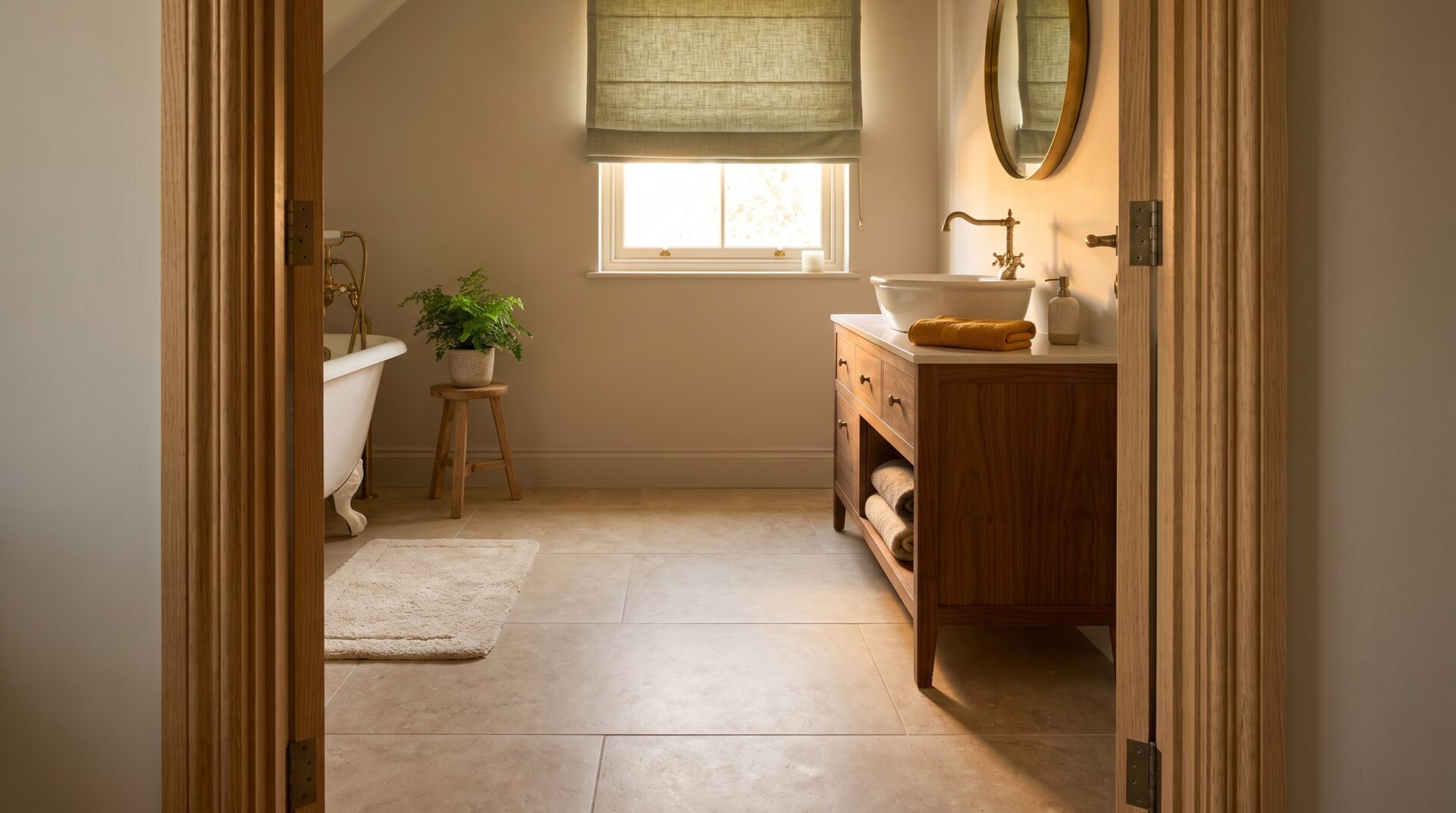
A bathroom floor works harder than almost any other surface in your home. Steam from the morning shower, splashes from the tub, wet feet, dropped towels, and in Wisconsin, the occasional draft of January air under the door. If you’re planning a remodel in Madison, WI, choosing the right bathroom flooring is the decision that determines whether the room still looks great in fifteen years or needs attention in five.
This guide is for homeowners renovating a bathroom, finishing a basement bath, or planning a new build anywhere in the Madison area. We’ll walk through the materials that work, the ones to skip, and the decision factors that matter most in our climate.
The Short Version: Luxury vinyl and porcelain tile are the two best bathroom flooring choices for most Madison homes. Both stand up to daily moisture, clean easily, and look better than ever. Tile wins on longevity and heated-floor comfort. Luxury vinyl wins on warmth underfoot, softer feel, and faster installation.
Key Takeaways
- Porcelain tile and luxury vinyl are the strongest all-around performers in full bathrooms.
- Waterproof and water-resistant are not the same thing, and the difference matters most in bathrooms with tubs and showers.
- Cold tile is a real concern in Wisconsin winters, but radiant heat turns it into the warmest floor in the house.
- Laminate belongs only in half baths, if anywhere near a bathroom at all.
- Subfloor condition affects bathroom floors more than almost any other room, so a professional assessment pays off.
The Best Bathroom Flooring Options for Madison Homes
Let’s start with the materials we recommend most often, and a couple we steer clients away from.
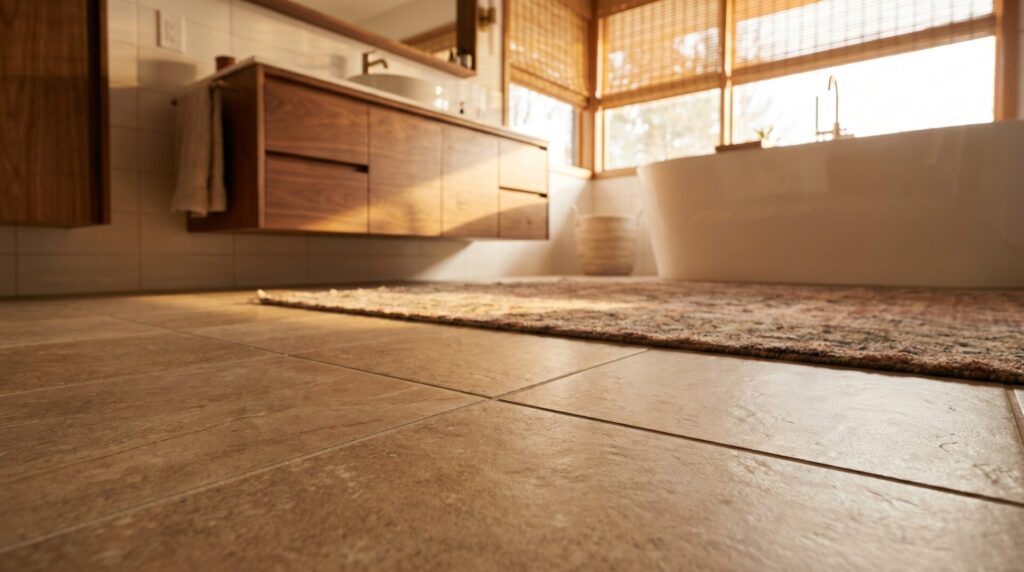
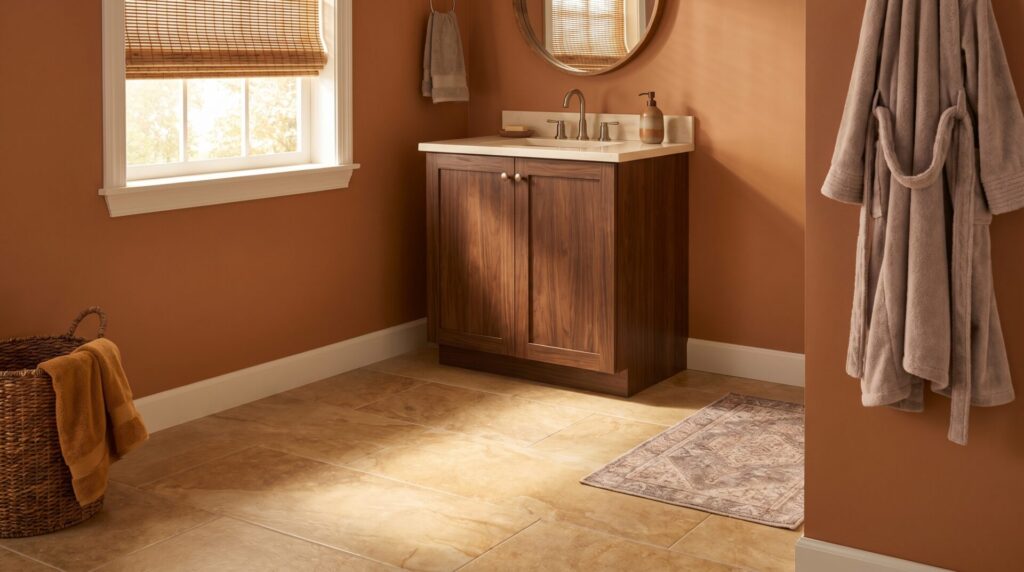
Porcelain and ceramic tile. Tile remains the classic bathroom choice for good reason. It’s fully waterproof, nearly impossible to stain, and lasts for decades when installed correctly. Porcelain is denser and more water-resistant than standard ceramic, which makes it the stronger pick for full bathrooms. Tile also offers the widest design range of any bathroom material, from large-format planks that mimic hardwood to classic hex and penny patterns that suit the historic homes of Maple Bluff. Browse the possibilities on our tile page.
Luxury vinyl plank and tile. Modern luxury vinyl has earned its place in the bathroom. Quality LVP and LVT are waterproof through their core, warmer and softer underfoot than tile, and quieter in busy households. The realism of today’s wood and stone looks surprises almost everyone who hasn’t shopped flooring in the last decade. For families with kids splashing through bath time, vinyl’s forgiving surface is a genuine everyday advantage. See what’s available on our vinyl page.
Sheet vinyl. Sheet vinyl gets less attention than its luxury plank cousins, but it has one quiet superpower: almost no seams. Fewer seams mean fewer places for water to find its way down. In a hardworking kids’ bath or a rental property, it’s a practical, presentable choice.
Laminate. Modern water-resistant laminate has come a long way, but a full bathroom is still the hardest test in the house. Standing water at the seams will eventually find the core. We’re comfortable recommending laminate for a half bath, where there’s no tub or shower, but for full bathrooms we point clients toward vinyl or tile.
What to skip. Solid hardwood and carpet. Hardwood expands and contracts with the humidity swings every Wisconsin home experiences, and a bathroom multiplies that stress daily. Carpet in the bathroom holds moisture against the subfloor, which is exactly what you don’t want.
If you’re weighing the two front-runners head to head, our guide to tile vs vinyl flooring for kitchens and bathrooms breaks that comparison down in detail.
How to Choose Bathroom Flooring: Five Decision Factors
Waterproof vs. water-resistant. This is the single most important distinction in bathroom flooring. Waterproof materials (porcelain tile, quality luxury vinyl, sheet vinyl) can sit under standing water without damage. Water-resistant materials tolerate splashes and humidity but fail under prolonged exposure. Full bathrooms demand waterproof. Half baths give you more latitude.
Slip resistance. Glossy surfaces and wet feet are a poor combination. Look for tile with a textured or matte finish, or smaller tiles where the extra grout lines add grip. Most luxury vinyl carries a low-sheen texture that performs well when wet. This matters even more in households with young kids or anyone thinking ahead to staying in their home long-term.
Warmth and comfort. Here’s something that surprises many of our Madison clients: tile’s biggest winter weakness is also its hidden strength. Tile feels cold because it conducts heat away from your feet quickly. Pair it with in-floor radiant heat and that same conductivity works in reverse, making tile the warmest, most comfortable floor in the entire house on a February morning. Vinyl can’t match that, though it never feels as icy as bare tile either.
Maintenance. Tile itself is nearly maintenance-free, but grout needs periodic sealing to stay bright and water-tight. Luxury vinyl asks almost nothing of you beyond regular cleaning. If low upkeep tops your list, vinyl has the edge.
Durability and lifespan. Porcelain tile, properly installed, can outlast the rest of the bathroom. Luxury vinyl performs beautifully for many years but will eventually show wear in heavy-use baths. Think about how long you plan to stay in the home and whether this is a forever bathroom or a refresh.
Matching the Floor to the Bathroom
Not every bathroom asks the same questions, and the right answer shifts with the room.
- Primary and full family baths: This is where waterproof performance and comfort both matter most. Porcelain tile with radiant heat is the premium play. Luxury vinyl is the smart, comfortable alternative.
- Half baths and powder rooms: No shower means more freedom. Laminate, vinyl, and tile all work, and this is a great room to take a design risk with a bold pattern.
- Basement bathrooms: Common in newer Sun Prairie and Middleton homes, and the trickiest case. Below-grade concrete can wick moisture upward year-round. Tile and luxury vinyl handle it well, but the subfloor and moisture situation should be assessed before anything is installed.
- Small bathrooms: Larger tiles with fewer grout lines can actually make a compact bathroom feel bigger, and a consistent floor color expands the space visually. Light-colored luxury vinyl achieves the same effect with less installation complexity.
What Drives the Investment
Bathroom flooring projects vary more than most rooms, and square footage is the smallest part of the story. The bigger factors are the condition of the subfloor, the complexity of the layout, and the performance tier of the product you choose.
Here’s what professionals look for that homeowners rarely think to check: floor height and stiffness. Switching from sheet vinyl to porcelain tile raises the finished floor, which can affect the toilet flange, the door swing, and the transition to the hallway. Tile also needs a stiff, flat subfloor; too much flex and grout lines crack within a year or two. None of this is a problem when it’s planned for. All of it is a problem when it’s discovered halfway through.
Entry-level vinyl, mid-range porcelain, and luxury large-format or natural stone each deliver a different balance of longevity, design, and comfort. The right answer depends on how long you’ll own the home and how hard the bathroom works. If you’d like help weighing those trade-offs, talk through your options with us before you commit.
Why Professional Guidance Matters in Bathrooms
Bathrooms are the least forgiving room in the house for flooring mistakes. Waterproofing details, subfloor prep, transitions, and fixture clearances all have to be right, because moisture finds every shortcut eventually. The most common bathroom flooring failure we see in Madison-area homes isn’t water from above. It’s moisture working up from below in basement baths, or through unsealed grout and seams over years.
A professional consultation catches those risks before they cost you anything. It also means the floor you fall in love with in a showroom is actually the right floor for your specific room.
Bathroom Flooring FAQs
What is the best flooring for a bathroom?
Porcelain tile and luxury vinyl are the best bathroom flooring options for most homes. Porcelain offers unmatched durability and design range. Luxury vinyl delivers waterproof performance with a warmer, softer feel underfoot. Both handle the daily moisture of a full bathroom without trouble.
Can you put laminate flooring in a bathroom?
We recommend laminate only for half baths without a tub or shower. Even water-resistant laminate is vulnerable at the seams under standing water, which full bathrooms produce regularly. If you love the laminate look for a full bath, luxury vinyl achieves it with true waterproof performance.
What bathroom flooring is not slippery when wet?
Textured or matte-finish porcelain tile, smaller tiles with more grout lines, and low-sheen luxury vinyl all offer strong slip resistance. Avoid high-gloss finishes in any bathroom where the floor regularly gets wet.
How much does it cost to replace a bathroom floor?
It depends less on the room’s size than on the subfloor’s condition, the material tier, and the installation complexity. A straightforward vinyl install sits at the entry level, while large-format tile with radiant heat and subfloor work is a premium project. A professional measure visit gives you a real number for your specific bathroom.
Are heated bathroom floors worth it in Wisconsin?
For many Madison homeowners, yes. Radiant heat turns tile from the coldest floor in the house into the warmest, and the bathroom is where bare feet meet the floor every single morning. It’s most practical to add during a full remodel, when the floor is already coming up.
Is luxury vinyl plank waterproof enough for a full bathroom?
Quality luxury vinyl plank is waterproof through its core and performs very well in full bathrooms. The key is proper installation, with sealed perimeters and correct transitions, so water can’t slip beneath the planks at the edges.
How Harmony Flooring Works
- Design: We help you find the right bathroom floor for your space, your household, and your home’s style.
- Measure: We come to you. A professional measure visit checks the subfloor, the moisture situation, and the details that make or break a bathroom floor.
- Install: Our team handles everything from tear-out to final transition strips, start to finish.
Your bathroom floor should be the one surface in the house you never worry about. Choose a waterproof material that fits how the room actually gets used, get the subfloor right, and the rest is just picking the look you love. That’s Covering Every Detail, and it’s how we approach every project.
Ready to see what fits your bathroom? Schedule your free consultation and let’s find the floor that handles everything your mornings throw at it.