- Flooring
Best Laminate for Basements in Wisconsin: What to Look For (And When to Skip It)
March 19, 2026
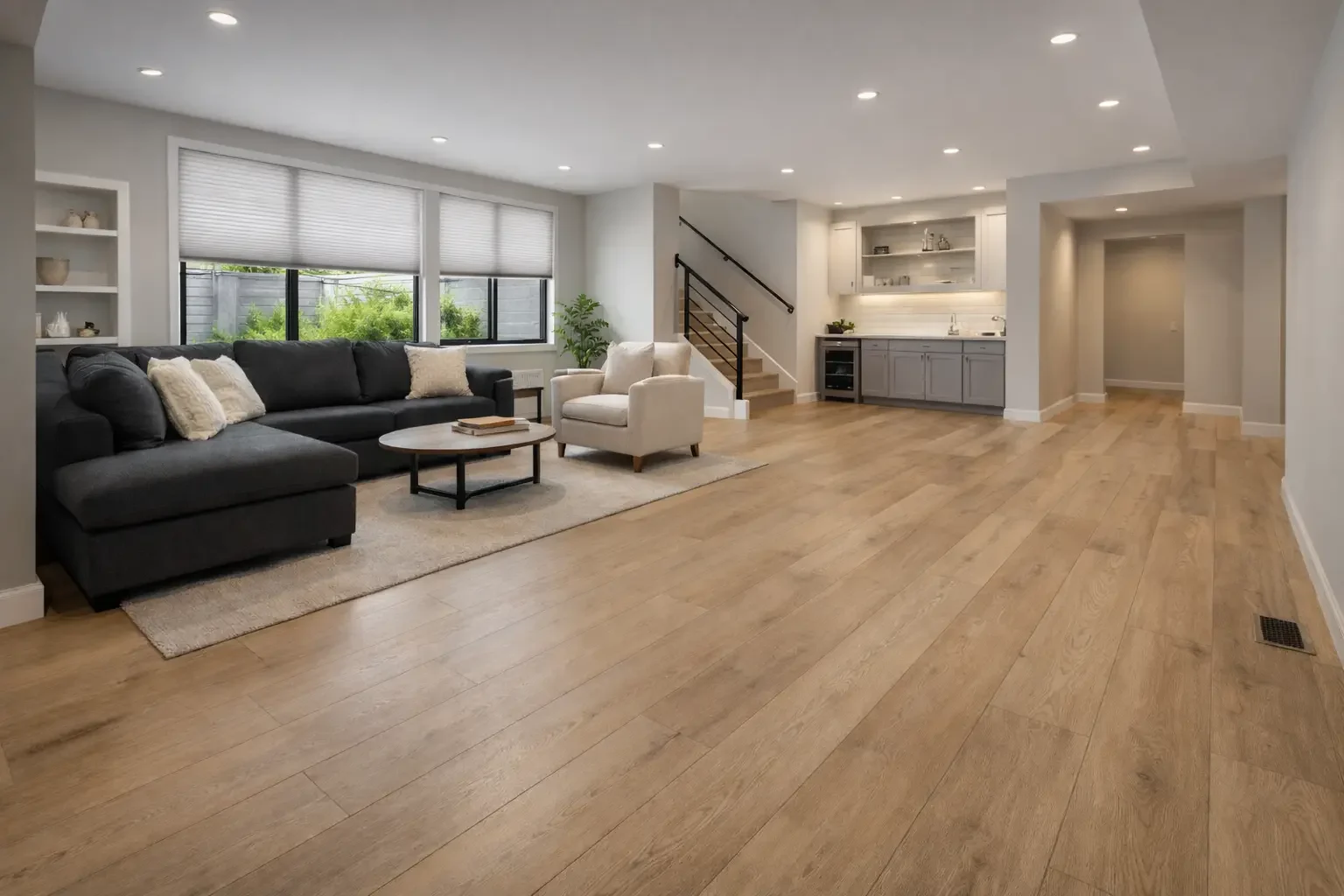
The best laminate for a basement is a premium, moisture-resistant laminate that’s approved for below-grade use and paired with the right vapor barrier and prep. But here’s the honest truth: if your basement has a history of dampness, puddles, or seasonal moisture, laminate is usually a gamble. In many Madison-area basements, a waterproof vinyl option is the more reliable long-term choice.
Key Takeaways
- Basements aren’t “just another room.” Concrete can release moisture even when it looks dry.
- If you choose laminate, look for below-grade approval, water-resistant construction, and tight locking edges.
- The underlayment and vapor barrier matter as much as the plank you pick.
- Avoid laminate in basements with leaks, musty smells, past flooding, or frequent wet cleaning.
- Want the wood look with fewer worries? Consider waterproof vinyl in basement zones.
Why basements are tough on laminate
Laminate is a wood-based product at its core, even when the surface layer is tough and scratch resistant. In a basement, the main threat isn’t foot traffic. It’s moisture vapor moving up through concrete, humidity swings from season to season, and the occasional surprise water event.
Around Madison, Middleton, and Sun Prairie, we see the same pattern every winter and spring: tracked-in moisture, thaw cycles, and higher indoor humidity can stress the wrong flooring system. A laminate floor that’s perfect upstairs can struggle below grade if the conditions aren’t right.
When laminate can work in a basement (and when it shouldn’t)
Laminate can be a solid choice when:
- The basement stays consistently dry and doesn’t smell musty
- You run a dehumidifier in humid months and keep the space conditioned year-round
- There’s no history of seepage at the walls, corners, or floor cracks
- You want a warmer, more wood-like feel than some hard surfaces
Laminate is usually the wrong call when:
- You’ve had water on the floor before, even once
- You see damp spots after heavy rain or snowmelt
- There’s a floor drain, sump area, or laundry zone that occasionally splashes
- You want a “hose-it-down” cleaning routine (laminate hates that)
If your basement falls in the second list, it’s not about picking a “better” laminate. It’s about choosing a different material that matches the reality of the space.
What “best laminate for basements” really means
A lot of laminate is marketed with moisture-friendly language, but basements demand specifics. Here’s the checklist we walk through with customers in Fitchburg, Verona, and the Madison area.
- Below-grade approval
Start here. The product needs to be approved for basement installations. If it’s not, that’s a hard stop, no matter how nice it looks. - Water-resistant construction (not just a tough surface)
You want a laminate built to slow down moisture at the seams and edges. Look for features like treated cores, sealed edges, and locking systems designed to resist seepage between planks. - A strong, stable core
Basements often have minor slab variations. A sturdier core helps the floor feel solid underfoot and reduces “hollow” sound. It also tends to handle everyday life better over time. - Tight locking system and smart beveling
A precise click-lock matters in basements because seam gaps are where moisture finds its way in. For bevels, think practical: subtle details that clean easily. Deep grooves can collect grime and make damp cleanup harder. - A finish that matches how you’ll use the space
- A basement family room, home office, or workout space needs a finish that resists scuffs and cleans easily. If you’ve got a dog who treats the basement like a racetrack, prioritize scratch resistance and a finish that won’t show every mark.
If you’re browsing laminate options, our laminate page is a good starting point before you narrow down basement-suitable picks: https://www.harmonyflooring.com/laminate/
Basement prep matters more than the product
The biggest basement flooring failures we see aren’t because someone chose the “wrong color.” They’re because the moisture story wasn’t addressed first.
Before you commit to laminate, make sure you’re comfortable with these basics:
- Bulk water is handled (gutters, grading, downspouts, and any known seepage points)
- Humidity is controlled (especially in summer)
- The slab is evaluated so the flooring system matches the conditions
If you’re still troubleshooting moisture, this basement moisture guide is worth reading: https://www.harmonyflooring.com/how-to-prevent-moisture-damage-in-your-basement-floors/
Underlayment and vapor barrier: the basement deal-breakers
In basements, your laminate isn’t just “floating over concrete.” It’s floating over a system. The right combination helps protect the floor and improves comfort.
A few practical guardrails:
- Use the vapor barrier approach that the laminate manufacturer allows for below-grade installs.
- Don’t double up padding unless it’s specifically approved. Too much cushion can stress the locking joints.
- Choose an underlayment that supports the feel you want. Some improve sound and comfort, others focus on moisture management.
- Keep transitions clean and protected. Busy doorways and stair landings are where edges get damaged first.
We always recommend confirming the exact product requirements before installation, because basement approvals and underlayment rules vary by line.
Design tips that make basement laminate look more expensive
If you’re investing in a finished basement, the floor should feel intentional, not like an afterthought.
- Choose a tone that works with low light
Many basements have fewer windows. Medium tones often look rich without making the room feel smaller, and they’re forgiving with dust. - Match the visual to the vibe of the house
If your main level is warm and classic, a natural oak look usually feels seamless. If your style is modern, cleaner graining and a calmer color palette can look very high-end. - Plan the transitions early
- Basements often include stairs, utility rooms, and storage areas. Clean transitions make the whole project look more “built-in” and less like separate zones.
How to keep basement laminate looking great
Laminate does well with consistent, simple care. Basements just require a little more discipline.
- Keep humidity steady with a dehumidifier in sticky months
- Put walk-off mats at basement entries and stair landings
- Clean grit regularly (it’s the #1 cause of dullness over time)
- Use damp, not wet, cleaning methods and wipe spills quickly
- Avoid steam cleaning on laminate
Want the laminate look with fewer basement risks? Consider vinyl
If you love the wood look but don’t love basement moisture uncertainty, waterproof vinyl is often the peace-of-mind choice. It handles the real-world stuff better: snowmelt, spills, damp-season humidity, and the occasional “we didn’t notice the leak right away” moment.
You can compare options here: https://www.harmonyflooring.com/vinyl/
FAQ
Q: Can laminate be installed directly over a concrete basement floor?
A: Sometimes, but it depends on the product’s below-grade approval and the right vapor barrier and underlayment system. Concrete can release moisture even when it looks dry, so the system matters as much as the laminate.
Q: Is “waterproof laminate” actually waterproof in a basement?
A: Laminate can be highly water resistant, but it’s not the same as a waterproof vinyl product. In a basement, the difference shows up when moisture sits at seams or when humidity stays high for long periods.
Q: Do we need a vapor barrier under laminate in a basement?
A: In most basement situations, some form of vapor protection is part of the plan, but the exact materials and method should match the laminate’s installation requirements.
Q: What happens if the basement floods?
A: Laminate is rarely the best performer after a flood or standing water event. If flooding is even a remote possibility, it’s usually smarter to choose a truly waterproof surface.
Q: Is laminate warmer than vinyl in a basement?
A: Laminate can feel more wood-like and comfortable underfoot, especially with the right underlayment. That said, many vinyl options are also comfortable, and they’re typically more forgiving with moisture.
Q: How do we know if our basement is “dry enough” for laminate?
A: If you’ve seen damp corners, musty smells, or moisture after storms or snowmelt, that’s a warning sign. A quick evaluation of site conditions and product requirements will tell you whether laminate is a safe bet.
Closing thoughts
The “best laminate for basements” isn’t one magic product. It’s the right laminate, installed the right way, in a basement that’s truly moisture-managed. When those pieces line up, laminate can look beautiful and feel great for a lower level living space.
If you’re deciding between basement-friendly laminate and waterproof alternatives, we’ll help you compare them side by side and build a plan that holds up long-term, Covering Every Detail. Schedule a consultation with Harmony Flooring here: https://www.harmonyflooring.com/contact/