- Flooring
How to Choose Flooring for High-Traffic Businesses
March 12, 2026
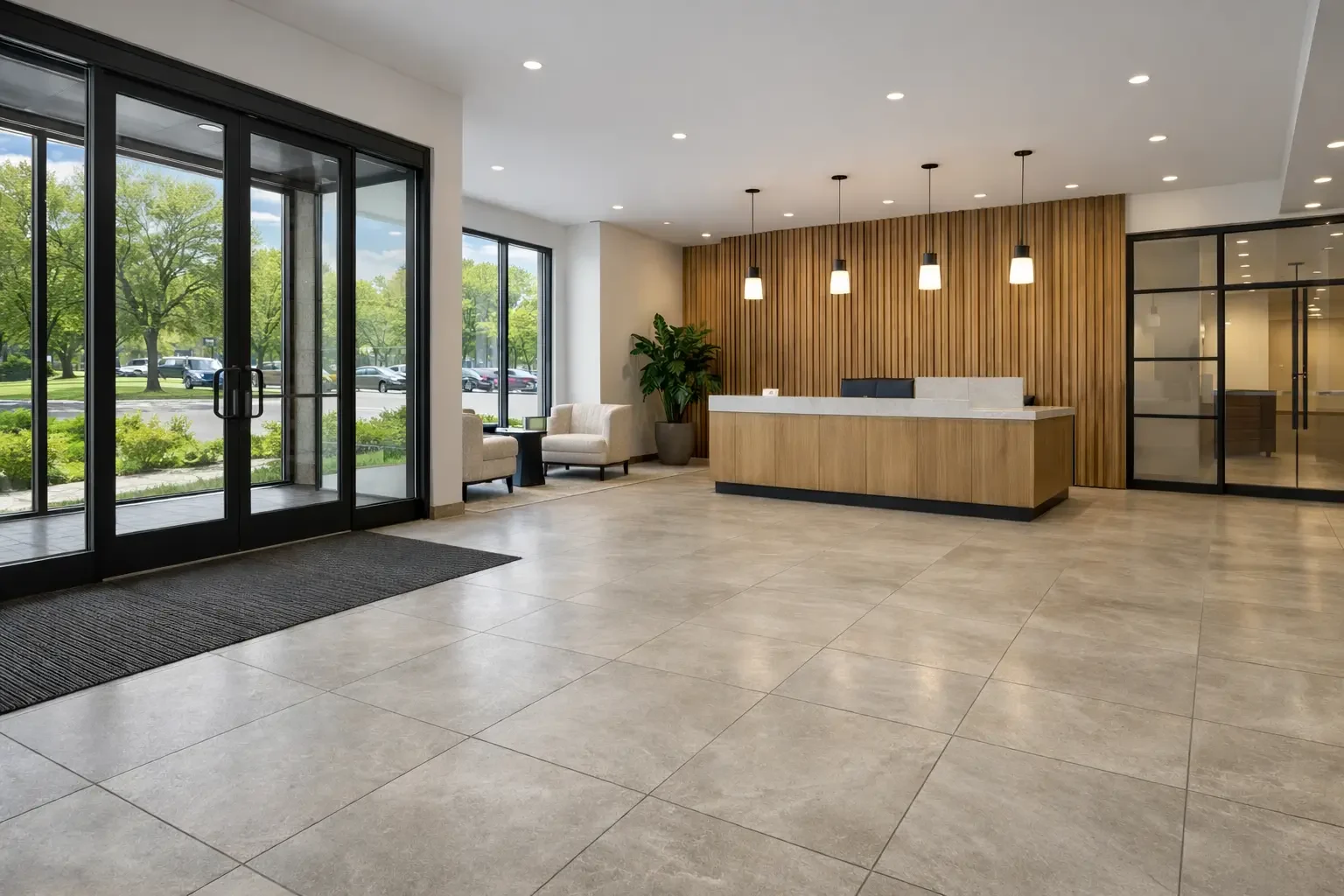
Picking flooring for a high-traffic business comes down to three things: what’s actually happening on that floor (foot traffic, carts, spills), how you’ll clean it, and how much downtime you can afford. The “best” option is rarely one material for the whole space. Most high-performing commercial floors are a smart mix of surfaces, chosen zone by zone. See our commercial flooring page.
If you’re planning a refresh in Madison or nearby communities like Middleton, Sun Prairie, or Fitchburg, this checklist will help you choose flooring that looks sharp on day one and still performs when the rush hits.
Key Takeaways
- Map your traffic zones first, then choose flooring for each zone’s wear, moisture, and load.
- Prioritize cleanability and repairability in high-traffic areas, not just looks.
- Winter salt and tracked-in moisture in Wisconsin change what “durable” really means at entries.
- Plan installation around business hours, subfloor prep, and realistic cure times.
- A great commercial floor is a system: surface + subfloor prep + transitions + maintenance plan.
Step 1: Start with a traffic map, not a sample board
Before you fall in love with a color, sketch your floorplan and mark:
- Primary paths (front door to counter, aisles, corridors)
- Waiting zones and checkout lines (constant pivoting and grit)
- Rolling traffic (chairs, carts, racks, wheelchairs)
- Wet zones (entries, break rooms, restrooms, back-of-house)
- Behind-the-counter and staff-only routes (more wear than most owners expect)
This “traffic map” usually reveals that one floor type won’t perform equally everywhere. Zoning lets you put the right material where it earns its keep, while keeping the overall design cohesive.
Step 2: Know what “high-traffic” wear actually looks like
High traffic isn’t just “a lot of feet.” It’s often one or more of these:
- Grit and micro-scratching from street shoes (especially winter sand and salt)
- Point loads (stiletto heels, chair legs, ladder feet, display racks)
- Rolling loads (office chairs and carts can stress seams and edges)
- Spills and chemicals (coffee, cleaning agents, sanitizer overspray, hair color, grease)
- Moisture and temperature swings (Wisconsin seasonal shifts can stress certain installs)
When you understand your top two wear drivers, your shortlist gets a lot clearer.
Step 3: Decide what matters most for your business
Every business has a different “must-have” list. Rank these before you shop:
- Durability: resistance to scratches, dents, and surface wear
- Cleanability: how quickly you can clean it, and how it handles frequent mopping
- Safety feel: traction underfoot, especially when damp
- Acoustics: how loud the space feels with customers, music, and phones
- Repair strategy: can you replace a section without redoing the whole floor?
- Design: brand vibe, lighting, and how the floor looks with daily use
- Downtime: what installation schedule is realistic for your hours
If you want a second set of eyes on your priorities, our commercial team can help you build a plan before you get deep into product shopping: https://www.harmonyflooring.com/commercial/
Step 4: Match flooring to zones (the short list that performs)
Here’s how we typically think about high-traffic commercial spaces.
Luxury Vinyl Tile or Plank (LVT/LVP)
Best for: retail, boutiques, offices, corridors, break rooms, many waiting areas
Why it works: resilient underfoot, easy to clean, and available in premium visuals that hold up to daily use
What to watch: choose commercial-rated options and confirm the product’s wear construction and maintenance expectations. The wrong finish or install method can show edge wear faster in heavy-traffic lanes.
Commercial Carpet Tile
Best for: offices, conference rooms, waiting areas, upper floors, spaces where noise control matters
Why it works: comfortable, quieter, and individual tiles can be replaced if you get a stain or a damaged area
What to watch: entryway placement is critical. Carpet tile can perform well, but only when you control grit and moisture at the door and stick to a realistic vacuum and spot-clean routine.
Tile (Porcelain or Ceramic)
Best for: entries, restrooms, break rooms, service counters, some retail and hospitality areas
Why it works: tough surface, great for frequent cleaning, and strong long-term wear when installed correctly
What to watch: tile is only as good as the prep and the details. Grout and transitions should be chosen with your cleaning routine in mind. Confirm slip feel and finish performance in the specific tile you’re considering.
Hardwood
Best for: boutique retail, certain hospitality spaces, executive areas where warmth and design lead the brief
Why it works: premium look and feel that elevates the space
What to watch: hardwood is a higher-touch floor in a commercial environment. It needs a realistic plan for grit control, finish protection, and periodic maintenance to stay looking sharp in high-traffic lanes.
Laminate
Best for: some dry, lower-risk commercial areas where you want the look and a tough wear surface
Why it works: strong scratch resistance in many products and a clean visual
What to watch: laminate is less forgiving when moisture is part of the daily picture. If your entry or cleaning routine includes lots of water, confirm the product’s limits and choose accordingly.
Epoxy or Resinous Systems (over concrete)
Best for: back-of-house, workshops, certain facilities, storage, utility corridors
Why it works: seamless, durable, and easy to wash down when properly specified
What to watch: surface prep and moisture conditions matter a lot. Not every slab is ready without the right evaluation and prep.
Step 5: Plan for Wisconsin winters at the front door
In Madison winters, the entry is the make-or-break zone. Salt, sand, and meltwater are basically sandpaper plus moisture. A few practical moves protect your investment:
- Use a multi-step mat strategy (outside + inside) to catch grit before it reaches the main floor
- Choose an entry material that tolerates moisture and frequent cleaning
- Expect a “traffic lane” and plan for it with color, texture, and a repair strategy
- Keep transitions tight and well-planned so edges don’t become the first failure point
If your entry stays wet for long stretches, steer toward surfaces and installs that don’t mind damp conditions and frequent mopping. Always confirm the exact product’s specs for wet maintenance and real-world use.
Step 6: Don’t ignore acoustics and comfort
A floor changes how a space feels, not just how it looks. Hard surfaces can make a busy space feel louder and more chaotic, especially in offices, clinics, and retail stores with open ceilings.
Carpet tile in the right zones can calm the room down and improve comfort for staff who stand all day.
If you prefer hard-surface looks everywhere, we can still improve comfort through smart product selection and underlayment choices where appropriate. The goal is a space that feels premium and works day to day.
Step 7: Installation planning is part of the flooring decision
High-traffic businesses can’t always “just close for a week.” When you’re choosing materials, ask how they affect scheduling:
- Can the space be done in phases (front half, then back half)?
- Will furniture, fixtures, or equipment need to move?
- What does the subfloor look like, and how much prep is realistic?
- How quickly can the floor handle rolling loads and cleaning after install?
A beautiful product won’t feel like a win if the timeline doesn’t fit your operations. When we plan commercial projects, we focus on minimizing disruption while still doing the prep work that protects the floor long term.
Step 8: Understand where value actually comes from
In commercial flooring, the long-term value isn’t just the surface material. It’s the whole system:
- Subfloor prep and moisture conditions
- The right installation method for your traffic type
- Transitions and edge protection in the busiest lanes
- A maintenance plan that matches your staff and cleaning schedule
- A repair plan (especially in entries and main pathways)
That’s why two floors that “look the same” in a sample can perform very differently in a real business.
If you want help narrowing options without guesswork, set up a consultation with Harmony Flooring. We’ll walk through your traffic map, review your priorities, and recommend a plan that fits your space and schedule: https://www.harmonyflooring.com/contact/
FAQ
Q: What’s the most durable flooring for a busy retail store?
A: For most retail, commercial-rated vinyl (LVT/LVP) is a strong go-to because it balances durability, easy cleaning, and design flexibility. Entries and restrooms may perform better with tile, depending on moisture and cleaning needs.
Q: Is carpet tile a bad idea for high-traffic areas?
A: Not at all. Carpet tile can be excellent in offices and waiting areas because it’s comfortable and repair-friendly. The key is keeping it out of constant wet traffic and having a plan for entry mats, vacuuming, and spot cleaning.
Q: What flooring works best with rolling office chairs?
A: You want a surface and installation that handle rolling loads without edge issues. Many commercial vinyl options perform well, and carpet tile can also work in office zones. Confirm the product’s intended use and maintenance requirements before you commit.
Q: How do we handle winter salt and tracked-in moisture?
A: Start with a serious entry mat strategy and choose an entry surface that tolerates frequent cleaning. Also plan your layout so the busiest “grit lane” is on the most resilient material, not the most delicate finish.
Q: Can we install new flooring without shutting down the whole business?
A: Often, yes. Many commercial projects can be phased or scheduled around off-hours, depending on the space and the flooring system. The best approach starts with a clear plan for prep work, cure times, and equipment moves.
Q: Should we use one flooring type throughout for a consistent look?
A: Consistency is great, but performance matters more. A mixed-material plan can still look seamless when transitions and color coordination are handled thoughtfully, and it usually holds up better over time.
Keep Reading
- Epoxy Flooring for Commercial Use: The Complete Guide for Wisconsin Facilities
- Best Flooring for Restaurants and Cafés in Wisconsin: Durable, Slip-Resistant, and Easy to Clean
- Commercial Flooring in Madison, WI: how we help businesses plan floors
Closing thoughts
High-traffic business flooring is a performance decision first and a design decision second. When you map traffic, choose materials by zone, and plan for Wisconsin weather and real cleaning routines, you get a floor that stays professional-looking and reliable for the long haul.
When you’re ready, Harmony Flooring is here to help you build the right plan for your business, from selection through installation, Covering Every Detail. Schedule a consultation here: https://www.harmonyflooring.com/contact/
Questions About Your Floors?
Call or text 608-221-5500Schedule a Free Consultation
Shop our floors: Hardwood · Vinyl · Carpet · Tile · Laminate
Showroom: 2125 S. Stoughton Rd, Madison, WI 53716