- Buying Guides
Prevent Flooring Fade From Sunlight: Practical Tips for Madison Homes
March 5, 2026
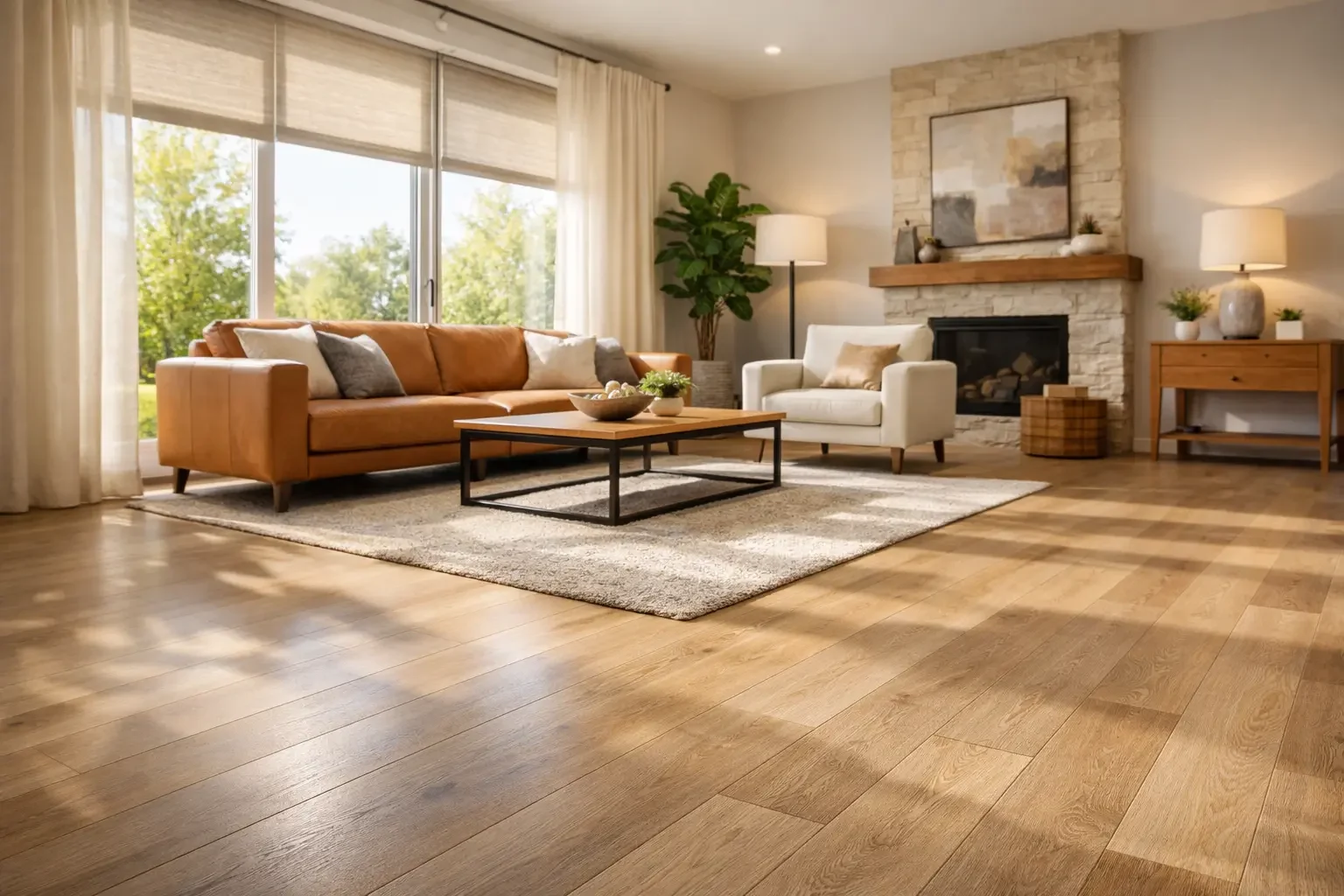
Sunlight fading is real, especially in Madison homes with big south- or west-facing windows. The most practical way to prevent it is to manage direct sun (shades or UV film), avoid “tan lines” (rotate rugs and furniture), and keep your floor’s protective surface in good shape. You won’t stop natural aging completely, but you can keep color change subtle and even so your floors still look intentional and high-end.
The Short Answer: To prevent fading on hardwood floors, cut direct sun with light-filtering shades, lined drapes or UV-blocking window film, then rotate rugs and shift furniture a few times a year so color changes evenly. Keep grit and winter salt off the finish, because a worn protective surface lets sunlight change the wood faster.
Key Takeaways
- Block or soften direct sun in the brightest windows, especially south and west exposures.
- Rotate rugs and move furniture a few times a year to prevent sharp color lines.
- Keep grit and winter salt off the surface so the finish stays protective longer.
- Choose fade-forgiving colors and higher-performance topcoats when you’re shopping for new floors.
- If fading is already noticeable, there are repair paths for wood, and replacement options for plank floors.
What “Sun Fading” Really Is (And Why It Shows Up in Patches)
When people say a floor “faded,” they’re usually seeing one of three things:
- Bleaching or lightening in areas that get direct sun.
- Darkening or ambering in the exposed areas (common with some woods and finishes).
- Uneven change where a rug, runner, or sofa protected one area while the rest of the floor aged.
Even if your windows have modern glass, sunlight still delivers energy that can shift color over time. And because sunlight hits the floor in specific rectangles and angles, you often notice it first as sharp outlines near patio doors, picture windows, or sunny dining rooms.
In Madison, this can surprise homeowners because it’s not just summer. Winter sun sits lower in the sky, and south-facing windows can blast the same spot on the floor for hours a day.
Which Flooring Types Fade the Most?
Every material behaves a little differently, but here’s the practical takeaway:
Hardwood and Engineered Hardwood
- Wood is natural, so some color change is normal.
- Darker stains and high-contrast looks can show change sooner because the shift is easier to spot.
- Engineered hardwood can perform beautifully in Wisconsin homes, but the finish and the amount of sun exposure still matter.
Luxury Vinyl Plank (LVP) and Laminate
- These are generally more fade-resistant than wood, but they’re not “fade-proof.”
- Direct sun can still cause gradual color shifts over time, and it can happen unevenly if only part of the room gets strong sun.
Carpet
- Many carpets hold color well, but intense light over years can still lighten certain areas, especially in sunrooms or rooms with wall-to-wall glass.
Tile and Stone
- Typically the most stable in sunlight, though grout and surface soils can make it look like there’s “fading” if one area stays cleaner than another.
If you’re in a bright home in Middleton, Sun Prairie, Verona, or Fitchburg with lots of glass, it’s worth planning for sunlight from the start.
Step 1: Control the Sun Without Living in the Dark
You don’t have to block all daylight to protect your floors. The goal is to cut the intensity of direct beams.
- Sheer shades or light-filtering blinds: These soften harsh rays while keeping the room bright.
- Lined drapery in the sunniest rooms: Great for west-facing windows that get strong afternoon sun.
- UV-blocking window film: This is one of the most effective options when you want to keep the view. Just make sure it’s appropriate for your glass type and your window manufacturer’s requirements.
If you love bright interiors, think of this as preserving the design you paid for. Sun control isn’t only about fading. It also reduces glare and helps rooms feel more comfortable.
Step 2: Stop “Tan Lines” Before They Start
Uneven fading is what makes floors look patchy. The fix is simple: change what’s covered and what’s exposed.
- Rotate area rugs and runners a few times a year. A quarter-turn can make a big difference.
- Reposition furniture slightly (even a few inches) so sunlight doesn’t hit the exact same border lines forever.
- Be careful with solid rubber-backed rugs in areas where tracked-in moisture is common. In Wisconsin, winter slush and humidity swings are real, and you don’t want to trap moisture against the floor. A breathable rug pad is usually a safer approach.
Quick habit that works: set reminders at daylight saving time. Spring and fall are perfect moments to rotate rugs and shift furniture.
Step 3: Keep the Protective Surface Working
Sunlight fades floors faster when the protective surface gets worn down. In Madison, the biggest finish-killers are often:
- Grit and sand that act like sandpaper under shoes.
- Winter salt that gets tracked in and sits on the surface.
- Over-wet cleaning or harsh products that dull or strip protection.
What to do instead:
- Use entry mats inside and outside the main doors during snow season.
- Dry dust mop or vacuum regularly in sunny rooms. Fine grit is the enemy.
- Clean with a floor-appropriate cleaner and a damp, not wet, method. If you’re not sure what’s safe for your finish, it’s better to keep it gentle and confirm product guidance.
Step 4: Plan for Sunlight When Choosing New Floors
If you’re selecting flooring for a bright living room, sunroom, or open-concept space, you can make choices that hide change better and keep the look consistent longer.
Choose Colors That Forgive Natural Change
- Mid-tones, natural looks, and lower-contrast visuals tend to age more gracefully.
- Very dark floors can be stunning, but they may show any change more clearly in high-sun zones.
Prioritize High-Performance Topcoats and Wear Layers
- On wood, the finish system plays a big role in how the floor ages visually.
- On LVP and laminate, the top layer is the first defense against daily wear, and it also helps with long-term appearance in bright rooms.
If you want help matching the “right look” to the “right light,” that’s exactly the kind of detail we walk through with homeowners in the showroom.
A Quick Madison Reality Check: Sunlight Plus Seasons
Madison homes face extremes: dry winter air, humid summers, and plenty of tracked-in moisture. That matters because seasonal stress can subtly impact finishes and seams over time, especially if the floor is also getting intense sun.
A few local-pro habits:
- Try to keep indoor conditions steady year-round. Big swings can show up as gaps or stress, and that can make aging look less uniform.
- In winter, be aggressive about removing salt and grit near entryways, even if the “sunny room” is across the house. That grit travels.
What If Your Floor Has Already Faded?
If you’re already seeing outlines from an old rug or a sunny rectangle near the patio door, don’t panic. The right solution depends on the material and how deep the change goes.
For Hardwood
- If the issue is mostly the top surface looking dull, a professional recoat (sometimes called a screen-and-recoat) can refresh the protective layer and even out sheen.
- If the color difference is deeper or widespread, refinishing may be the best path to a true reset.
- If it’s a smaller area, sometimes the smartest move is simply balancing exposure over time (changing rugs and letting areas catch up) while protecting the surface moving forward.
For Engineered Hardwood
- Some engineered floors can be refinished, some can’t, and some can only handle a light refresh. It depends on the wear layer and the floor’s condition.
For LVP or Laminate
- These usually can’t be refinished like wood. If fading is severe in a concentrated area, the practical fix is often plank replacement, if matching material is available.
If you want a clear plan, we can look at your specific floor, your window exposures, and the current condition, then recommend the most sensible path forward. Schedule a free consultation or call or text 608-221-5500.
Keep Reading
- Maintenance Tips for Long-Lasting Floors
- Light vs Dark Flooring: Pros and Cons
- Hardwood Flooring in Madison, WI: styles, brands and how to choose
Closing Thoughts
Sunlight doesn’t have to be the enemy of beautiful floors. With the right light control, a simple rotation routine, and smart maintenance that fits Madison’s seasons, you can keep your flooring looking consistent and intentional for years.
If you’d like help choosing a fade-resistant floor for a bright room or figuring out what to do about existing sun lines, contact Harmony Flooring. We’ll help you protect the look you love, Covering Every Detail. Call or text 608-221-5500 or schedule a free consultation.
Hardwood Fading Questions
How do you keep hardwood floors from fading?
Soften direct sun with light-filtering shades, lined drapes or UV-blocking window film. Rotate rugs and shift furniture a few times a year so the color changes evenly.
Does low-E glass stop hardwood floors from fading?
Modern low-E glass cuts some ultraviolet light, but visible light and heat still shift wood color over time. Shades or window film in the sunniest windows add more protection.
Which hardwood colors hide sun fading best?
Mid-tone, natural-looking floors with lower contrast hide gradual color change best. Very dark stains and high-contrast looks show fading sooner in sunny rooms.
Why do hardwood floors fade unevenly?
Sunlight lands in the same rectangles near windows and patio doors every day. Rugs and furniture shield the floor beneath them, which leaves sharp outlines when they are moved.
Do hardwood floors fade more in winter?
Winter sun sits lower in the sky, so south-facing windows can hit the same spot on the floor for hours a day. In Madison homes, fading is a year-round concern, not just a summer one.
Does UV window film help with floor fading?
Yes. It cuts the intensity of the light that drives color change. Pick a film that suits your window type and have it installed correctly.
Do all hardwood floors change color in sunlight?
Most change at least a little over time. That’s natural for real wood. The goal is to keep the change even and subtle.
Is luxury vinyl plank fade-proof in sunny rooms?
LVP resists fading better than wood, but it isn’t immune. Years of direct sun can still cause gradual change. Big windows with strong afternoon light speed it up.
Questions About Your Floors?
Call or text 608-221-5500Schedule a Free Consultation
Shop our floors: Hardwood · Vinyl · Carpet · Tile · Laminate
Showroom: 2125 S. Stoughton Rd, Madison, WI 53716