- Flooring
Epoxy Flooring for Commercial Use: The Complete Guide for Wisconsin Facilities
January 20, 2026
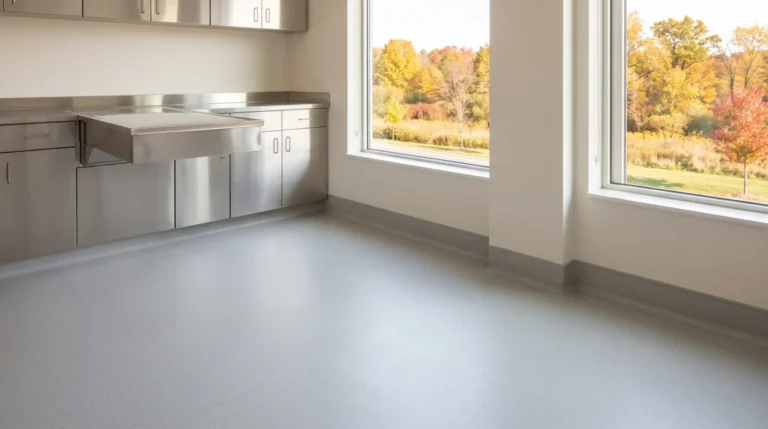
Why Commercial Epoxy Flooring Is Everywhere Right Now
Epoxy flooring has become one of the most requested commercial upgrades we see around Madison, WI and nearby communities like Verona, Middleton, Sun Prairie, Fitchburg, Waunakee, and DeForest. It’s not just because it looks clean and modern. It’s because epoxy systems can solve real facility problems: worn concrete, dusting floors, constant spills, heavy traffic, sanitation requirements, and safety concerns.
At Harmony Flooring, we look at epoxy as a system, not a single product. The best results come from matching the right resin, texture, and topcoat to the way your building actually operates. You can see the full range of commercial flooring we install for Madison facilities on our commercial flooring page.
What “Epoxy Flooring” Really Means in Commercial Buildings
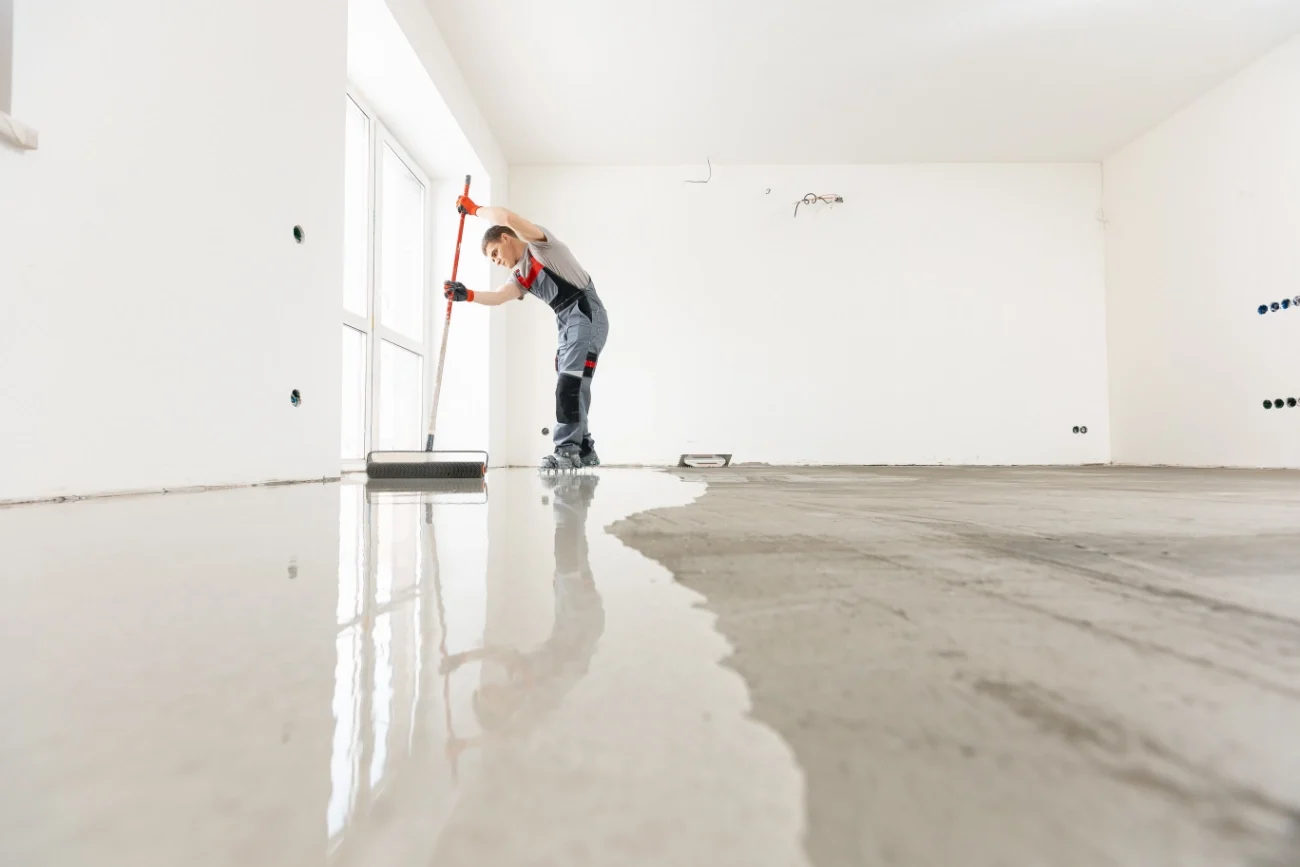
In commercial settings, “epoxy flooring” typically refers to a resinous coating system installed over concrete to create a seamless, durable, cleanable surface. Most successful commercial installs are multi-layer systems:
- Surface prep (the most important step)
- Primer
- Epoxy base coat(s)
- Optional broadcast media (color flakes or quartz for texture and design)
- Topcoat (often urethane/polyurethane or polyaspartic depending on needs)
Many commercial and industrial projects use 100% solids epoxy because it builds a thicker dry film and contains no water or VOCs in the resin itself.
The Big Pros and Cons of Epoxy Flooring for Commercial Use
Key advantages
Seamless and easy to sanitize
Epoxy creates a continuous surface (no grout lines) that’s easier to keep clean in food, healthcare, and high-traffic environments.
Excellent durability for traffic and equipment
Properly specified systems can handle heavy foot traffic, rolling carts, pallet jacks, and many day-to-day impacts.
Chemical and stain resistance (when correctly specified)
Epoxy resists many common chemicals, but performance depends on the specific resin and topcoat (more on that below).
Design flexibility
Solid colors, decorative flake, quartz, safety striping, and “zoned” layouts for workflows, aisles, or wayfinding.
Improves worn concrete
Epoxy reduces concrete dusting and protects the slab, which matters in warehouses and service areas.
Common drawbacks and limitations
Surface prep makes or breaks the floor
Most failures come from poor prep: insufficient profile, contamination, moisture vapor, or weak concrete.
Cure time and downtime
Epoxy is not always the fastest option. Some systems cure quickly, but many commercial systems require staged installation and cure windows.
UV exposure and yellowing
Some epoxies can amber or chalk in direct sunlight. If you have large storefront windows or bright vestibules, we often use UV-stable topcoats.
Hot-tire pickup and softness (in some formulations)
More common in garages, but it’s still a consideration where rubber wheels and heat are constant.
Commercial Epoxy System Types and Where Each One Works Best
1) High-build 100% solids epoxy
Best for: warehouses, showrooms, corridors, light industrial, retail back rooms
- Builds a thicker film and is common in industrial/commercial use
- Great base for flakes or quartz
Watch-outs: may need a UV-stable topcoat if sunlight is strong.
2) Epoxy flake systems
Best for: break rooms, lobbies, restrooms, corridors, retail, veterinarian clinics, many restaurants front-of-house
- Decorative, hides dirt and scuffs well
- Can be built with textured options for traction
Watch-outs: choose the right topcoat. The topcoat is what determines cleanability, stain resistance, and UV performance.
3) Quartz broadcast systems
Best for: commercial kitchens (some areas), locker rooms, restrooms, wet environments, facilities that need extra traction
- Quartz can provide consistent texture and slip resistance
- Often used where safety and water exposure matter
Watch-outs: highly textured floors are safer but can take longer to scrub clean. The “right” texture is the one your cleaning crew can realistically maintain.
4) Epoxy mortar and heavy-duty troweled systems
Best for: industrial abuse zones, loading areas, manufacturing, repair shops
- Built to take severe impact and heavy equipment
- Can repair and re-profile damaged concrete
Watch-outs: more material, more labor, higher investment.
5) Urethane cement (urethane concrete)
This is not epoxy, but it’s often part of the same conversation because it’s a workhorse in food and wet environments.
Best for: commercial kitchens, dish rooms, breweries, food processing, laundry areas
- Often chosen for better moisture tolerance and thermal shock resistance than standard epoxy systems
- Commonly promoted for hygienic performance in repeated washdown environments
Watch-outs: typically more expensive and more specialized to install, but it can be the right call for the harshest areas.
Slip Resistance: How to Specify It Without Guessing
Slip resistance is a safety issue, a liability issue, and a day-to-day comfort issue for staff.
A reputable epoxy specification should call out a way to measure traction. One common approach is Coefficient of Friction (COF) testing, often referenced with ASTM methods like ASTM D2047.
Practical rule:
- Front-of-house often needs “cleanable traction,” not an aggressive grit that traps grime.
- Back-of-house wet areas may need more texture, but it must still be cleanable and compatible with your sanitation routine.
The Most Important Part: Concrete Prep and the Right Surface Profile
If you only remember one thing from this blog, make it this: prep drives performance.
Epoxy needs a mechanically prepared surface so it can bond properly. Many installers use a concrete “texture target” called Concrete Surface Profile (CSP). CSP is commonly discussed as a key factor in coating adhesion and long-term success.
In commercial work, prep might include:
- Shot blasting (often preferred for consistent profile in many coating projects)
- Diamond grinding
- Crack and joint repair
- Moisture testing and mitigation when needed
Skipping prep is how you get peeling, bubbling, and premature failure.
Performance Specs That Matter in Commercial Epoxy
If you want to compare bids or write a strong spec, look for testable performance language:
- Adhesion strength: Often evaluated using ASTM D4541 pull-off testing
- Abrasion resistance: Commonly referenced with ASTM D4060 (Taber abrasion)
- Slip resistance / COF: Often referenced with ASTM D2047 in some coating discussions
- VOC / environmental considerations: 100% solids epoxy is often used in commercial spaces and can contain no VOCs in the resin itself
You do not need to become a test-method expert. The point is to choose a system that can be evaluated on measurable criteria, not vague promises.
Where Epoxy Flooring Works Best in Wisconsin Commercial Buildings
Here’s where epoxy systems shine around Madison-area facilities:
Warehouses and light industrial
- Dust control and slab protection
- Better cleaning and line striping for aisles and safety zones
Restaurants and cafés
- Back-of-house: traction and sanitation
- Front-of-house: decorative flake or modern solid-color systems that clean fast
Healthcare and clinics
- Seamless, cleanable, professional appearance
- Zoning and wayfinding options
Auto service, fleet, and light manufacturing
- Chemical resistance, impact resistance, easy cleanup
Retail and showrooms
- High-end look, durable surface, brand-matching colors
Wisconsin-specific note: entry zones see salt and grit. A good epoxy plan includes a tough vestibule strategy and strong matting, because grit is the #1 abrasion culprit.
Installation Timeline and Downtime
Downtime depends on system choice, square footage, and slab condition. A typical commercial project includes:
- Site evaluation (substrate condition, moisture, traffic needs, cleaning routine)
- Mechanical prep (shot blast or grind to proper profile)
- Base and build coats
- Optional broadcast (flake or quartz)
- Topcoat
- Cure window before foot traffic and equipment return
If a facility needs faster return-to-service, we can look at faster-curing topcoat options. The key is balancing speed with long-term performance.
Cleaning and Maintenance: Keeping Epoxy Looking Sharp
Most commercial epoxy floors do best with a simple routine:
- Dry dust mop or auto-scrub to remove grit
- Neutral cleaner suited to your topcoat
- Avoid harsh degreasers unless the system is designed for it
If the floor is in a greasy environment (like kitchens), the right texture and topcoat choice makes cleaning much easier long term.
Common Failure Points and How to Avoid Them
If you want epoxy to last, plan around these:
- Moisture vapor from the slab (needs testing and possibly mitigation)
- Insufficient surface profile (CSP matters)
- Contamination (oils, silicones, curing compounds)
- Wrong system for the environment (for example, standard epoxy in a high-heat washdown zone)
- No plan for slip resistance (texture must match cleaning capability)
This is why commercial epoxy is not a “one product fits all” project.
Keep Reading
- Best Flooring for Restaurants and Cafés in Wisconsin: Durable, Slip-Resistant, and Easy to Clean
- Gym Flooring for Madison Fitness Studios: A Buyer’s Guide
- Commercial Flooring in Madison, WI: how we help businesses plan floors
Ready to Spec Epoxy Flooring for Your Facility?
If you’re planning a new build, remodel, or upgrade in Madison, Verona, Middleton, Sun Prairie, Fitchburg, Waunakee, or anywhere within about an hour of Madison, Harmony Flooring can help you choose the right commercial epoxy system, plan installation around downtime, and deliver a floor that performs the way it should.
Want a floor that’s durable, safe, and easy to maintain? Let’s talk. Harmony Flooring is Covering Every Detail.
Questions About Your Floors?
Call or text 608-221-5500Schedule a Free Consultation
Shop our floors: Hardwood · Vinyl · Carpet · Tile · Laminate
Showroom: 2125 S. Stoughton Rd, Madison, WI 53716